Bernese Mountain Dog vs Australian Shepherd: The Differences (With Pictures)

In this article
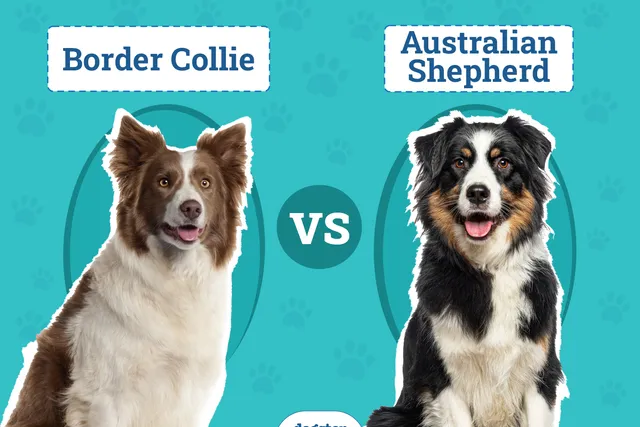
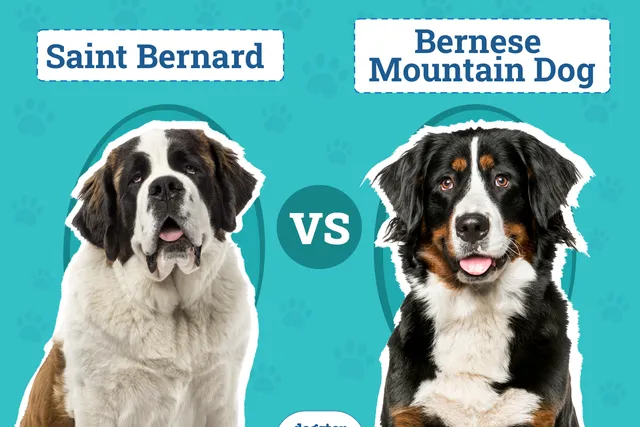
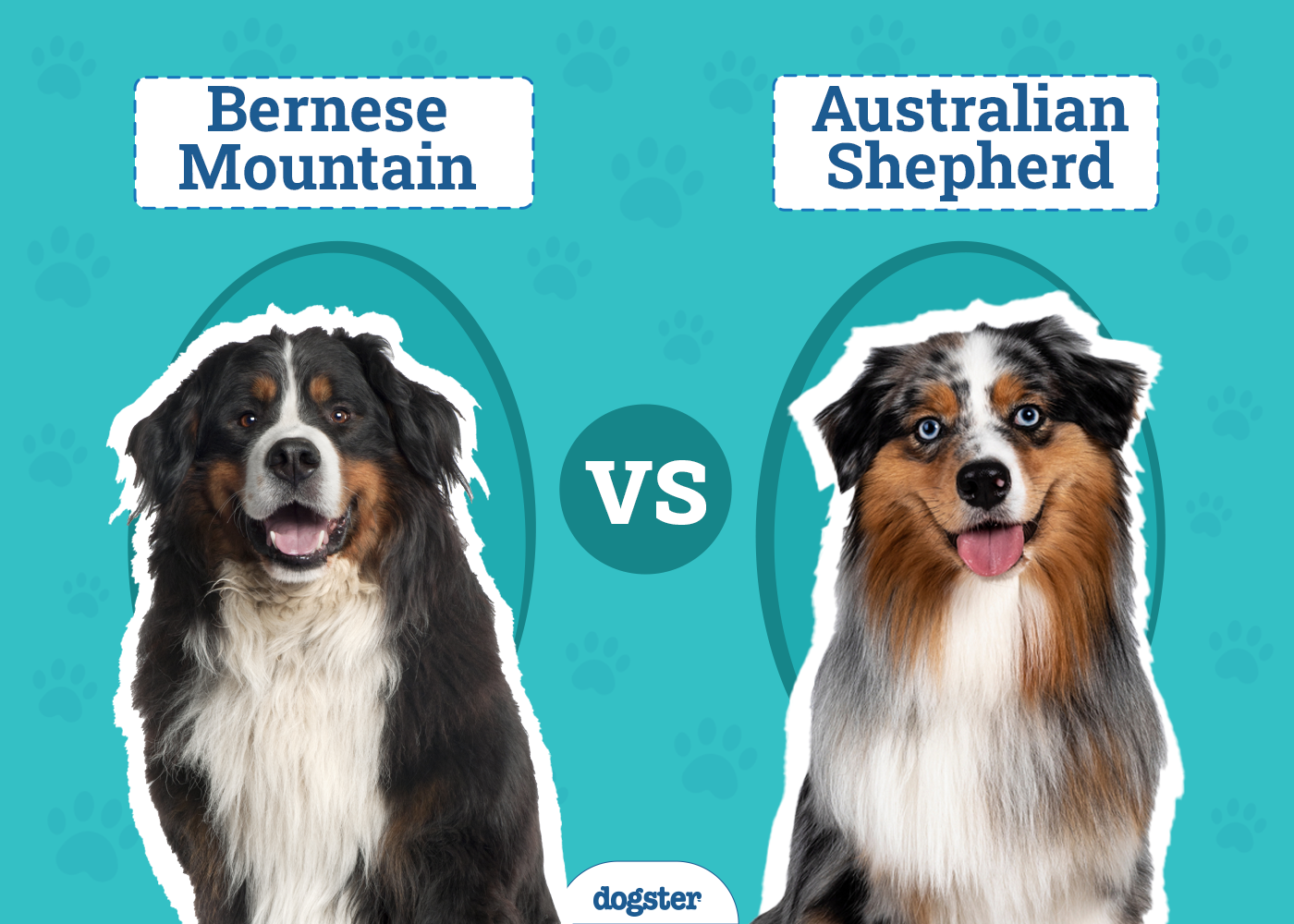
If you’re a would-be dog parent, choosing the right breed for you can be tricky—especially when you’re stuck between two fantastic breeds like the Bernese Mountain Dog and the Australian Shepherd. Both are active dogs with a strong work ethic that comes from years spent herding cattle and pulling carts on farms and ranches, but there are quite a few differences, too.
To help you decide which breed is right for you, we’ve put together this comparison detailing the similarities and differences between Bernese Mountain Dogs and Australian Shepherds. We’ll discuss personality, health, general care, and trainability in the hopes that you’ll click away with a clearer picture of which breed you want to share your life with.

Visual Differences

At a Glance
Bernese Mountain Dog Overview
Personality / Character
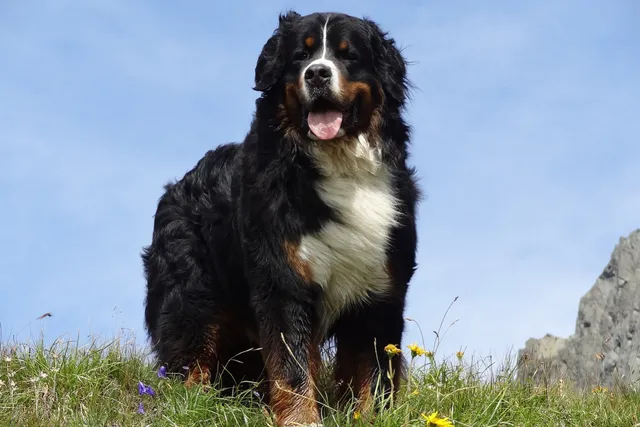
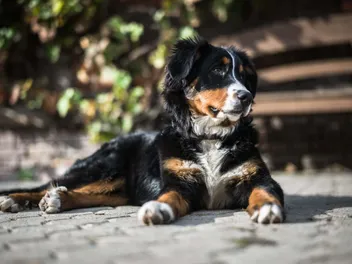
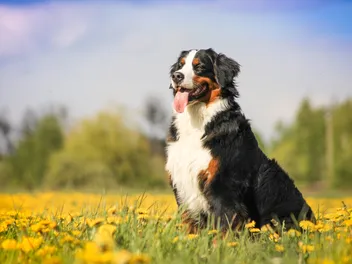
Bernese Mountain Dogs are typically hardworking, robust, and family-oriented, though a tad distant when it comes to strangers. Their working dog history has instilled in the Bernese Mountain Dog a solid work ethic and a strong sense of loyalty that never wavers.
To this end, they make competent watchdogs due to their instinctive alertness and desire to protect, though they’re not the intimidating type unless you count their large size as an intimidation factor.
Bernese Mountain Dogs are dogs for whom interaction and attention are very important—they’re not the best at spending time alone and may resort to destructive or disruptive behavior like barking if they don’t feel they’re getting enough attention.
For this reason, if you’re considering acquiring a Bernese Mountain Dog, be prepared to devote a lot of time to them.

Training 🎾
Due to their eagerness to please, quick brains, and how much they enjoy spending time with their people, Bernese Mountain Dogs are highly trainable. With plenty of positive reinforcement (yep, that includes treats) and praise, they’ll pick up the basics like house training and how to behave on a leash pretty quickly.
Health & Care
Bernese Mountain Dogs typically live between 6 and 9 years, which is sadly a pretty short lifespan. They can be prone to certain health conditions, including Von Willebrand’s Disease, hip and elbow dysplasia, hypothyroidism, hypomyelination, mast cell tumors, and progressive retinal atrophy.
As per the Bernese Mountain Dog’s grooming needs, they’re moderate to heavy shedders with a thick double coat. For this reason, they need to be brushed a few times per week to keep potential tangles and mats at bay.
In shedding season, Bernese Mountain Dogs shed their undercoats, so you’ll need to acquire a de-shedding tool to get rid of any loose hairs. At this time, you’ll also need to brush them daily.
Aside from this, the Bernese Mountain Dog’s grooming needs don’t really differ from those of other breeds. It’s a good rule of thumb to clean their teeth daily or at least every few days and keep their nails trimmed. As for bathing, every few months is fine as long as they’re not looking too grubby (muddy walks in the park with a large, long-coated dog, anyone?).

Suitable for:
Bernese Mountain Dogs are best suited to active people or families with the time and energy to devote to socializing them and providing mental and physical stimulation. As large, energetic dogs, it’s a bonus for them to be in a home with a yard so they can exercise.
If you don’t have a yard, you can take them for nice, long, daily walks instead. As long as they’re getting adequate exercise, they’ll do fine without a yard, so don’t worry.
Pros
- Affectionate with family
- Typically gentle with children
- Easy to train
- Very intelligent
- Loves human company
- Likely to enjoy cuddles
Cons
- Can be clingy (we love this trait, but we know it’s not for everyone)
- Short lifespan
- De-shedding required
Australian Shepherd Overview
Personality / Character
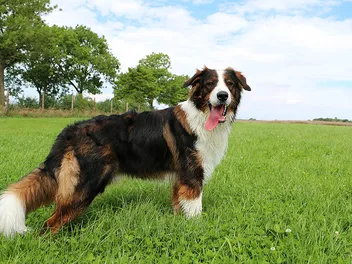
Australian Shepherds are always on the go and need a mission to keep them occupied. These super smart dogs love nothing more than being kept busy, whether that’s working on a farm or ranch or out adventuring with their families. Like Bernese Mountain Dogs, Australian Shepherds were bred as working dogs and have been keeping cattle in check on farms for many years.
If you’re looking for a dog that will spend a lot of time lazing around the house and snuggling up to you, an Australian Shepherd may not be the right breed for you. On the other hand, if you’re an outdoorsy, active person, the Australian Shepherd will suit you to a tee.
That’s not to say that Australian Shepherds don’t enjoy a cuddle or will love you any less—just that they have bags of energy, so need a great deal of physical and mental stimulation. When it comes to strangers, they’re typically somewhat aloof and reserved like the Bernese Mountain Dog.

Training 🎾
For an Australian Shepherd, training is just another excuse to put their quick brains to good use and get active, so they tend to respond to it pretty well. They’re unlikely to have any issues picking up basic training, but they would be best suited to a capable, firm but fair human leader—ideally with some experience with dogs.
This is because they can be a bit of a handful for new dog parents and will run rings around you if let them get away with it—quite literally! Patience, loving firmness, and consistency are key to training and socializing an Australian Shepherd.
Health & Care
One of the bonuses to parenting an Australian Shepherd is that they often have long lifespans (around 12–15 years) and are a generally healthy breed. That said, every breed has health issues they may be prone to, and in the Australian Shepherd’s case, these conditions include hip dysplasia, tumors, obesity, and eye problems like cataracts.
Another double-coated breed, Australian Shepherds shed heavily during shedding season, so arm yourself with a de-shedding tool. They also need to be brushed weekly or every other day to keep their coats smooth and healthy and bathing every few months should suffice. Aside from this, they need regular teeth brushing and nail clipping like other breeds.

Suitable for:
Australian Shepherds are best for active families—especially those that love spending time outdoors. With proper socialization, they make fantastic companions for older children and teenagers.
In the case of small children, Australian Shepherds, though typically not at all aggressive, sometimes struggle to shake off their working instincts (even if they’ve never set foot on a farm or ranch) and may attempt to “herd” them. However, proper socialization and training can help prevent this behavior.
Pros
- Excellent keep-fit buddies
- Highly intelligent
- Easy to train
- Long life span
- Generally healthy breed
- Great companions for older kids
Cons
- High energy (not everyone can keep up!)
- Require de-shedding
- Can be wilful when paired with inexperienced dog parents
Which Breed Is Right for You?

Both breeds are wonderful in their own way, but the one you choose comes down to your personality and lifestyle. If you’re looking for a large dog that you can have a lot of fun outdoors with but also will not shy away from snuggling up on the couch with you, the Bernese Mountain Dog is more likely the right breed for you.
If you’re someone with an active lifestyle who loves spending time outdoors and prefers a medium-sized dog with a tad more independence, you might prefer the Australian Shepherd. The good news is that whichever breed you choose, you’re sure to have a loyal, fun-loving companion for life.
Related Reads:
Sources
https://vcahospitals.com/know-your-pet/von-willebrands-disease-in-dogs
https://www.frontiersin.org/articles/10.3389/fvets.2019.00490/full
https://vcahospitals.com/know-your-pet/hypothyroidism-in-dogs
https://www.petmd.com/dog/conditions/neurological/c_dg_hypomyelination
https://vcahospitals.com/know-your-pet/mast-cell-tumors-in-dogs
https://vcahospitals.com/know-your-pet/progressive-retinal-atrophy-in-dogs
https://www.petmd.com/dog/conditions/digestive/c_multi_Obesity
https://www.petmd.com/dog/conditions/musculoskeletal/c_dg_hip_dysplasia
https://a-z-animals.com/pets/dogs/dog-comparison/bernese-mountain-dog-vs-australian-shepherd-2/
https://be.chewy.com/dog-breeds/compare/bernese-mountain-dog-vs-australian-shepherd/
https://be.chewy.com/dog-breed/bernese-mountain-dog/#breed-care
Featured Image Credit: Top - Shayna Douglas, Unsplash | Bottom - Maud Slaats, Unsplash
Expert dog care, straight to your inbox
News, insights, expert advice, and everything dog.

No spam — unsubscribe anytime.
By signing up, you agree to our Terms & Conditions and Privacy & Cookies Policy.
How useful was this post?
Click a star to rate. You can leave written feedback afterwards. (We read all feedback.)
Kit Copson is a freelance writer and lifelong animal lover with a strong interest in animal welfare. She has parented many furry beings over the years and is currently a proud cat mom of two—one very chilled (unless hungry) Siamese and a skittish but adorable Domestic Shorthair—and dog mom of one—an adopted Bichon Poodle cross. When not writing about or spending time with pets, Kit can be found drawing in her sketchpad, reading, or more often than not, drinking tea.