Saint Bernard vs. Bernese Mountain Dog: The Differences (With Pictures)

In this article
If you have narrowed your list to a Saint Bernard or a Bernese Mountain Dog, the choice can be a difficult one. Both breeds are large, attractive, and good with children. They do, however, have some significant differences. For example, one sheds excessively, and the other drools in buckets. One is high energy, and the other is calmer. But both are so loveable. How do you decide?
Let’s dive in and see which one of the two is best suited for you, shall we?

Visual Differences
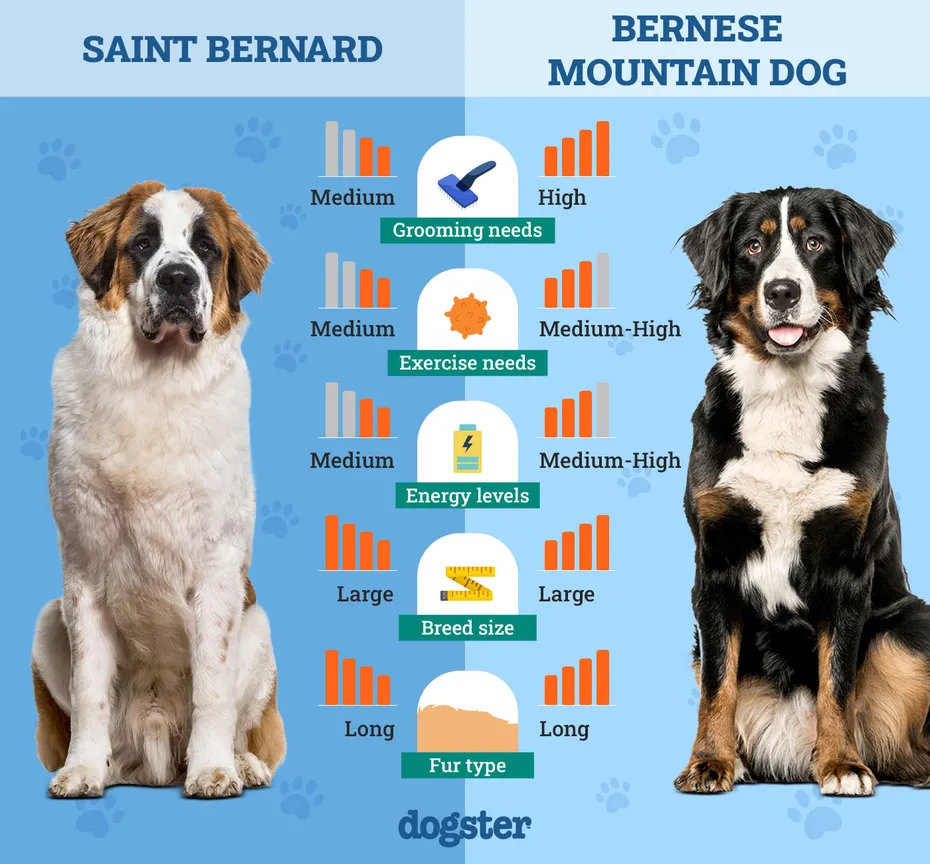
At a Glance

Saint Bernard Overview

The Saint Bernard is a cross between the Great Pyrenees and the Tibetan Mastiff. The breed originated in Switzerland and the Alps of Italy and was developed for rescuing people in the snow of the Swiss Alps. They were also used by Swiss farmers to help with pulling water from wells.
The Saint Bernard is considered a giant breed with webbed feet and strong legs. A female Saint can weigh between 80 and 100 pounds, with males ranging between 110 and 160 pounds. These characteristics, along with their fondness for water, make them exceptional swimmers despite their hefty size.
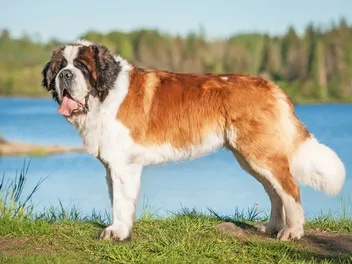
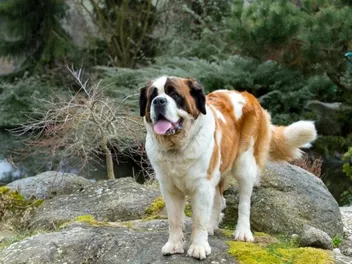
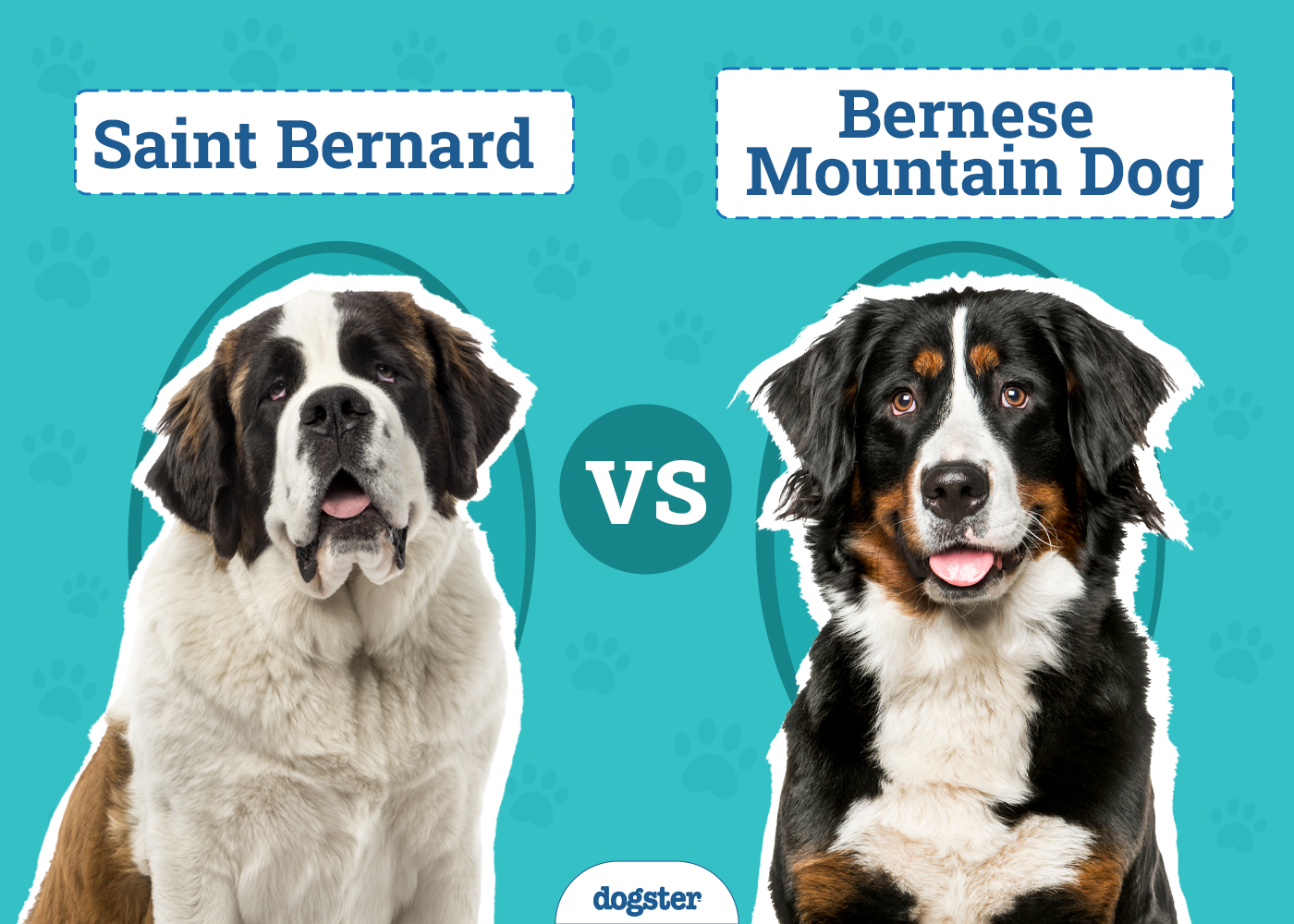
The coat of a Saint can be coarse or silky and thick around the legs and neck. The coat’s large color patches are mahogany brindle with white and red with white, with dark patches around the eyes.
Personality / Character
The Saint Bernard is a breed that does not bark unnecessarily. And yet, the size and bark of a Saint Bernard can make a stranger stop in their tracks. They do not make a watchdog, however. Although they are large and can sound intimidating, they are loving and playful canines that exhibit affection and cuddle with their family and other pets in the household.
The Saint is not a temperamental breed, and they do love children. They are big and can be clumsy, so they should be monitored with small children or those that are elderly and feeble. They also tend to be friendly with strangers but may show aggression toward animals that they are not familiar with.

Exercise 🐕
The breed is slow-moving and does not have a high level of energy. An occasional long walk is acceptable, but a slow walk daily is enough for this relaxed breed. Their low energy level and low tolerance for heat make them a poor choice if you want an active outdoor companion. Unless, of course, you live in an area where they can enjoy playing in the snow.
Training 🎾
Since Saint Bernards have a good level of intelligence, it is important to train and socialize them while they are still pups. Doing so will help to avoid aggressive behavior toward other animals or unfamiliar people.
It is important to note that because they are less responsive to training than some other breeds, they may require patience and extra time to learn what is expected of them.
Health & Care
The life span of larger breeds tends to be shorter than most dogs. The average for a Saint Bernard is a bit longer than the Berner, ranging between 8 and 10 years.
Common health conditions include heart problems, joint issues, and bloat.
Like Berners, Saint Bernard’s are at elevated risk for bloat. To help prevent it, frequent feedings in small amounts is recommended. It is also important to know the signs so you can get immediate medical attention for your pet and prevent a possible fatality.

Grooming ✂️
Saint Bernards do not require extensive grooming. A weekly brushing to control the hair should be sufficient.
Suitable For:
Saint Bernards can be a messy breed. They are large and clumsy, so they need room to move about. If you get anxious at the thought of dog hair and saliva, this may not be a good dog for you. Saint Bernards tend to drool excessively, so you will find it everywhere. The movie Beethoven was no exaggeration of the slobber that can be released from the mouth of this breed.
If you love colder temperatures and blasting the air conditioning in the summer months, this is an excellent breed for you. Saints do not tolerate hot temperatures and need to be kept cool in warmer weather, so air conditioning is necessary.
Pros
- Gets along with other household pets
- Loving and affectionate
- Low energy for inactive owners
- Good with children
- Love water
Cons
- Excessive drooling
- Can be aggressive to unfamiliar animals and strangers
- Clumsy
- Cannot tolerate high temperatures
- Hard to train
Bernese Mountain Dog Overview

The Bernese Mountain Dog, sometimes referred to as “Berners,” originated in the 1800s in the Swiss Alps. They were originally bred to be working dogs and were used for things like herding cattle and pulling carts. They are an affectionate breed that make great companions and family pets. They are an energetic breed that needs room to run and play.
Females weigh between 80–105 pounds and males weigh around 90–110 pounds. Due to the increasing medical issues with Berners, the life expectancy of the breed has been lowered to 7 to 10 years.
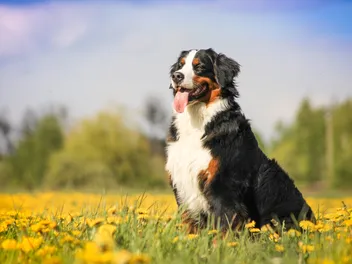
The double coat of the Berner is straight, long, and coarse, with a soft, dense undercoat. The tricolored fur is black with white and rust markings.
Personality / Character
Bernese Mountain Dogs make great family pets because they are loyal and affectionate. They are especially loving to children and make excellent therapy dogs. They love to spend time with their humans playing and lying on their lap. They are unaware of their size and think that they can be lap dogs. They require frequent physical and mental stimulation from their owners. Otherwise, they will get bored and be unhappy.
Exercise 🐕
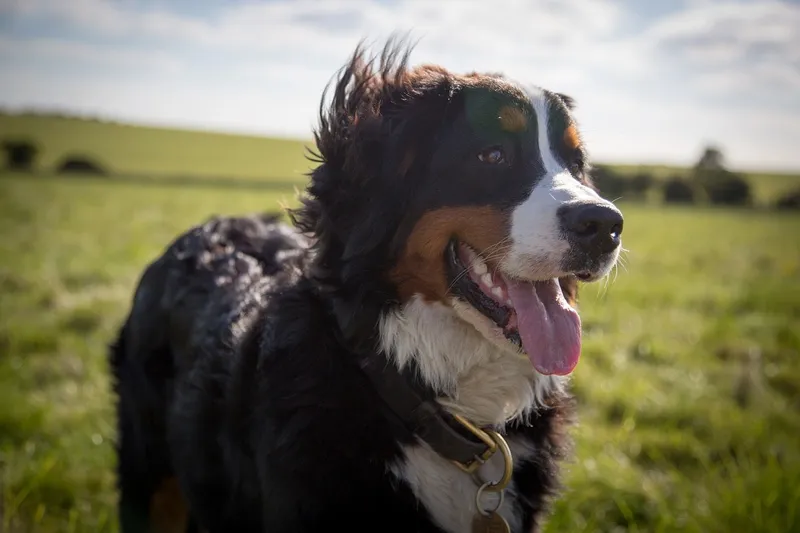
Berners are great pets for owners that are active and love the outdoors. They are a high-energy breed that has the stamina to go all day long. If you are looking for a hiking, running, and biking companion, the Bernese Mountain Dog is up to the task.
The breed should not engage in activities that can cause joint issues, however.
Training 🎾
The Bernese Mountain Dogs are eager to please, so they are highly trainable. Due to the size of the breed, training and socializing should begin when they are still puppies.
Health & Care
Berners are known to suffer from several joint issues like hip and elbow dysplasia. They are susceptible to health problems like Von Willebrand’s disease, cancer, and bloat.
In fact, approximately 50% of the Berner population passes away from cancer. Histiocytosis is a common cancer affecting Bernese Mountain Dogs and can kill them in a few weeks.

Grooming ✂️
Unlike Saint Bernards, Bernese Mountain Dogs have a double coat that sheds excessively throughout the year. They will also blow their coat in the spring and fall.
Suitable For:
Bernese Mountain Dogs are an ideal pet for families with children and single adults looking for an outdoor companion. Since they are quite large, they may not do well in an apartment-type setting, however. While Berners are more independent than Saints, they will be unhappy if you are away from home for lengthy periods of time. Berners are high energy, love their humans, and need frequent interaction along with mental and physical stimulation. The breed is highly trainable and does very well with children.
However, they do shed a lot! So, to enjoy the love and companionship of the Berner, you will need to have a tolerance for dog hair in your home.
Pros
- Calm and quiet
- Highly trainable
- High energy for active lifestyles
- Excellent for cold climates
- Good with children
Cons
- Short life span
- Health issues
- Excessive shedding
Which Breed Is Right for You?
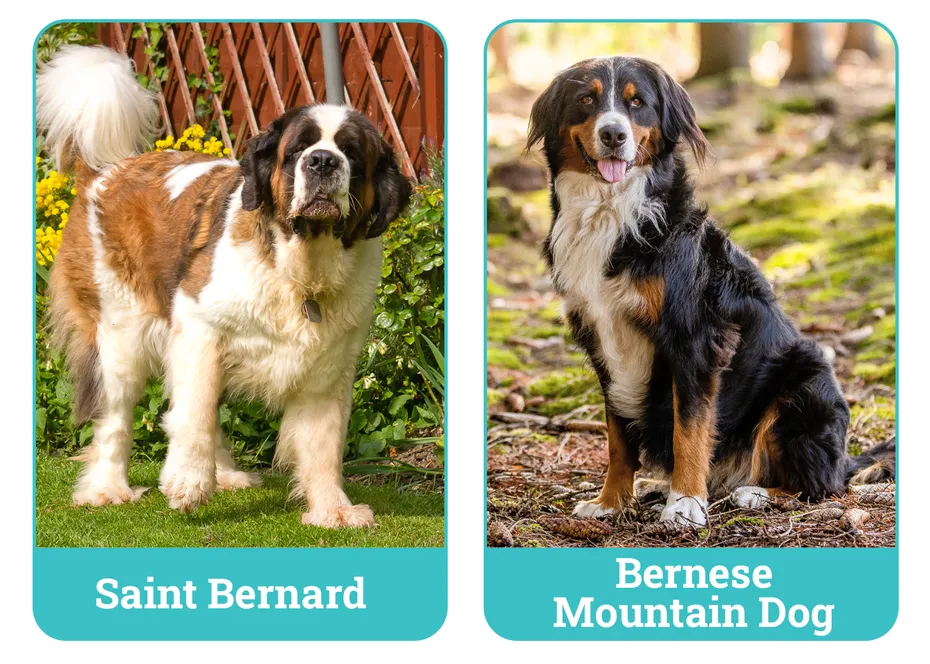
The choice of a Bernese Mountain Dog and a Saint Bernard comes down to a few significant differences. Are you looking for a laid-back breed or a high-energy companion that tolerates cold and warm temperatures?
The Saint Bernard is more than happy to lay around and watch tv in an air-conditioned home. They have minimal grooming needs and get along well in homes with children and other pets. They do drool excessively, so they are not good for homeowners that like perfection.
The Berner, however, would be bored and unhappy in that setting. They need a pet owner that wants a dog to bring along on a long run or bike ride. While they do not drool like the Saint, they do blow their coat in the spring and fall. So, for the homeowner that stresses at the sight of fur tumblers throughout their home, this breed may not be for you.
Both breeds are large and love children. Although, the Berner is more independent than the Saint and is a better option for those that have long work schedules that require them to be away for extended periods of time. Saint Bernards are more dependent and need to be with family to avoid getting separation anxiety which can lead to destructive behaviors.
Conclusion
Saint Bernards and Bernese Mountain Dogs are both wonderful breeds with many similarities. It is the significant differences like energy level, health issues, and grooming needs that will help to determine which breed is best for you and your lifestyle. Whichever breed you choose, you can look forward to some drool and dog hair for years to come!
See Also:
Sources
Featured Image Credit: Top - Aneta Jungerova, Shutterstock | Bottom - Shayna Douglas, Unsplash
Expert dog care, straight to your inbox
News, insights, expert advice, and everything dog.

No spam — unsubscribe anytime.
By signing up, you agree to our Terms & Conditions and Privacy & Cookies Policy.
How useful was this post?
Click a star to rate. You can leave written feedback afterwards. (We read all feedback.)
Nicole has loved animals of all sizes her whole life so it's no wonder she has dedicated her career to helping them through what she loves best: learning, writing, and sharing knowledge with others. She’s the proud mom of two dogs, a cat, and a human. With a degree in Education and 15+ years of writing experience, Nicole wants to help pet parents and pets around the planet to live happy, safe, and healthy lives.