Kennel Club Quietly Adds 14 Breeds to High Risk List

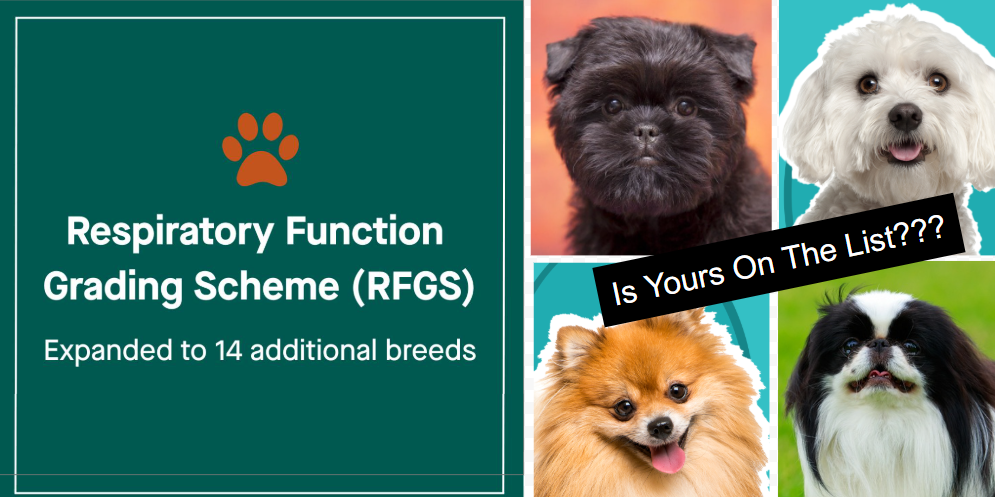
Earlier this month, the Royal Kennel Club in the UK sparked controversy when it quietly announced that, in addition to the Bulldog, French Bulldog, and Pug, 14 additional breeds would now be included in the expansion of its Respiratory Function Grading Scheme (RFGS), in partnership with the University of Cambridge.1 Whilst Kennel Clubs in the US are stubbornly holding onto outdated conformational standards, this landmark step in prioritising canine health over aesthetics has been largely met with positive reviews. However, some breeders and owners have voiced their concerns that this is revenue-raising disguised as animal advocacy.
On February 18th, 2026, the UK’s oldest and most respected kennel club revealed that a new peer-reviewed research paper by Cambridge University, which evaluates Brachycephalic Obstructive Airway Syndrome (BOAS) prevalence and severity across 14 breeds using the existing RFG methodology,2 demonstrated a varying prevalence of BOAS across the dogs assessed. While some breeds showed no evidence of clinically significant disease, others were found to have a 30-50% incidence of clinically significant signs. The announcement has been timed to coincide with the lead-up to one of the world’s most prestigious dog shows, Crufts, where, from March 5-7, The Royal Kennel Club will be offering free RFG testing on a walk‑up basis in the relevant breed halls, with no advance booking required.
Which Breeds Are On The List?
Joining the Bulldog, French Bulldog, and Pug on the list of dogs included in the RFGS are:
- Affenpinscher
- Boston Terrier
- Boxer
- Cavalier King Charles Spaniel
- Chihuahua
- Dogue de Bordeaux
- Griffon Bruxellois
- Japanese Chin
- King Charles Spaniel
- Maltese
- Pekingese
- Pomeranian
- Shih Tzu
- Staffordshire Bull Terrier
Many on the list have come as something of a shock, particularly to owners and breeders. However, they have been included as they demonstrate the anatomical and physiological traits that are considered to be brachycephalic (i.e., shortened muzzle), and are therefore at risk of being affected by brachycephalic obstructive airway syndrome (BOAS), not that they necessarily have BOAS.
In a recent statement, The Royal Kennel Club said it has been working alongside the relevant breed communities to ensure the expansion of the RFGS will be as smooth as possible.
“Breed representatives have been engaged throughout the process, including a consultation period which began in October 2025, and will continue to be supported with breed-specific information and guidance as the scheme is rolled out.
As part of the next scheduled update in June 2026, the Respiratory Function Grading Scheme will be added to the Health Standard for additional breeds, where appropriate and in line with the published methodology. The findings from the research, together with ongoing data collected through the expanded scheme, will help inform how respiratory health is addressed within each breed, including whether additional approaches are needed over time, in line with the Royal Kennel Club’s recently published Breeding for Health Framework for 2026.”

That hasn’t stopped a wave of criticism being aimed at the new guidelines, with some suggesting that the expansion of the RFGS is unnecessary and is being seen as a way to increase registration fees for the affected breeds. The comments section under the Kennel Club’s announcement on social media was dominated by breeders of the dogs on the list, adamant that they have been unfairly and unnecessarily targeted. One dog owner bemoaned that lots of older folk “just want small companion dogs that don’t need much exercise, and want to keep them as they are,” likely unaware that it is the anatomy and physiology of these dogs, not just their temperament, that often limits how much activity they are capable of. As the scientific report shows, while some of these breeds demonstrate only mild detrimental effects of their brachycephalic features, others show problems that significantly impact their quality of life, and until breeding across the board is held to a standard that puts the health of the dogs ahead of popularity and profits, this type of scheme should be embraced and supported by all who wish to preserve their favored breed, rather than have them marked for extinction, which is what some countries are geared towards.
In October 2022, the Norwegian Society for the Protection of Animals successfully brought about a ruling that effectively banned the breeding of two breeds fraught with inherited health problems: the Bulldog and Cavalier King Charles Spaniel.3 Although the NSPA admitted that there are many other breeds with inherent issues, these two represented dogs whose lives were of a diminished quality due to conformational problems like brachycephaly, neurological disorders, heart defects, spinal disease, and eye problems. However, the banning of the Bulldog was disappointingly reversed on appeal. Taking an even stronger stance against cruel breeding practices, the Netherlands is now famous for its strict policies. Not only is it illegal to own or breed 12 brachycephalic or flat-faced dog breeds, but the use of their images for advertising or social media promotion is also prohibited. Their breed-specific legislation also extends to cats, with the Sphynx and Scottish Fold recently joining the Munchkin and Persian.
Much of the controversy regarding the inclusion of the Cavalier King Charles Spaniel is likely to stem from the fact that not all countries, or even kennel clubs, seem to distinguish between the Cavalier King Charles and the King Charles Spaniel, and many people are not aware that there are two distinct breeds. In fact, the distinction was only made official in 19454. The former is considered to be the larger, more robust of the two, with a more pronounced muzzle and less rounded head, while the King Charles Spaniel bears many of the offending features, including a distinctly shortened muzzle, domed skull, and protuberant eyes. However, both breeds appear on the RFGS list.

It is hoped that through the implementation of more stringent breeding regulations aimed at ensuring the continued health of these much-loved dog breeds, the RFGS and programs like it may be able to bring these dogs back to a healthier form without the need to eradicate them completely. We need to look beyond the features we see as cute, endearing, or unique, and start to focus on how we can preserve the integrity of these dogs whilst allowing them to lead full, energetic, and healthy lives.
Did You Know?
- Our breaking news articles are included in our weekly emails. Don't miss out on the latest and sign up for our newsletter below!
Expert dog care, straight to your inbox
Vet-reviewed advice, training tips, and the best of Dogster. Free, and you can unsubscribe anytime.
By signing up, you agree to our Terms & Conditions and Privacy & Cookies Policy.
Dr. Karyn Kanowski, BVSc MRCVS (Vet)
Dr. Karyn is originally from Queensland, Australia, and has resided in the UK for the past 10 years. She graduated from The University of Queensland School of Veterinary Science in 2010, and also holds a Bachelor’s degree in Zoology. Karyn is passionate about using experience, evidence, and working with pet owners to provide the best solutions for pets. She also believes in making reliable information about animal health accessible to everyone. 5 cats and 4 dogs let her share their home with her and her husband, and when she is not practising as a veterinary surgeon, she spends her time writing, gardening, and cleaning up pet hair!
Join the conversation
Ask a question, share your story, or send private feedback.