


Check with your veterinarian before adding any new foods to your pet’s diet, particularly if your pet has any underlying health conditions or is on a special diet.
While the advice in this article has been fact checked and approved by a veterinarian, whether a food is suitable for your individual dog will depend on many factors including their age, diet, and medical history.
In this article
Peanut butter is a food staple that can be found in a lot of store cupboards because it is quick and easy to prepare, can be added to lots of foods to enhance the flavor, and is relatively inexpensive. It is also commonly found in pet owners’ cupboards, because peanut butter, whether it is smooth or crunchy, is generally considered a healthy treat for dogs when given in moderation.
However, it does contain a lot of fats, and while they are considered healthy fats, fed in too large a quantity, too often, these can cause weight gain.
You do need to ensure that the peanut butter you buy does not contain xylitol, which is an artificial sweetener that, while non-toxic to humans, is highly toxic to dogs. Other than this, though, crunchy peanut butter is generally a safe treat for our canine friends.

Why Can Dogs Eat Crunchy Peanut Butter?
Many peanut butters are made from very limited ingredients: often just peanuts and palm oil, with some containing additional sugar and salt.
Although palm oil can have laxative effects on dogs, and you should limit the amount of salt and sugar given to dogs, none of these ingredients are toxic, and, in moderation, they are safe for most healthy dogs.
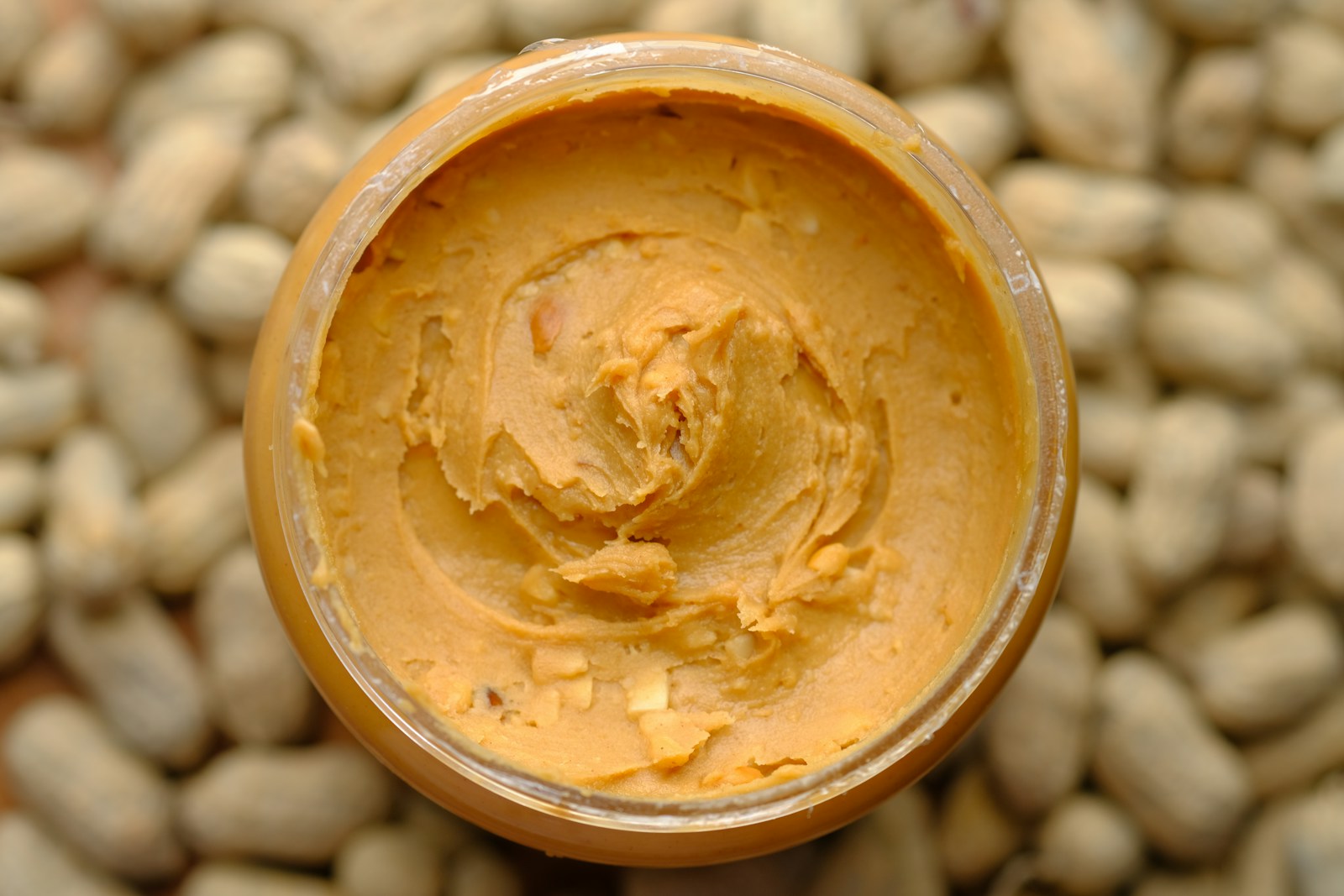
Benefits of Feeding Peanut Butter to Dogs
The main benefit of feeding peanut butter to your pup is that most dogs love it! It can be a great training treat, good for hiding medication and for used distraction purposes. When smeared inside a kong or on a lick mat it can keep dogs entertained for quite a while. While your dog should be getting all their essential nutrients from their balanced regular diet, peanut butter also contains some nutritional benefits.
- Protein-Peanut butter is a high protein treat and usually contains around 20-25% protein.
- Fat-Peanut butter is high in fat but they are mostly healthy fats like polyunsaturated fatty acids.
- Fiber-This treat is also high in soluble and insoluble dietary fibers which can help support a healthy digestive system.
- Vitamins-It contains several important vitamins in particular niacin (vitamin B3), and vitamin E which is an antioxidant.
- Minerals-Peanut butter contains magnesium which helps produce energy, phosphorus which alongside calcium is essential for healthy bones and teeth, and manganese.
How Much Peanut Butter to Feed Your Dog?
All treats, including peanut butter, should only make up 10% of a dog’s daily calories. Peanut butter is dense in calories and the amount of peanut butter you can feed depends primarily on your dog’s size. As a rough guide, small dogs should have no more than half a teaspoon, while big dogs can have a tablespoon of peanut butter a day. This should be ample to cover the hole in kibble dispensing treat toys, or smeared inside a toy like a kong or on a chew.
Alternatively, you can give the peanut butter directly to your dog, smear it on lick mat, or even make healthy homemade treats for your dog.
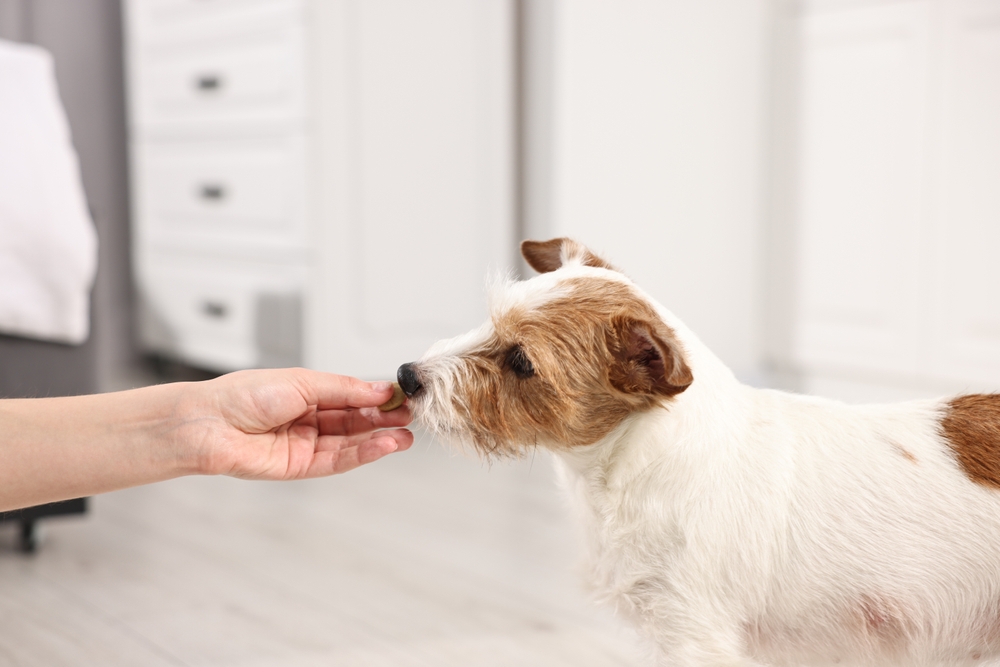
Avoid Dangerous Additives
Peanut butter is safe for most healthy dogs to eat, but you do need to check the ingredients first. Always avoid diet or low-calorie peanut butter because they will often contain an artificial sweetener called xylitol. Although considered a healthier alternative to sugar for humans, xylitol is toxic to dogs, and even relatively small amounts can cause considerable damage to our canine companions.
And, you might want to avoid feeding peanut butter that has added salt or sugar, although a small amount of either shouldn’t do too much harm. Products that contain peanut butter as one of their ingredients may also have additional ingredients that are either toxic or considered dangerous for dogs, so you should always check the ingredients before feeding these to your pups.
Avoid Feeding Too Much
Peanut butter is high in fat, and while some fat is good for a dog and considered an essential component in a dog’s daily nutrition, too much fat can cause several issues including digestive upset and pancreatitis. Excess fat in the diet regularly will cause your dog to put on weight and contribute to the development of obesity. If the peanut butter also contains added sugar this will only add to the calorie content.
Although a small amount of salt is necessary in your dog’s diet, too much is not healthy for them. Look for peanut butter without added salt. Better still, choose a canine peanut butter that has been designed specifically as a dog treat product.
When giving your dog any new ingredient, start by feeding a small amount and monitor for any adverse effects before offering it again or increasing the amount given.

Can Dogs Eat Peanuts?
Peanut butter is primarily made of peanuts, and these small nuts are usually considered safe to feed directly to dogs but you should only ever offer dry-roasted or raw, shelled peanuts. Again, start with a small amount of peanuts and only feed as an occasional treat, and if your dog develops diarrhea or has any other negative side effects, stop feeding peanuts.
Can Dogs Eat Peanut Butter and Jelly Sandwiches?
Generally, a small amount of peanut butter and jelly sandwich is safe for dogs to eat but this shouldn’t be a regular part of your pet’s diet. Plain bread is okay, although it doesn’t really offer any health benefits.
The jelly, as long as it doesn’t contain xylitol, should also be safe for canine consumption, but it will likely be high in sugar and some fruits are dangerous for dogs, so check the individual ingredients before feeding to your pup.

Is Crunchy Peanut Butter a Choking Hazard?
Peanuts are quite soft, especially when compared to hard dry dog kibble, and the chunks in peanut butter are small. Therefore, feeding crunchy peanut butter is no more of a choking hazard to your dog than feeding them their daily kibble
Conclusion
Crunchy peanut butter is a sticky treat that people and dogs love. It should be given in moderation and owners must ensure that the peanut butter does not contain xylitol, but, otherwise, it is a safe treat that can be offered occasionally during training and playtime.
It can be used in treat toys, on lick mats, frozen as a cooling treat, added to food, or you can make healthy homemade treats for your pup.
As when adding any new food to your dog’s diet it’s always best to check with your vet first to make sure it is suitable for your pup.
Featured Image Credit: eroyka, Unsplash

























2 Responses
Is Skippy Super Chunky 7 per cent ok?
Hi Karen. Skippy Super Chunky 7% peanut butter can be okay in small amounts, but there are a couple of things to be aware of. First and foremost, make sure there is no xylitol in the ingredients. Xylitol is a sugar substitute that’s highly toxic to dogs. Skippy products usually don’t have it, but always double-check the label just to be safe. The other point is that Skippy tends to have added sugar and salt, which isn’t ideal for dogs—especially on a regular basis. A little bit as an occasional treat or to hide medication is usually fine, but I wouldn’t use it daily. I hope this helps. 🙂