Why Are Smaller Dogs More Aggressive Than Larger Dogs? 4 Likely Reasons
In this article
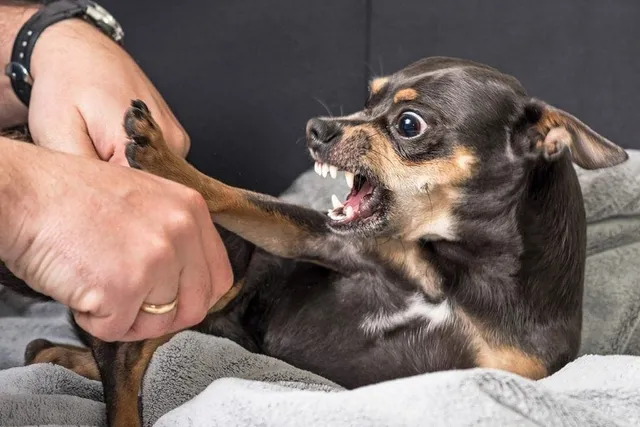
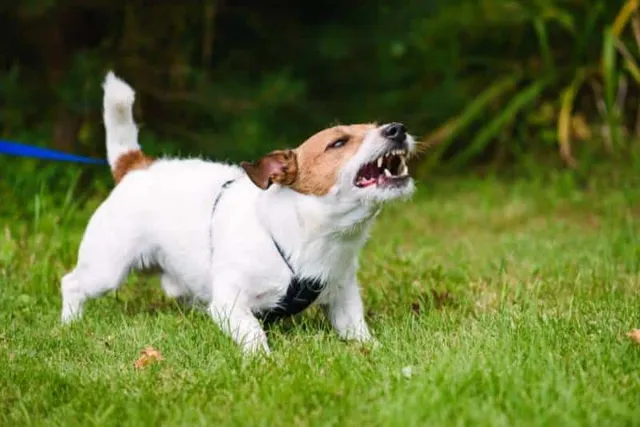
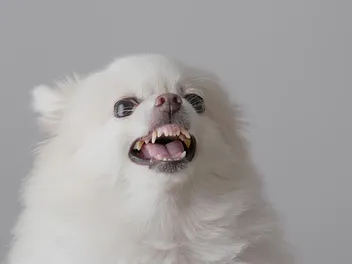
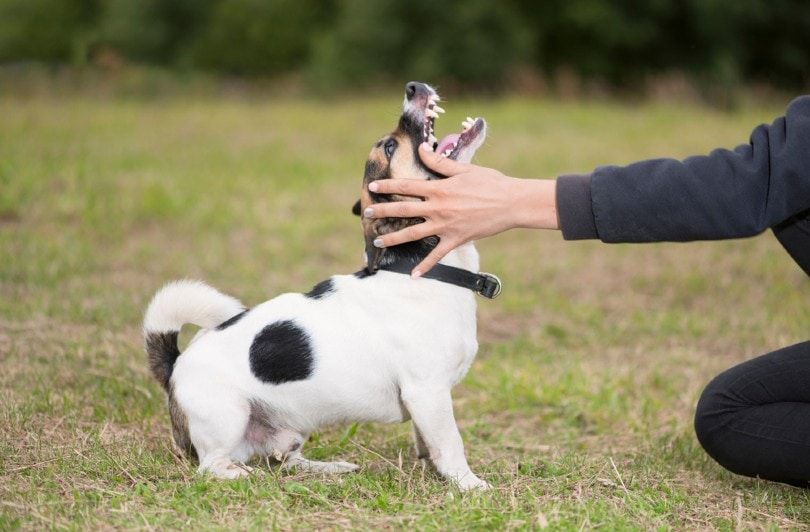
It’s something that people have long assumed to be true, and some studies suggest that, on average, smaller dogs are more likely to be aggressive than larger dogs.1
But why, though? Are they insecure about their size? Were they bred for more ferocious jobs than their larger brethren? Do they just think that no one will see them coming? In fact, many factors influence smaller dogs being more aggressive than larger dogs.
To get to the bottom of this mystery, we took a deep dive into the matter.

The Evidence
Until recently, most of the evidence supporting this theory was anecdotal. However, according to a recent study performed by the University of Helsinki, University of Helsinki, small dogs were more likely to display aggressive behavior toward humans than medium-sized or large dogs.
While it’s easy to take this information at face value and just assume that size is the only thing that matters, there are several other factors that the study found can contribute to aggression. These include age, sex, fearfulness, breed, dogs in the family, and the owners’ interaction with their dogs.
As it turns out, small dogs come out on the short end of the stick in just about every one of these categories, and that may go a long way toward explaining why they’re reported as displaying more aggressive behaviors in general. Two factors don’t necessarily play into the size aspect: sex and the number of dogs in the family. Male dogs are typically more aggressive than females, but that’s true for dogs of any size.
Also, the more dogs in the household, the lower the likelihood that aggression will occur; it appears that they teach each other proper manners. However, we’d assume that people with small dogs are just as likely to have multiple pets as those with larger pups, so it’s unlikely that that contributes to little pups’ Napoleon complex.
Let’s look at each of the remaining factors individually.

The 4 Reasons Small Dogs Are More Aggressive Than Large Dogs
1. Age
According to the study, the likelihood of aggression increases as the dog ages, with the risk becoming most significant after the dog turns 10. Given that the average lifespan for a large-breed dog is only 8 to 12 years, it makes sense that this would negatively impact smaller breeds more.
As a dog ages, any number of factors can make them grumpy. Many dogs are in poor health and may be in physical pain all the time, increasing the odds that they’ll lash out. Others may have difficulty seeing and are easier to take by surprise. Dogs can even get cognitive dysfunction syndrome, and that can cause an otherwise sweet dog to react violently and unpredictably.
You may not be able to do much about this factor entirely, but regular veterinary care can help identify pain, sensory decline, or cognitive changes that may contribute to behavioral changes. To give your dog the best chance of aging gracefully, feed them a healthy diet, give them plenty of exercise, and take them in for regular checkups.

2. Fearfulness
The world can feel like a big, scary place when you’re a 5-pound Chihuahua. Small dogs can be more vulnerable to predators and threats from larger animals than large dogs, and they have to worry about everything from owls and mountain lions to, yes, bigger dogs. It makes sense that they’d always be on guard. They simply may encounter more situations that feel physically threatening than a Great Dane, so they’re likely to be more suspicious of everyone and everything.
Small dogs are also more likely to get hurt accidentally. Whether that means getting stepped on, dropped, or just played with too roughly, they also have to worry about the people in their lives. You’d also probably be a grouch if you had to worry about giants stomping on you all the time.
The best way to increase a dog’s confidence is to socialize them through positive, gradual experiences during puppyhood and throughout adulthood. You’ll also want to be extra careful with them and make sure others in your family (especially children) know to be careful too.

3. Breed
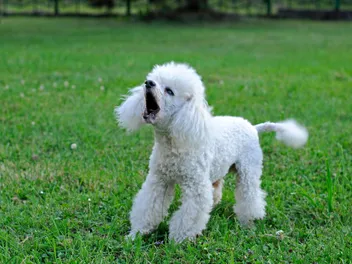
We’re not sure whether to chalk this up to correlation or causation, but the simple fact is that according to the study, more small breeds have an inclination to be aggressive than large breeds. The three breeds most likely to be aggressive are the Miniature Poodle, Miniature Schnauzer, and Rough Collie. Other dog breeds that scored highly on the aggression scale were the Chihuahua, the Chinese Crested, and the Coton de Tulear—small dogs all.
At first glance, there’s no reason that this should be the case; after all, it’s not like anyone bred Miniature Poodles for combat. Whatever the reason, though, there certainly seems to be a link between small breeds and aggressive tendencies.

4. Owner Interaction
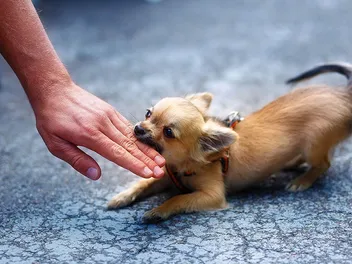
This is one of the biggest factors and the one that you have the most control over. The researchers behind the study found that the owners of small-breed dogs were less likely to train them, making them more likely to display aggressive behaviors and be reactive.
There are several reasons that this might be the case. Some owners feel like their small pup can’t do much damage, so there’s no real point in training them, while others might think that it’s cute to see a tiny pup posturing aggressively toward a much larger dog.
It might be cute—until the larger dog decides that they’ve had enough. The fact is that not training your small dog may increase the risk of injury during negative interactions with people or other dogs. A small dog that bites children—even if the damage isn’t severe—is more likely to face behavioral complaints or legal consequences, and one that starts fights with Rottweilers is more likely to end up dying of the injuries sustained in said fight.
If you decide to adopt a small-breed dog, you must give them the same amount of socialization and obedience work that you’d give a large dog. They may not be a threat to human life, but they can still disfigure people (especially small children), and you don’t want your beloved pet meeting an early grave because you didn’t teach them better.
Another factor involved here is that first-time owners seem more likely to adopt small dogs under the mistaken impression that they’re easier to raise. Many small breeds are incredibly stubborn, while large dogs can be agreeable and easy to please, so don’t make any assumptions. Do your research, get the breed that’s right for you, and don’t be afraid to ask a pro for help if you need it.
What’s the Verdict? Why Are Smaller Dogs More Aggressive Than Larger Ones?
There’s no single answer to this question (and it should be noted that it’s not always the case—there are plenty of sweet tiny dogs out there and plenty of ferocious giants). It’s a combination of many factors, including the fear can come with being a tiny dog in a great, big world.
The good news is that aggressiveness is not an immutable trait. There are things that you can do to make your small dog friendlier, less fearful, and ultimately, less aggressive. It all starts with proper training and socialization. Once they know that not everything in the world wants to eat them (and that you have their back if anything tries), they’ll be more curious and welcoming than suspicious and angry. You have to put in the time and effort, though.
Keeping them healthy is equally important. Make sure they eat a healthy diet, play with them safely, and take them in for regular checkups. This will make it less likely that they’ll be in pain as they age—and no one can be happy if they’re hurting.

Conclusion
If you own a small dog, you need to take extra care to be sure they’re well-behaved and taken care of. They can be every bit as fun and cuddly as their larger counterparts, but only if their humans know how to behave too!
Related Read: Small vs Medium Dog: The Main Differences Explained
Featured Image Credit: IRINA ORLOVA, Shutterstock
Expert dog care, straight to your inbox
Vet-reviewed advice, training tips, and the best of Dogster. Free, and you can unsubscribe anytime.
By signing up, you agree to our Terms & Conditions and Privacy & Cookies Policy.
Quincy has been around mutts his entire life and has been writing about them for the past nine years and now consists of sharing a house with three spoiled pups who couldn’t hold down a job to save their lives. Quincy never intended to be a cat person. When his wife brought home a kitten one day, he told her she had one week to find it a new home. That week turned into 10 years (his wife moves very slowly), and that kitten turned into three (they got two more, the kitten didn't self-replicate). After a decade of sharing his home with the dogs and three cats, one horrifying realization finally set in: oh God, he's a cat person now too, isn't he???
Join the conversation
Ask a question, share your story, or send private feedback.