Dogster is reader-supported. When you buy via links on our site, we may earn a commission at no cost to you. Read about privacy.

Lifestyle

Why Do Dogs Have Whiskers? Canine Anatomy Explained

Nicole Cosgrove
By Nicole Cosgrove · Reviewed & fact-checked by Dr. Paola CuevasVet Approved
Dr. Paola Cuevas
Reviewed & Fact-Checked byDr. Paola CuevasVeterinarian
Dr. Paola Cuevas is our Senior In-House Veterinarian at Dogster and Pangolia. She has over 19 years of experience working with an array of species and loves sharing her knowledge and experience with our readers and aims to provide assistance with any issue presented by your non-human family members. She received her degree from the University of Guadalajara, Mexico.View authorThe information is current and up-to-date in accordance with the latest veterinarian research. Read about our vets
Updated on
Share
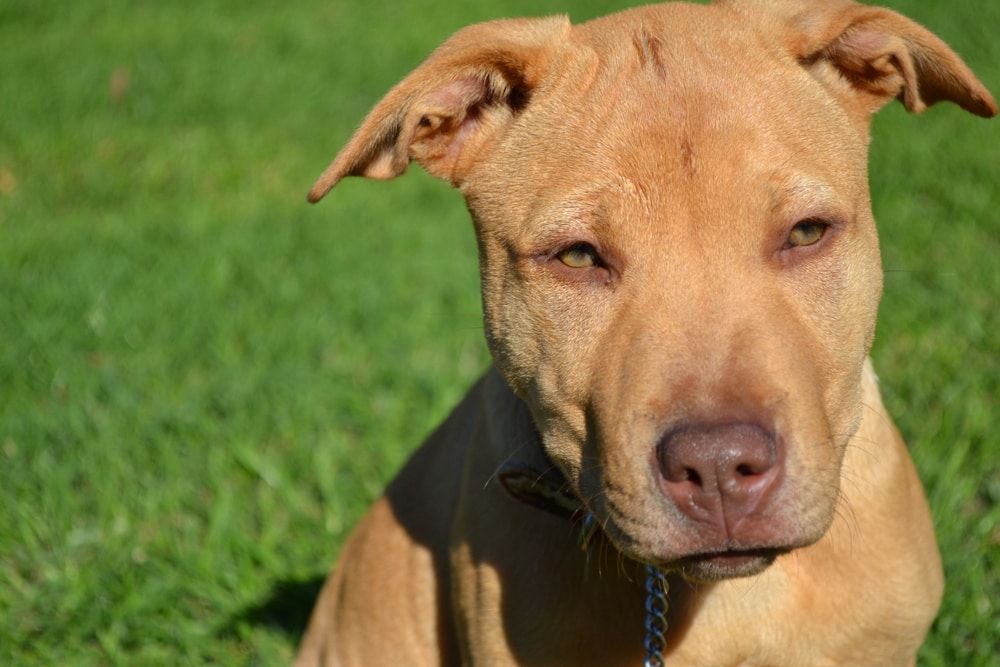
Shar Pei Pitbull mixed breed dog

Many mammals have whiskers, but have you ever wondered what purpose they serve? Whiskers help dogs to navigate the world by transmitting sensory information from the environment.

In this article, we’ll break down the purpose of dog whiskers and why canines evolved to have them.

divider dog faces oct 2024

What Are Whiskers?

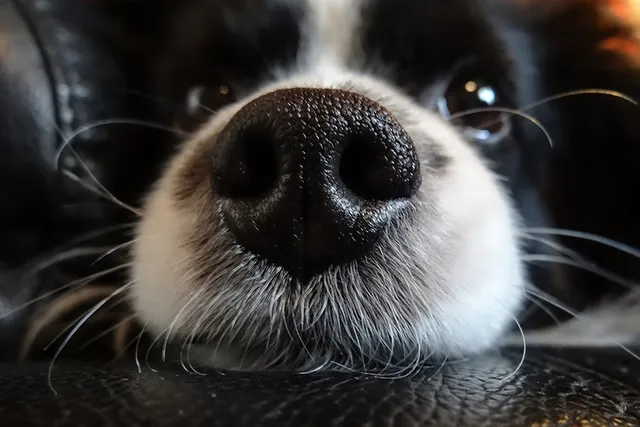
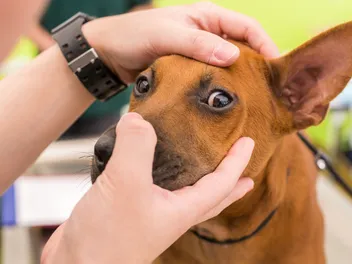
Whiskers are hairs that come from a follicle, just like any other type of hair. However, you’ll notice that whiskers are longer and thicker than a dog’s fur or human hair. Whiskers are also located in strategic areas above the eyes, on the chin, and on the lips. Though the pattern and location may vary by breed, all dogs have whiskers from birth through their senior years.

Another way whiskers differ from other hairs is that they are more sensitive. The follicles are packed with nerve endings and blood vessels, making them highly sensitive sensory structures comparable in function to human fingers. And like human fingertips, dogs experience touch through their whiskers.

Image Credit: Sonja Kalee, Pixabay

Why Do Dogs Have Whiskers?

Whiskers may enhance the expressions of certain dogs, but that’s not their primary purpose. Whiskers are sensory additions for dogs that help them navigate the world. These hairs help with spatial awareness and other sensory inputs, similar to the antennae of insects.

Though whiskers have no sensory perception themselves, they transmit sensory information like air currents or the size and speed of nearby objects.

divider dog faces oct 2024

Whiskers Are "Dog Radar"

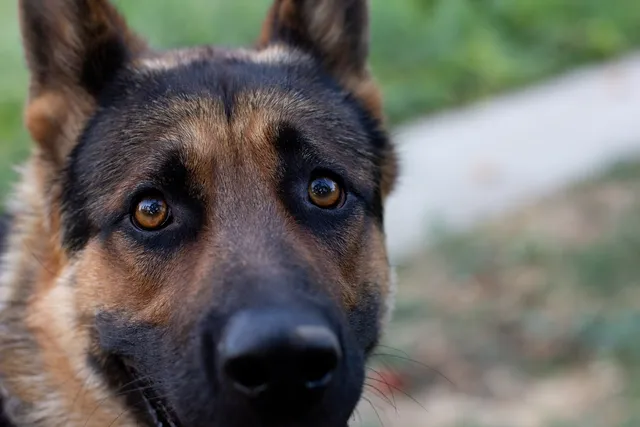
Dogs may be known for excellent senses of smell and hearing, but most dogs do not rely heavily on vision. Dogs have unique eyesight that can’t be measured using standard methods, but research indicates that they see things more clearly when they’re at a distance. Whiskers help them detect close objects by sending additional information to the brain. When a dog approaches something, the air currents hit objects and bounce back, delivering vibrations to the whiskers – much like a radar.

For wild dogs, whiskers are important for close-range environmental awareness, helping detect prey movement and nearby threats, particularly in low-light conditions. In a domestic environment, dogs can find their toys or food, even in low light.

Image Credit: Dr. Arpan Chatteerjee, Shutterstock

Whiskers Change With Age

Whiskers play an especially important role during puppyhood, when young dogs are still developing coordination and spatial awareness. As puppies explore their surroundings, whiskers help provide close-range sensory feedback that supports learning and movement.

In senior dogs, whiskers may become even more valuable as vision and hearing naturally decline with age. By supplying additional tactile information about nearby objects, whiskers can help older dogs move more confidently in familiar environments, particularly in low-light conditions.

divider dog faces oct 2024

Whiskers Provide Protection

As mentioned, whiskers are sensitive and responsive to the slightest stimuli. When dust falls on an eye whisker, for example, a dog will often reflexively shake its head to remove it or blink repeatedly. This helps to protect the eye from particles that can injure it.

Whiskers also help dogs avoid getting into tight situations. Like cats, dogs can use their whiskers to gather close-range spatial information about whether they can fit in narrow areas, like between fence posts or between your furniture and walls.

Image by: Alexas_Fotos , Pixabay

Whiskers Are Vital

A significant part of a dog’s brain is dedicated to processing information from touch, especially from whiskers. Each individual whisker is connected to a well-defined sensory mapping in the brain. Because of this, whiskers are an important part of a dog’s anatomy.

Always be mindful of how you touch the whiskers. They’re sensitive and need to be handled gently, and only when necessary. Don’t pull or pluck the whiskers, and never trim them during grooming sessions.

divider dog faces oct 2024

Conclusion

Whiskers are more than just a cute, expressive part of your dog’s face – they’re a valuable sensory tool that helps them navigate and understand their world. Now that you know how important whiskers are to your dog, make sure to take care of them so your dog can live a full, happy life.


Featured Image Credit: Kim Bryant, Shutterstock

The Dogster Newsletter

Expert dog care, straight to your inbox

News, insights, expert advice, and everything dog.

No spam — unsubscribe anytime.

By signing up, you agree to our Terms & Conditions and Privacy & Cookies Policy.

Click a star to rate. You can leave written feedback afterwards. (We read all feedback.)

Nicole Cosgrove
Authored by

Nicole Cosgrove

Leave a Reply

You're very welcome to leave a comment or question. Please know that all comments must meet our community guidelines, and your email address will NOT be published. Let's have a positive and constructive conversation.

Do Dogs Have Eyebrows? Vet-Verified Canine Facts

Do Dogs Have Eyebrows? Vet-Verified Canine Facts

When you're looking at your pup, and they're gazing back, do you notice the innocent slanting of their eyebrows when they hear their name being called or when…

Beth Crane
By Beth Crane ·
15 Fascinating Facts About Your Dog's Eyes & Eyesight

15 Fascinating Facts About Your Dog's Eyes & Eyesight

The love that comes with having a dog as a companion is so wonderful, but the fact that we can’t talk with our beloved dog seems like such an injustice. But th…

Nicole Cosgrove
By Nicole Cosgrove ·
Can a Dog's Nose Sense Heat? What Science Has to Say

Can a Dog's Nose Sense Heat? What Science Has to Say

We already know that a dog's nose is a powerful tool. Humans have utilized the canine's keen sense of smell to track down criminals, search for drugs, and loca…

Brooke Norris
By Brooke Norris ·
Why Are Dogs’ Noses Wet? 4 Vet-Explained Reasons

Why Are Dogs’ Noses Wet? 4 Vet-Explained Reasons

The first bit of any dog you’re likely to encounter is their nose since all dogs will always introduce themselves and investigate nose first! The nose is a vit…

Dr. Greg Steele
By Dr. Greg Steele ·

How Is Being Cute for a Dog an Evolutionary Advantage? Vet-Verified Behavior Explanation

While beauty is in the eye of the beholder, most people agree that puppies are adorable. Something about their cuteness draws our attention, and you just can’t…

Jessica Kim
By Jessica Kim ·
How Is Being Cute for a Dog an Evolutionary Advantage? Vet-Verified Behavior Explanation

Do Dogs Have Eyelashes? Breed Differences & Facts

All dogs have eyelashes, but some dogs have very short ones, others have just a few, and still others are blessed with long, thick lashes that curl into their…

Chelsie Fraser
By Chelsie Fraser ·
Do Dogs Have Eyelashes? Breed Differences & Facts

Puppy Dog Eyes: What Do They Mean & What They Do to Us (Vet-Reviewed)

Any dog parent will tell you their pup is the cutest animal alive. However, the cuteness factor of a dog increases exponentially when they break out the puppy…

Misty Layne
By Misty Layne ·
Puppy Dog Eyes: What Do They Mean & What They Do to Us (Vet-Reviewed)

How Powerful Is a Dog’s Hearing Compared to Humans? Facts & FAQs

Dogs have incredibly impressive senses, and we typically associate dogs with their amazing sense of smell. But how well do they hear? Dogs have much more sensi…

Simon Treulle
By Simon Treulle ·
How Powerful Is a Dog’s Hearing Compared to Humans? Facts & FAQs

Can Dogs See in the Dark? Vet-Reviewed Facts & FAQ

Although there are certain areas in which a canine's standard vision is weaker than that of a human, they certainly have an edge over us when it comes to night…

Kit Copson
By Kit Copson ·
Can Dogs See in the Dark? Vet-Reviewed Facts & FAQ

Can Dogs Read Our Facial Expressions? What Science Says

Dogs can focus on various aspects of communication beyond verbal ones, similar to humans. For example, we utilize facial expressions when communicating with ot…

Rachael Gerkensmeyer
By Rachael Gerkensmeyer ·
Can Dogs Read Our Facial Expressions? What Science Says

Can Dogs Smell Other Dogs on You? Vet-Verified Senses Explained

You may notice your dog paying closer attention to you after you’ve been around other dogs during the day. Perhaps you made a canine friend on the trail or cud…

Chris Dinesen Rogers
By Chris Dinesen Rogers ·
Can Dogs Smell Other Dogs on You? Vet-Verified Senses Explained

Do Dogs Know What They Look Like? The Surprising Answer

If you’ve ever lifted your puppy up to a mirror to show them their reflection, you may be wondering if dogs actually know what they look like. Can they recogni…

Jessica Rossetti
By Jessica Rossetti ·
Do Dogs Know What They Look Like? The Surprising Answer

Love Dogs? So Do We! Join the Dogster Community

Stay informed with expert pet care insights delivered straight to your inbox! Discover professional guidance on animal behavior, feeding tips, trusted product picks, and much more.

You may opt-out at any time. View our Privacy Policy for more information.

The Dogster app on a phone