How to Train Your Dog with Love + Science Book Review 2026: Canine Coaching You'll Enjoy

In this article
Our Final Verdict
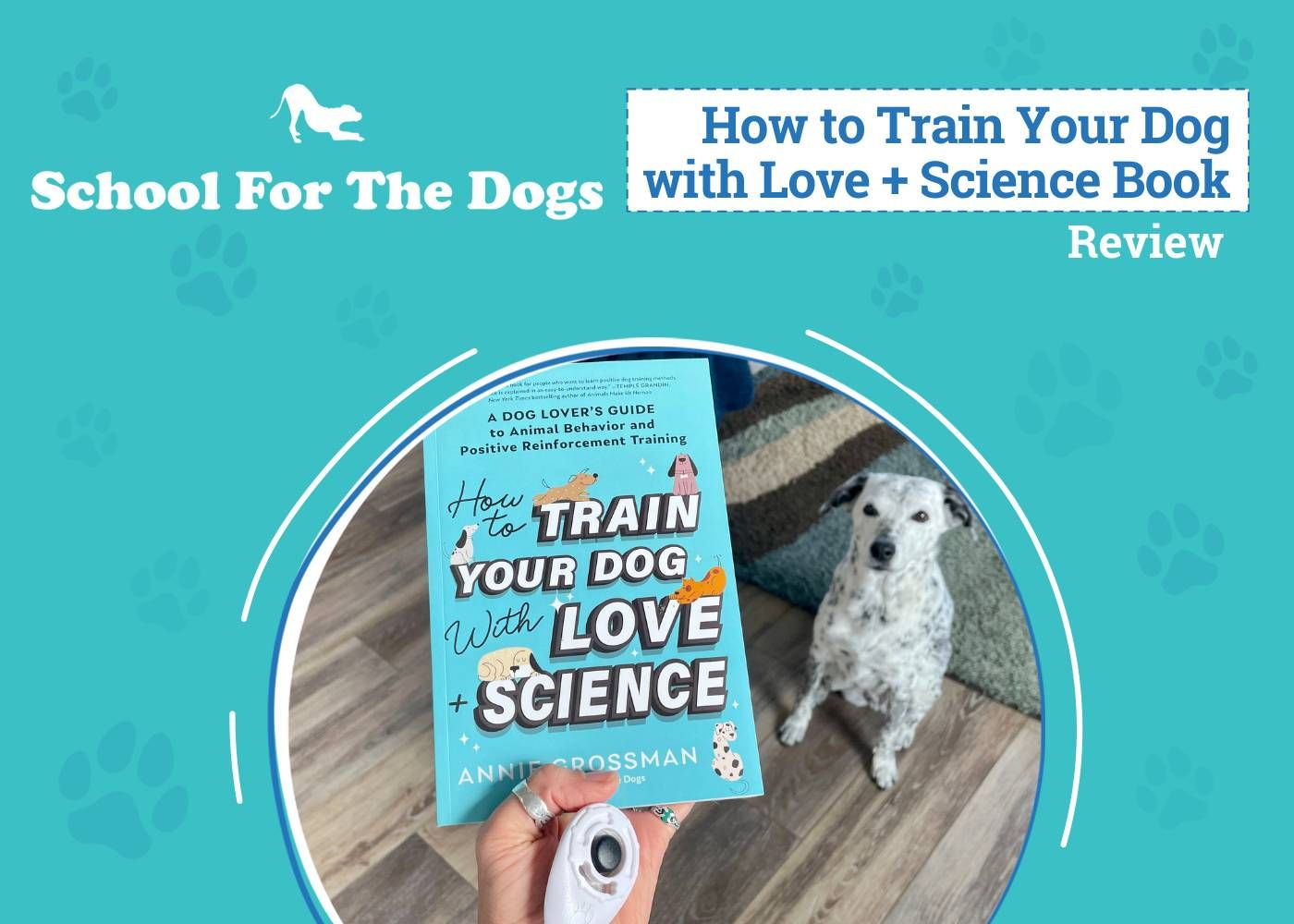
As a retired dog trainer with a formal education in animal behavior, I probably read a lot more training books than most dog owners. Recently, I picked up Annie Grossman’s How to Train Your Dog with Love + Science. It only took reading a quarter of the book to decide this is one of my favorite training books ever.
Not only does Grossman write in an entertaining and engrossing fashion, but she presents the information in a way that allows you to expand it to subjects beyond obedience training and even dog ownership. With this book, readers are empowered to use behavioral science to change just about anything in their lives, from a poor canine recall to annoying spouse behaviors.
But there is a lot more about this book to love than that. Keep reading to find out why this is the only dog training and life manual you need in my full How to Train Your Dog with Love + Science book review.

Overview

| Product Type: | Book |
| Best Suited For: | Dog owners, novice and experienced |
| Price Range: | Affordable |
| Content: | 282 pages |
| Formats Available: | Paperback, audiobook, Kindle ebook |
| Training Philosophy: | “Good training” using positive reinforcement techniques and behavior science |
Our Experience

This book surprised me in multiple ways. I laughed out loud a lot more than I thought I would while reading a dog training book, for one. I also found myself getting strangely emotional at times.
But the biggest surprise was discovering how Grossman has added a whole new level to the positive training world. Let me explain.
My dog training education started at the age of eight when I entered 4-H with my chocolate Lab, Nell. There, I learned how to train with a mix of treats, choke chains, and a hard stare.
In college, I pursued a bachelor’s degree in biology with an emphasis on animal behavior. It was in these classes that I came to understand the pitfalls of punishment-heavy training methods (and why Nell never really liked me that much). I used this knowledge while I earned my dog training certification through a positive reinforcement-based training program.
The training philosophy I used when teaching my obedience classes and during my in-home behavior consults was a positive reinforcement-based approach heavily supplemented with behavior science. I thought my method was positive-training-perfected.
And then I read this book.
Grossman takes the most progressive, effective approaches to dog training and says, without remorse, we can do better! Her philosophy: We can encourage our dogs to engage in the behaviors we want without using any form of force or coercion, and we do this by approaching training as a game where both sides feel like they're winning.
She defends this stance throughout the book with explanations of behavioral science, real-life examples, and horror stories from a notable punishment trainer/TV personality.
This deep dive into animal behavior includes many recent discoveries about how animal brains work. One of many anecdotes that has stayed with me from this book is the fact that “learned helplessness,” a condition that can arise when an animal is punished too frequently or for reasons they don’t understand, presents in the brain the same way depression does in human brains.
Grossman expands on this by saying that you can help your dog avoid depression by giving them agency to make their own choices. And that you can use reward-based training to ensure they make the right choices.
But this book isn’t just about dog training. As Grossman is quick to point out, humans are animals, too. And that means that the pillars of behavior science can be applied to spouses, bosses, and strangers just as readily as they can to dogs.
In the same vein as Karen Pryor’s classic book, Don’t Shoot the Dog, this training how-to has applications far beyond puppy obedience.
As a certified dog trainer, animal behavior major, and dog owner of 36-plus years, I was amazed at how much I took away from this book.
The immense amount of valuable information combined with Grossman’s engaging writing style, humor, and honesty, make this not only a valuable read but an entertaining one, as well.
Pros & Cons
Pros
- Valuable behavior insights
- Actionable steps and training advice
- Humor and honesty
- Real-life examples
- Applies to dogs and beyond
Cons
- Few step-by-step instructions
- Some explanations are buried
Key Aspects

Science-Based Approach
Grossman wastes no time diving into the heated debate about the best method for effective dog training. Her answer: “Good training” is the best training.
Forget positive vs. punishment, treats vs. shocks. Grossman defends good dog training as anything that produces reliable results and a happy dog without side effects. And she uses behavioral science as her guide to find these methods.
She explains in detail throughout the book how staying in the quadrant of “positive reinforcement” is often the safest and most effective way to train a dog (or human or dolphin). She also helps the reader establish a solid foundation for effective training in this realm by teaching you the basics of classical and operant conditioning.
Far-Reaching Applications
If you’re after a book that spells out step-by-step approaches to training common obedience commands, this is not the book for you. But if you’re looking for a deep dive into dog behavior and training theory to establish a firm foundation from which you can train anything, Grossman has you covered.
This book delves into popular training methods and why they do or don’t work based on behavioral science. She then gives you the tools you need to understand how to change and manipulate your dog’s behavior in any situation. From there, she provides real-life examples and stories to help you see how these methods can be applied to common issues.
Engaging and Entertaining
I’ve read a lot of training books and even more animal behavior texts. Few are especially engaging and even fewer are entertaining. Grossman manages to accomplish both with How to Train Your Dog with Love + Science.
She provides so much information on hard behavior science. But she does it while telling emotional stories, offering hilarious anecdotes, and giving entertaining examples. This results in a book that is as fun to read as it is educational.
More importantly, this book offers behavioral insights that every person—dog owner or not—can use. The fact that the book is fun to read just makes it that much easier to recommend to people.
About the Author

Annie Grossman, CPDT-KA, KPA CTP, is a certified dog trainer, former owner of School for the Dogs in Manhattan, podcaster, and journalist.
She has published articles on pet ownership in various publications, including The New York Times, Boston Globe, and Vice. She is also a co-founder of Petcademy, a platform that provides affordable training to families who adopt shelter dogs to help reduce the likelihood of those dogs being returned to the shelter.
Before she became a dog trainer, she was a staff reporter at New York Observer and New York Post. She has worked as a writer on multiple TV shows, including Too Cute! On Animal Planet and the hit gameshow, Cash Cab.
Frequently Asked Questions
Is this a good book for a new puppy owner?
Yes! In fact, I highly recommend anyone even considering getting a dog read this book first. It provides a wonderful foundation from which to approach dog ownership and training.
Does this book explain how to train different commands step-by-step?
No, this book doesn't focus on specific obedience commands or how to train them, with a few exceptions. Instead, it explains basic training principles that can be applied to various obedience and problem behaviors.
Is this book going to be hard to follow if I don't have a science background?
Not at all! Grossman explains the science behind her methods in a way that is easy for even the most science-adverse to follow.


Conclusion
Whether you have a new puppy, have just adopted a dog, or have had your pooch for years, How to Train Your Dog with Love + Science by Annie Grossman has plenty to offer.
With valuable insights on pet (and human) behavior and a fresh look at the most effective way to train animals, this book provides a firm foundation from which to build your dog training routine. Grossman’s deep knowledge of behavior science and decades of experience in this field provides the reader with all the tools they need to tackle any behavior issue and obedience command. And she does it all with humor and honesty for a read that is as entertaining as it is valuable.
You might also be interested in: I See Me! If My Dog Could Talk Personalized Book Review
Expert dog care, straight to your inbox
News, insights, expert advice, and everything dog.

No spam — unsubscribe anytime.
By signing up, you agree to our Terms & Conditions and Privacy & Cookies Policy.
How useful was this post?
Click a star to rate. You can leave written feedback afterwards. (We read all feedback.)
Sara Seitz is an accomplished freelance writer and certified dog trainer, who graduated from Colorado State University in Fort Collins with a Bachelor of Science in Biology, specializing in animal behavior. After college, Sara was the general manager of a renowned dog daycare and pet boarding facility for five years. She is devoted to providing pet owners with the knowledge and resources to provide their furry and feathered companions with the best quality of life. The Seitz family consists of Ragz the Dalmatian mix, Papyrus the Chihuahua, Mickey the Red-Bellied parrot, and a rotating selection of foster pets.