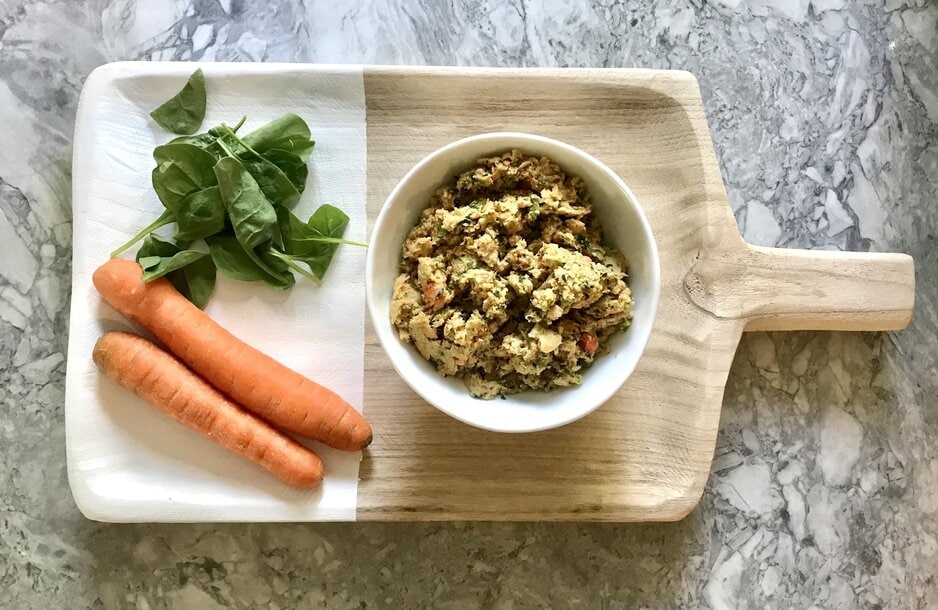
How to Choose a Dog Food: 5 Vet-Approved Tips & Advice



As crucial as it is for your pet’s health, picking the best dog food is rarely easy. Several exceptional products are available, but wading through the complicated labels, brand messages, and marketing tactics can leave even the savviest consumer confused and doubtful.
If you’re wondering which products supply the most value and how to make sense of the information, we have tips and perspectives to help you choose the right dog food for your pet.

Top 5 Tips on How to Choose a Dog Food
As the only thing they’ll eat daily, the dog food you choose must be nutritionally complete and balanced to fuel your pet’s activity and promote their overall health. Ingredients are an essential consideration, but nutrients are the central concern.
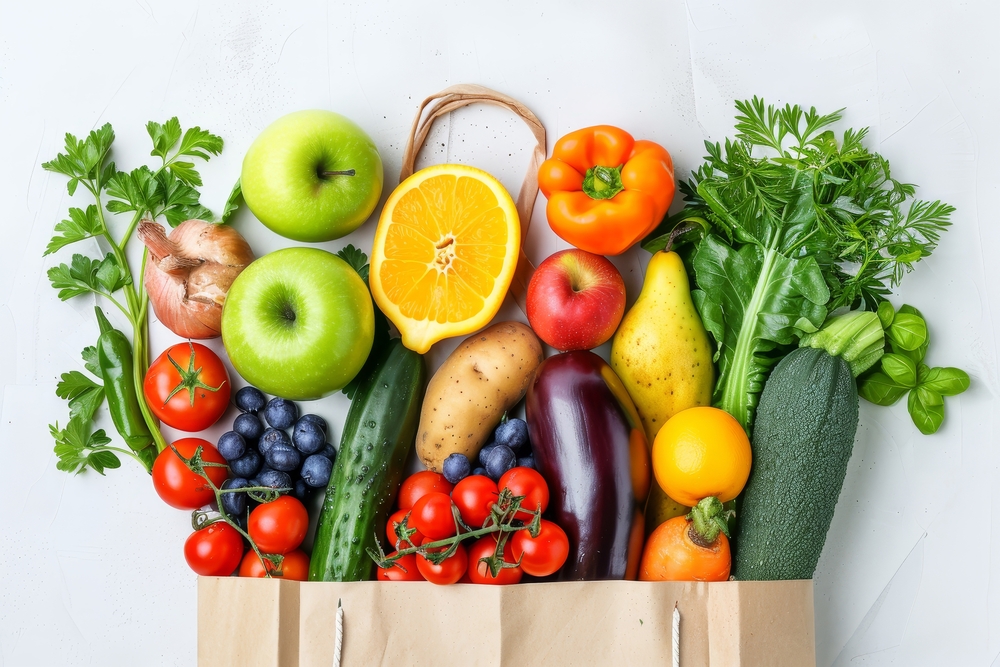
Dogs are facultative carnivores and need to eat numerous types of meat, but can also obtain some nutritional benefits from veggies, fruits, and grains. Your pet can enjoy diverse formulas and flavors if they receive the required proteins, fats, vitamins, and minerals.
Commercial dog food is often the easiest and surest way to ensure adequate nutrition. Manufacturers work with nutritionists to formulate safe and healthy foods.
The consumer’s role is to read food labels correctly, assess their dog’s needs, and follow the feeding directions to provide the most benefits with every meal.
1. Check For an AAFCO Nutritional Adequacy Statement
The AAFCO nutritional adequacy statement is the quickest way to ensure that a dog food provides complete nutrition. The Association of American Feed Control Officials (AAFCO) establishes nutrient standards for dog and cat foods.
Although it doesn’t do the testing, manufacturers can put an AAFCO nutritional adequacy statement on their products if they have third-party feeding tests or laboratory analyses to verify they meet the AAFCO nutrient profiles.
Dog food that meets the AAFCO’s nutritional requirements is considered “complete and balanced.” It has at least the minimum requirement for the essential nutrients, each in the proper proportion, giving you confidence that you’re fulfilling all your dog’s dietary needs.

2. Choose Based on Life Stage or Not?
Dogs need varying nutrient profiles based on their developmental stage and breed. For instance, growing small and medium-sized breed puppies need more nutrients like protein, fat, and calcium to complement their growth and development, while the minimal requirements for adult dogs to maintain their body are less. Larger breed puppies will need less calcium and phosphorus to promote healthy growth and prevent the development of bone and joint issues. Foods will have clear labels like “Small breed formula,” “For large breeds,” or “Adult stages” to help you decide.
On the flip side, some dog foods are labeled as “for all life stages.” This means that their formula contains every nutrient that dogs need regardless of their life stage. The reason for this is that AAFCO nutrient recommendations for maintenance or adults as based on the minimal amount of protein and fat needed, which certain food brands will barely provide while others will cover in sufficient amounts for any dog.
Talk to a Vet to Choose the Right Dog Food
Generally, you want dog food designed for your dog’s breed and life stage. Timing the transition from one life stage food to the next can change depending on the breed of dog and any health conditions.
You can talk to a vet to help you decide which life stage to feed and when to change it.
3. Check the Guaranteed Analysis (and Do the Math)
Ingredients, guaranteed analysis, and feeding instructions are the other essential details on the label that deserve your attention. Guaranteed analysis breaks down four broad details:
- Maximum moisture
- Minimum crude protein
- Minimum crude fat
- Maximum crude fiber
These numbers will be displayed as a percentage of the total weight of the food, including the moisture. Looking at these percentages on a dry matter basis by removing the moisture can significantly affect how much each nutrient stacks up in the formula.
How to Calculate Dry Matter Percentages
Calculating the true nutrient concentration on a dry matter basis lets you compare foods more accurately. To calculate the dry matter concentrations, subtract the product’s moisture percentage from 100. Then, divide the nutrient percentage by the dry matter percentage and multiply by 100 to get the rough percentage of that nutrient on a dry matter basis.
Consider a dry dog food product with 10% moisture and 24% protein:
- 100% - 10% moisture = 90% dry matter
- 24% protein/90% dry matter = 26.67% protein on a dry matter basis
You can see that the percent protein is higher on a dry matter basis than it is as a percentage of the complete weight of the food.

4. Check the Ingredients
The ingredients include everything that is in the dog food, listed by concentration in descending order based on weight. Look for high-quality protein sources as the primary components while avoiding sketchy ingredients like the following:
- Generic ingredients like “fish meal” or “poultry by-product” that don’t define a species
- Meat by-product as the first source of protein
- Non-animal ingredients as the top protein
- Refined grains like white flour
The preservatives and additives toward the end of the ingredient list can be tricky to judge. Though manufacturers add them in amounts determined to be safe, this is one of the most crucial areas for many pet owners to consider when feeding their dogs the healthiest diet possible.
When you’re unsure about any of the ingredients, research the risks online and contact a vet.
5. Decide on the Food Format (Dry, Wet, Etc.)
Manufacturers provide more food options than ever and strive for the most natural, healthy, and palatable products. The dog food formula that you choose can significantly impact your dog’s eating habits, your finances, and everyone’s overall satisfaction.
Fresh Dog Food
Fresh dog food is a minimally processed recipe prepared with simple and fresh ingredients. This kind of food is a fast-growing market in the pet food industry and for a good reason, it combines the best of both worlds. Convenience plus quality. Since this food is prepared following a veterinary nutritionist's recipe, it is complete and balanced to provide a dog with all the nutrients that they need to thrive. One of the biggest advantages of feeding more natural ingredients is the natural sources of antioxidants and natural nutrients which seem to have a positive impact on a dog’s gut microbiome and overall health.
- Our Pick: The Farmer’s Dog

The Farmer’s Dog is a subscription service that selects and preproportions a diet according to your dog’s specific needs. After filling up a questionnaire, the food is delivered frozen and thawed daily to be served to your pet. They offer a variety of recipes with protein from chicken, turkey, beef, or pork so you can decide what is best for your dog.
Dry Dog Food
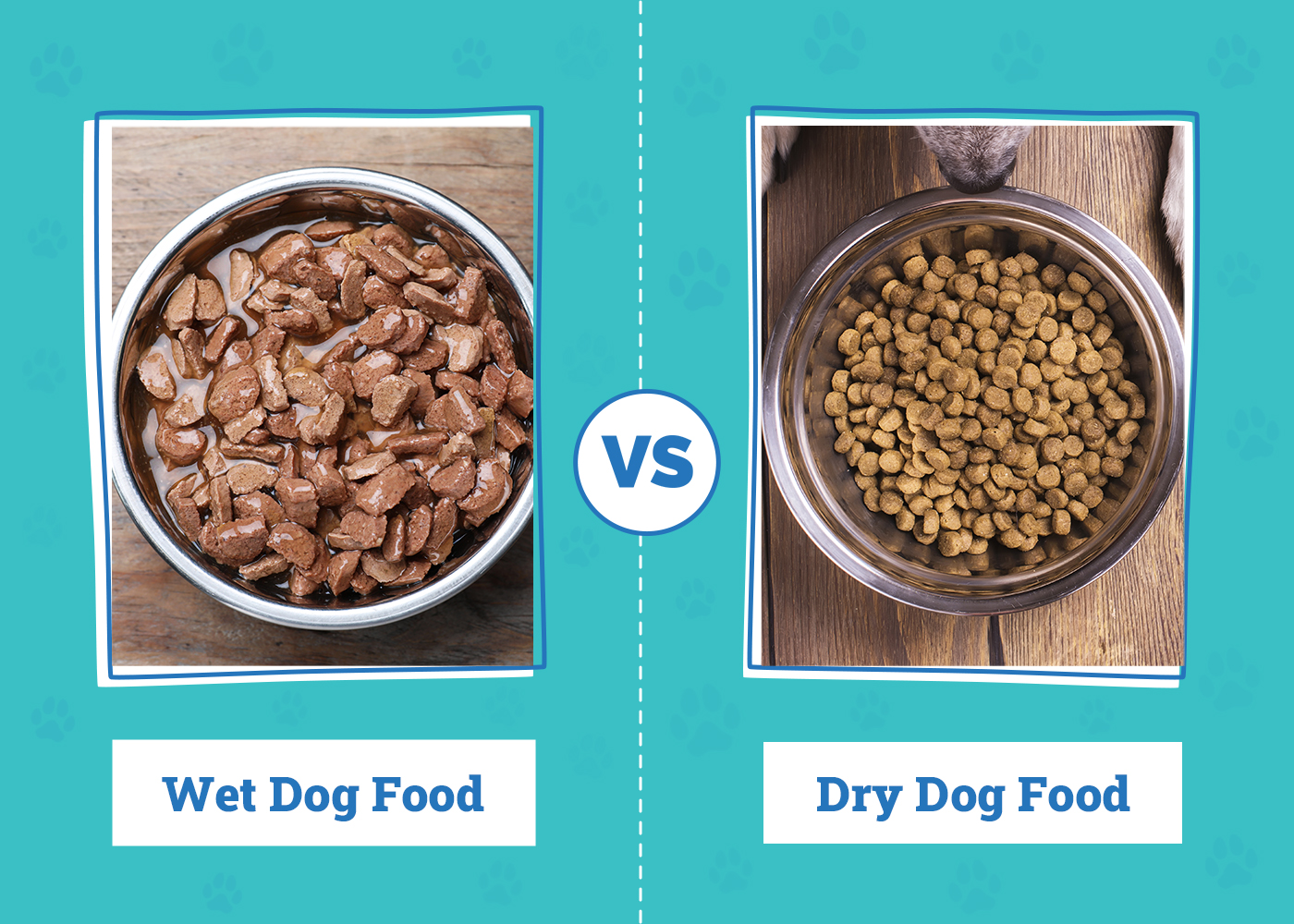
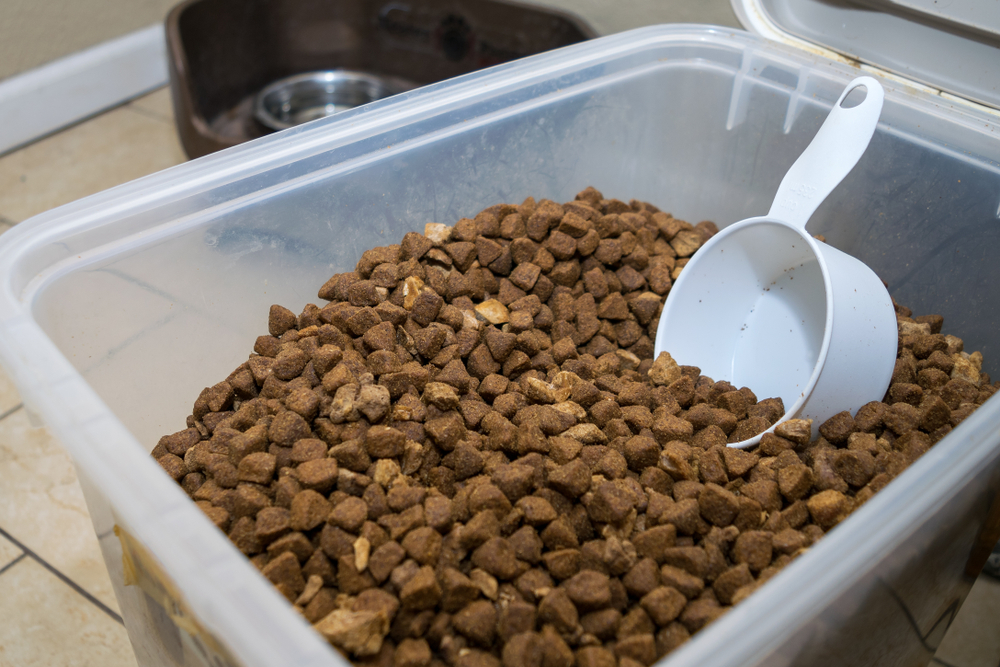
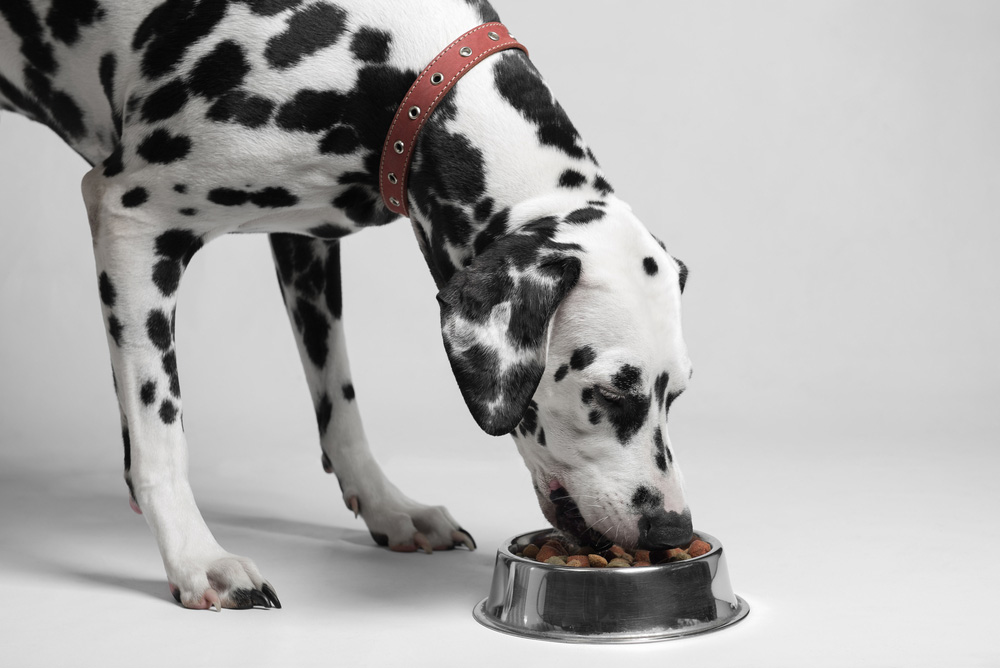
Dry dog food is the most cost-effective and popular dog food. Ingredients are mashed together and extruded (high-pressure cooked and shaped), a process that can reduce nutrient quality and palatability. Regardless, dry dog food that meets AAFCO standards will be as nutritious as necessary, so you can be confident feeding it to your pet.
Dry dog food is easy to store and is easier to portion to multiple dogs according to varying schedules. However, dry dog food is usually higher in carbohydrates as starch is needed to shape the kibble.
- Our Pick: Open Farm Ancient Grains Dry Dog Food
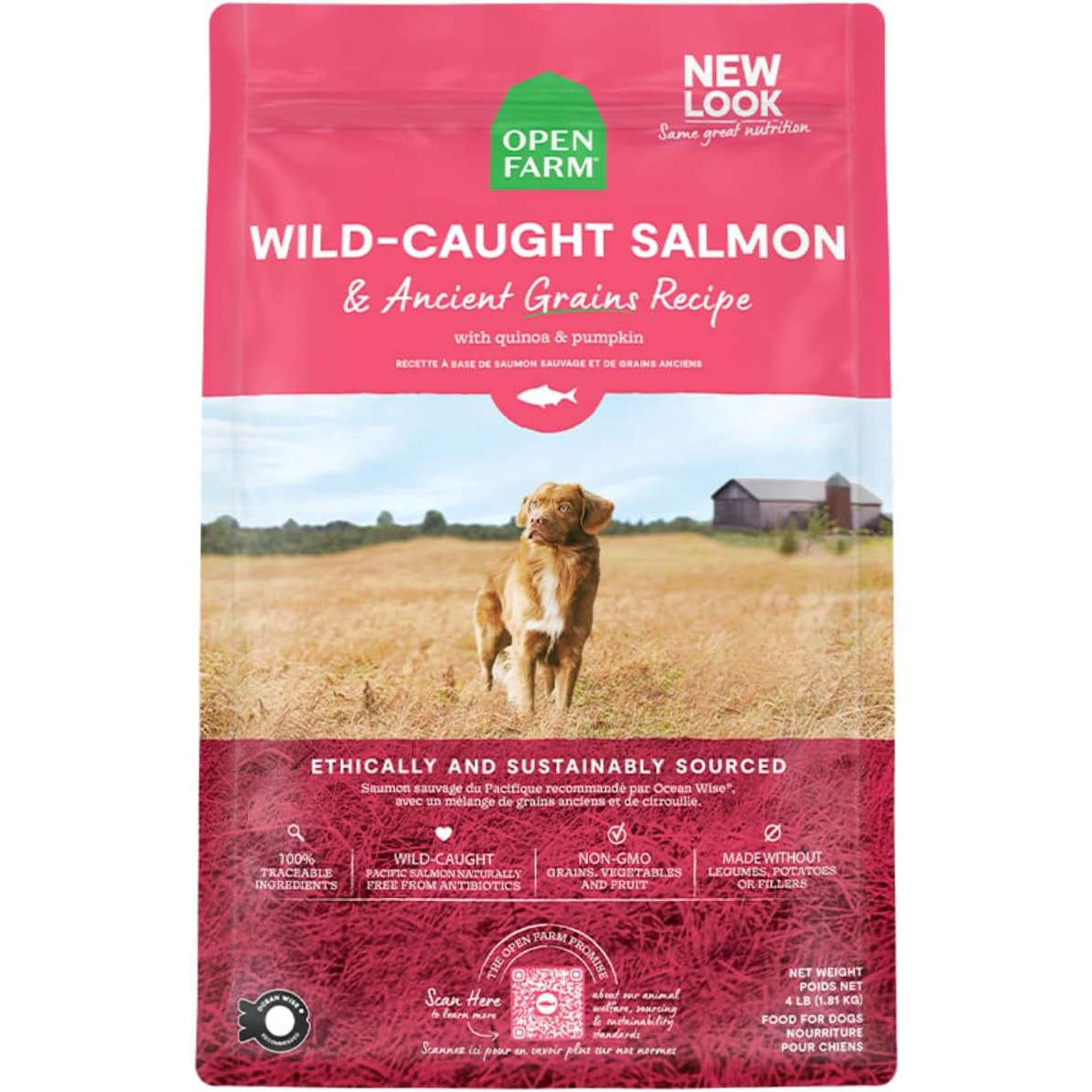
Open Farm Ancient Grains Dry Dog Food comes from a company focused on sourcing and sustainability. Responsibly raised meat sources combine with wholesome grains in various GMO-free recipes to supply a rich blend of high-quality proteins, fats, vitamins, minerals, and fiber.
Wet Dog Food
Wet dog food is a little pricier and less convenient than dry food, but it’s an excellent way to hydrate your dog and offer them a more tantalizing meal. Canned foods are gentler for dogs with dental problems and typically have a stronger smell and taste.
- Our Pick: Honest Kitchen One Pot Stews
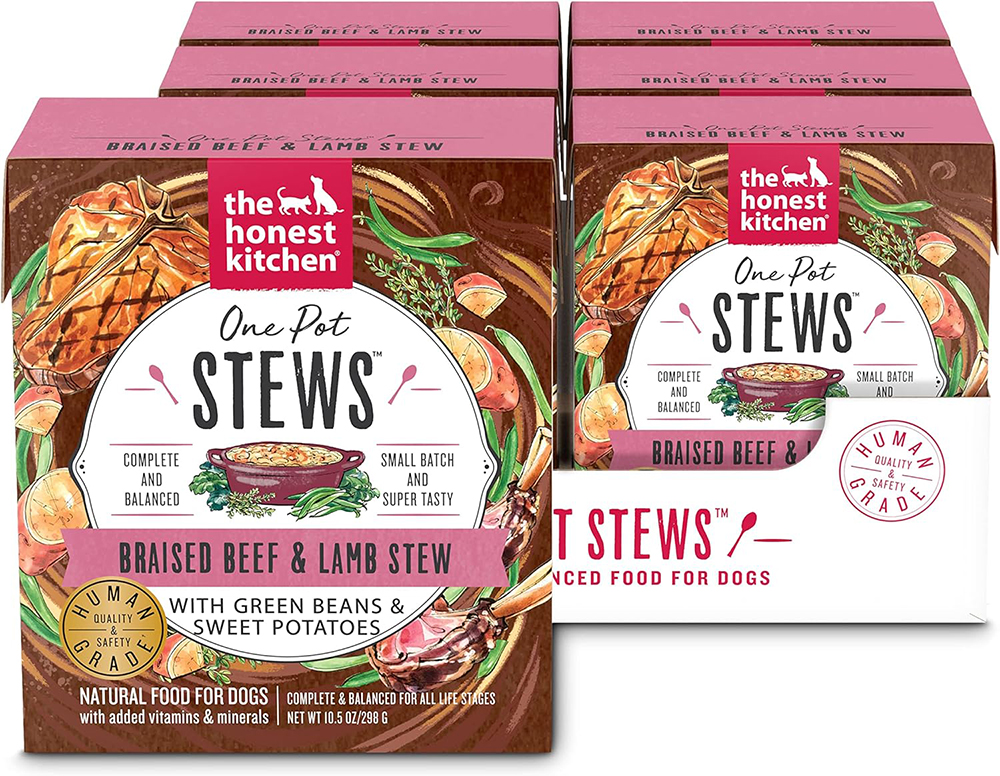
The Honest Kitchen One Pot Stews boast human-grade ingredients to supply complete and balanced nutrition in a highly palatable format. There are no feed-grade components, meat meals, artificial preservatives, or low-grade fillers. The product is kettle-cooked in small batches, retaining maximum flavor and health benefits to satisfy dogs and their owners.
Freeze-Dried Dog Food
Freeze-drying dog food removes moisture without heat, making it an excellent way to add shelf life to raw diets. Though pricey, these formulas retain crucial nutrients that traditional commercial preparation can degrade.
They’re highly nutritious and digestible, maximizing the food’s benefits, and you can feed them as a meal or as a topper.
- Our Pick: Vital Essential Freeze Dried Raw Mini Nibs
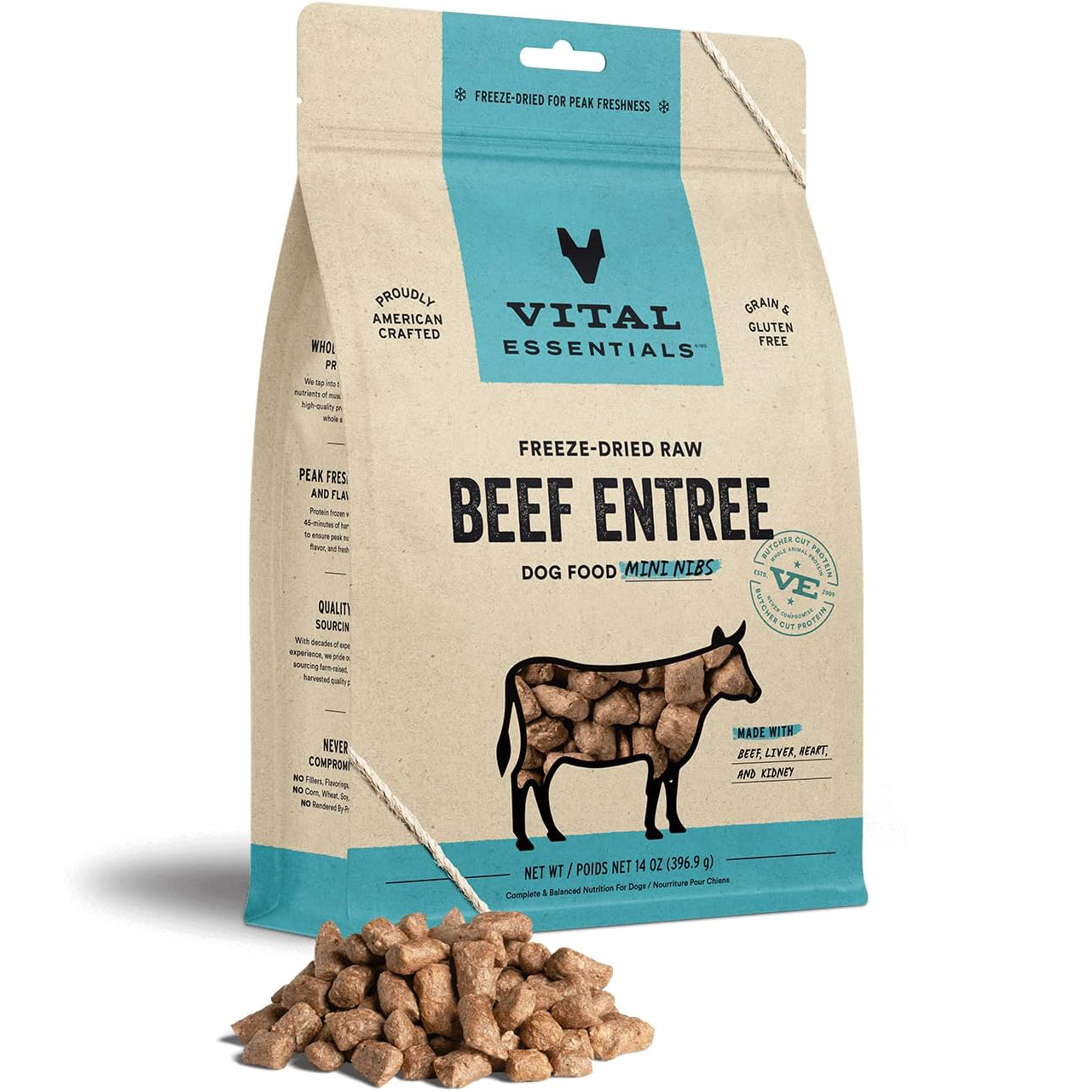
Vital Essential Freeze Dried Raw Mini Nibs is a meat-heavy raw food featuring limited ingredients with no fillers or artificial additives. Ethically sourced components work together in a complete and balanced blend, promoting strong muscles, improved GI function, and healthy skin, teeth, and coats.
Final Thoughts
Every pet is different, and although checking labels and researching brands is critical in choosing a dog food, your dog’s body response to it will be more significant than anything. You can monitor your dog for an appropriate body condition, a healthy hair coat, upbeat energy, and healthy digestion and stools while ensuring they enjoy the taste of the food and don’t show any allergic reactions.
You have plenty to consider when choosing the best dog food, and several brands will likely work well for your dog. By following these tips and working with your vet, you can easily find a trustworthy product.
See Also:
Featured Image Credit: BearFotos, Shutterstock
Expert dog care, straight to your inbox
Vet-reviewed advice, training tips, and the best of Dogster. Free, and you can unsubscribe anytime.
By signing up, you agree to our Terms & Conditions and Privacy & Cookies Policy.
Nicole has loved animals of all sizes her whole life so it's no wonder she has dedicated her career to helping them through what she loves best: learning, writing, and sharing knowledge with others. She’s the proud mom of two dogs, a cat, and a human. With a degree in Education and 15+ years of writing experience, Nicole wants to help pet parents and pets around the planet to live happy, safe, and healthy lives.
Join the conversation
Ask a question, share your story, or send private feedback.