Dogster is reader-supported. When you buy via links on our site, we may earn a commission at no cost to you. Learn more.

Dog Nutrition

Are Dogs Carnivores or Omnivores? What Research Suggests

Ed Malaker
By Ed Malaker · Reviewed & fact-checked by Dr. Paola CuevasVet Approved
Dr. Paola Cuevas
Reviewed & Fact-Checked byDr. Paola CuevasVeterinarian
Dr. Paola Cuevas is our Senior In-House Veterinarian at Dogster and Pangolia. She has over 19 years of experience working with an array of species and loves sharing her knowledge and experience with our readers and aims to provide assistance with any issue presented by your non-human family members. She received her degree from the University of Guadalajara, Mexico.View authorThe information is current and up-to-date in accordance with the latest veterinarian research. Learn more
Updated on June 17, 2026
Share
close up of a dog eating from the bowl

If you have a dog, you know that there are few things that they like more than pieces of meat, but they also like to steal just about any other kind of food off the table, causing many people to be confused about whether dogs are carnivores or omnivores.

The short answer is that dogs are facultative carnivores. This means that they need an animal protein-based diet, but they can benefit from eating plants, too. Keep reading as we dive deeper into the debate and science to help you learn more about your pet’s eating habits.

Are Dogs Omnivores? Analyzing the Evidence

Image Credit: Olga Anikina, Shutterstock

Plants

Unlike their grey wolf ancestor, the modern canine will seek out food made from plants to eat, mostly in the form of human food. Scientists believe that dogs first evolved when food waste from human settlements first became available more than 13,000 years ago. Since dogs can digest this type of food, which is often high in starches and grains, many people believe them to be omnivores.

Amylase

Amylase is an enzyme that breaks down starch and other foods besides meat. You can find it in human saliva, but you won’t find it in carnivores, like cats or grey wolves.

Dogster divider_v2_NEW_MAY_24_

Are Dogs Carnivores? Analyzing the Evidence

Image Credit: Tati argent, Shutterstock

Amylase

Although dogs make amylase, they produce it in their stomach instead of their saliva like humans do, which makes it less effective because it takes much longer to come into contact with the food. Research suggests1 that dogs developed the ability to digest grains due to interacting with humans, and this was a major step into their domestication.

Teeth

Herbivores have flat teeth, carnivores have sharp teeth, and omnivores have a mix of the two. Dogs have mostly sharp teeth that help them tear through flesh and muscle and crunch bone to get to the marrow inside. A dog’s jaw cannot move side to side to grind food, so their spiky molars help shear the food instead.

Image Credit: Rainer Lesniewski, Shutterstock

Behavior

If you watch your dog closely, you will notice a few carnivorous behaviors. For instance, canines have powerful noses that help them find and track prey over long distances, and many breeds still have a strong prey drive. Most dogs also enjoy chewing bones and even like to go after bone marrow.

However, as scavengers, they will dig holes to bury their food so they can retrieve it later.

Metabolism

A dog’s metabolism can withstand long periods without eating, which is common for carnivores that struggle to find prey, unlike omnivores that eat several times each day and herbivores that eat constantly.

Image By: Jaromir Chalabala, Shutterstock
Dogster divider_v2_NEW_MAY_24_

Is My Dog an Omnivore or a Carnivore?

While much research still needs to be done, many experts consider dogs to be facultative carnivores, which is similar to but different from obligate carnivores like house cats. While felines only eat meat, canines prefer meat but will fall back on other foods if there is none around. This means they are carnivores but also opportunistic scavengers that can get nutritional benefits from plant matter.

Should I Change My Dog’s Diet?

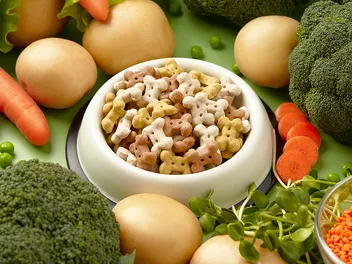
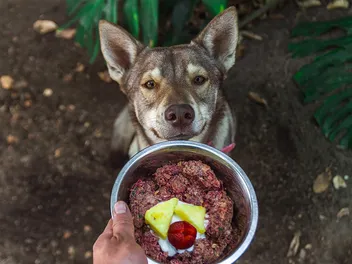
While lean and even raw meat diets are becoming more popular, many experts agree that a balanced diet containing meat and plant ingredients is best for your pet to help ensure that they get all the required nutrients. Feeding a meat-only diet to a dog can result in a calcium deficiency and other imbalances because calcium is stored in their prey’s bones. But a diet heavy on carbohydrates and plant-derived proteins can result in metabolic disease and has been linked to dilated cardiomyopathy and other health problems. It is best to choose a commercial dog food that lists real meat, like chicken, turkey, lamb, or beef, as the first ingredients.

Nom Nom Subscription Dog Food - papyrus eating nom nom fresh food
Dogster divider_v1_NEW_MAY_24_

Conclusion

While many people consider dogs to be omnivores because they seem able to digest plant and animal food, recent research suggests that they might be better classified as enhanced carnivores that developed the ability to digest plant matter over time, likely in response to close habitation with humans.

Several traits of canines back up this theory, like their sharp teeth, predatory behavior, and ability to go a long time without eating. However, veterinarians still suggest feeding your pet a complete and balanced diet based on meat proteins and including a small amount of plant matter to ensure that they get the necessary nutrients, fiber, and antioxidants for optimal health.

Sources

Featured Image Credit: Dmytro Zinkevych, Shutterstock

The Dogster Newsletter

Expert dog care, straight to your inbox

News, insights, expert advice, and everything dog.

No spam — unsubscribe anytime.

By signing up, you agree to our Terms & Conditions and Privacy & Cookies Policy.

Click a star to rate. You can leave written feedback afterwards. (We read all feedback.)

Ed Malaker
Authored by

Ed Malaker

Leave a Reply

You're very welcome to leave a comment or question. Please know that all comments must meet our community guidelines, and your email address will NOT be published. Let's have a positive and constructive conversation.

Should Dogs Eat the Rainbow? Vet-Reviewed Eating Tips for Canines

Should Dogs Eat the Rainbow? Vet-Reviewed Eating Tips for Canines

Dogs are often considered to be carnivores that require a meat-heavy diet. Still, there are some similarities between a dog’s diet and a human’s diet. However,…

Jessica Kim
By Jessica Kim · 1 month ago
Can Dogs Be Vegetarian? Vet-Verified Nutrition & Health Facts

Can Dogs Be Vegetarian? Vet-Verified Nutrition & Health Facts

Dogs are considered omnivores, or facultative carnivores, meaning they can digest and utilize both animal and plant-based foods in their diet. However, did you…

Sarah Psaradelis
By Sarah Psaradelis · 1 month ago
10 Facts About a Dog's Digestive System: Vet Approved Guide

10 Facts About a Dog's Digestive System: Vet Approved Guide

For both dog owners and dogs alike, a healthy diet results in a healthy body in most cases. As dog parents, it is important to understand how your dog’s digest…

Nicole Cosgrove
By Nicole Cosgrove · 1 month ago
What Meat Is Best for Dogs? Top Types Explained

What Meat Is Best for Dogs? Top Types Explained

If you’ve spent time looking at dog foods in the pet store recently, then you know just how many protein options there are on the market these days. It can be…

Brooke Billingsley
By Brooke Billingsley · 1 month ago

Protein in a Dog’s Diet: Vet-Reviewed Complete & Incomplete Proteins Guide

There are so many dog foods on the market today that it can be overwhelming to select one. You want your furry friend to be healthy and to have a balanced diet…

Nicole Cosgrove
By Nicole Cosgrove · June 29, 2026
Protein in a Dog’s Diet: Vet-Reviewed Complete & Incomplete Proteins Guide

Do Dogs Need Carbohydrates? Vet Approved Facts & Advice

Carbohydrates are sugars, fibers, and starch. Strictly speaking, dogs technically do not need carbohydrates in their diet, but because carbs produce energy, th…

Matt Jackson
By Matt Jackson · June 17, 2026
Do Dogs Need Carbohydrates? Vet Approved Facts & Advice

Dog Nutrition: 6 Vet-Approved Essential Nutrients They Need

Nutrition and a healthy diet play a significant role in a dog’s health and well-being. Dog owners must stay on top of their dogs’ nutritional intake and ensure…

Jessica Kim
By Jessica Kim · June 16, 2026
Dog Nutrition: 6 Vet-Approved Essential Nutrients They Need

Can Dogs Be Vegan? Vet Approved Advice & Safety Tips

Responsible dog owners always want to make smarter, more ethical choices to improve their pet’s physical and mental well-being. With growing awareness around t…

Nicole Cosgrove
By Nicole Cosgrove · June 27, 2026
Can Dogs Be Vegan? Vet Approved Advice & Safety Tips

What Is Dog Food Made Of? Vet-Reviewed Ingredient Guide

Buying dog food is so commonplace. We do it all the time without a second thought. If your dog is running low on food, you hop online or go to the store and gr…

Ashley Bates
By Ashley Bates · July 4, 2026
What Is Dog Food Made Of? Vet-Reviewed Ingredient Guide

How to Choose the Best Vegan Dog Food in 2026 - Complete Guide

Adopting a vegan lifestyle is a pretty major commitment, but with the increased range of plant-based products on the market, it has become easier to do than ev…

Dr. Karyn Kanowski
By Dr. Karyn Kanowski · July 4, 2026
How to Choose the Best Vegan Dog Food in 2026 - Complete Guide

Can Dogs Eat Vegetables? Vet-Verified Nutrition Facts, Safe Options & Benefits

Domestication has profoundly affected our canine companions. They have gone from carnivorous predators to pampered pets. Roughly 95% consider them members of t…

Chris Dinesen Rogers
By Chris Dinesen Rogers · June 17, 2026
Can Dogs Eat Vegetables? Vet-Verified Nutrition Facts, Safe Options & Benefits

Raw Dog Food Diet Plan: Vet-Approved Guide to Get Started

Raw food diets for dogs are surrounded by controversy, but they’re becoming more popular among dog owners. These diets aren’t new. Racing Greyhounds and sled d…

Nicole Cosgrove
By Nicole Cosgrove · June 17, 2026
Raw Dog Food Diet Plan: Vet-Approved Guide to Get Started

Love Dogs? So Do We! Join the Dogster Community

Stay informed with expert pet care insights delivered straight to your inbox! Discover professional guidance on animal behavior, feeding tips, trusted product picks, and much more.

You may opt-out at any time. View our Privacy Policy for more information.

The Dogster app on a phone