Can You Judge Dog Food Solely by Its First Ingredient? Facts & FAQ



Judging dog food can be overwhelming. There is a lot that you need to keep in mind when checking out dog food. You may be tempted to shorten the process by only looking at the first ingredient. While you can eliminate dog food from the viability list based on the first ingredient, you shouldn’t feed your dog a food solely because the first ingredient seems high-quality.

What to Look For

The Basics
When picking out commercial food for your dog, the following key points are very important. As a starting point, all of these should be considered when it comes to picking out commercial pet food for your dog.
Key Steps to Selecting Food for Your Dog
If everything checks out, you can proceed to the next step of applying additional checks to the specific product.
Your Dog’s Needs – Additional Checks
The following points might be worth considering on a case-by-case basis for dogs when it comes to selecting a food for them.
Additional Tips to Selecting Food for Your Dog
With these checks out of the way, you can then proceed to examining the ingredient list, feeding guidelines, and nutritional composition of your dog food.

What Should the First Ingredient in Dog Food Be?
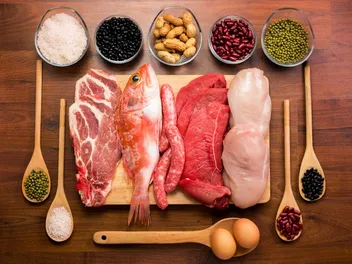
The first ingredient in all commercial dog foods should be high-quality meat. What counts as high quality is a bit complicated, however. The general consensus is that whole meat is one of the most obvious high-quality options. Things like “chicken” and “beef” signify whole meat. These are not necessarily human-grade meats. Many may be for pet consumption only. However, whole meat does signify that it is the muscle meat of the animal.
What Is “Meal” in Dog Food?

At times, you might find a specific “meal” as an ingredient on your dog food label. Examples include “meat meal”, “chicken meal”, “feather meal”, and “bone meal”. The term “meal” when used in this context refers to food that is rendered – a process that converts waste animal products into a usable source. The rendered food is then added into your pet’s food during the production process.
The inclusion of such ingredients within products intended for pet consumption is considered controversial. Historically, the inclusion of both meat and bone meal inside the feed of cattle was thought to have been responsible for several outbreaks of Bovine Spongiform Encephalopathy (BSE), better known as Mad Cow Disease. As a result of this, such rendered products are no longer allowed in the feed of ruminants.
However, current legislations do allow the inclusion of “meals” in pet food, and such ingredients are common in both cat and dog food (including within the US). Those in favor of the inclusion of such ingredients argue that it minimizes waste, improves the amino acid profile of certain foods, and is safe for our pets to consume, as wild animals would do a similar thing. Those against their inclusion argue that these ingredients are low-quality, are primarily used to control costs, and are fillers within pet foods.
Home-made fresh diets can be formulated as complete and balanced without the inclusion of such ingredients. Therefore, from a strict sense they aren’t necessary in pet food. It’s also somewhat unfair to compare our pets to wild animals. Wild animals exist solely to eat and reproduce as quickly as possible. The lives of our pets are different and therefore, many people rightfully claim that more emphasis should be placed on their nutritional welfare.
Ultimately, whether or not you find the presence of a “meal” in your dog’s food as a red flag is largely up to your interpretation. Likewise, the decision to purchase or steer clear of a food that does use such ingredients is at your discretion as well.
What Should I Look for When Choosing Dog Food?

There are several things you should consider when choosing your dog’s food besides just the first ingredient. These other points will help you figure out if the dog food is high-quality enough for your pooch.
Other Ingredients
Everything in the food’s ingredient list matters. However, some things matter more than others. The first five ingredients are going to be the most important. Food is often listed by weight on the ingredient list, with the heaviest options at the top.
This isn’t always the case, though. The ingredients may be weighed before or after they are processed. Whole meat weighs a lot before it is cooked down and dehydrated to make dry food. Some ingredients are also “split.” For instance, the company may list “pea protein” and then “pea starch” as separate, even though together they make whole peas. This allows the company to list them lower on the ingredient list, even though there are technically more peas in the food than the ingredient list makes it appear.
Grain-free foods don’t necessarily contain extra meat. Often, these foods use veggies like peas and potatoes instead of the usual grain. This can possibly be a risk factor for your dog, and grain-free diets are currently being investigated by the FDA for the possibility of such diets leading to a heart condition in dogs.
Finally, keep your dog’s nutritional preferences in mind. The best food will be of no use if your dog doesn’t seem to enjoy it and refuses to eat it! As canine nutrition is a complex topic which involves a plethora of factors (which often keep changing throughout your pet’s life), it’s best to follow a veterinarian’s lead if you’re in doubt about your dog’s nutritional needs.
Macronutrient Content
The three nutrient groups which contribute to the total energy yield of your dog’s diet are:
Their relative contribution to the total energy yield of the diet plays a major role in determining your dog’s overall health. For example, if your dog is an exceptionally active working dog, they will need to obtain a larger portion of their energy from protein, as protein plays a considerable role in muscle development and maintenance. However, the same wouldn’t apply to an indoor dog who only goes on a single leisurely walk everyday. The following are rough guidelines of macronutrient contributions towards your dog’s total energy needs. However, please note that these guidelines are NOT an indication of the ratio of each macronutrient in a dog’s diet, but rather a breakdown of the contribution of each nutrient towards your dog’s total energy requirements.
| Dog Information | Protein | Digestible Carbohydrates | Fat |
| Growing Puppy | 25–30% | 30–35% | 40–45% |
| Adult Dog (Maintenance) | 20–25% | 35–45% | 35–40% |
| Working/Active Dog | 25–30% | 25–30% | 40–45% |
What Ingredients Do You Not Want as the First Ingredients?
Meat is the preferred first ingredient for any dog food. You don’t want a grain or low-quality filler. For instance, wheat and corn should not be the first ingredient. These are generally not as nutritious as meat and shouldn’t be the main ingredient in food intended for dogs. You should avoid veggies that may sound nutritious as well. Many formulas will include lots of peas. Some pet owners mistakenly believe that these are good for their canine since they’re good for people as well. But, while some peas are good for dogs, you don’t want them to make up the vast majority of their food. They simply don’t have all the amino acids that your dog needs to thrive. Water is not necessarily a bad first ingredient. In many cases, you can often skip it as an ingredient altogether. Many wet foods need added water or broth to make them wet. Water doesn’t introduce any nutritional values and isn’t really considered an ingredient, though the company has to list it anyway. Broth is the same as water but with extra nutritional content.
Please Note

Conclusion
You cannot completely judge a dog food by its first ingredient alone in most cases. However, if the first ingredient is not an animal protein or is something your dog is allergic to, you can generally write that food off as an option for your canine. However, just because the food contains a high-quality first ingredient doesn’t necessarily mean it is the best option for your canine.
Featured Image Credit: BearFotos, Shutterstock
Expert dog care, straight to your inbox
News, insights, expert advice, and everything dog.

No spam — unsubscribe anytime.
By signing up, you agree to our Terms & Conditions and Privacy & Cookies Policy.
How useful was this post?
Click a star to rate. You can leave written feedback afterwards. (We read all feedback.)
Kristin loves to help pet parents create a fulfilling life for their pets by informing them on the latest scientific discoveries and helping them choose the best products for their pets. She currently resides in Tennessee with three cats, four dogs, two fish, and a lizard, though she has dreams of owning chickens one day!