
Dingo vs. Dog: The Main Differences (With Info & Pictures)


In this article
We all know our awesome domesticated doggos descend from gray wolves (Canis lupus). While they have evolved tremendously, we aren't really domesticating wild dogs anymore.
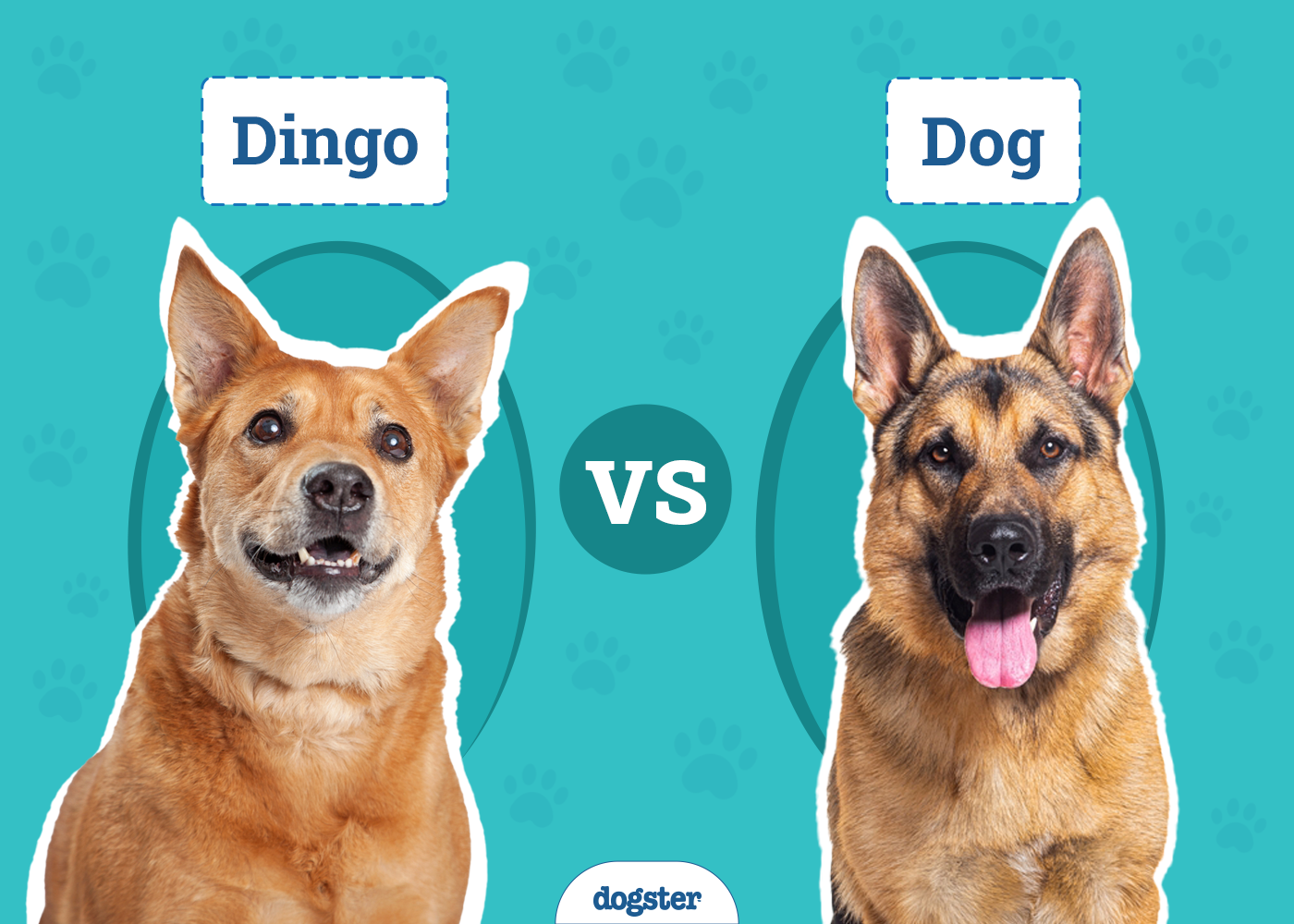
So, because a dingo is a native wild dog of Australia, where do they fall? Can you own a dingo? Are there any legal dog breeds that resemble dingoes? We have all this information and more! Let's dig into the details.

Visual Differences

At a Glance
Dingo Overview

First things first—Dingoes are not pets; they are wild animals protected in Australia. So, keep in mind that in this description, we will go over how dingoes live in the wild and what they are like.
Dingoes are considered pests or subject to population control in some regions of Australia due to livestock predation, although their ecological role is complex and context-dependent.
Personality / Character
Dingoes have social structures like other wild canids and may form small family groups or packs. They are complex and depend on others in the pack to hunt and survive. While you may see a dingo run around solo, it is likely that there are other dingoes hanging around if a single is spotted.
Domestication
Dingoes are considered wild animals that are not domesticated. On the mainland of Australia, dingoes usually dwell in a variety of habitats, including deserts, grasslands, and woodlands, often in areas with access to prey and water.

Diet
Dingoes are opportunistic eaters and fierce predators. They are facultative carnivores, meaning they feast mostly on animal protein to thrive.
Primarily, dingoes eat:
However, dingoes can also kill household pets and farm animals when opportunities arise.
Legalities
The legalities and conservation of dingoes depends greatly on the area of Australia in question. For example, in Victoria, they are considered a threatened species that is protected by the Wildlife Act of 1975. Dingoes are also protected by the Northern Territory and the Nature Conservation Act of 1992.
Dingoes can be hunted in some cases, but in most places, they are protected and can’t be owned as pets. Unfortunately, dingoes are primarily killed by humans, usually controlled or culled in some regions due to livestock predation concerns. Others are hit by cars and victims of accidents.
Suitable For:
The only time dingoes should be near humans is if they are in conservation for a reason. Wildlife rehabilitators have the resources available to keep injured, diseased, or disabled dingoes and nurse them back to health, with or without the ability to release them.
Dog Overview

Dog—a man's best friend. A domesticated animal descended from wolves, and was far displaced. These canines take on roles as our companions, emotional support, and saviors. Where would we be without them? You know what they say: we don't deserve dogs.
Much different from a dingo but not quite out of left field, the domestic dog is one of the most depended-upon animals on earth. There are over 300 different purebred and hybrid (a mix between two purebred dogs) breeds out there, and each one is different!
Personality / Character
Each dog has its own individual personality. Certain breeds have characteristics that stick out. Since dogs have been bred for years, crafted for individual purposes, it’s no wonder that we see so much difference in both appearance and character.
Collies are great herding dogs that are generally very intelligent. Golden Retrievers get the reputation of being super chill and laid back, while German Shepherds are revered for their intelligence and protective nature.
So you can essentially choose the dog breed that works best for you, your lifestyle, and activity levels.
Domestication
Dogs have been domesticated for quite some time now. So much so that it is hard to fathom they came from wolves. While there is some discrepancy on how things got started, we do know that our dogs share a common ancestor with modern wolves.
Now, we have dogs that are so far removed from wolves that you wouldn't even be able to tell they're descended from them. You have brachycephalic dogs like a Boxer, Pug, Boston Terrier, and Bulldog, or teacup pups weighing less than 5 pounds—none of these breeds look anything like their ancestors.

Diet
Dogs are omnivores with a facultative carnivorous bias, meaning they require nutrients from animal sources and can also utilize certain plant ingredients to thrive. Pet nutritionists are still perfecting the domestic canine diet—and we’ve come quite far!
On top of traditional dry kibble and wet canned food, we now have vaster options to feed our pups. You can choose a more species-specific option, like fresh food delivered to your doorstep, or raw and homemade diets you make from the comfort of your home.
All diets should be selected after consulting your veterinarian to make sure your dog is getting the best nutrition.
Legalities
It’s legal to own a dog just about anywhere in the world. However, there are certain stipulations. Some areas restrict certain breeds based on local legislation. Others require vaccinations, specifically rabies.
It is important to check with apartment complexes, condos, and other public living spaces to see specific legalities on pet owning. Your pet might need to undergo certain vetting or you may have to provide records to administrative offices.
It is important to keep up with your dog's tags and rabies vaccines. Rabies vaccination is legally required in many regions and is critical for public health, and identification tags are strongly recommended. These are non-negotiables, and you will get in trouble if your dog bites or injures someone and you don't have this.

Suitable For:
Any dog-loving household where their physical, behavioral, and social needs are met. Carefully research breeds to see which one will be most compatible with you. Or even better, go to a rescue or shelter and fall in love with a pup who deserves a second chance!
Dog Breed That Looks Like a Dingo

Now you know that owning a dingo is not a good idea, nor is it legal in most places. But, if you just like the way that dingoes look, there is an American dog breed that looks very much like a dingo, so much so that it is even referred to as the American dingo. Let us introduce you to the Carolina dog. These animals are yellow in color, like their wild cousins, and even have slightly aloof temperaments.
The American dingo is considered a primitive or landrace-type dog breed, and you can own one, provided you didn't snatch one from its natural habitat.
Interestingly, these are one of the only dog breeds that still actively roam in packs. However, you can find one to bring home, too. These dogs might be a little thinly populated throughout the United States as far as pets are concerned, but if you live in the South, you might have direct access to breeders or rescues.
The Carolina dog is described as independent, intelligent, and very wild-like. It generally does not adhere to social doggy norms (i.e., not playing fetch, not being overly affectionate, or being highly trainable), meaning these dogs march to the beat of their own drum.
Conclusion
Now that you know the differences between a dingo and a dog, it should be obvious that a dingo isn’t a pet, so you can’t have one. It’s just the facts. Unless you are a wildlife professional, you won't be spending much time with dingoes.
But the upside is, we have a lot of incredible dogs that can rise to every occasion—and we love them for it! Remember, if you love the look of a dingo but can't have one, we have our very own American dingo—the Carolina dog. Learn more about the breed and decide whether to welcome them.
But, there are also over 300 other dog breeds to choose from, and even more mixed breeds out there, so you’re sure to find one that fits well into your family!
Expert dog care, straight to your inbox
News, insights, expert advice, and everything dog.

No spam — unsubscribe anytime.
By signing up, you agree to our Terms & Conditions and Privacy & Cookies Policy.
How useful was this post?
Click a star to rate. You can leave written feedback afterwards. (We read all feedback.)
Ashley Bates is a freelance dog writer and pet enthusiast who is currently studying the art of animal therapy. A mother to four human children— and 23 furry and feathery kids, too – Ashley volunteers at local shelters, advocates for animal well-being, and rescues every creature in need. Her mission is to create awareness, education, and entertainment about pets to prevent homelessness. Her specialties are dogs and cats.


