How Big Are Wolves Compared to Dogs? (Size Chart & Comparison)

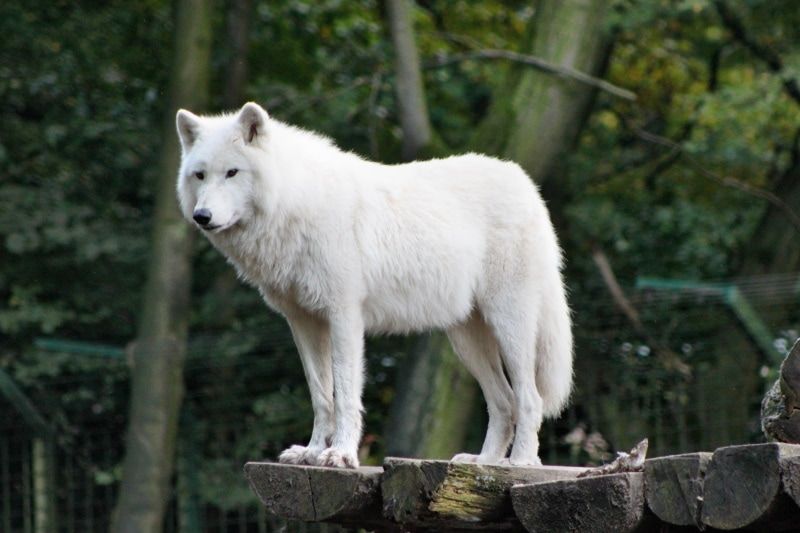
Wolves are feared and held in awe, but they have been the subject of many movies, TV shows, and books. While they are often seen as villainous (such as in the story of Little Red Riding Hood), wolves are just animals—no more evil than your dog.
But how big are they compared to dogs? This depends on the dog, of course; wolves are among the largest in the canine family and are bigger than most dog breeds. But there are a few breeds of dogs that can give wolves a run for their money!
Below, we'll discuss the size of wolves and dogs, which is particularly important because wolves are ancestors of our beloved pet dogs.

Are Wolves Bigger Than Dogs?
The largest wolf species is the Gray Wolf,1 also known as the Timber Wolf. The average male Gray Wolf can be 6.6 feet long, 30 inches tall at the shoulder, and weigh 100 pounds. Remember that this is just an average wolf; the largest Gray Wolf on record weighed about 175 pounds!
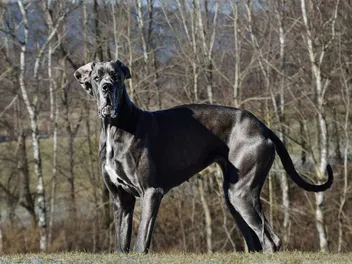
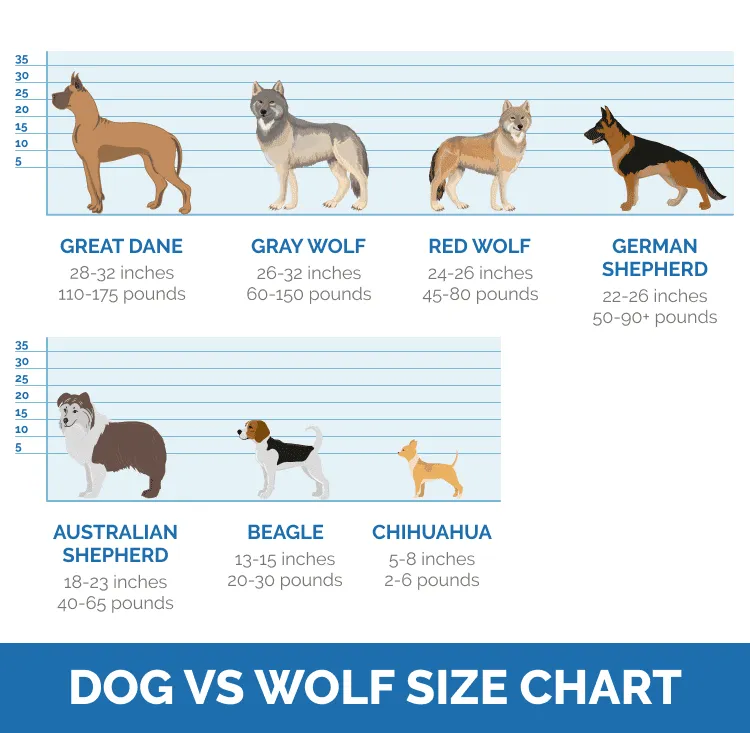
But how do they compare to dogs? Wolves are larger than most dogs, but a few extra-large breeds are bigger than wolves. For example, most Great Danes are taller and heavier than the average wolf. The following chart compares the height and weight of the Gray Wolf to a few other animals and humans to put the wolf's size in perspective.
| Species | Height | Weight |
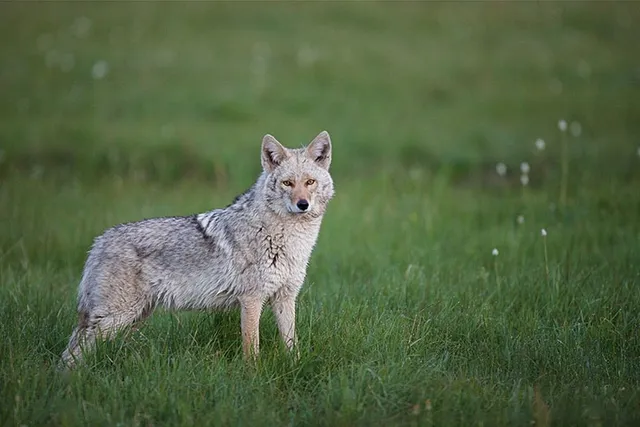
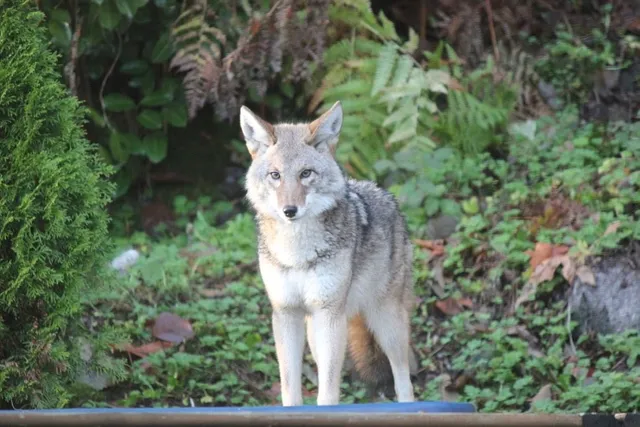
| Coyote | 23–26 inches | 20–50 pounds |
| Gray Wolf | 26–32 inches | 60–145 pounds |
| Great Dane | 28–32 inches | 110–175 pounds |
| Average Human | 69 inches | 198 pounds |
| Spotted Hyena | 30–32 inches | 88–190 pounds |
| Lion | 42–48 inches | 330–550 pounds |
As you can see, the wolf is technically smaller than the average Great Dane and human, but of course, everything depends on the size of the individual. There are many small and large dogs, as well as small and large wolves.
A Little About Wolves
Despite their name, Gray Wolves range in color from white to black, and most have gray or light brown fur. They are considered a keystone species, which essentially means they are critical to the ecosystem. Gray Wolves are the largest species of wolf, and the largest of these wolves are found in west-central Canada, Alaska, and northern Asia. The smallest Gray Wolves are located in the southern parts of their distribution, such as India and the Middle East.
The Gray Wolf is the most common wolf species, but the Red Wolf, the Eastern Wolf, and 40 subspecies have smaller populations. The Red Wolf is critically endangered and is only found around eastern North Carolina. As of July 2024, there are 18 collared Red Wolves in North Carolina and an estimated 19 to 21 in the wild. In a bid to save them from extinction, there are 263 Red Wolves in captivity as part of the Species Survival Plan.
The Eastern Wolf is only found around the Great Lakes and southeastern parts of Canada. They are small to medium in size and are reddish or light brown in color. They are also known as the Algonquin Wolf and the Timber Wolf (like the Gray).

What Are the Largest Dog Breeds?
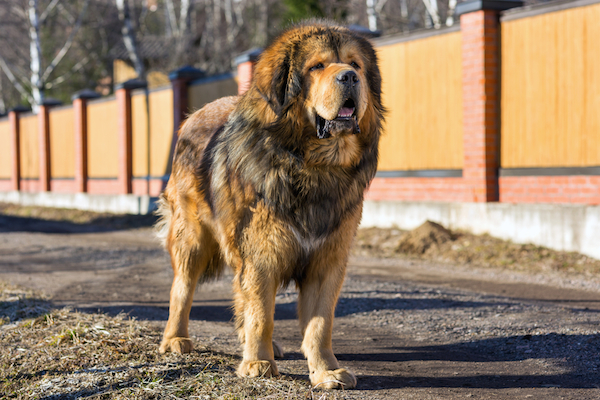
The Great Dane is considered the largest dog breed, but several other breeds are nearly as big. The Dane is the largest by height (though sometimes challenged by the Irish Wolfhound), but the English Mastiff can be considered the biggest by weight. The following are 10 of the world’s largest breeds of dogs.

What Are the Main Differences Between Wolves and Dogs?
There are several differences between wolves and dogs, though you can see the resemblance when you look at a breed like the German Shepherd.
Summary
Wolves are bigger than most dog breeds, but a few giant pups are even larger! However, while a few dog breeds resemble wolves and have a few other similarities, the differences between the two species are quite striking.
Wolves are beautiful animals that are essential to many of the world's ecosystems. If you’d like to bring home a breed that reminds you of a wolf, consider adopting a Husky, Akita, Samoyed, Alaskan Malamute, or German Shepherd.
See Also:
Featured Image Credit: Piqsels
Expert dog care, straight to your inbox
News, insights, expert advice, and everything dog.

No spam — unsubscribe anytime.
By signing up, you agree to our Terms & Conditions and Privacy & Cookies Policy.
How useful was this post?
Click a star to rate. You can leave written feedback afterwards. (We read all feedback.)
Kathryn was a librarian in a previous lifetime and is currently a writer about all things pets. When she was a kid, she hoped to work in a zoo or with wildlife in some way, thanks to her love for animals. Unfortunately, she's not strong in the sciences, so she fills her days with researching and writing about all kinds of animals and spends time playing with her adorable but terribly naughty tabby cat, Bella. Kathryn is hoping to add to her family in the near future – maybe another cat or two and a dog.