Can Dogs Be Nearsighted? Vet-Approved Signs, Diagnosis & Treatment


In this article
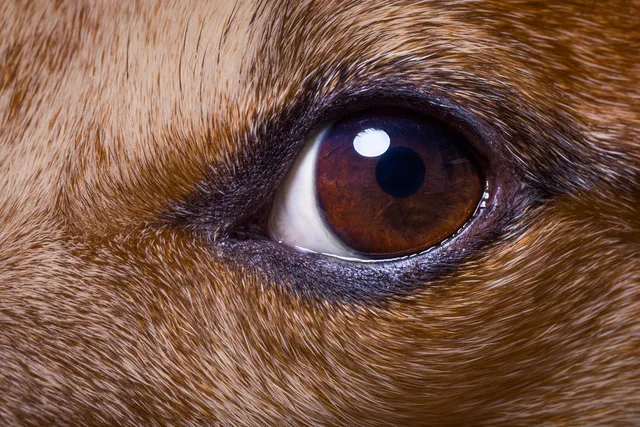
Nearsightedness, or myopia, is a refractive disorder that makes far-away objects look blurry. So, can dogs be nearsighted? The answer is yes, in some cases, dogs can be nearsighted. While it isn’t as common as it is for humans, a larger proportion of canines are nearsighted than you might think. However, it is rarely bad enough to be diagnosed, as dogs don't need to read or spot details at a distance.
Generally, dogs can also observe their surroundings with their sensitive senses of smell and hearing. Therefore, they have more ways to overcome nearsightedness than humans do.
Let’s take a look at the prevalence of nearsightedness in dogs.

Prevalence of Nearsightedness in Dogs
Different dog breeds have different probabilities of suffering from nearsightedness. Surprisingly, many breeds have been studied in this regard (though not all). Therefore, we know a lot about their sight.
For instance, a 2017 study found that 8–15% of Labrador Retrievers are nearsighted.1 Around 15% have one eye affected, while 8% have both. Researchers noted that nearsightedness is likely due to genetic factors for the most part. However, it may also be related to environmental factors, such as the number of puppies in a litter.
Labrador Retrievers have a very similar anatomic cause of nearsightedness as humans, so they are often used as a comparison for humans. Other dogs have different causes of nearsightedness, though, and it isn’t always genetic.
German Shepherds are very prone to nearsightedness. In fact, the same study found that pet German Shepherds had an instance of 53%, while working dogs only have a prevalence of closer to 19%. Rottweilers can also suffer from myopia quite often, with as many as 64% of dogs being diagnosed with this refractive disorder. Schnauzers were diagnosed with nearsightedness over half the time too.
There is a big chance that both genetic factors and environmental factors play a role in nearsightedness. Because certain breeds are more prone to this condition than others, it is likely that certain dog populations have inherited this problem from ancestors suffering from it.
However, studies have shown that the environment also plays a big role. Sadly, these factors aren’t well studied, so we do not know much about them.

Signs of Nearsightedness in Dogs
There are some signs that your dog may be nearsighted. However, many of these are easy to overlook and may be related to other conditions too.
The most obvious sign is blurry vision, which can make itself apparent through different behaviors. For instance, your dog may be hesitant to walk down the steps in very severe cases. Other times, your dog may be unable to find items you’ve thrown (such as during a game of fetch), or it may become apparent that they can’t identify things at a distance.
You may sometimes notice your dog squinting one or both eyes and wonder if they are trying to improve their focus. While this might be possible, it is important to note that sudden and severe squinting may be due to an eye injury, in fact. Therefore, we highly recommend calling your vet if your dog suddenly starts squinting.
Nearsighted dogs may also display certain behavioral differences. Refractive disorders have a significant impact on dogs’ orientation and how they navigate their environment. Your dog may be hesitant to try new activities or go to new places. They may suddenly get more aloof and fearful, especially if they are approached at a distance. In new settings, they may become clingy or anxious. Behavioral changes can be the result of nearly any illness, though. We highly recommend contacting your vet if your dog suddenly has behavioral changes.
The severity of nearsightedness varies greatly, and some dogs don’t develop any signs at all. The intensity can range from mild to severe. The more severe the condition, the more likely your dog is to display signs.
Diagnosis & Treatments for Nearsightedness in Dogs
Dogs cannot use the usual eye charts that humans use. Instead, veterinarians have to rely on specialized equipment to measure their eyes. There are many tools and techniques that your vet may use when diagnosing your dog with nearsightedness. A common test is the retinoscopy, which projects light into your dog’s eye and measures how it reflects back.
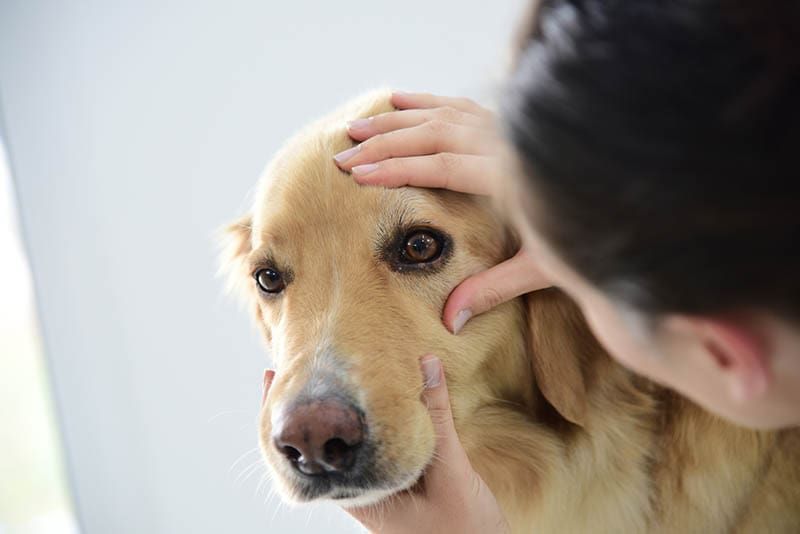
An autorefraction may also be used. This device also shines a light in the dog’s eye and then measures the light as it refracts, allowing vets to determine if it is refracting properly or not. Your vet will likely also do an examination of your dog’s eye to rule out any other cause for vision problems.
There is currently no recognized treatment for your dog if they suffer from severe nearsightedness. However, unlike people, dogs don’t rely on their vision quite as much. They can often adjust naturally using their nose and ears. Plus, dogs aren’t trying to read anything at a distance, so a small amount of nearsightedness is often normal.
There are corrective contact lenses available on the market, but these are not widely used. With regards to refractive errors caused by cataract surgery, these are corrected by veterinary ophthalmologists implanting intraocular lenses (IOL) inside the lens capsule, which significantly improves the patient’s quality of life.

Can You Test a Dog’s Vision at Home?
Testing a dog’s vision without the proper gear is challenging due to the communication barrier. After all, you cannot ask if your dog can see something or not. Measuring a dog’s eyesight is a bit like measuring an infant’s eyesight, requiring some advanced medical equipment to do so accurately.
The only way to get an accurate estimate is to visit your vet and have them perform the proper tests.
There are a few ways you can see if your dog can see at all, though. For instance, if you move your hand quickly toward their face, the dog should turn their head in response. If your dog doesn’t, it may be because they cannot see your hand. However, many dogs with nearsightedness would be able to see your hand, so this isn’t a very accurate test.
Final Thoughts
Even in breeds where it is less common, around a quarter of dogs will be nearsighted. It is a pretty common condition, just like it is pretty common with humans. There is likely a genetic link to nearsightedness, but some environmental factors are probably at play too.
Luckily, nearsightedness is often not severe. In many cases, you won’t even notice that it is there. Most dogs don’t show any signs at all in their life. If they do, it’s often when they are older, as nearsightedness tends to be progressive.
At present, there is no recognized or widely used treatment for nearsightedness in dogs. However, if you notice any changes in your dog’s visual abilities, you should contact your vet right away since other vision problems can be treated, and the sooner the condition is diagnosed and treated, the higher the chances of a successful outcome.
Sources
Featured Image Credit: goodluz, Shutterstock
Expert dog care, straight to your inbox
News, insights, expert advice, and everything dog.

No spam — unsubscribe anytime.
By signing up, you agree to our Terms & Conditions and Privacy & Cookies Policy.
How useful was this post?
Click a star to rate. You can leave written feedback afterwards. (We read all feedback.)
Kristin loves to help pet parents create a fulfilling life for their pets by informing them on the latest scientific discoveries and helping them choose the best products for their pets. She currently resides in Tennessee with three cats, four dogs, two fish, and a lizard, though she has dreams of owning chickens one day!