
Cataracts in Dogs: Vet-Verified Signs, Causes & Treatment


In this article
View 4 More +It’s not surprising that dogs can get cataracts. After all, they share 84% of our DNA. Canines can also get other health conditions common in people, like asthma, heart disease, and diabetes. Interestingly, we share many similarities in this eye disease. The difference is that we can detect immediately when something is impairing our vision and take action to do something about it. But dogs are different.
Research has shown that our pets have stem cells and brains capable of reorganizing themselves or neuroplasticity. They can adapt to the vision loss that accompanies cataracts to compensate. The same thing happens in people if they lose the functioning of a sense or because of brain injury due to a stroke. The latter is where some of the most compelling evidence exists, but more on that later. Let’s start by explaining what cataracts in dogs actually are.

What Are Cataracts in Dogs?

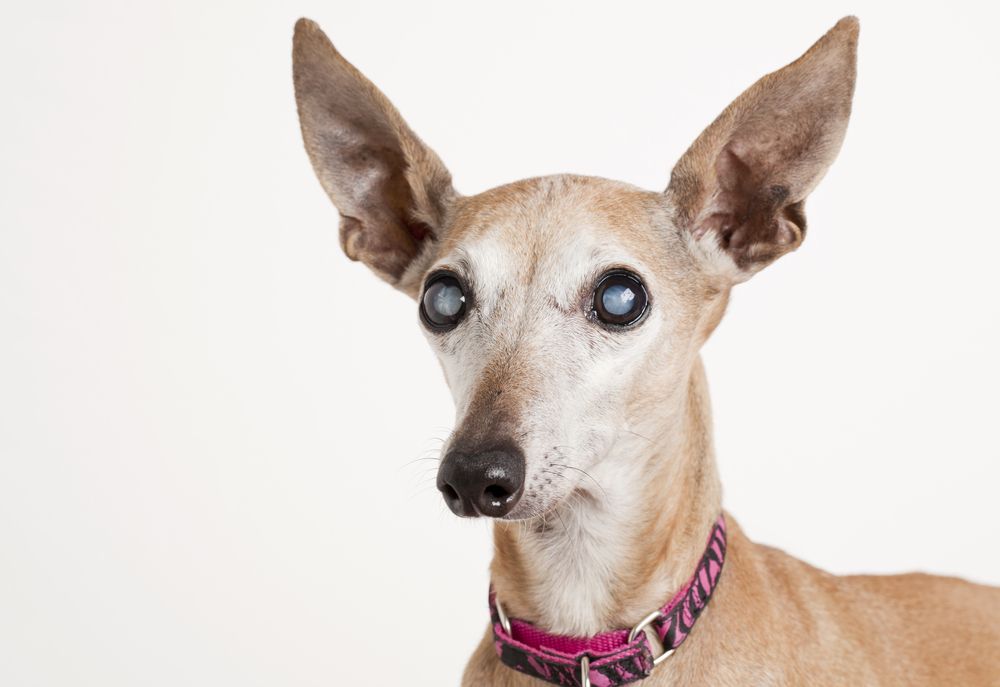
Cataracts describe the opaqueness or cloudiness that occurs on the dog’s lens, located behind the iris, the color portion of the eye. The lens allows animals to see by focusing light on the retinas. The change in their transparency diminishes sharp vision. Visual impairment can vary from minimal to 100%. The condition usually affects older pets, although it can occur in younger pups as well.
Aging can cause nuclear sclerosis, which causes cloudiness in dog’s eyes, but the difference is that normal aging does not affect their vision, and cataracts do, resulting in blindness if they progress. Cataracts affect vision by decreasing the light reaching the retina. It can vary in the degree and onset of the condition. Veterinarians also classify cataracts based on their shape and the effects on the lens. You may not notice the change in the appearance of your dog’s eyes since they may be quite small.
What Are the Signs of Cataracts in Dogs?
Signs of Cataracts in Dogs
We discussed the impact of neuroplasticity on cataracts and the diagnosis of the disease. Sometimes, a dog can have the condition for some time before the owner notices something is amiss. Remember that instinct still drives the animal’s behavior. Vision loss is a vulnerability, especially for a predator. If the cataracts aren’t bad, your pup’s sight might not be fully impaired.
At some stages, your pet’s eyes may show signs of inflammation, such as redness. Your pup may also become sensitive to bright light. When vision loss occurs, your dog might start running into things. They may not be able to play fetch well anymore. Their lens may cloud over with the telltale bluish cloudiness denoting a cataract. However, it sometimes isn’t evident until the condition progresses to an advanced state.
What Are the Causes of Cataracts?
Cataracts often occur with age, as they do in people. Other causes are trauma from an injury. Diabetes mellitus is another common reason, with cataracts being a common occurrence in diabetic dogs. Nutritional deficiencies and chronic uveitis can also trigger the condition. However, a dog can also inherit cataracts, particularly if it occurs when the animal is under 2–3 years old.
Breeds that are prone to cataracts include the following:
Fortunately, the Orthopedic Foundation for Animals (OFA) maintains its Companion Animal Eye Registry (CAER) to identify animals at risk and help breeders avoid passing on the condition. An OFA Eye Certification examination can identify cataracts and other hereditary and congenital eye issues.


How Do I Care for a Dog With Cataracts?
Treatment depends on the type of cataract, to what extent your pet’s vision is affected, and the complications that are associated with it. Your vet will recommend an appointment with a veterinary ophthalmologist and watchful monitoring of the condition with regular follow-ups. Some research suggests that the aldose reductase inhibitor alpha lipoic acid might be helpful for cataracts caused by diabetes by delaying its progression. However, you should always follow your vet ophthalmologist's advice and understand that surgery is the only recognized way to treat cataracts in dogs. It’s worth noting that cataracts can progress very quickly and cause painful consequences to the animal if complications occur.
Surgery is the only effective way to treat cataracts and prevent blindness. Luckily, the procedure has up to a 90% success rate. Timing is critical, as the surgery is more successful if done in the early stages. The procedure can run between $3,000 to $4,200 depending on whether one or both eyes are operated on and the complications. However, many factors can affect the cost. You can expect your pup to remain hospitalized for a couple of days after the procedure.
Your follow-up will include frequent exams to monitor your pet’s recovery. You’ll likely have to administer eye drops and anti-inflammatories. Your dog will also have to wear an E-collar to keep them from scratching their face. The risk of complications increases with the age of the pet and the condition of the cataracts. Aftercare is time-consuming. Your vet will advise you about what you must do once your pet is released.

Frequently Asked Questions
Is Surgery Always the Best Way to Treat Cataracts?
Surgery is the only effective way to remove cataracts, but it is possible, in some circumstances, that your vet advises against the procedure if your dog has another health condition, like severe heart disease, that would make anesthesia too risky. You must also consider your pet’s temperament and how much they cooperate to put drops in. Remember that aftercare involves much hands-on contact to administer the meds.
How Does Diabetes Cause Cataracts?
Remember that a diabetic dog has high circulating blood sugar levels. The excess sugar levels in the eye cause the lens to swell as water enters them, ultimately leading to cataracts.
Can My Dog Have a Good Quality of Life Without Surgery?
Yes, as long as you work closely with your vet and address any complications immediately. The progressive condition can cause other eye diseases, including glaucoma and uveitis. These conditions are painful, making your pet uncomfortable. Dogs with cataracts should visit their local vet or ophthalmologist periodically to check for complications. Additionally, anytime you notice your dog’s eyes change appearance, you should contact them to ensure you address any complications on time.

Conclusion
While cataracts can’t be cured with eye drops, they can be treated with surgery and diligent follow-up care. Some cases occur in young animals that inherit the condition. That makes getting pets from reputable sellers vital. These individuals conduct pre-breeding screenings to prevent passing heritable conditions onto their offspring. Like many health issues, early detection and treatment are essential for your pup’s good quality of life.
Sources
Featured Image Credit: marekuliasz, Shutterstock
Expert dog care, straight to your inbox
News, insights, expert advice, and everything dog.

No spam — unsubscribe anytime.
By signing up, you agree to our Terms & Conditions and Privacy & Cookies Policy.
How useful was this post?
Click a star to rate. You can leave written feedback afterwards. (We read all feedback.)

Since 2009, Chris has written on a variety of topics. Her motto with all of her writing is “science-based writing nurtured by education and critical thinking.” She specializes in scientific topics, with a special love for health and environmental topics, and of course, pets of all shapes and sizes.
Chris lives happily with her husband and three cats in the land of 10,000 lakes, writing, wining, and boating as much as she can. She and her husband, Norm, were awarded the State of Kentucky Colonel Honor for their restoration work at Mammoth Cave National Park.