How Can You Tell if Your Dog Is Going Blind? 8 Vet-Verified Signs


Dogs can start to experience vision impairment or blindness as they age. It’s often a startling transition for both dogs and their owners, and it requires special care and attention to help dogs adjust.
Dogs often exhibit specific signs when they’re starting to lose their vision. Knowing the common signs can help you provide early treatment for your dog, which can slow down disease progression and help you maintain your dog’s quality of life. If you have any suspicions that your dog is losing their sight get them checked over by your veterinarian. We’ve listed seven signs of vision loss in dogs and have tips for how you can help your dog navigate the changes that come with it.

The 8 Signs That Your Dog Might Be Going Blind
1. They Get Startled Easily
If your dog’s vision starts to weaken, you may notice that they get scared more easily. They may flinch in surprise if you approach them from the side or behind to pet them. Some dogs may get startled when a car drives past them while they’re out on a walk.
You can help your dog feel more relaxed by avoiding approaching them from behind. If you have to wake them or get their attention, call their name or gently tap their bed or the floor instead. Directly touching your dog when they’re unaware can end up frightening them.

2. They’re Hesitant to Walk
Having impaired vision may cause your dog to feel more hesitant about walking around. You may notice decreased activity, and dogs that once enjoyed going on walks may no longer want to go outside. Some dogs can develop a fear of going up and down the stairs.
You may have to assist your dog by walking with them around the house with a leash. It’s also helpful to rearrange furniture to prevent your dog from bumping into it and then not changing the layout so they can learn it. If you have stairs in your home, use gates at the top and bottom to protect them from tripping down the stairs.
3. They’re Sniffing More Frequently
Your dog is likely to rely on their other senses when they experience vision impairment. Dogs have powerful noses that help them navigate their environments, so it’s common for dogs to sniff more after vision loss. They may pause to sniff before they resume walking. Some dogs may sniff around when they enter a new room. Your dog may also take extra time to sniff their toys and treats before eating them.

4. They Bump into Walls
Since vision impairment affects spatial awareness, your dog may bump into walls more frequently, even if they have partial vision. They can also trip on things on the floor, such as toys and carpet rugs.
It’s helpful to create clear and simple pathways around your house so that your dog can avoid bumping into objects. You can use non-slip mats or hallway rugs to create paths that lead to your dog’s food and water bowls, beds, and other areas that they frequent. Your dog will be able to navigate on their own as they get used to feeling the mats and rugs.
5. They Have Cloudy Eyes or Discharge Around Eyes
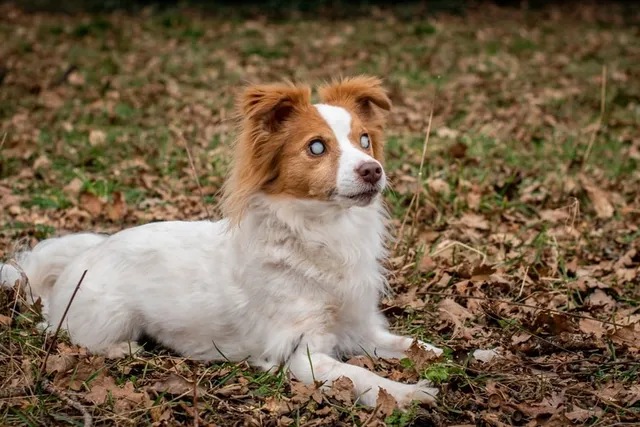
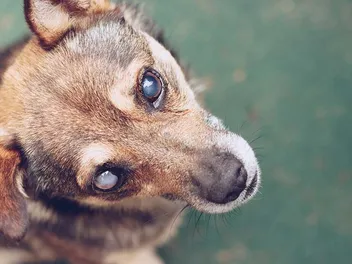
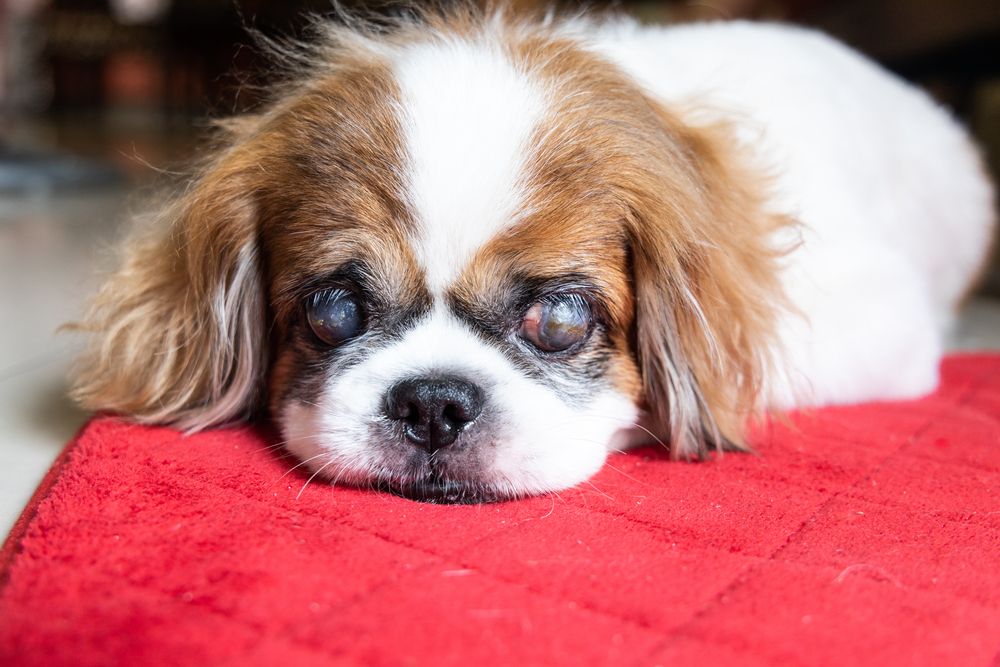
It’s common for dogs’ eyes to cloud over slightly as they age. This occurrence is often attributed to nuclear sclerosis, but it doesn’t usually cause vision impairment. Cataracts also cause a milky or cloudy appearance but do affect vision. However, other medical issues can cause cloudiness and discharge around the eyes. Eye diseases can also cause swolleness, redness, and discharge around the eyes.
Cataracts, glaucoma, and anterior uveitis are all medical conditions that can cloud your dog’s eyes, and they can be quite painful. If you notice your dog’s eyes looking cloudy, it's best to take them to your veterinarian to determine the cause and receive proper treatment.

6. They Resist Jumping Up and Down Furniture
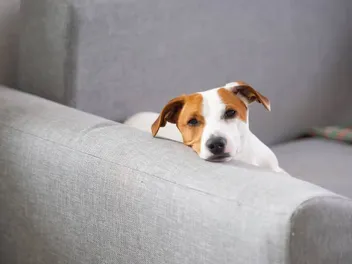
Because your dog’s spatial awareness can be affected by vision impairment, they may become more hesitant to jump up and down from furniture. They often require assistance in order to use furniture without hurting or injuring themselves.
If your dog is becoming resistant to jumping up and down from furniture, buying dog stairs can be helpful for them. Dog stairs can help dogs maintain their independence and confidence, as they can get onto furniture on their own without anyone’s help.
7. They Have Increased Clinginess
Vision impairment can be scary for dogs, and you may start to notice some emotional signs from them that may look similar to separation anxiety. Your dog may not like being alone, and they may keep searching for you. Some dogs may refuse to leave their owner’s side and will become even more reliant on them.
If your dog is becoming noticeably clingier, it’s important to show compassion without coddling them. Making adjustments to your home and your dog’s routine can help them navigate their vision loss without turning them overly dependent on you.

8. They Have Difficulty Finding Familiar Objects
Dogs with vision impairment may start to show difficulty locating familiar objects around the house. They may not know where their food and water bowls are, and dogs that use potty pads may start to miss them by accident.
One way you can help your dog locate their food is to heat it up. Warm food emits a stronger smell, which makes it easier for dogs to sniff it out and locate their food bowl.

How to Help Dogs Through Vision Loss
See Your Veterinarian
The first thing to do if you suspect vision loss in your dog is to take them to your veterinarian. Vision loss can be a sign of a number of health issues, so it’s important for a veterinarian to examine your dog and make an accurate diagnosis.
Sometimes, vision loss can be temporary, and your dog’s vision can return after they receive proper treatment. Some diseases and illnesses can be degenerative or eventually turn into permanent blindness.
Get in touch with a veterinarian for guidance and advice on the best course of action.
Make Adjustments to Your Home
If your dog’s vision loss isn’t curable, it’s important to start making adjustments to your home and your dog’s routine. Your veterinarian can help you develop a plan to make your home safer for your dog. You can also work with a dog trainer or behaviorist to come up with new activities for your dog to enjoy and ideas for preventing anxiety or depression.
It'll be helpful for your dog if you clear your home of any obstacles that can harm or injure them. You can lay out a trail of rugs and non-slip mats to help your dog navigate your home more easily. Another safety measure is to install gates at your stairs to prevent your dog from slipping and falling down them. Your dog may also benefit from using dog stairs to help them access couches and beds.
Use Protective Devices
With your veterinarian’s approval an anti-collision ring, more commonly known as a “Halo” may be appropriate for your dog. This is a light frame attached to a jacket that can help stop your dog from bumping into objects.
Dog protective eye goggles are another option suitable in some cases for eye protection. These protect the eyes from wind, UV light and impact injuries.

Be Patient and Compassionate
Most of all, it’s important to be patient and compassionate toward your dog. Vision loss is often a nerve-wracking experience for dogs, and they can feel fear and lose confidence as they experience these changes. Being gentle, supportive, and encouraging can help soothe your dog’s anxiety, which can help your dog adjust to vision loss more quickly. Often the rate of vision loss will be a factor, sudden loss of vision may be harder to adjust to than slow and incremental loss of sight.
Conclusion
Vision loss is a significant life event for both dogs and their owners. It can be a sign of a variety of underlying health issues, so it’s important to get your dog to your veterinarian as quickly as possible if you suspect vision loss.
While it can feel intimidating and scary, dogs with vision impairment can still live happy lives. It does require making some changes, but with some time, dogs are able to adjust well and enjoy their new lifestyle.
Featured Image Credit: ThamKC, Shutterstock
Expert dog care, straight to your inbox
News, insights, expert advice, and everything dog.

No spam — unsubscribe anytime.
By signing up, you agree to our Terms & Conditions and Privacy & Cookies Policy.
How useful was this post?
Click a star to rate. You can leave written feedback afterwards. (We read all feedback.)
Jessica is a freelance writer who spends bigger part of her day researching and writing while her furry companion Cavapoo, Nora, snoozes beside her. She loves dogs, pets and animals because there’s so much to learn from them, and they do so much for us. As a dog mom, she understands the strong connection that pet parents have with their pets. So, she loves sharing helpful information that pet owners can use to better understand their beloved pets. When she isn't writing, you may find her walking dogs, tending to her plants, or drinking her nth cup of coffee.