

Dogster is reader-supported. When you buy via links on our site, we may earn a commission at no cost to you. Learn more.

Dog Nutrition

How to Cook Chicken & Rice for Dogs: Vet-Approved Bland Diet

Hanh Duong
By Hanh Duong · Reviewed & fact-checked by Dr. Paola CuevasVet Approved
Dr. Paola Cuevas
Reviewed & Fact-Checked byDr. Paola CuevasVeterinarian
Dr. Paola Cuevas is our Senior In-House Veterinarian at Dogster and Pangolia. She has over 19 years of experience working with an array of species and loves sharing her knowledge and experience with our readers and aims to provide assistance with any issue presented by your non-human family members. She received her degree from the University of Guadalajara, Mexico.View authorThe information is current and up-to-date in accordance with the latest veterinarian research. Learn more
Updated on June 17, 2026
Share
Woman Coocking In A Kitchen Beside a Dog

For dogs recovering from illness, veterinarians often recommend bland food like homemade chicken and rice 1. It's an easy-to-digest, low-fat, single-protein diet that is great for gastrointestinal problems. When a dog is sick, this protein and carbohydrate mix can also help to gradually increase their appetite. It's not suitable for long-term use, but chicken and rice are still nutritious enough to get your dog back on track.

How much chicken and rice should you give them? How do you prepare it? With our simple tips and recipes for making chicken and rice for dogs, we'll help you figure out the best way. Your furry friend will wag their tail when they smell this delicious meal!

divider dog paws 3 oct 2024

Before You Get Started

You should choose the highest-grade chicken you can afford. The easiest option is boneless chicken breasts since you won't need to trim the fat or remove bones. If at all feasible, try to find chicken that was raised without the use of hormones. Short- or long-grain white rice should be used to prepare chicken and rice for your dog since it is easier to digest than its long-cooking counterpart.

How to Cook Chicken & Rice for Dogs

1. Place the Chicken in a Large Pot

First, put the chicken in the pot, pour enough water in to cover it, and bring it to a boil. Then, reduce the heat. Depending on the size of the chicken pieces you choose, the cooking time will range from 10 minutes to 30 minutes. Note that chicken with bones tends to take longer. Your pets may be at risk of gastrointestinal infections if the chicken is not fully cooked, so be careful.
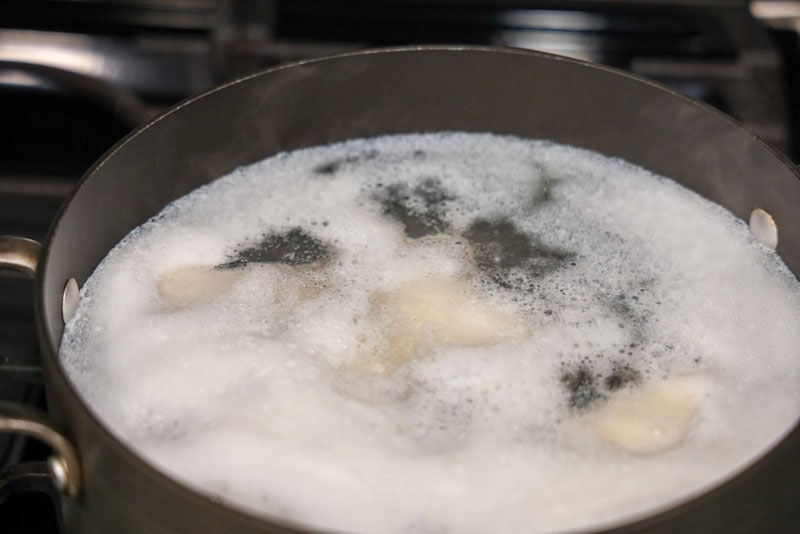
Image Credit: Rosamar, Shutterstock

2. Take the Chicken Out of the Water, Then Let It Cool

Spreading the chicken out on a cooling rack can help it cool rapidly. You can save the broth for later use.


3. Remove Bones

You'll now remove the bones, separate the meat, and cut the chicken into small pieces. The recommended size is 1 inch or less for medium and large breeds or half an inch or smaller for small canines.

It's crucial to remove all the bones and discard them. Your dog's esophagus, stomach, or intestines might be pierced by bone fragments if they consume them. Therefore, always ensure they can't get to the cooked chicken bones in the chicken or the trash can.
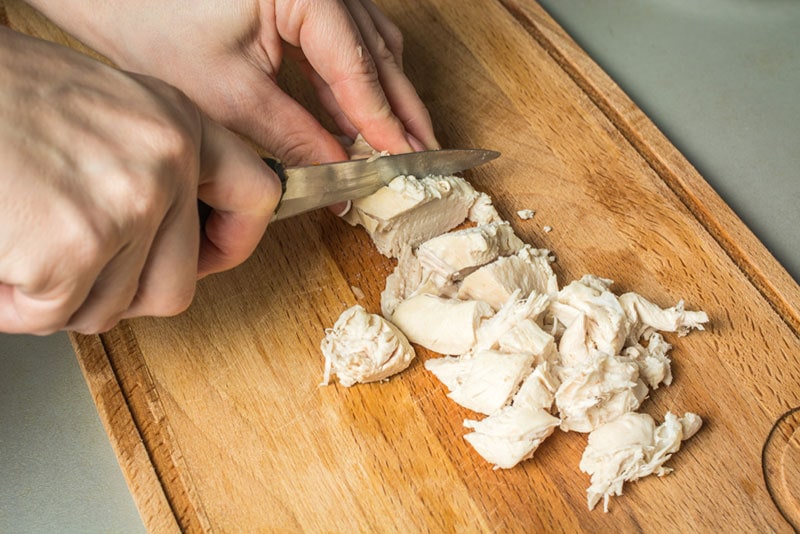
Image Credit: Tagwaran, Shutterstock

4. Skim Off the Fat From the Broth and Boil Again

After skimming off the fat from the leftover broth, pour the remaining liquid into a container and refill the pot with the chicken broth. If you cut off the chicken fat first, there may not be much fat to skim off. While you wait for the water in the pot to boil, start preparing the rice that'll be cooked in the broth.


5. Use Chicken Broth to Cook the Rice

Rice can be rinsed in a bowl, a pan, or a rice cooker insert. Remember to rinse it multiple times until the water is clear. Put the cup of rice into 2 cups of the chicken broth after the water has boiled for a while. Then, bring it back to a boil before reducing the heat. Cook for 20 to 25 minutes with a tight-fitting cover (brown rice may require 40 to 45 minutes, but again, we recommend using only white rice since it is easier to digest). When it's done cooking, the rice will be mushy and a bit soggy, and the water should have been absorbed.
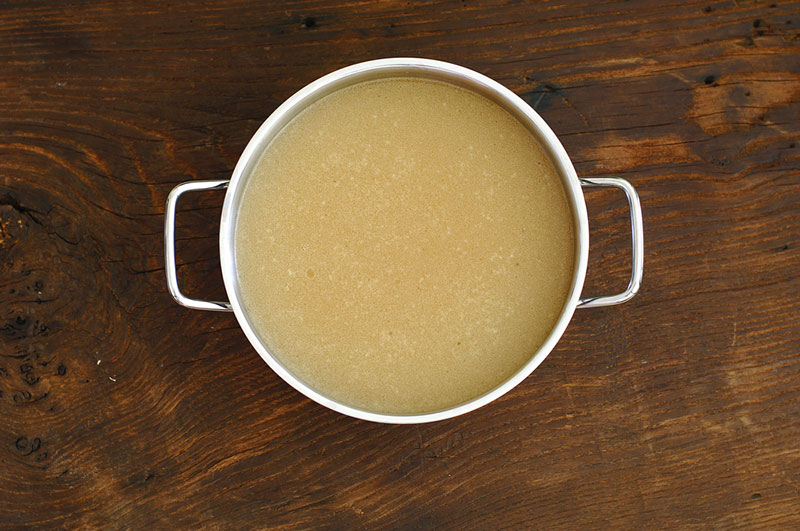
Image Credit: ZAHRA22, Shutterstock
divider dog paws 3 oct 2024

Chicken and Rice for Dogs: Dos and Don'ts

Do

  • Use homemade broth rather than store-bought broth, which may contain additives. The latter will usually include meat and vegetables, which means it might have spices like garlic and onions. Neither of those is safe for your dog to consume.
  • Call your veterinarian if you have any concerns or if your pet seems to be getting worse or still has diarrhea after a couple of days on a chicken and rice diet.
Image Credit: Africa Studio, Shutterstock

Don’t

  • Although some veterinarians advise using brown rice, its extra fiber can make food more difficult to digest, so don't use it if your pup has stomach issues. Long-grain white rice works best for calming an upset stomach.
  • If your pet has any medical issues, you should not substitute their regular food for chicken and rice unless your veterinarian recommends it.
  • The chicken and rice recipe aims to ease your dog's stomach with straightforward, easy-to-digest foods, so don't add additional ingredients.

Ratio

Since dogs come in different sizes and may be suffering from different health conditions, there is no single ideal ratio for a bland diet that suits all dogs. However, a commonly recommended short-term ratio is 2 parts cooked white rice to 1 part cooked, skinless chicken by volume. This 2:1 rice-to-chicken mixture is gentle on the digestive system, offering easily digestible carbohydrates for energy and lean protein to support recovery. While effective for managing acute gastrointestinal upset, it is important to keep in mind that this combination is not nutritionally complete and should not be used as a long-term diet without veterinary guidance.

divider dog paws 3 oct 2024

Conclusion

Chicken and rice should not replace regular dog food since it's not nutritionally complete. It is simply a short-term alternative, and starting with a small amount first is better to see if it works. Then, you can gradually increase the amount when your furry friend gets used to it.

Sources

Featured Image Credit: G-Stock Studio, Shutterstock

The Dogster Newsletter

Expert dog care, straight to your inbox

News, insights, expert advice, and everything dog.

No spam — unsubscribe anytime.

By signing up, you agree to our Terms & Conditions and Privacy & Cookies Policy.

Click a star to rate. You can leave written feedback afterwards. (We read all feedback.)

Hanh Duong
Authored by

Hanh Duong

Can Dogs Eat Rice? Vet-Verified Nutrition Facts, Benefits & Risks

Can Dogs Eat Rice? Vet-Verified Nutrition Facts, Benefits & Risks

Rice is a staple food found in almost every kitchen worldwide, and there are many different varieties to choose from! If your dog is eyeing your rice-based mea…

Kathryn Copeland
By Kathryn Copeland · 3 weeks ago
How to Boil Chicken for Dogs: A 5-Step Vet-Approved Guide

How to Boil Chicken for Dogs: A 5-Step Vet-Approved Guide

Good nutrition is important to not only human beings but animals as well. It’s the reason why their bodies can fight foreign invaders such as fungi, parasites,…

Oliver Jones
By Oliver Jones · 4 weeks ago
What to Give a Dog for an Upset Stomach: 10 Vet-Approved Options

What to Give a Dog for an Upset Stomach: 10 Vet-Approved Options

If you own a dog, you’ve probably realized that the “five-second rule” for dropped food no longer applies. Before you can even blink, your hungry pooch has dar…

Nicole Cosgrove
By Nicole Cosgrove · 4 weeks ago
What to Feed a Sick Dog: 8 Vet Suggested Foods for a Poorly Pup

What to Feed a Sick Dog: 8 Vet Suggested Foods for a Poorly Pup

If your dog is unwell and you’re looking for some ideas of what you might be able to tempt them with, we’re here to point you in the right direction. The first…

Dr. Karyn Kanowski
By Dr. Karyn Kanowski · 4 weeks ago

5 Easy Dog-Friendly Recipes You Can Try at Home

It’s so easy to make your dog one of these five dog-friendly recipes: This recipe makes a great everyday meal, especially with the addition of homemade gravy.…

Kyra Kirkwood
By Kyra Kirkwood · June 16, 2026
5 Easy Dog-Friendly Recipes You Can Try at Home

Can Dogs Eat Raw Chicken? Vet-Verified Dietary Facts & FAQ

Chicken is a common and healthy ingredient in many dog foods, and plenty of pet parents love to feed their dogs plain-cooked chicken. If you’ve been considerin…

Jordyn Alger
By Jordyn Alger · July 4, 2026
Can Dogs Eat Raw Chicken? Vet-Verified Dietary Facts & FAQ

How to Cook Ground Turkey for Dogs: Vet-Approved Recipes

Ground turkey can be a good addition to many dog’s diets, and cooking it by itself is rather simple. You can cook it just like you would for human consumption…

Kristin Hitchcock
By Kristin Hitchcock · July 10, 2026
How to Cook Ground Turkey for Dogs: Vet-Approved Recipes

Dog Food Alternatives: 6 Vet-Approved Options

As a dog owner, you are probably familiar with the panic you feel when you realize you have run out of dog food and are unable to get more at the moment. You m…

Sarah Psaradelis
By Sarah Psaradelis · June 16, 2026
Dog Food Alternatives: 6 Vet-Approved Options

Can Dogs Eat Brown Rice? Vet-Approved Facts & FAQ

Brown rice is an excellent carbohydrate to include in your dog’s diet. It's seen as one of the more nutritious types of rice that is safe for your canine compa…

Sarah Psaradelis
By Sarah Psaradelis · June 29, 2026
Can Dogs Eat Brown Rice? Vet-Approved Facts & FAQ

How to Add Grain to a Grain-Free Dog Food: 5 Vet Approved Tips

Over the last decade or so, grain-free and gluten-free diets have become increasingly popular for humans, and by extension, that popularity has trickled down i…

Chelsea Mortensen
By Chelsea Mortensen · July 10, 2026
How to Add Grain to a Grain-Free Dog Food: 5 Vet Approved Tips

Human Foods That Are Surprisingly Good for Dogs (And Some That Aren’t)

We all know what it’s like to share a room with a dog at mealtimes. The puppy dog eyes, twitching nose, and trickle of drool as whatever is on your plate becom…

Dan Seymour
By Dan Seymour · July 7, 2026
Human Foods That Are Surprisingly Good for Dogs (And Some That Aren’t)

My Dog Ate a Chicken Bone, What Do I Do? (Vet Answer)

You may have been warned about the dangers of dogs eating chicken bones, and with good reason. Eating a chicken bone can be dangerous for a dog. So, whether yo…

Dr. Chyrle Bonk
By Dr. Chyrle Bonk · June 29, 2026
My Dog Ate a Chicken Bone, What Do I Do? (Vet Answer)

Love Dogs? So Do We! Join the Dogster Community

Stay informed with expert pet care insights delivered straight to your inbox! Discover professional guidance on animal behavior, feeding tips, trusted product picks, and much more.

You may opt-out at any time. View our Privacy Policy for more information.

The Dogster app on a phone