Homemade Dog Food vs Store-Bought: Vet-Verified Pros & Cons


In this article
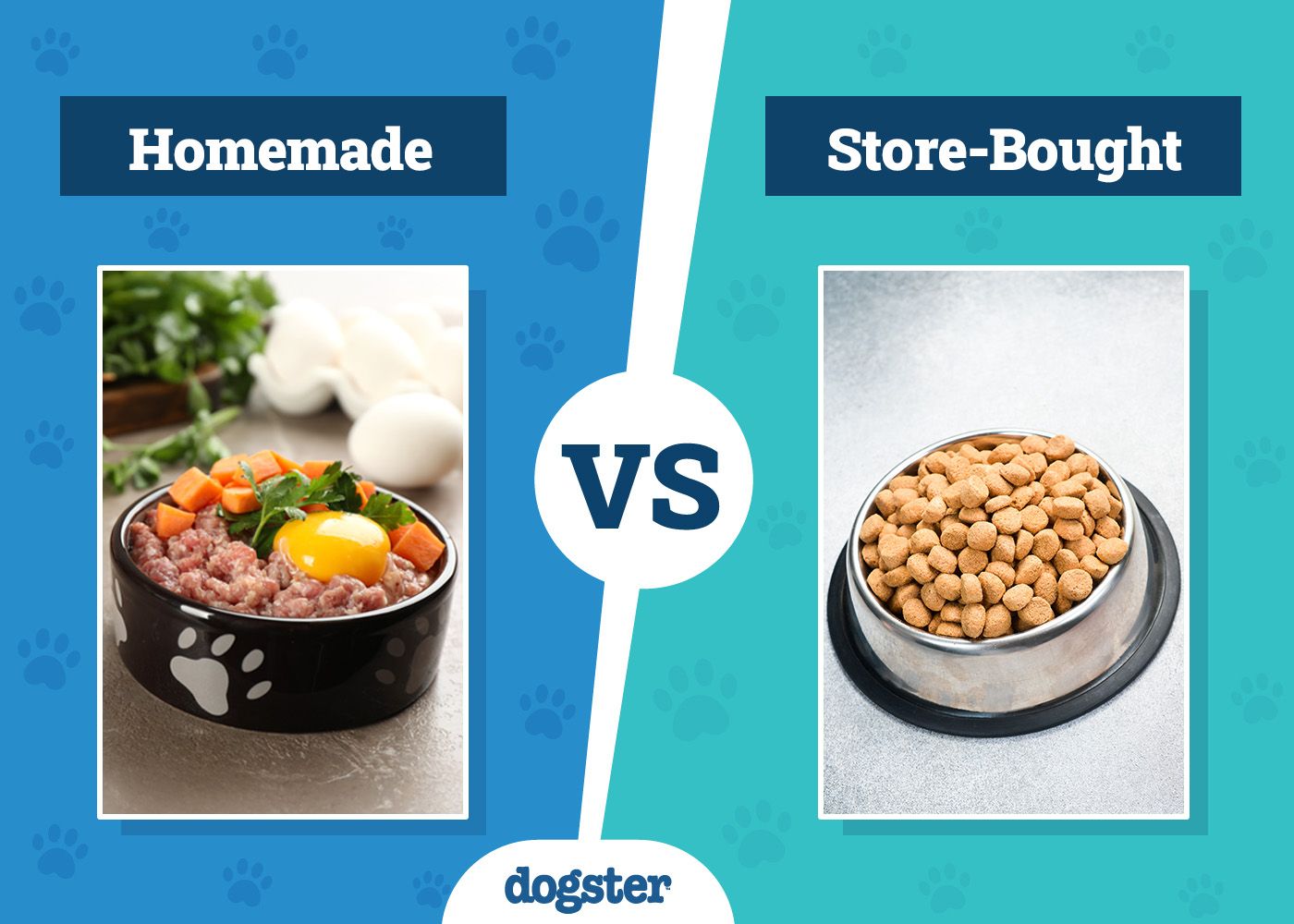
Dog owners want to give their dogs the best food possible, which may lead some people to wonder which is better for them: homemade or store-bought food? In this article, we compare both in detail.
In almost all aspects, store-bought wins over homemade dog food. It's certainly the more popular option and has more benefits for dogs and their owners. If you’re looking to save money, time, and effort while making sure your dog is getting quality nutrition, store-bought dog food is the way to go.
Homemade dog food requires meticulous planning. Gathering the ingredients to use can cost more than a bag of dog food from the store, and busy dog owners may not have the time necessary to dedicate to cooking. If you run out of time, your dog has no food.
While some dog owners choose homemade food because they believe that it’s healthier than store-bought, this isn’t always the case either. Read on for more information about both options to see which one is right for you.

At a Glance
Overview of Homemade Dog Food

Cooking for your dog enables you to give them various flavors each day so they don’t get bored of the same thing. You can also feed them fresh food for every meal, which some dog owners feel is healthier. Homemade dog food includes no preservatives because it isn’t made to last for weeks on a shelf. If your dog is allergic to certain ingredients, you can make sure these foods aren’t included. Recipes can also be customized for weight loss and other health concerns.
However, homemade dog food has to have the right balance of nutrients in it, or the results can be devastating. You can’t just cook chicken and vegetables for your dog and call it a day. You may need to use supplements to fill nutritional gaps, and these can be expensive.
Before you begin, you need the right advice from a veterinary nutrition expert who can offer scientifically backed recipes that will give your dog the correct nutrients. Homemade diets often lack iron, calcium, riboflavin, and vitamins E and B12. These are all necessary for a dog’s health. To prevent this, you can purchase a DIY homemade food package like the one offered by The Farmer's Dog.
Making homemade food can also be time-consuming, and if you run out of time, you won’t have any food for your dog. Keeping store-bought food on hand in case of this circumstance might seem like a solution, but dogs can get stomach issues and diarrhea from switching foods too quickly.
Pros
- Ingredients are always fresh
- You know what’s in the food
- Recipes don’t include preservatives
- Dogs won’t get bored of the flavor
Cons
- Time-consuming
- May lack necessary nutrients
- Ingredients need to always be kept on-hand
- Nutritional supplements can be costly
- Requires a great deal of work
- Education on dog nutrition is needed before starting
Overview of Store-Bought Dog Food

Store-bought dog food offers the right amount of nutrition for dogs of all breeds, sizes, and life stages. If you look for a food that meets the requirements of the Association of American Feed Control Officials, you can trust that the manufacturers followed the proper nutritional guidelines for the food’s targeted dogs. Senior dogs need different nutrition than puppies, which is another advantage that store-bought food has over homemade food. The life stages are already balanced appropriately to provide dogs of all ages with everything that they need.
Store-bought dog food is convenient. Unopened dry and wet food can stay on a shelf for a long time. It’s best to check the expiration date printed on the label to see how long this period is, but the fact that it's shelf-stable enables you to buy it in bulk or stock up when the food is on sale. No preparation is involved. You can just open it and feed your dog.
One major issue with dog food, though, is that it can have recalls. Companies can discover that their manufacturing process may have resulted in food contamination. In these cases, the food should stop being offered to your dog immediately and be returned to the place of purchase for a refund.
If your dog suffers from allergies, reading through countless ingredient lists can be time-consuming. Dogs with specific health issues need certain types of food, which can be hard to locate even among the seemingly endless number of options.
Pros
- Nutritionally balanced and complete
- Shelf stable
- Cost-effective
- Available for all life stages, breeds, sizes, and ages
- Convenient
Cons
- Occasional recalls
- May be difficult to narrow down a selection
- May go stale before it’s used once opened
What Are the Differences Between Them?
Health Benefits
- Edge: Homemade
Both homemade and store-bought dog food have health benefits. Homemade dog food contains only the ingredients that you choose to add, and you know everything that your dog is consuming. The nutrition is controlled by you. However, sometimes it can be impossible to include every nutrient that is essential for your dog’s health in a homemade recipe if it is not properly supplemented.
Store-bought dog food is required by law to meet nutritional and safety standards in production. The food is nutritionally complete and balanced. Learning how to make homemade recipes requires a great deal of time, dedication, and education to be sure that you're not eliminating anything essential from your dog's diet.

Nutrition
- Edge: Both
Store-bought food provides an easy solution to offer a complete and balanced diet to your dog. Homemade food also offers benefits: If you make a nutritionally complete recipe for your dog, they will get the proper amount of nutrition. But this is difficult to do, you need balanced, approved recipes and supplementation to guarantee that they are receiving the right number of vitamins and minerals.
Safety
- Edge: Homemade
In a homemade dog food recipe, you can see everything that’s included. While that doesn’t mean the food is never at risk of contamination, even in your own kitchen, the risk is reduced when you can control the food and how it’s prepared.
Store-bought dog food can always be recalled if there is an issue in the production, so we give the edge to homemade dog food when it comes to safety but only slightly.

Price
- Edge: Store-Bought
Store-bought food is an easy way to offer a complete and balanced diet to your dog. Homemade food also offers benefits: if you make a nutritionally complete recipe for your dog, they will get the proper amount of nutrition. However, this is difficult to do, as you need balanced, vet-approved recipes and supplementation to guarantee that your dog is receiving the right amount of vitamins and minerals.
Keeping up with these ingredients can be expensive. You also want to make sure you’re adding the correct number of vitamins and minerals to the food, which means you likely need to purchase supplements. If you’re making two or three meals every day for your dog, the costs of the meat, produce, and supplements can add up quickly.
Final Thoughts
When it comes to homemade dog food vs store-bought dog food, there are advantages and disadvantages to both. Store-bought food stands out as the better choice in terms of price and convenience.
Homemade dog food requires a great deal of work, both in learning how to make it correctly and then preparing the recipes. That doesn’t mean you should be discouraged from trying it, just that you should do it the right way. If done correctly, you will know exactly what you are feeding your dog and mix in some love, too. We recommend that you get advice from a veterinary nutritionist and speak to your vet before switching your dog to a homemade diet.
We hope that this article was informative and helped you decide which type of food is best for your dog.
See Also:
Expert dog care, straight to your inbox
Vet-reviewed advice, training tips, and the best of Dogster. Free, and you can unsubscribe anytime.
By signing up, you agree to our Terms & Conditions and Privacy & Cookies Policy.
Jessica has shared her home with feathered, furry, and scaly pets of all shapes and sizes for over 30 years as a lifelong resident of Chicago. Her enthusiasm for animals began at an early age and led to her owning and operating a pet care company. Jessica is now a full-time writer and spends her days writing about all types of animals. Jessica and her husband Dominic enjoy the city life while turning their backyard into an oasis for the neighborhood squirrels and birds.
Join the conversation
Ask a question, share your story, or send private feedback.