Dogster is reader-supported. When you buy via links on our site, we may earn a commission at no cost to you. Learn more.

Dog Nutrition

Can Dogs Eat Kale? Vet-Reviewed Facts to Know

Nicole Cosgrove
By Nicole Cosgrove · Reviewed & fact-checked by Dr. Paola CuevasVet Approved
Dr. Paola Cuevas
Reviewed & Fact-Checked byDr. Paola CuevasVeterinarian
Dr. Paola Cuevas is our Senior In-House Veterinarian at Dogster and Pangolia. She has over 19 years of experience working with an array of species and loves sharing her knowledge and experience with our readers and aims to provide assistance with any issue presented by your non-human family members. She received her degree from the University of Guadalajara, Mexico.View authorThe information is current and up-to-date in accordance with the latest veterinarian research. Learn more
Updated on June 29, 2026
Share
Can Dogs Eat_Kale

Kale is a popular health food in America and around the world, so it’s natural to wonder if dogs can also eat kale and get the same health benefits. The short answer is yes; most dogs can eat kale in small amounts. However, there are potential risks to consider.

Here, we take a closer look at kale to learn more about the benefits and risks of feeding it to your dog. We also discuss the best way to serve it and how often, so you can keep your pet healthy and happy.

Dogster divider_v2_NEW_MAY_24_

Is Kale Bad for My Dog?

Thallium

Thallium is a heavy metal found in the soil that can accumulate in many greens, especially those of the Brassica genus, including kale. If your dog eats too much, it can lead to thallium poisoning, which can cause digestive issues, trembling, seizures, elevated body temperature, and even death.

While most experts agree that a dog would need to ingest a large amount of kale to lead to poisoning, thallium is a heavy metal similar to lead that stays in the body for a long time, so toxicity can build up. It is worth noting that most cases of thallium poisoning in dogs are acute due to the ingestion of rodenticides rather than chronic accumulation. You can prevent issues by serving kale only sparingly, on occasion, and rotating it with other leafy greens.

Thyroid Impact

Raw kale can interfere with how your dog’s thyroid gland is absorbing iodine, causing it to operate incorrectly. While it’s unlikely to be an issue for healthy dogs, those suffering from hypothyroidism will need to avoid foods like kale.

Calcium Oxalate

Kale contains calcium oxalates that can bind to other minerals, preventing their absorption, or can clump together to form stones that might affect the urinary tract. A small amount of kale here and there is unlikely to be a problem, but dogs that have previously suffered from bladder stones should probably avoid this food.

Is Kale Good for My Dog?

Vitamins and Minerals

Kale has plenty of vitamins and minerals that are essential for a dog’s health. It provides your pet with a good amount of vitamins C, K, and carotene, all of which help boost the immune system and help your pet heal faster. It also contains iron, magnesium, calcium, potassium, copper, and other minerals your pet needs to build strong bones and develop properly.

Low Calories

There are almost no calories in kale, so you will not need to worry about your dog putting on weight by giving them kale as a treat. It’s also low in sugar and has no fat that might contribute to obesity.

Image Credit: Pixabay

Fiber

Kale is high in fiber, which can help balance your pet’s digestive system by feeding the good bacteria in their gut and regulating the water in the intestines. A dog with a diet high in fiber is less likely to be constipated or have diarrhea.

Water

Kale is moisture-rich, so eating it will help your dog stay hydrated. It can be particularly beneficial if your pet hasn’t been drinking enough water or they occasionally suffer with very mild constipation. Anything else will require veterinary attention.

dogster face divider

How Can I Feed Kale to My Dog?

  • To feed kale to your dog, the first thing that you will need to do is wash it. The large surface area of kale can harbor potentially dangerous pesticides. Wash both sides of the leaves with water before giving them to your pet.
  • You can feed a small amount of raw kale, whole or diced, but we recommend cooking or steaming it first to make it easier for your dog to digest, even though that robs it of some of the healthy nutrients.
  • Only serve a few leaves once a week as treats to avoid any health risks.
Dogster divider_v2_NEW_MAY_24_

Final Thoughts

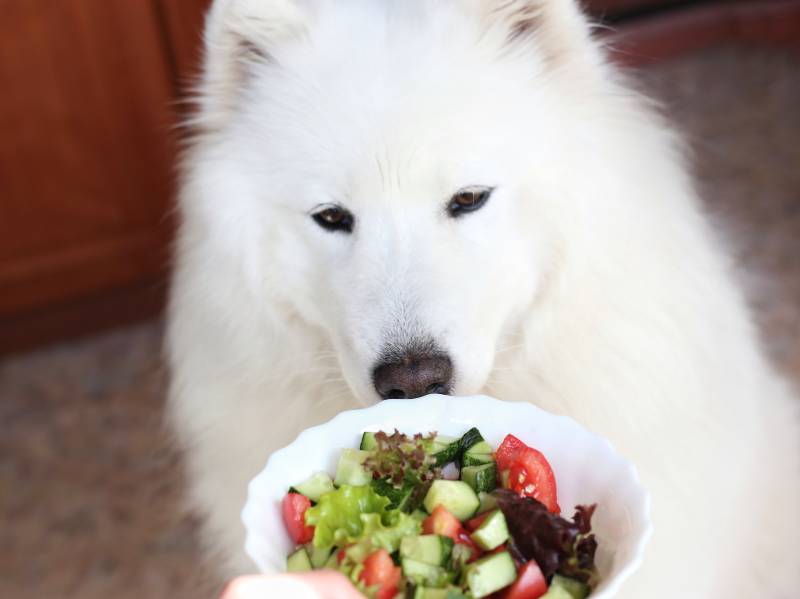
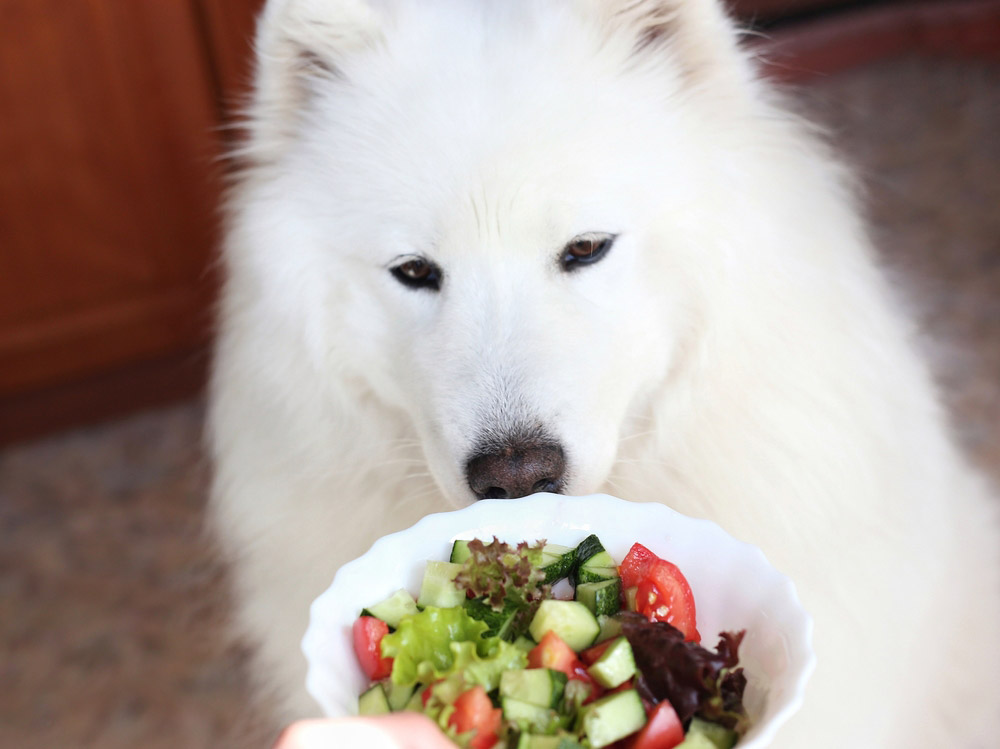
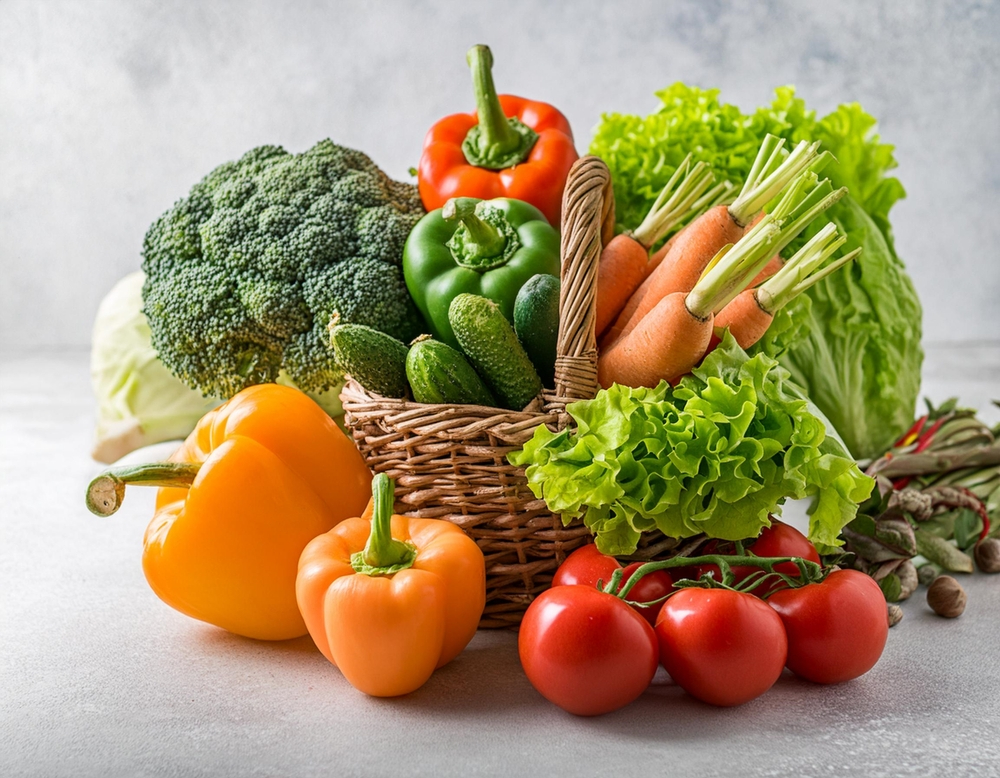
If your dog ate plain kale when you weren’t looking, there is no reason to be concerned. Your pet will simply have gotten a few healthy nutrients. In fact, you can find kale listed in the ingredients of many dog foods. However, we recommend avoiding adding it to your pet’s diet every day because health problems can develop over time. The amount of kale in dog food is tiny, and there are plenty of other healthy vegetables that you can feed your pet instead, like peas, green beans, spinach, and cucumbers.

Other Foods Your Dog Might Eat:

The Dogster Newsletter

Expert dog care, straight to your inbox

News, insights, expert advice, and everything dog.

No spam — unsubscribe anytime.

By signing up, you agree to our Terms & Conditions and Privacy & Cookies Policy.

Click a star to rate. You can leave written feedback afterwards. (We read all feedback.)

Nicole Cosgrove
Authored by

Nicole Cosgrove

Can Dogs Eat Broccoli? Vet-Reviewed Facts & FAQ

Can Dogs Eat Broccoli? Vet-Reviewed Facts & FAQ

The fact that dogs are omnivorous means you’re at liberty to supplement your dog’s regular food with veggies now and again (unless your vet has advised against…

Kit Copson
By Kit Copson · 1 week ago
Do Dogs Need Vegetables to Be Healthy? Our Vet Explains

Do Dogs Need Vegetables to Be Healthy? Our Vet Explains

We know that vegetables are a healthy part of the human diet, but can the same be said for a dog’s diet? Yes, in moderation, vegetables can be great additions…

Dr. Stacie Grannum
By Dr. Stacie Grannum · 3 weeks ago
Vitamin K for Dogs: 5 Vet-Approved Food Sources

Vitamin K for Dogs: 5 Vet-Approved Food Sources

Vitamin K is a necessary nutrient for all humans and animals. In addition to making this vitamin within our bodies, we can get the vitamin from the foods that…

Rachael Gerkensmeyer
By Rachael Gerkensmeyer · 1 week ago
Can Dogs Eat Vegetables? Vet-Verified Nutrition Facts, Safe Options & Benefits

Can Dogs Eat Vegetables? Vet-Verified Nutrition Facts, Safe Options & Benefits

Domestication has profoundly affected our canine companions. They have gone from carnivorous predators to pampered pets. Roughly 95% consider them members of t…

Chris Dinesen Rogers
By Chris Dinesen Rogers · 3 weeks ago

Thyme for Dogs: Our Vet Explains Potential Benefits, Uses & Risks

Thyme (Thymus vulgaris) is a popular spice that many people keep in their homes. You can even grow it in the garden or indoors to have a fresh herb to use in y…

Dr. Luqman Javed
By Dr. Luqman Javed · July 10, 2026
Thyme for Dogs: Our Vet Explains Potential Benefits, Uses & Risks

Can Dogs Eat Cabbage? Vet-Verified Nutrition Facts & Info

Cabbage is considered a healthy vegetable for humans, and one that we are encouraged to eat regularly as part of a balanced diet. It is also non-toxic to dogs,…

Matt Jackson
By Matt Jackson · June 17, 2026
Can Dogs Eat Cabbage? Vet-Verified Nutrition Facts & Info

Can Dogs Eat Bok Choy? Vet-Verified Health Facts & FAQ

Most dogs love it when you offer them something different from their usual diet, and what could be better than healthy treats like veggies? But certain seeming…

Genevieve Dugal
By Genevieve Dugal · July 10, 2026
Can Dogs Eat Bok Choy? Vet-Verified Health Facts & FAQ

Can Dogs Eat Cauliflower? Vet-Verified Nutrition Facts & FAQ

According to the International Fresh Produce Association (IFPA), cauliflower is the 16th most popular vegetable based on 2022 retail sales.1 After all, you can…

Chris Dinesen Rogers
By Chris Dinesen Rogers · June 29, 2026
Can Dogs Eat Cauliflower? Vet-Verified Nutrition Facts & FAQ

What Foods Are Dangerous for Dogs? Vet-Reviewed Fruits, Veggies & More

Fruits and vegetables are a necessary part of a human's diet, but did you know that they can play a role in your dog's diet too? Unfortunately, not all fruits…

Chantelle Fowler
By Chantelle Fowler · June 29, 2026
What Foods Are Dangerous for Dogs? Vet-Reviewed Fruits, Veggies & More

Can Dogs Eat Kohlrabi? Vet-Approved Facts & Safety Guide

The vegetable kohlrabi might not be very well known to many people and even the name alone might sound kind of foreign. It is characterized by being very simil…

Nicole Cosgrove
By Nicole Cosgrove · June 29, 2026
Can Dogs Eat Kohlrabi? Vet-Approved Facts & Safety Guide

Can Dogs Eat Spinach? Vet-Reviewed Facts & FAQ

If your dog already eats nutritionally balanced dog food, they should get all the necessary vitamins and minerals. However, if you want your dog to get an addi…

Elizabeth Gray
By Elizabeth Gray · June 29, 2026
Can Dogs Eat Spinach? Vet-Reviewed Facts & FAQ

Can Dogs Have Beets? Vet-Reviewed Nutritional Facts & FAQ

For many people, beets aren’t the first vegetable that comes to mind when they’re at the grocery store or getting ready to make dinner. They are an often malig…

Brooke Billingsley
By Brooke Billingsley · June 16, 2026
Can Dogs Have Beets? Vet-Reviewed Nutritional Facts & FAQ

Love Dogs? So Do We! Join the Dogster Community

Stay informed with expert pet care insights delivered straight to your inbox! Discover professional guidance on animal behavior, feeding tips, trusted product picks, and much more.

You may opt-out at any time. View our Privacy Policy for more information.

The Dogster app on a phone