Why Does My Dog Have Scabs on Their Back? 6 Vet-Verified Reasons


In this article
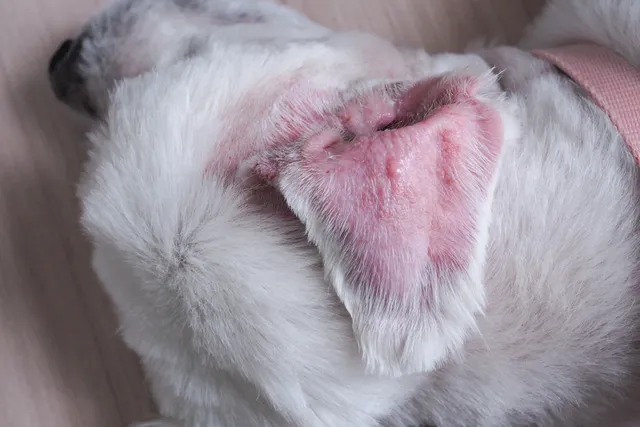
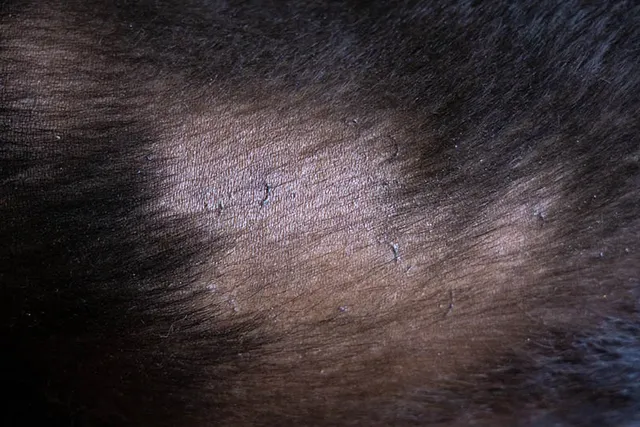
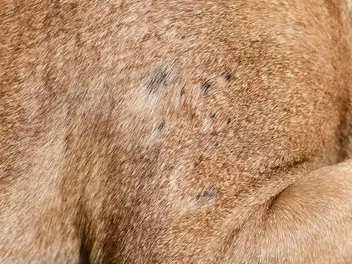
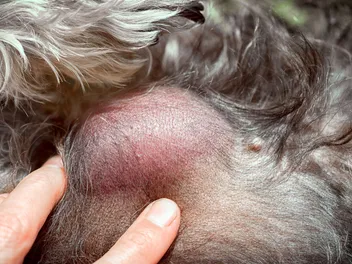
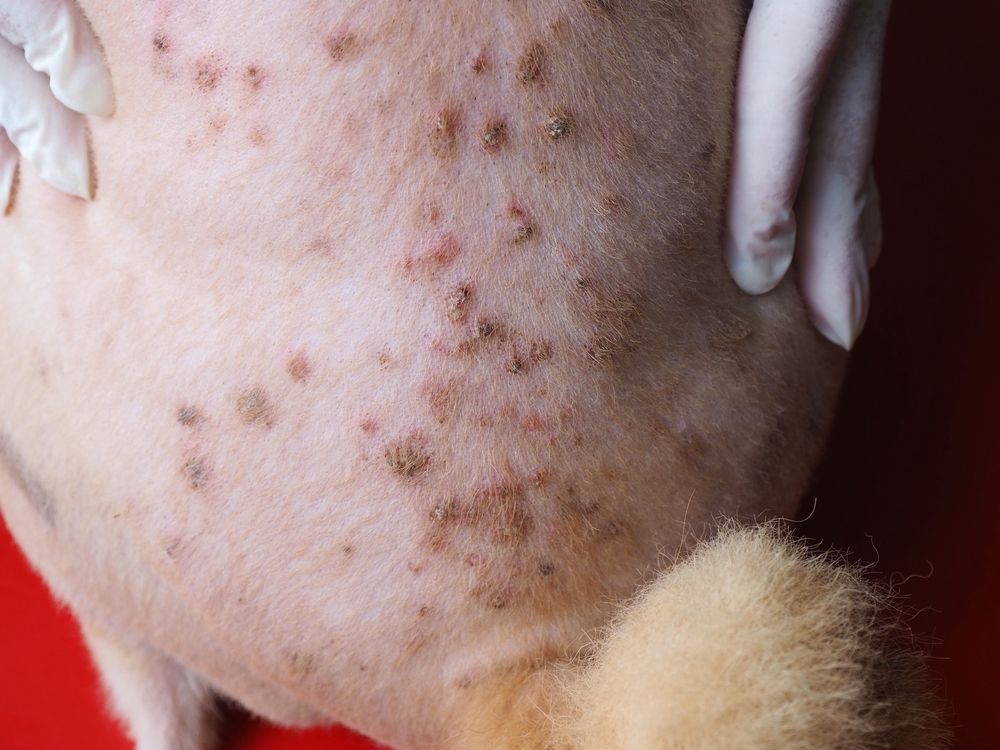
Finding crusty scabs on your dog's back can be stressful for pet owners. Not only are scabs gross to touch and clean, but their presence likely indicates that your pup is in some degree of pain, as many scabs are self-induced.
The good news is that discovering scabs on your dog isn't always a major cause for concern, but they're still something you should have evaluated by your veterinarian. Read on to find six potential reasons dogs develop scabs on their backs and what you should expect in terms of treatment options.

The 6 Reasons Dogs Can Get Scabs on Their Backs
1. Allergies
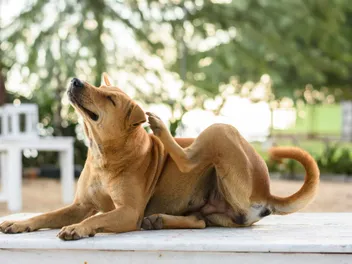
Just as with humans, allergies can cause extreme itchiness for affected dogs. Since pets don't understand that scratching is doing more harm than good, they'll often scratch themselves until they've caused inconsistent hair loss, skin thickening, and—you guessed it—scabs.
Skin allergies, also known as allergic dermatitis, are a common kind of allergy seen in dogs. Unfortunately, a vast range of irritants can cause flare-ups in your pup. The most common allergens are pollen, molds,house dust mites and storage mites, but even your pup's food can be a trigger.
Other signs of allergies in dogs include:
- Rubbing their body on the ground or against objects
- Excessive licking
- Chewing or biting themselves
- Excessive scratching
- Recurrent skin and ear infections
2. Parasites
The term "parasite" refers to any organism that feeds off your dog and depends on them to survive. They aren't always visible to the naked eye, but they can wreak havoc on your pup. Unfortunately, most dog owners will have to face parasites at some point.
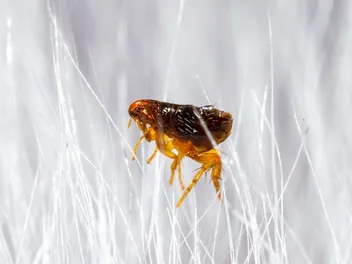
- Fleas are the most common parasite that causes scabbing on your dog's back and around their tail base. Some dogs suffer from flea allergy dermatitis (FAD) and are allergic to flea saliva injected by the bites of fleas. This makes them particularly itchy and more likely to develop scabs.
- Ticks are another common parasite found in dogs. Unfortunately, they're capable of producing life-changing diseases, so tick prevention is absolutely essential. Ticks can transmit infections through their bites, and the bites themselves can become infected if the parasite is allowed to feed on your dog for extended periods.
- Mange is a common skin disease in dogs that's caused by mites. There are two main types: sarcoptic and demodectic. Sarcoptic mange is highly contagious but, thankfully, rare. This condition can cause irritation and itching, which can lead to red, crusty, and scabby skin. Demodectic mange is not contagious, and dogs with this condition aren't as itchy as those with the sarcoptic type. They do, however, tend to lose their hair in patches.

3. Skin Conditions
Another leading cause of scabs on a dog's back is skin infections or diseases.
- Bacterial and fungal infections can cause your pup's skin to become dry, flaky, or crusty, which can lead to itchiness and discomfort. Dogs with such conditions may resort to excessive scratching to try to relieve themselves of their itchiness, causing sores and scabbing in the process. Ringworm is a fungal infection that can cause scaly skin with crusty scabs and areas of hair loss.
- Yeast dermatitis can occur when there's an abnormal overgrowth of the yeast Malassezia pachydermatis on your dog's skin. Malassezia is a fungal organism that normally lives on a dog's skin without causing any issues; however, if your pup's immune system is weakened or if they have an underlying health problem, the yeast can overgrow and cause infections. This condition causes extreme itchiness and skin changes, like thickening and discoloration.
- Dermoid cysts are congenital cysts that can develop along the midline of the back when puppies are still embryos. They can occur because the outer skin layer does not close as it should, creating little "pockets" that can accumulate debris like dander, hair, and skin oils. This is a rare cause of cysts and scabs along the backbone, seen most frequently seen in Rhodesian Ridgebacks and Kerry Blue Terriers.
- Ichthyosis is another rare condition that occurs due to a genetic mutation that prevents the outer layer of the skin from developing properly, and causing it to become thickened. Dogs with this condition will have rough skin with thick scales that stick to their hair and skin.
4. Autoimmune Diseases
Autoimmune diseases are conditions where the body’s immune system mistakenly attacks healthy cells.
There are many autoimmune systems in dogs, all of which can affect different parts of their body, including the skin. Pemphigus foliaceus is the most common immune-mediated skin disease in dogs and can cause scabs and ulcerated areas. These skin lesions can occur anywhere, including on a dog’s back, but are more common on their face, ears, groin, and footpads. If you are concerned your pup is suffering from an immune system disease, it's best to have them evaluated by your veterinarian as soon as possible.

5. Hormonal Imbalances
Hormonal conditions like hypothyroidism (lack of thyroid hormones) and Cushing’s disease (hyperadrenocorticism) can cause dry skin, hair loss, skin infections and itchiness. Dogs may begin licking, scratching, or chewing their fur and skin because of the irritation leading to scabs.
6. Injuries
A scab, by very definition, is a rough, protective crust that forms over a cut or wound during healing. Your pup's scabbing may be the result of exploring the forest on a hike and scratching their back on a tree branch or getting into a brawl with your household cat.


What to Do if Your Dog Has Scabs on Their Back
Only a veterinary professional can diagnose and recommend treatment options for your dog's back scabs. That said, they'll likely suggest the following to address your dog's skin condition.
Determine the Cause
Before you can begin treatment for your dog's scabs, you must determine what's causing them in the first place.
Many skin conditions can cause similar signs along with the scabs such as itchy, red and irritated skin. Your vet will examine your dog’s skin and may take samples to look at under the microscope or to send off to a laboratory. Your vet will need to know what's going on with your pup before developing a treatment plan.
Use a Veterinary Shampoo
If your pup is dealing with skin infections or allergies, a medicated veterinary shampoo may be recommended to treat their skin. The best shampoo for your dog will depend on the cause of the scabbing. There are plenty of formulas out there designed to target specific conditions, such as those containing antimicrobial and moisturizing ingredients.

Consider a Diet Change
If your pup's scabbing is being caused by their diet, your vet may recommend switching their food. Unfortunately, the only accurate way to diagnose a food allergy is to remove all the currently fed foods and begin a strict elimination diet. This must be done under the guidance of your veterinarian, so please do not try to do this alone.
Use Medication
If your veterinarian deems medication necessary, they may prescribe topical or oral medications to treat your pup's skin issues. Be sure to follow the dosage and administration instructions to a T to get the best results.
Keep Up With Preventatives
The best way to keep your pup healthy and scab-free is to follow your vet's instructions and keep up with any preventative treatments. Don't skip out on your dog's annual wellness exams, and keep up-to-date with the recommended flea, tick, and parasite regimes and vaccination schedules.

Final Thoughts
Scabs on your dog's back can be caused by numerous factors. The only way to know for sure what's causing your pup's scabbing is to visit your veterinarian. We do not recommend trying at-home treatments for scabs unless your veterinary team advises you to do so. You need to first accurately diagnose what's causing your dog's back scabs before moving ahead with treating them.
Sources
Featured Image Credit: Choun JC, Shutterstock
Expert dog care, straight to your inbox
Vet-reviewed advice, training tips, and the best of Dogster. Free, and you can unsubscribe anytime.
By signing up, you agree to our Terms & Conditions and Privacy & Cookies Policy.
Chantelle is passionate about two things in her life – writing and animals. She grew up on the prairies of Canada surrounded by animals and as an adult, she choose to share her home with five cats, two guinea pigs, and a bearded dragon. Chantelle, her husband, and their child take great pride in being great animal parents- the ones who spend a thousand dollars on wall-mounted cat shelves so that their cats can have an indoor jungle gym all year round. When Chantelle isn’t snuggling her cats on the couch or taking pictures of them being funny, she’s outside exploring in the Rocky Mountains, binging the same shows on Netflix over and over, and reading about whatever random topic pops into her brain.
Join the conversation
Ask a question, share your story, or send private feedback.