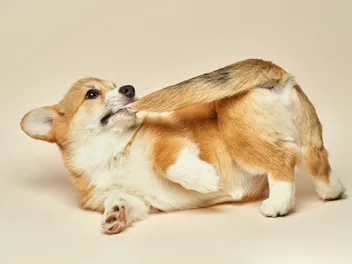
Why Do Dogs Scratch Themselves? 8 Vet-Reviewed Reasons



Scratching is a normal behavior in dogs once in a while, but if your pup is busy itching themselves nonstop, this can be a sign of a deeper issue. Excessive scratching can be caused by parasites or allergies or be a sign of an underlying disease, so it’s not something you should brush off, especially if it’s an out-of-character behavior for your dog.
Read on to learn eight potential reasons for your dog’s scratching, including signs to look for and treatment options.

The 8 Reasons That Dogs Scratch Themselves
1. Fleas

If your dog is scratching excessively or biting their skin, they may have fleas. Look at the base of their tail for flea “dirt” (the feces of adult fleas), which looks like flakes of black pepper. Some dogs suffer from flea allergic dermatitis (FAD) and are allergic to flea saliva, this means that only a few flea bites can lead to extreme itchiness.
Dogs that are highly allergic to fleas may also benefit from allergy treatments to address their itching and inflammation.
Other signs your dog has fleas include:
- Red pimples or bumps on the groin, belly, or tail base
- Hair loss
- Dry skin
- Skin biting
Fleas can be a huge problem once they enter your home and can be challenging to get rid of, which is why prevention is key. By regularly using flea and tick preventatives, you can take the reins and keep these pesky insects at bay. Speak to your veterinarian about the best options for your dog.
2. Seasonal Allergies
Your dog can get itchier during the warmer months when more mosquitoes are buzzing around and plants are shedding pollen. Just like humans, dogs can have reactions to airborne pollen and particles from grass and dust. Seasonal allergies are more prevalent during spring, summer, and fall, but they can be year-round in areas that experience warm or humid weather continuously.
Other signs your dog has seasonal allergies include:
- Biting their coat or skin
- Red and inflamed skin
- Excessive shedding
- Compulsive paw licking
- Hair loss
- Moist skin
- Head shaking
- Odorous skin or ears
3. Mange

Mange is a parasitic skin disease caused by mites. Two types of mites are responsible for this condition: one that lives under the skin’s surface (sarcoptic mange) and one that lives in the hair follicles (demodectic mange). Though the mites share similar characteristics, there are key differences, so it’s important to educate yourself on both types as they have differing causes and treatments.
Demodectic Mange
The most common type of mange is demodectic mange. It is caused by a mite that lives in your dog’s hair follicles and occurs most often in dogs with immature immune systems (e.g., puppies, seniors, or those with illnesses).
Signs of demodectic mange include:
- Hair loss
- Red, inflamedskin
- Thickened skin
Dogs with this type of mange are typically not excessively itchy.
Treatment includes topical or oral medications. Young dogs typically present with localized patches of hair loss, which resolve as the dog matures. Generalized demodectic mange in young and adult dogs is more difficult to treat, it requires more intensive treatments and any underlying conditions need to be addressed.
Sarcoptic Mange
Sarcoptic mange mites burrow beneath the surface of the skin of healthy dogs. This condition is also known as scabies and is zoonotic, meaning it can be transmissible from your dog to you.
Signs of sarcoptic mange include:
- Excessive itching
- Skin chewing
- Skin scratching
- Hair loss
- Thickened skin
- Darkened skin
There are several treatment options available including topical and oral medications. Anti-itch medications are often needed as well to give relief. Dogs with sarcoptic mange should be kept apart from other animals while they are being treated to prevent the spread of the mites. Your vet may recommend that other pets in the household are treated even if they aren’t showing clinical signs.
4. Ticks

Just like fleas, ticks require blood to survive. Their bites can cause inflammation, which can worsen the longer the tick is allowed to remain attached to the skin.
Ticks are very effective carriers of disease as they attach themselves firmly to the skin and feed slowly. If owners aren’t diligent about checking their dogs for ticks after walks, they can go unnoticed for periods of time. Tick bites can pose significant health risks, such as transmitting Lyme disease.
As well as scratching or licking at the site of a tick bite, signs of Lyme disease can include:
- Fever
- Lack of appetite
- Swollen joints and limping
- Lethargy
There are countless tick preventatives available, some of which are over the counter, while others are available only through your veterinarian. We highly recommend speaking to your vet before treating your dog with preventatives to ensure you’re using the right product for your dog’s size and age.
5. Dry Skin
Some dogs and certain breeds may be prone to developing dry skin, which can be extremely itching and irritating. For example, hairless dog breeds like the Xoloitzcuintli and the Chinese Crested can be prone to numerous skin conditions, and Alaskan Malamutes and Siberian Huskies can be prone to a condition called zinc-responsive dermatosis that causes scaly and crusty skin.
Feeding your dog a high-quality food that they digest and tolerate well can go a long way in keeping their skin healthy. However, it’s important to note that dry skin can sometimes be indicative of a larger problem. For example, metabolic diseases like Cushing’s disease and hypothyroidism are both associated with dry skin. If your pup develops dry skin suddenly, it’s best to have them examined by their veterinarian to rule out any underlying health issues.
6. Food Allergies

Some dogs may be allergic to components in the food you’re feeding them due to an overenthusiastic immune system reaction to a specific ingredient. When a dog’s immune system mistakenly treats the allergen like a foreign substance, it kicks into gear, causing inflammation and physical changes in the body. Dogs typically develop allergies to proteins (e.g.,beef, dairy, chicken, gluten), though virtually any food can produce allergies.
Signs of food allergies in dogs include:
- Itchy skin
- Frequent skin infections
- Chewing feet
- Licking feet
- Gastrointestinal issues (e.g., diarrhea, vomiting)
- Weight loss
Diagnosing food allergies can be challenging and should be done under the supervision of your veterinary team. You’ll need to put your pup on an elimination diet to determine what food they’re sensitive or allergic to. Once you know what ingredient is causing your pup’s allergies, your vet can suggest a diet that restricts the allergen.
7. Stress or Boredom
Sometimes, dogs will scratch themselves if they’re not being mentally stimulated enough or if they are feeling anxious about something in their life. Scratching can become compulsive in some dogs and can be akin to obsessive-compulsive disorder in humans. This behavior can sometimes be addressed by adding extra playtime into your pup’s day or investing in enrichment toys to keep them stimulated.
Other signs your dog is bored include:
- Other repetitive behaviors (e.g., pacing, tail chasing, spinning)
- Destruction behavior
- Inappropriate elimination
- Excessive sleeping
However, if anxiety is the root cause of the scratching behavior, your pup may require medication or therapies like pheromone collars or Thundershirts.
Other signs of anxiety in dogs include:
- Panting
- Pacing
- Withdrawal
- Aggression
- Irritability
- Inappropriate elimination
- Excessive barking
- Whining
8. Infections

Bacterial and fungal infections are common causes of scratching and itching behaviors. Infections are often accompanied by other signs like:
- Hair loss
- Flaky or crusty skin
- Redness
- Inflammation
- Scaling
- Odor
- Fluid discharge
If an infection is suspected, your vet may use topical or oral treatments to get it under control and investigate any contributing factors such as allergies.

Final Thoughts
There are many reasons your dog could be scratching themselves, and all dogs will itch themselves now and then. However, if this is an unusual behavior for your pet, we highly recommend seeking veterinary advice. It may just be that they’re bored, or their scratching could be a sign of something else going on that’ll require medication intervention.
See also:
Why Does My Dog Itch So Much But Has No Fleas? Vet-Reviewed Possible Reasons & What to Do
Why Do Dogs Scratch the Floor? 10 Vet-Reviewed Reasons Explained
Sources
Featured Image Credit: MitchyPQ, Shutterstock
Expert dog care, straight to your inbox
News, insights, expert advice, and everything dog.

No spam — unsubscribe anytime.
By signing up, you agree to our Terms & Conditions and Privacy & Cookies Policy.
How useful was this post?
Click a star to rate. You can leave written feedback afterwards. (We read all feedback.)
Chantelle is passionate about two things in her life – writing and animals. She grew up on the prairies of Canada surrounded by animals and as an adult, she choose to share her home with five cats, two guinea pigs, and a bearded dragon. Chantelle, her husband, and their child take great pride in being great animal parents- the ones who spend a thousand dollars on wall-mounted cat shelves so that their cats can have an indoor jungle gym all year round. When Chantelle isn’t snuggling her cats on the couch or taking pictures of them being funny, she’s outside exploring in the Rocky Mountains, binging the same shows on Netflix over and over, and reading about whatever random topic pops into her brain.