Why Do My Dog’s Ears Smell: 5 Vet-Reviewed Reasons


In this article
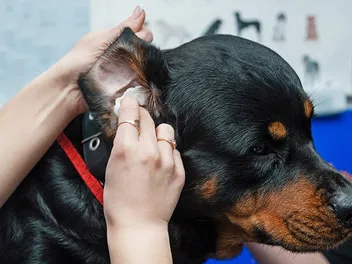
Grooming represents an essential part of any dog’s routine; it includes everything from regular brushing and dental and nail care to cleaning and checking your dog’s ears. It’s our job to keep our furry friends healthy and in good shape and pay attention to possible health problems that may arise along the way.
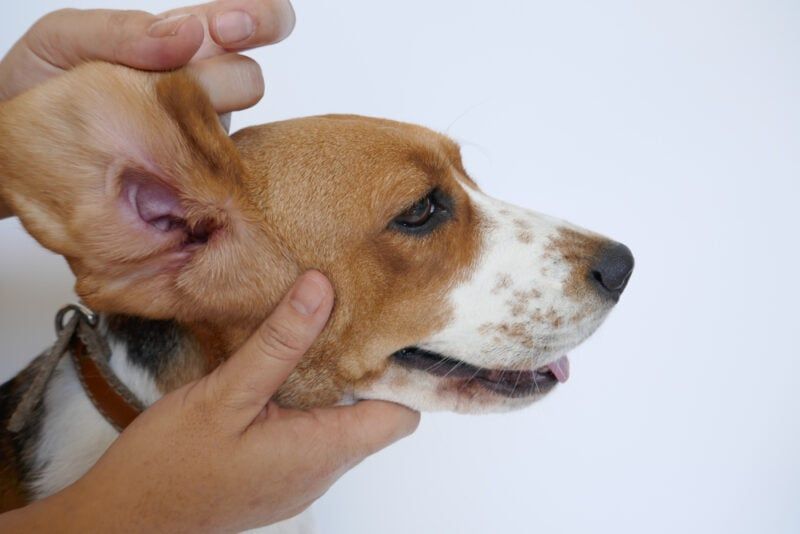
One of the common health problems dog parents can encounter is smelly ears. Healthy dog ears have minimal odor, meaning that smelly ears usually indicate something off with your canine.
In this article, we’ll talk more about the five possible reasons why your dog’s ears smell, how to prevent ear odors in your dog, and how to care for your canine’s ears properly.

The 5 Reasons Your Dog’s Ears Smell
1. Buildup of Earwax
Like humans, dogs also produce earwax, but they have self-cleaning mechanisms that help them regulate the amount of earwax in their ears. However, the self-cleaning mechanism in your dog’s ears can not work properly for various reasons, leading to a buildup of earwax.
Earwax typically doesn’t cause any discomfort in your dog, so you may not even notice something off. However, dogs' ears with extra wax buildup tend to have a mild odor, and the excess wax may be visible around the entrance to the ear canal, which is how you can verify this problem in your furry friend.
Some dog breeds are more prone to the buildup of earwax in their ears; those breeds include:
How to Resolve the Issue?
Having some earwax inside your dog’s ears is entirely normal, but if there’s a lot of wax buildup, especially if it's accompanied by a smell, it's best to get them checked by your vet.
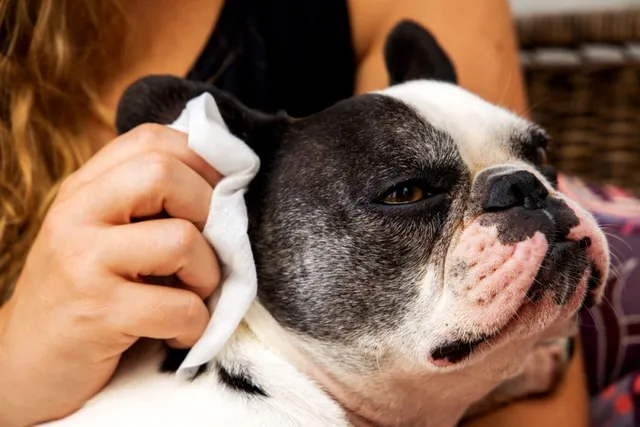
If cleaning your dog’s ears at home, you can use dog-friendly, vet-recommended ear-cleaning solutions that will allow you to remove the buildup easily and quickly.
2. Bacterial Ear Infections
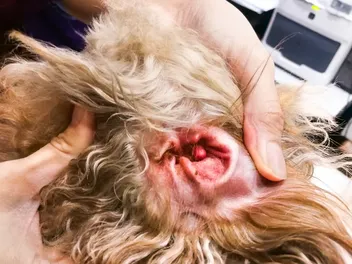
Dogs can suffer from various health problems; a common problem that leads to a bad smell coming from your dog’s ears is bacterial ear infections. Depending on the type of bacteria and the severity of the infection, the smell could vary from a mild odor to a bad smell you can sense across the room.
Other common signs of bacterial ear infections in your dog include:
If you notice any of these signs, it's essential to book an appointment with your vet as soon as possible. Ear infections are painful for your canine.
How to Resolve the Issue?
When suspecting a bacterial ear infection in your dog, it’s best to consult your vet about the possible treatment options.
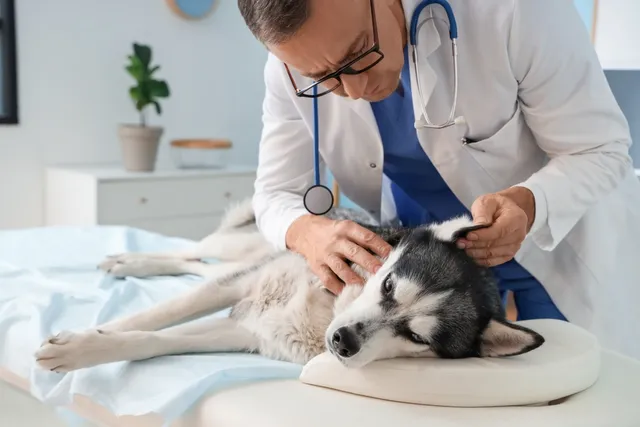
Most of the time, your vet will examine the ear canal with an otoscope and perform cytology to confirm the presence of a bacterial infection. As cytology requires your vet to take a cotton swab of the ear, you shouldn’t clean your dog’s ears before the vet appointment.
Your vet will likely prescribe antibiotic ear drops or oral medication for confirmed bacterial ear infections. In severe cases with large swellings, the vet may also prescribe oral steroids to reduce inflammation, pain, and swelling. Sometimes sedation or a GA is required to examine and treat the ear properly. Recurrent bacterial infections usually have an underlying cause such as allergies, so your vet may discuss further investigation with you.
3. Yeast Infections
It’s also common for dogs to have yeast infections in their ears, which can often be uncomfortable, annoying, and smelly. The most common yeast to cause an ear infection is Malassezia.
Although all dog breeds could potentially suffer from a yeast ear infection, this condition is especially common in certain dog breeds, usually with floppy ears, including:
Most of the time, yeast ear infections lead to your dog’s ears having a somewhat sweet yet musty odor. The discharge is usually pale brown in color and your dog will show similar signs to dogs with a bacterial ear infection: redness, swelling, and irritation of the ears.
Yeast infections can also be connected with other underlying issues, such as allergies or stuck objects inside the ear. Because of that, it’s essential to recognize the early signs of a problem and get your dog to their vet.
How to Resolve the Issue?
If you notice an odor coming from your dog’s ears and suspect your dog has an ear infection, it’s best to consult your veterinarian as soon as possible. The vet will do the necessary tests, typically including cytology, to diagnose this issue.
Most veterinarians will prescribe antifungal ear drops, dog-friendly ear cleaners, or oral antifungal medication for more severe cases. After the diagnosis, you can clean your dog’s ears at home following your vet’s instructions; however, remember never to clean your dog’s ears before the vet appointment, as you could make the diagnosis more challenging.

4. Mixed Ear Infections
Besides having bacterial and yeast ear infections, dogs could suffer from mixed ear infections containing both yeast and bacteria that also cause a bad smell. The signs will be similar to the signs of any ear infection.
How to Resolve the Issue?
The treatment for mixed ear infections will vary based on the type of organisms and the amount of them in your dog’s ear. These treatments are often similar to treating yeast infections and bacterial infections; your vet will determine the severity of the problem and offer possible treatment solutions.
5. Ear Mites
Dogs can also often suffer from ear mites (Otodectes cynotis), highly contagious parasites which infect the insides and outskirts of your dog’s ear canal. Ear mites can also affect other animals, so if you live in a multi-pet household, all pets will likely need treatment.
Some of the most common signs of ear mites include:
Ear mites can cause the ears to smell but they are difficult to see with the naked eye. They can affect dogs of any age but are more common in younger animals.
How to Resolve the Issue?
Your vet will normally confirm the diagnosis by examining your dog’s ears with an otoscope. They may also take a sample to look at under a microscope if needed.
Dogs are usually treated with a medication to kill the ear mites, this may be a spot-on topical medication or tablet. They may need medicated ear drops to help with the inflammation and infection. It's also likely your vet will suggest an ear cleaner.


How to Prevent Ear Odors in Your Dog
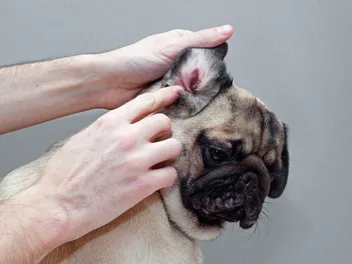
Ear problems are not completely preventable but are much easier to treat if the signs are picked up earlier. Regularly inspect your dog’s ears, checking for any discharge or smell. Remember your dog’ ears can be a very delicate and sensitive area, and it is important to form positive associations with their ears being touched. Routine ear cleaning can be helpful to remove wax and debris from within the ear, but excessive cleaning can also cause problems. Discuss the cleaning regime/product with your vet, and never use cotton buds in your dog's ears.
Final Thoughts
If you notice an unpleasant smell coming from your dog’s ears, that’s typically a sign of something going on. As bacteria and yeast infections, as well as ear mites, can cause the odor, it’s best to consult your veterinarian. They will check your dog’s ears and do further testing to determine the problem.
Most of the time, treatment for causes behind smelly dog ears requires a mixture of oral and topical medications and ear cleaning to prevent further problems. Checking for underlying issues such as allergies may also be required.
Related read: 13 Dogs with Curly Ears
Sources
https://www.petmd.com/dog/general-health/why-do-my-dogs-ears-smell-bad
https://www.akc.org/expert-advice/health/dog-ear-infections/
https://pets.webmd.com/dogs/yeast-infection-in-dogs-causes-treatment-and-prevention
https://www.petmd.com/dog/conditions/infectious-parasitic/ear-mites-dogs
https://www.bluecross.org.uk/advice/dog/health-and-injuries/ear-mites-in-dogs
Featured Image Credit: Kate Kanmepol, Shutterstock
Expert dog care, straight to your inbox
News, insights, expert advice, and everything dog.

No spam — unsubscribe anytime.
By signing up, you agree to our Terms & Conditions and Privacy & Cookies Policy.
How useful was this post?
Click a star to rate. You can leave written feedback afterwards. (We read all feedback.)
I'm a creative, adaptable content writer that covers various topics such as DIY, pets, home improvement, travel, gardening, and more.
As a young mom and a college student, I didn’t have enough time to balance my personal and work life, so after multiple years of working a regular 9 to 5 job, I decided to pursue my passion and make a living out of it. I have been writing for a couple of years now, helping people to find valuable and interesting information online.
I believe that writing is a great way to share your knowledge with the community and express yourself. There's nothing that words cannot accomplish, so I always try to use them in the best possible way.