11 Fascinating Facts About Your Dog’s Ears: Vet-Reviewed Facts & FAQ


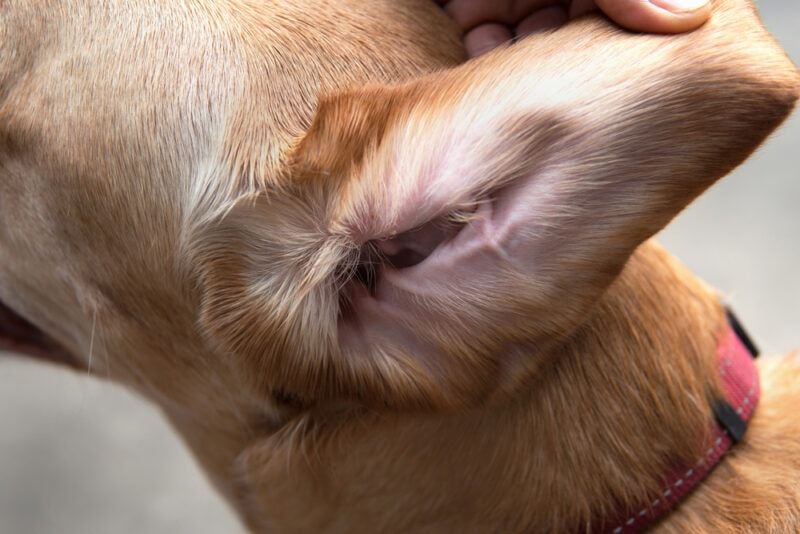
Canines have many unique traits, but one anatomical feature that stands out is their ears. These can be long, short, pointy, folded, or floppy, but one thing is for sure: Dog ears look adorable, regardless of their shape and size!
Of course, the primary purpose of a dog’s ears is not to be cute but to help the dog hear things around them. Besides providing outstanding hearing abilities, canine ears are quite distinct compared to those of other animals.
Read on to learn more about your dog’s ears and what makes them so fascinating.

The 11 Fascinating Facts About Your Dog’s Ears
1. All Puppies Are Born Deaf
While most animals are born with a sense of hearing, that’s not the case with dogs. All puppies are born functionally deaf, with their ear canals closed. Hearing is the last sense that gets developed, and it starts when your puppy is around 3 weeks old.
The canine sense of hearing keeps developing until your puppy is 2 months old, which is when their hearing should be completely developed. Once they get this ability, puppies can hear a wide range of different frequencies.

2. Dogs Hear Better Than Humans
While dogs take a long time to develop their sense of hearing, once it's fully developed, it's quite impressive because their ears are incredibly sensitive. In fact, canines can hear things four times better than humans, and they can pick up on various frequencies that we can't.1 The average frequency range for a human is from 20Hz to around 20Khz, and dogs hear higher frequencies, ranging between 40Hz and 60kHz.
Canine ears are always functioning, and our furry friends can hear so many things in their surroundings that we won't even notice. So, even when your dog is sleeping, they can still hear you breathing, the clock on the wall, or a fly that's buzzing around your home.
One thing to mention is that like with humans, a dog's ability to hear can decline with age, and some dogs can experience hearing issues.
3. Dogs Can Filter Specific Sounds
Due to their excellent hearing abilities, dogs can hear frequencies and sounds that we can’t. However, this ability can probably become tiring for your pup, especially since canines hear things even when they’re sleeping.
Fortunately, nature has made sure to help dogs that don’t want to hear specific things. Canines are capable of filtering specific sounds, which enables them to concentrate on the things that they actually want to hear.
This feature of canine anatomy is especially important in chaotic situations with a lot of different sounds, as your furry friend will be able to tune out other noises and concentrate on your voice.

4. Dog Ears Have Multiple Muscles
When you look at your dog's ears, you may probably think they don't contain any muscles, as they're typically soft. However, dog ears have multiple muscles, typically at least 18 in each ear! These are essential for dogs to move, raise, tilt, and rotate their ears and hear and identify different sounds in their environment.
Since each of a dog's ears has muscles, they also have the ability to move one ear independently of the other.
5. Dogs Can Express Emotions Through Their Ears
Your dog can express how they're feeling by making different ear movements. For example, if they have their ears slightly pulled back but they're wiggling their tail, that can indicate that your puppy is happy and ready to play. Similarly, if your dog has their ears pinned back or to the side, it may mean that your furry friend is stressed, scared, or anxious.
Of course, just observing the ears is not enough to entirely understand how your dog feels. However, in combination with other physical movements, you should be able to sense your dog's emotions and know how your beloved friend feels.

6. Ear Infections Are the Most Common Health Problem in Dogs
While the ears serve an essential purpose in a canine’s life, they can also cause health problems. In fact, ear infections are among the most common health problems in dogs and are frequent reasons for vet visits.
All dogs are susceptible to ear infections, though this health problem is more common in some breeds with long, floppy ears, including:
These infections can be annoying and painful for your dog, so it's vital to react promptly and take your canine to the vet to get the needed treatment.
7. Dogs Have L-shaped Ear Canals
One of the main reasons dogs are so prone to ear infections is that each of their ears has an L-shaped ear canal. This shape prevents dirt and debris from entering the ears and yeast and bacteria from reaching the interior.
However, dogs can still frequently get things like grass seeds stuck inside, which can cause ear problems. Also, due to that L-shape, ear examination can be more challenging.

8. The Dog With the Longest Ears Is a Coonhound
It’s common for Coonhounds to have long ears, but one Coonhound has ears so long that they got a spot in the Guinness World Records. A Coonhound named Lou has the longest dog ears, which are 13.38 inches long. The owner claims that even with that extreme length, her dog’s ears are easy to care for.
9. There Are Multiple Types of Dog Ears
Dog ears come in many different shapes and sizes, and there are multiple different types. They can be short, long, point, or flappy; the possibilities are endless!
The most common canine ear shapes include:
It is common practice for certain breeds to have their ears cropped/cut soon after birth to change them from natural floppy ears to short pricked-up ears. This is a controversial topic, though.

10. Dog Ears Have a So-Called Henry’s Pocket
All dogs have a small, cute flap on their ears, commonly known as Henry's pocket. It's located on the skin at the margin of each ear. Nobody knows what exactly it does, but there are a few different theories, including:
- The Henry's pocket enables dogs to better locate sounds around them.
- It helps enhance the sounds that they hear in their environment.
- It helps dogs flatten their ears.
11. Dog Ears Have Pheromones
Dog ears are truly unique, and one thing that makes them so special is the fact that they contain sebaceous and ceruminous glands with pheromones. These pheromones are quite similar to those released by a mother dog to make her puppies recognize her. They also serve an important purpose in dog communication and socialization, which is why many dogs greet each other by sniffing their ears.

Conclusion
Your dog's ears are essential for hearing, showing emotions, and releasing pheromones. They come in various types, shapes, and sizes, making them extremely cute. However, due to the shape of the inner canals, many dogs suffer from ear infections, which is why you should practice regular maintenance and keep your canine's ears in good shape. See Also:
Sources
Featured Image Credit: 9gifts, Shutterstock
Expert dog care, straight to your inbox
News, insights, expert advice, and everything dog.

No spam — unsubscribe anytime.
By signing up, you agree to our Terms & Conditions and Privacy & Cookies Policy.
How useful was this post?
Click a star to rate. You can leave written feedback afterwards. (We read all feedback.)
I'm a creative, adaptable content writer that covers various topics such as DIY, pets, home improvement, travel, gardening, and more.
As a young mom and a college student, I didn’t have enough time to balance my personal and work life, so after multiple years of working a regular 9 to 5 job, I decided to pursue my passion and make a living out of it. I have been writing for a couple of years now, helping people to find valuable and interesting information online.
I believe that writing is a great way to share your knowledge with the community and express yourself. There's nothing that words cannot accomplish, so I always try to use them in the best possible way.