How Big Is a Spay Incision? Vet-Reviewed Health Facts


In this article
If you’re considering getting your dog spayed, you’re on the right track. There are numerous health and behavioral benefits to the procedure, but what can you expect when you bring your dog home?
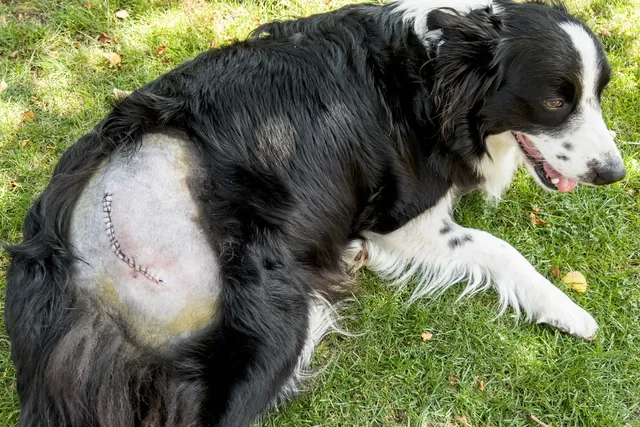
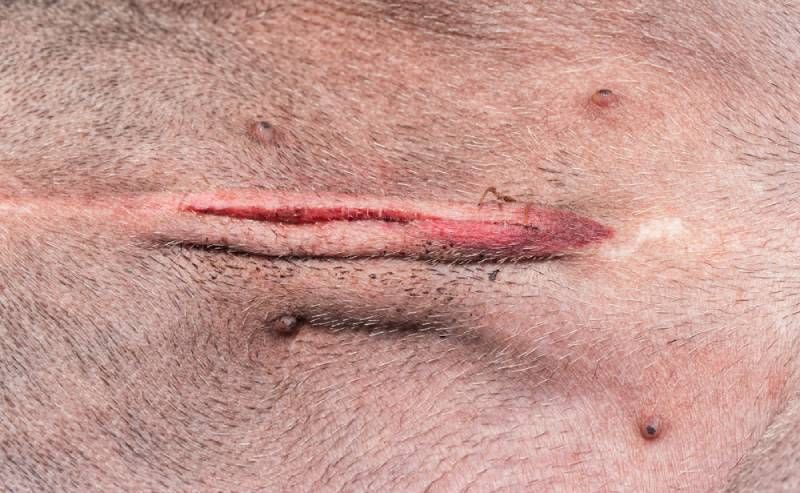
The exact size of the incision will vary depending on the type of spay surgery they get, ranging from two small incisions about 1/5th of an inch in size, all the way up to one incision that is 4 inches long. We’ve highlighted everything you need to know below so you can determine exactly what will happen to your dog and how big their spay incision is likely to be. However, if you want a direct answer, just reach out to the vet who will perform the surgery.

Traditional Spay Incision Size
If your dog is undergoing a traditional spay surgery, you can expect the incision to be between 2 and 4 inches long, depending on the size and age of your pup. Often, the larger your dog, the larger the surgical incision will be. Bear in mind that each vet will make a different sized incision, and this is due to their surgical preference. In dogs with deeper abdomens, the wound may have to be larger to allow the veterinary surgeon to access and remove the ovaries.
The ideal time to spay a dog depends on their breed.1 In most small breeds, you usually need to wait until they’re at least 6 months old before the surgery, but this depends on your vet’s preference. Larger breeds vary in terms of ideal timings. Thankfully, traditional spays are readily available at most veterinary hospitals and are fairly affordable.
If the size of a 2- to 4-inch incision is a bit much for you, you could opt for a laparoscopic spay instead, which is more expensive but less invasive.

Laparoscopic Spay Incision Size
While a traditional spay incision is between 2 and 4 inches long, a laparoscopic spay incision is much smaller. With a laparoscopic spay, there are two incisions made. Each incision is between 1/5th to 2/5th of an inch long. The surgery is less invasive and leads to less trauma and post-operative discomfort. Some other benefits include less bruising at the surgical sight, smaller wounds to manage, quicker recovery and fewer complications from surgery. It is important to note that in a laparoscopic spay, only the ovaries are removed. The uterus is left in, but this should cause no problems as long as both ovaries are removed completely.
Each vet has their own preferences, and it’s best to follow their advice when it comes to surgery.

Is Spay Surgery Painful?
No matter how you look at it, spay surgery isn’t a pleasant experience for your pup. It’s a surgery that involves exterior incisions and procedures happening inside your dog’s body, which are painful to recover from.
This is why veterinarians can and should prescribe pain medications for your dog while they’re recovering. And keep in mind that while the surgery is painful, there are numerous health benefits that make it more than worth it (in all breeds except Golden Retrievers)2 in the long run.
The Spay Surgery Process

If you’re like us, you want to have all the information possible before making a decision, which is why we wanted to give you a brief rundown of the surgical process. However, if you have any questions, they should always be directed to the vet who will be performing the surgery.
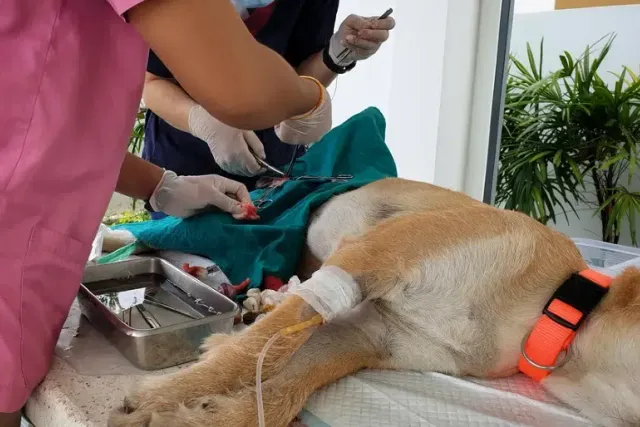
The process begins with your vet completing some routine bloodwork to ensure your pet is ready for surgery. Next, the vet uses a sedative to reduce your pet’s anxiety and give some preemptive pain relief, before placing them under general anesthesia.
The veterinary nurses then prepare and stabilize the patient. This includes preparing the area for surgery by clipping hair and sterilizing the skin, monitoring the breathing rate and heart rate of your dog, amongst other parameters. Once the patient is prepared, the veterinary surgeon will make their incision just below the belly button. This incision will go through the skin but also through the muscle layers of your dog’s abdomen. The vet will then locate and remove the reproductive tract, which includes the uterus, and both ovaries. They then close the incision with two layers of stitches under the skin that will dissolve over time. The skin can be closed with stitches (which are often self-dissolving and may or may not be visible), or skin staples.
The vet then administers more pain medication so they wake up in a little less pain, and the recovery process begins!

Advantages of Spaying Your Pet
There are numerous advantages to spaying your pet, including preventing accidental puppies. Another advantage is that you don’t need to worry about spotting around your home, which can be messy and unsanitary. On top of that, spaying can help protect your dog from future diseases, like uterine infections and breast cancer. Behavioral benefits of spaying can include a reduction in humping, roaming, and inter-dog aggression.
Final Thoughts
Now that you know a little more about the spaying process and why it’s beneficial for your pooch, all that’s left is for you to reach out to your vet and schedule an appointment. While it might be scary for you and your dog, it’s the best thing for them in the long run! If you do have a female Golden Retriever, it is best to speak to your vet about when and if you want to spay her at all.
Sources
Featured Image Credit: Sari ONeal, Shutterstock
Expert dog care, straight to your inbox
News, insights, expert advice, and everything dog.

No spam — unsubscribe anytime.
By signing up, you agree to our Terms & Conditions and Privacy & Cookies Policy.
How useful was this post?
Click a star to rate. You can leave written feedback afterwards. (We read all feedback.)
Adam is a professional freelance writer and animal enthusiast who has rescued countless animals throughout the years. He's been a freelance writer for ten years and has been rescuing animals for even longer! Adam is also a proud father of three kids and is always up for a challenge and adventure!