Back Pain in Dogs: Our Vet Explains Signs, Causes & Treatment

In this article
You probably know that back pain is common in us two-legged humans. Many people don’t know, however, that back pain is also relatively common in their four-legged companions. Dogs suffer back pain for both similar and different reasons to people. Back pain can be tricky to diagnose in dogs, in part because they do not arrive at the clinic and announce to the veterinarian, “I have a sore back”.
So, what are the causes of back pain in dogs, and what remedies are available to help them recover? This article will discuss the importance of getting an expert’s opinion, as well as pain relief, rest, physiotherapy, and adjustments you can make at home. It will also touch on what signs to watch for and alternative therapies.

Signs of Back Pain
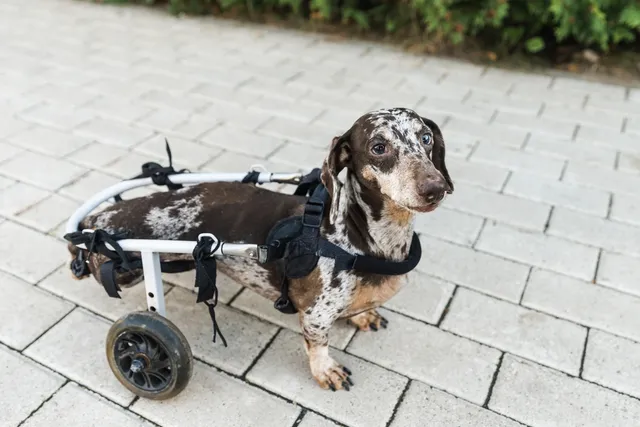
Here, it helps to categorize back pain into those conditions causing pain (and pain alone), and those conditions causing pain and neurological deficits. The latter occurs when the spinal cord, which runs between the vertebrae that make up the spine, is compressed.
This prevents nerve signals from reaching their target, such as the legs, after being sent out by the brain.

1. Back pain without neurological deficits
- Reluctance to walk or jump
- Stiff and stilted gait, as if walking on egg-shells
- Hunched or arched appearance to the back
- Pain or sensitivity when touched on the back
- Normal coordination
2. Back pain with neurological deficits
- Difficulty walking
- Stumbling and crossing legs
- Paralysis of the back legs or all four legs
- Loss of pain perception
- Severe pain and distress


Causes of Back Pain
There are numerous causes of back pain in dogs, ranging from those relatively benign in nature to those that can be life-threatening. The four most common causes have been summarized below:
1. Arthritis
As dogs age, the bones and joints in their back experience “wear and tear.” This can cause pain and bony protrusions.

2. Disc Disease
This refers to the intervertebral discs that sit between vertebrae (bones of the spine). More specifically, it refers to the bulging of that disc, which puts pressure on the spinal cord. There are sub-types of disc disease in dogs—some occur slowly over time; others occur very suddenly. Disc disease can cause anything from mild back pain to complete paralysis.
3. Soft tissue injury
This is vet-talk for an injury, normally caused by landing awkwardly, turning too quickly, or just over-exercising. Soft tissue injuries are unlikely to cause neurological problems.

4. Inflammatory conditions
Infections and auto-immune conditions affecting the layers of tissue around the spine can cause significant back pain in dogs.

Recovering From Back Pain: A 5-Step Approach
Follow this plan to help with your dog's back injury recovery time.
1. Arrange a Vet Consult
We can’t emphasize enough the importance of seeking prompt veterinary care and following your veterinarian’s guidance. Your vet will ask questions, examine your dog, and arrange suitable tests; sometimes, they may recommend an MRI or CT scan to visualize the back and spinal cord.
They can discuss the treatment options and prescribe pain relief.
2. Pain Relief
One of the cornerstones of being a vet is alleviating pain; of course, no dog owner wants to see their dog in pain. Anti-inflammatories are commonly prescribed, though other pain-relief medications may also be warranted.

3. Rest and Controlled Exercise
Rest allows inflammation in muscles and ligaments to settle down. However, too much rest can be counterproductive.
As a rule of thumb, gentle leash exercise is beneficial. When not performing this gentle exercise, it’s best to keep your dog in a crate or small room to minimize movement and prevent jumping. It may feel a bit cruel, but it’s in their best interests.
4. Physiotherapy
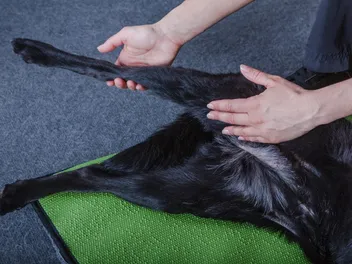
Your vet may allocate a specific physiotherapy plan for your dog. Hydrotherapy (under-water exercise) is also useful, depending on the severity of your dog’s injury.
Heat packs for 10–15 minutes per day are a good way of providing comfort and promoting blood flow to the area, which improves healing.

5. Home Adjustments
Providing non-slip floors is very helpful; you may have to lift your dog onto the couch, or into the car, to prevent them from jumping. Weight loss is very important (if your dog is overweight). Restrict access to stairs.
A Note on Other Therapies
In addition to the steps outlined above, you may hear about other treatment options for dogs with back pain. Some have limited research, and others must be discussed with your veterinarian. Joint supplements may or may not be beneficial.
Laser therapy appears promising if performed by an expert. Acupuncture and other traditional remedies may be useful, though more research is needed.
At this point, it is appropriate to state that many dogs experiencing neurological issues as a result of spinal cord compression require surgical intervention. This surgery removes the bulging disc material and is generally performed by a veterinary specialist.
Conclusion
Thankfully, the strategies outlined above allow most dogs to make a recovery from their back pain. If you are concerned that your dog is experiencing back pain, or want to implement a plan to minimize the risk of back pain, we recommend arranging a consult with your veterinarian.
Sources
Featured Image Credit: Elena Loza, Shutterstock
Expert dog care, straight to your inbox
Vet-reviewed advice, training tips, and the best of Dogster. Free, and you can unsubscribe anytime.
By signing up, you agree to our Terms & Conditions and Privacy & Cookies Policy.
Dr. Joe Mallat DVM (Veterinarian)
Joe is a veterinarian from Sydney, Australia. When he's not working, he enjoys cooking, exercising, and exploring the Australian wilderness. He has worked for 2 years at a mixed-species practice on the mid-north coast of New South Wales, treating animals of all sizes. His areas of particular interest include wound management, internal medicine, and oncology. Joe's love for the profession comes not only from helping dogs, but also from helping their parents and working with wonderful teams of people.
Joe completed his Bachelor of Veterinary Biology and Doctor of Veterinary Medicine at the University of Sydney in 2020.
Join the conversation
Ask a question, share your story, or send private feedback.