Are Skinks Poisonous to Dogs? Vet-Verified Dangers, Toxicity & Effects



In this article
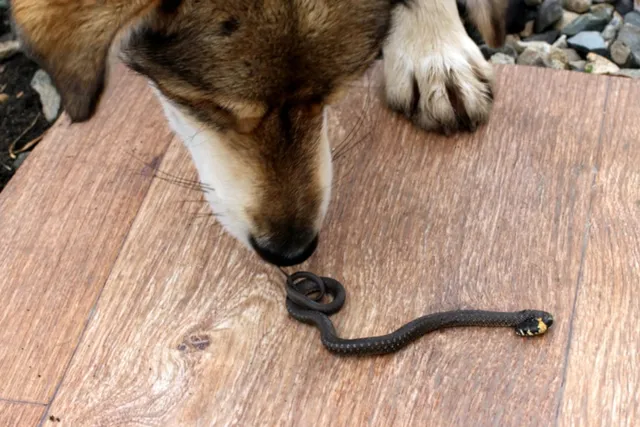
Skinks are reptiles that are commonly kept as pets. While many of them look exotic and have vibrant colors and unique features, most of them are harmless to dogs. They don’t secrete venom or have venomous bites, they are also not poisonous. So you usually don’t have to worry if your dog comes in contact with one.
Of course, as with any animal bite, there can be some safety risks that are involved. Here’s what you need to know about skinks and what to do if your dog gets bitten or comes in contact with one.

What Are Skinks?
Skinks are a type of lizard that belongs to the Scincidae family. There are over 1,700 different species of skinks, making Scincidae an extremely diverse family of lizards. While skinks can vary in appearance, most are characterized to have smaller legs than true lizards. Many skinks also don’t have a pronounced neck.
Wild skinks can also be found living in various kinds of ecosystems across the world. They can live in deserts, grasslands, and mountain ranges. Skinks are typically ground animals that burrow, but some can be arboreal and aquatic.
Many species of skinks are popular pets for reptile enthusiasts. They’re loved for their adaptability to handling, beautiful and vibrant coloring, and mild temperaments. Some species are also quite hardy, which makes them considerable options for novice reptile owners.

What Happens if Your Dog Touches a Skink?
For the most part, skinks are not poisonous or venomous. So, there really shouldn’t be any issues if your dog touches or licks a pet skink. In the rare case that your dog gets bitten by a skink, make sure to check the bite area for any puncture wounds. Usually, you can simply clean the bite area and disinfect it, and your dog should be fine. If you want to be extra safe, you can consult your veterinarian to see if you need to do anything else for your dog.
It's still important to note that skinks can transfer certain infectious diseases to dogs and humans. Skinks can carry bacteria that cause salmonella, botulism, campylobacteriosis, and leptospirosis. Therefore, it’s best to keep an eye out for signs of infections if your dog has a close encounter with a skink. Some common signs to look for are vomiting, diarrhea, fever, and abdominal pain.
If you notice any strange behaviors or health issues with your dog after they’ve come in contact with a skink, contact your veterinarian right away. Your veterinarian can run diagnostic tests to see what’s causing your dog to feel sick and can provide the appropriate treatment to help them recover.
Can Dogs Live With Skinks?
The possibility of dogs and skinks living in the same house will vary based on individual experiences. Some factors to consider are your dog’s temperament and your living space. Dogs with gentler personalities can live with other pets if they don’t intrude on their enclosure and cause them stress. In contrast, dogs with stronger prey drives usually aren’t good candidates for living with other types of pets.
It's also important to consider the size of your living space. Skinks need to live in a quiet and peaceful environment to be happy and stress-free. Their natural predators include large mammals, so many can end up feeling distressed if your dog gets too close to them. Therefore, make sure you have enough space in your home where your skink will be left undisturbed by your dog. It’s often best if your skink can be in a room with a door so that you can prevent your dog from entering at any time.

Conclusion
Skinks are generally harmless to dogs. If anything, dogs are more likely to cause skinks to feel stressed out. Therefore, if you want a pet skink, it’s important to ensure you can provide an adequate living space for your skink. They must be in a space that makes them feel safe and remain undisturbed by your dog.
If your dog happens to encounter a skink in the wild, make sure to avoid the skink, as they can be carriers of certain harmful bacteria. It’s better to be safe than sorry, so if you have any concerns for your dog after they’ve come in contact with a skink, don’t hesitate to contact your veterinarian to ensure you’re providing the proper care that your dog needs.
Sources
Featured Image Credit: iboomz, Pixabay
Expert dog care, straight to your inbox
News, insights, expert advice, and everything dog.

No spam — unsubscribe anytime.
By signing up, you agree to our Terms & Conditions and Privacy & Cookies Policy.
How useful was this post?
Click a star to rate. You can leave written feedback afterwards. (We read all feedback.)
Jessica is a freelance writer who spends bigger part of her day researching and writing while her furry companion Cavapoo, Nora, snoozes beside her. She loves dogs, pets and animals because there’s so much to learn from them, and they do so much for us. As a dog mom, she understands the strong connection that pet parents have with their pets. So, she loves sharing helpful information that pet owners can use to better understand their beloved pets. When she isn't writing, you may find her walking dogs, tending to her plants, or drinking her nth cup of coffee.