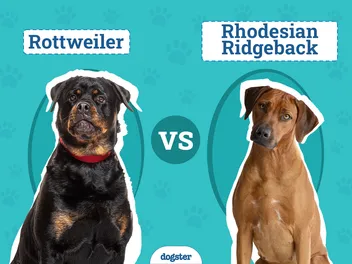
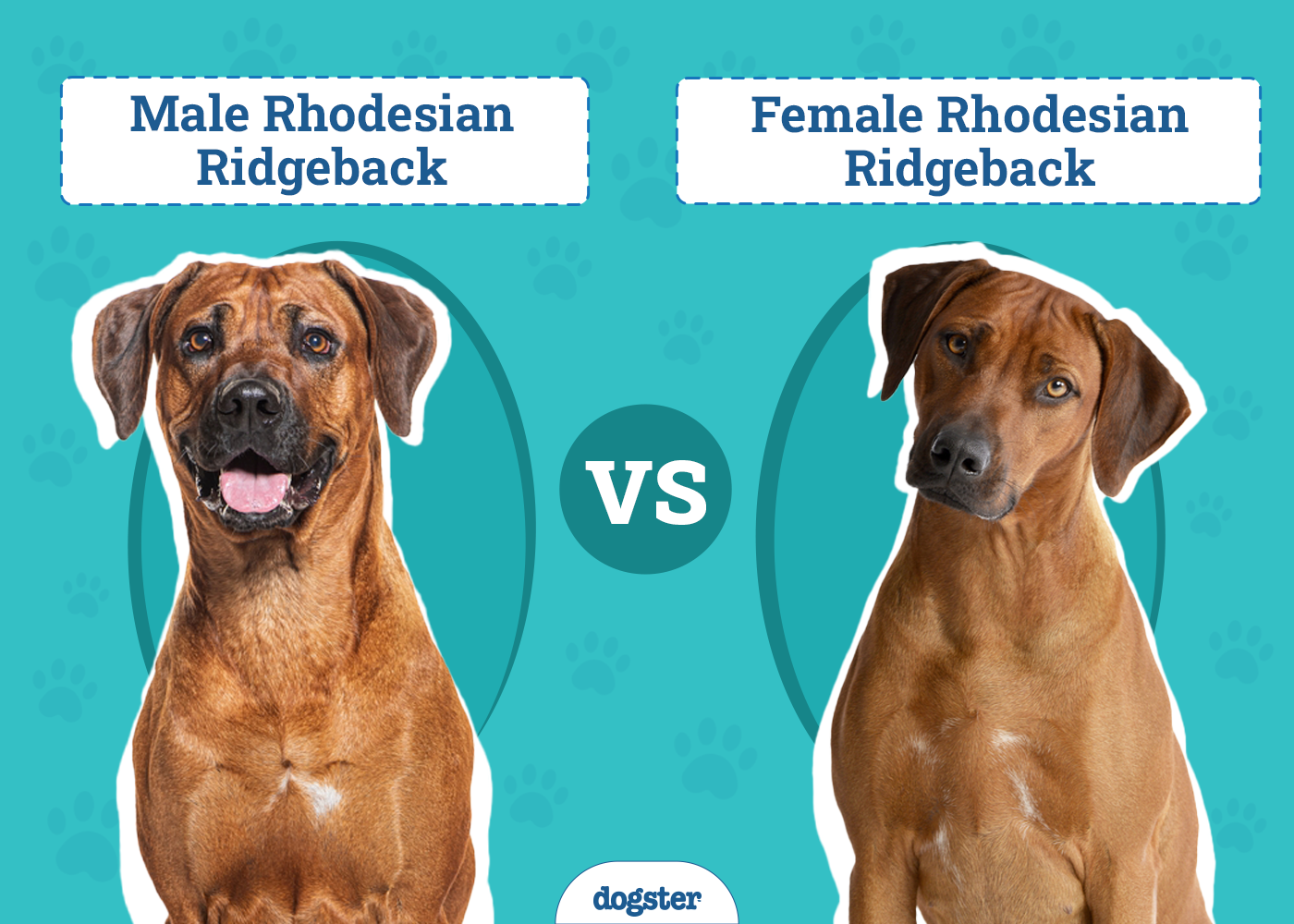
Male vs Female Rhodesian Ridgeback: What’s The Difference (With Pictures, Vet-Reviewed)


In this article
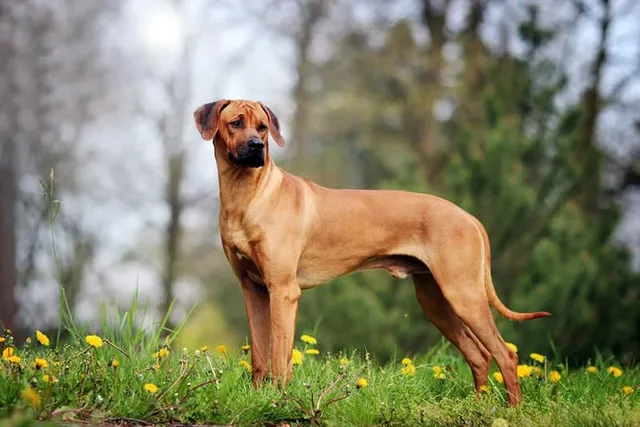
The Rhodesian Ridgeback is a loyal and assertive dog that is generally willing to please its owners. This medium to large dog breed was originally bred for tracking and hunting large game. They are known for being a protective and loving dog breed. They have many interesting qualities that make them a good family-oriented dog breed when properly socialised and trained.
If you are interested in learning the main differences between a male and female Rhodesian Ridgeback in terms of personality and appearance, then this article will help you make an informed decision on which gender is better suited for you.

Visual Differences
At a Glance
Rhodesian Ridgeback 101
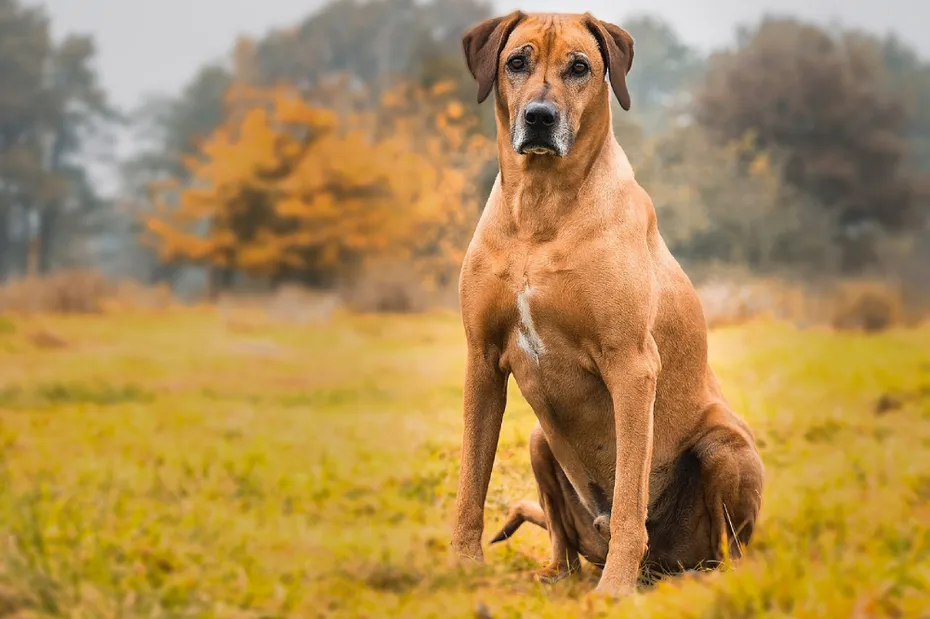
The Rhodesian Ridgeback is a uniquely Southern African dog. This breed was developed from crosses between European dogs and indigenous African dogs. This makes them decently large and powerful dogs. The name 'ridgeback' comes from the prominent ridge of hair that runs along their back in the opposite direction to the rest of their coat. They live for around 10 to 12 years on average and are not considered to be a hypoallergenic dog breed.
They have a low to moderate level of shedding. This dog breed has many things to offer its owners, as it has many great characteristics that shape the positive view of the breed. They are active and independent with a noticeably energetic and confident temperament.
As puppies, Rhodesian Ridgebacks are playful and small, but their large paws are a sign that they will grow quickly and large. They were originally bred by farmers for hunting purposes, which makes them prey-driven and headstrong.

Male Rhodesian Ridgeback Overview
Personality / Character
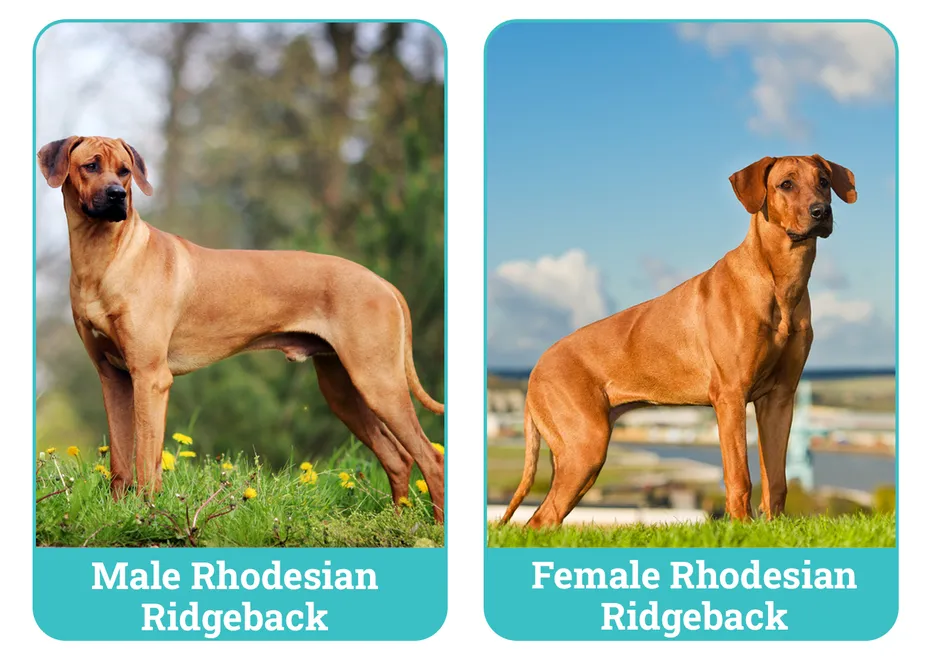
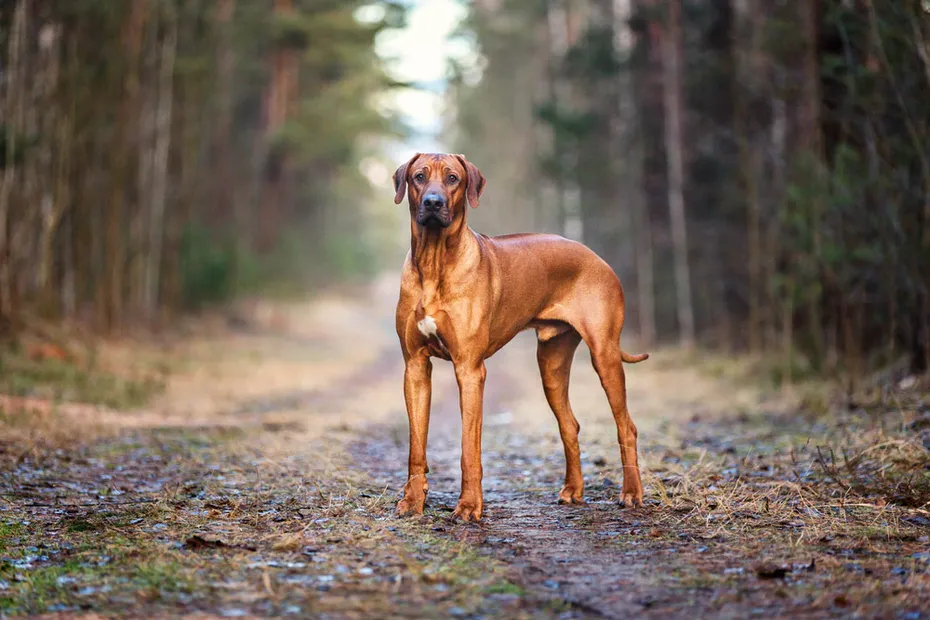
Males are often considered to be more energetic and outgoing than their female counterparts, although protectiveness can vary by individual dog. Males are significantly larger than females and typically weigh more. Male Rhodesian Ridgebacks are usually more muscular, while females may appear slightly leaner. Their bodies are built for speed and endurance, and differences in barking between males and females are not consistent.
Training 🎾
Male Rhodesian Ridgebacks are relatively trainable, although their independent nature can make training more challenging at times. Their assertive and intelligent nature allows them to learn various commands and house training with consistent guidance. Males can perform well in agility courses, and their athletic build enables them to use speed and balance to complete courses effectively.
Health & Care
Male Rhodesian Ridgebacks have many of the same health issues as females, aside from sex-specific reproductive conditions. Some common health issues these dogs may face include elbow dysplasia, canine hip dysplasia, hypothyroidism, and dermoid sinus.
Breeding
It is not encouraged to breed your dog without knowledge and skill. Inbreeding the Rhodesian Ridgeback can cause an increased risk of health issues in the puppies. Breeding your male Rhodesian Ridgeback with a small-breed female dog can increase the risk of birth complications and may be dangerous for the female.

Female Rhodesian Ridgeback Overview
Personality / Character
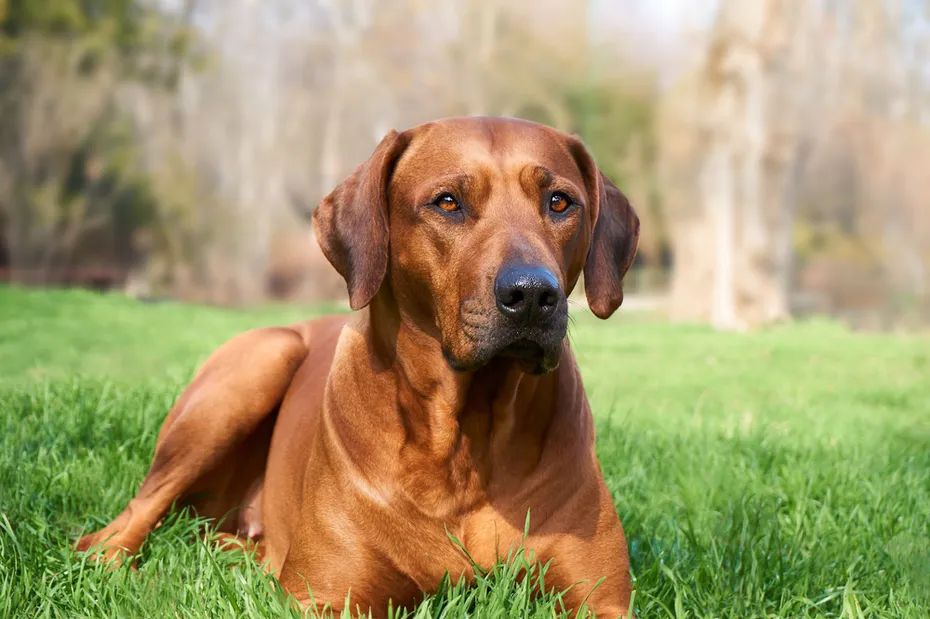
Females are sometimes believed to be more nurturing and gentle, which may make them appear well-suited for families with young children, although temperament varies greatly between individual dogs. Female Rhodesian Ridgebacks can be independent, as they may enjoy affection but also prefer to do their own thing. Like males, they are not inherently more prone to aggression, and behaviour depends more on training, socialisation, and individual personality.
Training 🎾
Female Rhodesian Ridgebacks are generally slightly smaller and lighter than males. However, there is no consistent difference in speed or agility based on sex, as performance depends more on individual build, training, and conditioning. They can be trained to do a variety of obstacle courses and tasks like sit or rollover.
Health & Care
Like males, females are prone to many of the same breed-related health issues. Obesity can occur in both sexes depending on diet, exercise, and lifestyle, and females may develop reproductive system diseases such as ovarian or uterine conditions, although these are less common, especially in spayed dogs. If you provide your female with a balanced diet and regular exercise, she should be able to maintain a healthy weight as she ages.
Breeding
Breeding should only be considered under veterinary guidance and with proper knowledge, planning, and health screening. Like all dog breeds, pregnancy and whelping can carry certain risks, so responsible breeding practices are important to reduce complications. It is best to consult with a vet and carefully consider the pros and cons of breeding your dog to ensure you are aware of the potential risks involved.
Frequently Asked Questions (FAQ)
Are Male Rhodesian Ridgebacks Aggressive?
Both male and female Rhodesian Ridgebacks can be aggressive or show reactive or protective behaviours depending on their environment, personality, and how they were raised. If a Ridgeback has previously had negative experiences with humans, they may become more guarded or cautious. However, there is no evidence that females are naturally more or less aggressive than males or that they bark constantly when detecting a potential threat. Both males and females can be protective of their family and may growl or react to strangers or other dogs in certain situations.
Is a Male or Female Rhodesian Ridgeback Better?
There is no better sex when it comes to the Ridgeback. The type of sex you want depends on your personal preference. Although there are some general differences often noted between males and females, the individual temperament, training, and environment will determine how your male or female Rhodesian Ridgeback behaves.
Has a Pair of Rhodesian Ridgeback Killed a Lion?
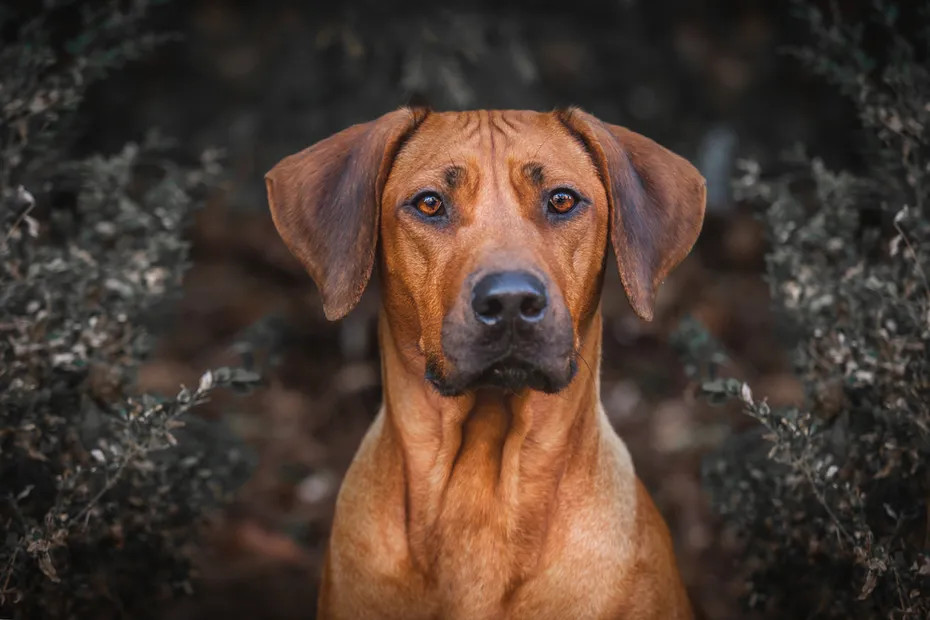
This South African dog breed was used to track lions while hunting for game for their owners many years ago. While Rhodesian Ridgebacks are strong and courageous, there is no reliable evidence that a pair could kill a healthy adult lion without suffering serious or fatal consequences. This dog breed is powerful, but it is no match for the strength and jaws of an adult lion.
This myth has most likely stemmed from their ability to take down large prey, but there are no factual records that state that a Rhodesian ridgeback has killed a lion but injuring one is a possibility. The power and strength have little to do with gender, as both male and female Rhodesian Ridgebacks can be equally as powerful and intelligent enough to protect themselves.

Which Gender is Right For You?
Females are not inherently better suited for families with older children compared to males. Temperament depends more on the individual dog, socialisation, and training than on sex.
If you prefer a calmer or more nurturing-appearing dog, a female Rhodesian Ridgeback may appeal to you, but this is not a guaranteed trait.
If you plan to train and work your Rhodesian Ridgeback for farm life, either sex can be equally capable, depending on the individual dog’s drive, training, and physical condition.
Although there can be some general physical and behavioural tendencies between male and female Ridgebacks, these do not directly determine the personality of an individual dog. Take time to observe differences between the sexes and ask the shelter or breeder about the temperament of the parents where possible.
Being of a particular sex does not guarantee that a male or female Rhodesian Ridgeback will have a specific personality. Keep this in mind when choosing your new canine companion.
Featured Image Credit: Up - Osetrik, Shutterstock; Down - erje_Ansgar_Eriksen, Pixabay
Expert dog care, straight to your inbox
News, insights, expert advice, and everything dog.

No spam — unsubscribe anytime.
By signing up, you agree to our Terms & Conditions and Privacy & Cookies Policy.
How useful was this post?
Click a star to rate. You can leave written feedback afterwards. (We read all feedback.)
Ollie is a zoologist turned freelance animal writer living in South Australia with his partner Alex and their mini zoo consisting of their eldest, a rescue dog named Pepper, many aquatic creatures, and their cat Steve. Ollie has a Master's degree in wildlife biology but became a freelance animal writer in 2020 and hasn't looked back. He loves sharing what he has learned with pet parents around the planet.