Thai vs Rhodesian Ridgeback: Breed Comparison (With Pictures)

In this article
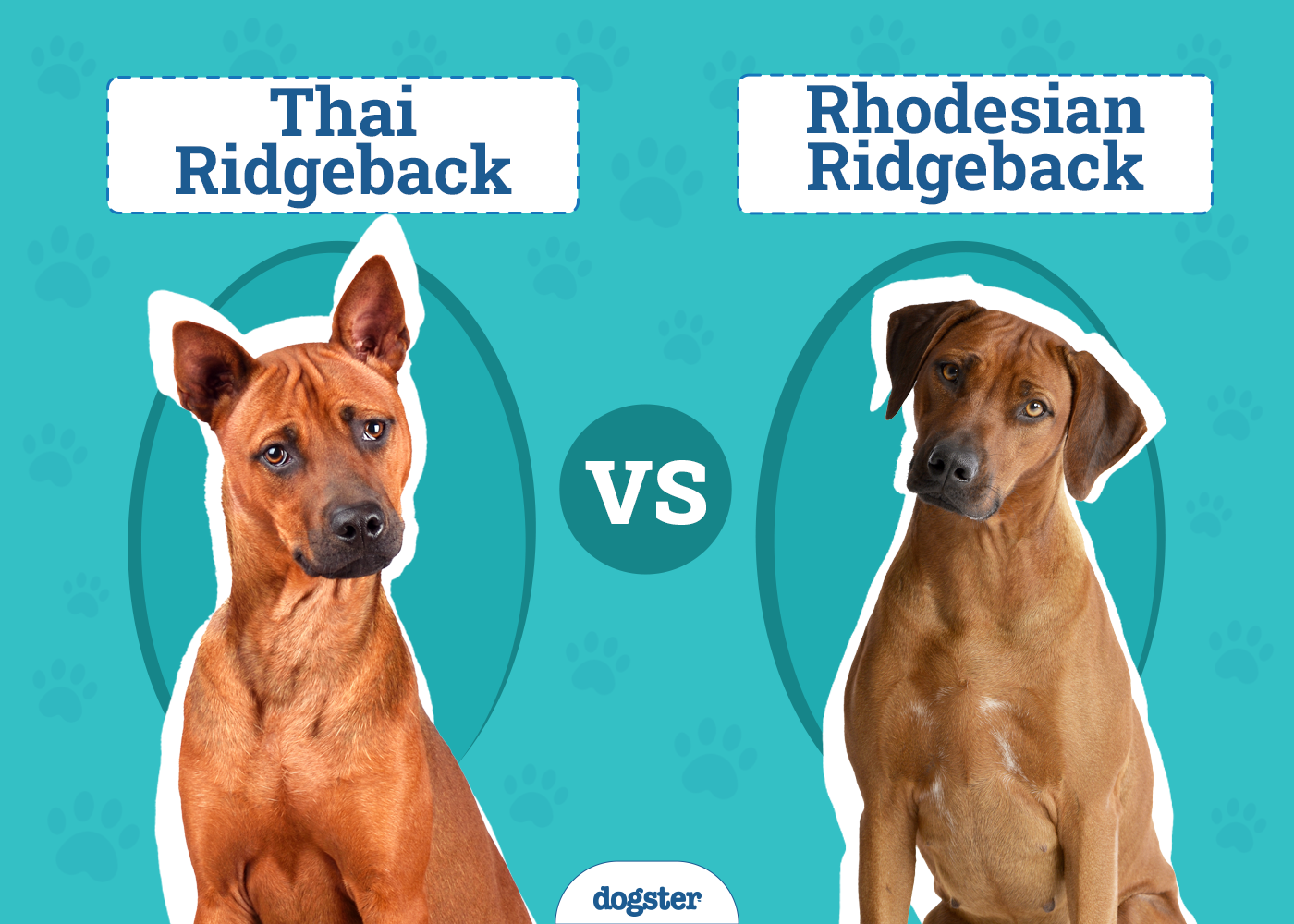
The Thai Ridgeback and the Rhodesian Ridgeback are two breeds named for their distinct ridge of hair growing in the opposite direction. With their strong, primitive instincts and muscular and menacing build, these Ridgebacks can be intimidating to most people. Despite that, they are incredibly loyal and affectionate dogs with high levels of energy and athleticism.
Both Ridgebacks are two lesser-known breeds. The Thai Ridgeback is a medium-sized breed, and the Rhodesian Ridgeback is a large breed. Despite being uncommon, they make great family pets and reliable guard dogs. Sharing similarities with fellow Ridgeback breeds, you may be surprised that the two differ in many ways. For instance, the Thai Ridgeback belongs to the companion breed group, while the Rhodesian Ridgeback belongs to the hound breed group.
The Thai and Rhodesian Ridgeback also differ in origin, size, temperament, training, and appearance. Read on to understand more about the comparison between these two Ridgebacks!

Visual Differences

At a Glance

Thai Ridgeback Overview

Also known as the Pariah dog, the Thai Ridgeback is an athletic and muscular medium-sized breed that originated in Thailand. This energetic and primitive canine was mainly bred to hunt game in Eastern Thailand during the 1600s. Aside from hunting, they were also primarily bred to pull and escort carts in the region as watch dogs.
Throughout the years, the Thai Ridgeback has kept their pure-bred, original type. Cross-breeding was uncommon and unlikely due to the poor transportation system and remoteness of the region. Due to the harsh living conditions, they adapted to become independent, self-sufficient, and resourceful to survive.
Today, Thai Ridgebacks have proven to be excellent family dogs, exhibiting affection and loyalty toward their owners. Although they are now mainly bred for companionship, they still possess the same high intelligence and strong instincts that allowed them to survive all those years ago.
To this day, the Thai Ridgeback is still considered rare outside of Thailand. Although they may not be as popular as other medium-sized companion dogs, they make excellent family dogs with their admirable traits. They are protective of their families, incredibly loyal, and show plenty of affection!
Physical Appearance
Thai Ridgebacks are smaller than their Rhodesian counterparts, standing at 20 to 24 inches and weighing between 35 and 75 pounds. Coming from a tropical climate, the Thai Ridgeback has a short coat that requires weekly brushing to stay healthy. Their coats generally come in solid colors, such as black, blue, red, or fawn. Some Thai Ridgebacks may have bridle and white coats, but those colors are not recognized as part of the breed standard.
The Thai Ridgeback has eight distinctive ridge patterns, including feather, needle, violin, lute, lead, saddleback, and bowling pin. Pups can be born with or without the ridge but will eventually develop it as they grow older.

Personality & Temperament
The Thai Ridgeback is a loyal and affectionate companion dog. They enjoy their humans' company and even tolerate small children. With their primitive instincts, they are naturally protective and may be wary and cautious towards strangers. They are vigilant and constantly on their toes for danger.
They also have a higher prey drive, which makes it risky to leave your Thai Ridgeback unleashed in public. You may find your Thai Ridgeback chasing small animals, such as cats, rabbits, and squirrels. They generally get along with other pets but may exhibit aggression toward smaller animals, like cats, so proper exposure is important during puppyhood.
Thai Ridgebacks were built for companionship, so it is best to shower your Thai Ridgeback with a lot of attention. They are also known to exhibit destructive behaviors when not properly stimulated, so be prepared to spend lots of time with your dog.
Training 🎾
To control their overprotectiveness, high prey drive, and primitive instincts, early training and socialization are important. Be sure to expose your Thai Ridgeback to strangers and other animals early on to manage their strong primitive instincts and reserved nature toward strangers.
The Thai Ridgeback is an intelligent and stubborn dog, so a firm and steady hand is needed when training. Training the Thai Ridgeback requires patience, but early and continuous training can make them the perfect family dog.

Health & Lifespan
The Thai Ridgeback is a generally healthy breed with an average lifespan of 10 to 13 years. Like most breeds, they are susceptible to specific health conditions, such as dermoid sinus and hip dysplasia.
As robust and healthy breeds, 30 minutes to an hour of daily exercise is necessary to keep them fit and burn energy. A healthy and balanced diet and consistent check-ups with the veterinarian are also necessary.
Suitable for:
The Thai Ridgeback is suitable for active families with experience owning and training dogs. They are loving and tolerant of children, but due to their size, they may not be suitable for smaller children to avoid any accidents. They work well for households with other dogs but require early socialization and training to control their elevated prey drive.
Rhodesian Ridgeback Overview

The Rhodesian Ridgeback is native to Zimbabwe, South Africa. This unique breed resulted from the cross between the ridged Khoikhoi dog native to the region and Boer Dogs, Greyhounds, and various Terriers during the late 19th century.
Historically, the Rhodesian Ridgeback showed prowess and reliability in hunting lions through harrying, giving them the nickname “the African Lion Hound.” Aside from their proficiency as hunting dogs, they were also used as guard dogs to repel other dangerous animals, such as leopards and baboons. They also showed extreme athleticism and could keep up with horse-mounted riders. They were primarily used as hunting and guard dogs in the rough South African Terrain but were also recognized for their affection and loyalty toward their families.
The Rhodesian Ridgeback faced extinction because big-game hunting was slowly disappearing in South Africa. They were eventually saved and bred primarily for companionship and family life. Under the hound category, Rhodesian Ridgebacks still have their primitive instincts and increased prey drive but remain excellent family dogs with their devotion and affection.
Physical Appearance
The Rhodesian Ridgeback is slightly bigger than their Thai counterpart, at 24 to 27 inches in height and 70 to 85 pounds in weight. Their short-haired coat can easily be maintained through weekly brushing but sheds much less than their Thai cousins. Unlike the Thai Ridgeback, however, they have only one wheaten coat color, which comes in various shades.
The ridge on the Rhodesian Ridgeback is clearly defined and symmetrical throughout the dog’s back. It begins immediately behind the shoulders and symmetrically continues all the way down to the prominence of both hips. These two whorls, or crowns at the end of the ridge, are distinct and symmetrically opposite.

Personality & Temperament
With the proper training and socialization, Rhodesian Ridgebacks are gentle and affectionate dogs. They are loyal and protective, constantly looking after their families and reserved toward strangers. Like the Thai Ridgeback, they have a higher prey drive and are quick to chase smaller animals. They are also known to work well with other animals, especially if they grew up with them during puppyhood.
They work great with children and are naturally protective and tolerant of them. Because of the Rhodesian’s size and energy, they may not be suitable for smaller children. Although gentle, children must also be taught how to respect the Rhodesian Ridgeback to prevent unwanted accidents.
Training 🎾
Rhodesian Ridgebacks are much more stubborn than their Thai counterparts, requiring a more competent and strong hand to train. They are intelligent and highly trainable but need patience and continuous training throughout their lives.
Early socialization and training are necessary for them to grow into well-rounded dogs. They require exposure to strangers, other animals, and different environments.

Health & Lifespan
The Rhodesian Ridgeback can live 10 to 13 years. They are generally healthy dogs, but they may suffer similar conditions as their Thai cousins, such as dermoid sinus and hip dysplasia. In addition, they are known to have elbow dysplasia and hypothyroidism.
Like the Thai Ridgeback, along with a healthy diet, they need 30 minutes to an hour of exercise per day to stay fit and properly stimulated enough to prevent destructive behaviors and health complications.
Suitable for:
Because of their stubbornness, Rhodesian Ridgebacks are unsuitable for inexperienced or novice dog owners. Instead, they are suitable for active families that can take the time to train and spend time with their dogs. They are affectionate and lovable dogs that can also make great watchdogs.
They are also suitable for families with older children and multi-pet households, provided they are properly socialized and exposed at a young age.
Which Breed Is Right for You?

The Thai Ridgeback and Rhodesian Ridgeback are two beautiful, unique breeds that make excellent family dogs. The slightly smaller Thai Ridgeback’s temperament comes from their history of survival in harsh conditions in Eastern Thailand, while the larger Rhodesian Ridgeback temperament comes from their heavy utilization as hunting and guard dogs in the rough South African environment. The two breeds have similar temperaments, but the Rhodesian is slightly more stubborn and willful than the Thai. Both require a strong and firm hand for training due to their high intelligence and primitive instincts.
Despite these slight differences, properly trained and socialized Thai and Rhodesian Ridgebacks make excellent family dogs and companions who are protective, loyal, affectionate, and lovable!
See Also:
Featured Image Credit: Top - Thai Ridgeback (Dmytro, Shutterstock) | Bottom - Rhodesian Ridgeback (Couleur, Pixabay)
Expert dog care, straight to your inbox
Vet-reviewed advice, training tips, and the best of Dogster. Free, and you can unsubscribe anytime.
By signing up, you agree to our Terms & Conditions and Privacy & Cookies Policy.
Nicole has loved animals of all sizes her whole life so it's no wonder she has dedicated her career to helping them through what she loves best: learning, writing, and sharing knowledge with others. She’s the proud mom of two dogs, a cat, and a human. With a degree in Education and 15+ years of writing experience, Nicole wants to help pet parents and pets around the planet to live happy, safe, and healthy lives.
Join the conversation
Ask a question, share your story, or send private feedback.