Male vs Female Boston Terriers: The Differences (With Info & Pictures)


In this article
You might be familiar with this dog’s nickname, the American Gentleman, which is a perfect way to describe the temperament of this breed. The Boston Terrier is a small, playful, and friendly dog. Many first-time pet owners gravitate towards their even-tempered attitude but find themselves wondering whether they should buy a male or female.
Both male and female Boston Terriers are intelligent and affectionate animals. Still, there are differences between sexes, even if only minor. These small characteristics could impact your experience raising a new pet.

Male vs Female Boston Terriers: Visual Differences

At a Glance
Boston Terriers 101
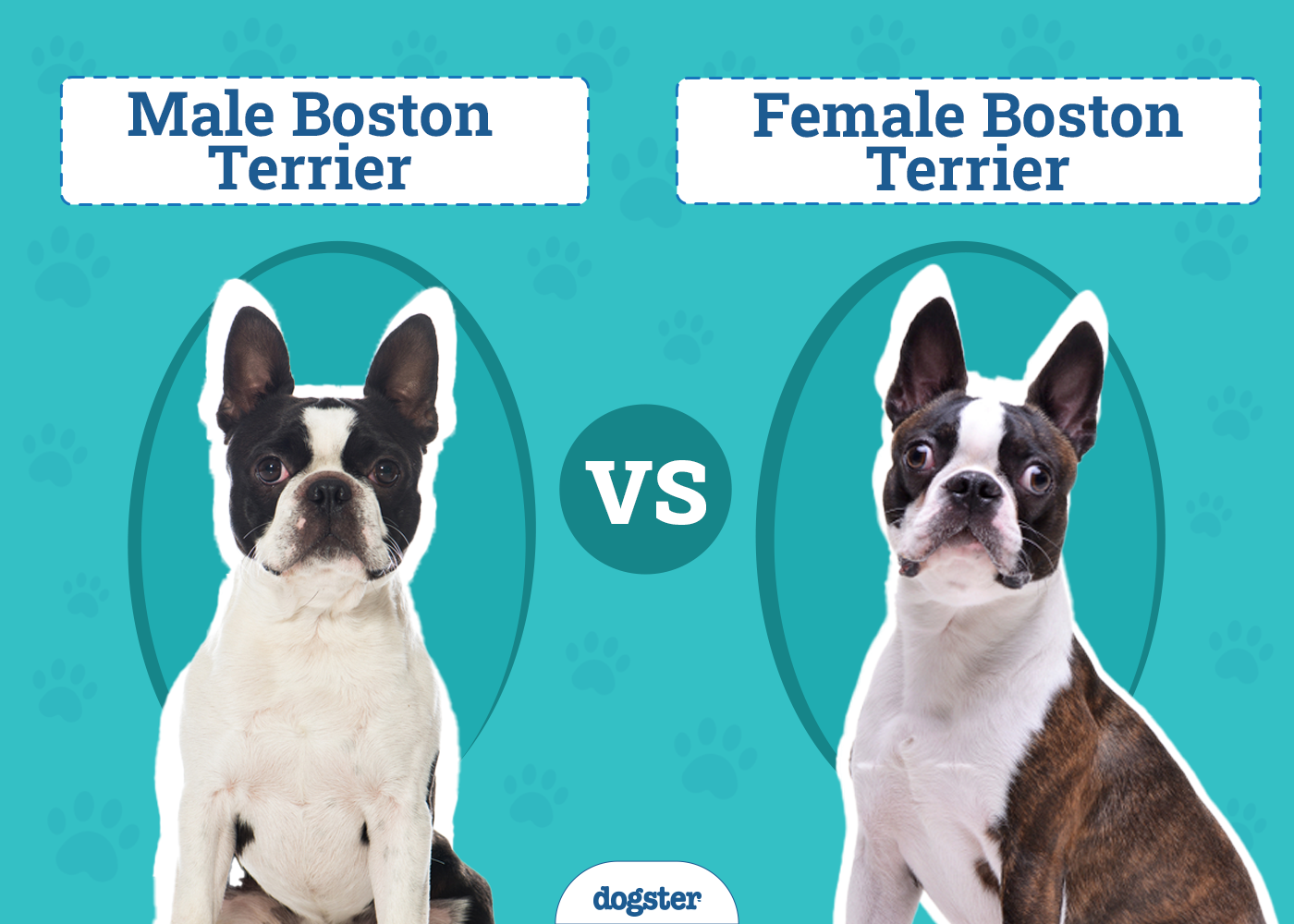
It’s hard not to love Boston Terriers after you spend time with their loving and affectionate personalities. Distinguishing the differences between males and females is a bit easier when comparing physical characteristics as opposed to personalities. Males tend to be taller and weigh more, while females are typically slightly less robust than males. If you want to really start picking out the minor details, take a closer look at each sex.
Male Boston Terrier Overview

Temperament & Hormone-Influenced Behaviors
Boston Terriers are friendly, social, and highly people-oriented dogs that thrive on companionship and interaction with their families.
Some behavioral differences between males and females may be influenced by sex hormones, particularly testosterone. Intact males are more likely to display behaviors such as urine marking, mounting, roaming, and increased interest in other dogs, especially females in heat. These behaviors are hormonally influenced rather than personality traits.
Neutering can reduce or modify some of these behaviors, particularly roaming, marking, and mounting, although it does not change a dog’s core temperament or learned behaviors. The degree of change varies depending on the individual dog and the timing of the procedure.
Health & Care
Boston Terriers have a flat face that contributes to some of their most common health issues. Both males and females suffer from respiratory problems.
Intact males may develop conditions influenced by testosterone, such as benign prostatic hyperplasia (BPH), which is an age-related enlargement of the prostate. This condition can lead to signs such as difficulty defecating, blood in the urine, or changes in urination patterns.
Testicular diseases, including testicular tumors, can occur in intact males, particularly as they age. Neutering eliminates the risk of testicular disease and significantly reduces the risk of hormone-related prostate conditions.
Pros
- Affectionate
- Non-aggressive
- Friendly
- Good family dog
Cons
- More likely to react if provoked
- Intact males may also be more prone to roaming behavior
Female Boston Terrier Overview

Behavior & Temperament
Boston Terriers are friendly, social, and people-oriented dogs that enjoy being part of family life. In females, some behaviors may be influenced by reproductive hormones. Intact females go through heat cycles, which can lead to temporary changes such as restlessness, vocalization, or shifts in how they interact with other dogs. These changes are temporary and linked to the heat cycle rather than fixed personality traits.
Spaying eliminates heat cycles and the behaviors associated with them, though it does not change a dog’s core temperament. The extent of change can vary between individuals.
Outside of hormone-related influences, differences in temperament between male and female Boston Terriers are generally subtle. Socialization, training, genetics, and environment play a much larger role in shaping behavior than sex alone.
Health & Care
Female Boston Terriers have small pelvises and broad heads that contribute to some of their difficulty giving birth. C-section is often the required form of delivery to ensure the health of the mother and her puppies. This also makes breeding more difficult. Aside from these, she is prone to the same common health issues as male Boston Terriers.
Pros
- Patient
- Good family dog
- Trainability
- Independent
Cons
- Pregnancy problems
- Heat cycles (if not spayed), which may include bleeding, behavioral changes, and the need for management around male dogs
Are Male or Female Boston Terriers Better for a Family?
This is a difficult question to answer because both males and females have their own sets of advantages and disadvantages. It’s always important to closely monitor your animals whenever there are children around. This is even more important with young children who can’t be taught how to treat a dog properly yet.
Boston Terriers of either sex can make excellent family dogs when properly socialized and trained. Rather than focusing on sex, it’s more helpful to consider the individual dog’s temperament, energy level, and how well they have been raised around children. Some Boston Terriers are very playful and energetic, while others are more relaxed, regardless of whether they are male or female. Consistent supervision and teaching children how to interact respectfully with dogs are key to creating a safe and positive relationship.

Male vs Female Boston Terriers: Which Gender Is Right for You?
After comparing the differences between male and female Boston Terriers, you’ve hopefully found a few things that are more appealing with one sex than the other. Take some time to think about how each of their temperament, energy level, and care needs could mesh with your lifestyle and what you want out of a companion. Just remember that each dog is an individual, and it’s possible that they don’t turn out at all how you expected.
You may also be interested in:
Featured Image Credit: Aneta Jungerova, Shutterstock (top); Avi's Colors, Pixabay (bottom)
Expert dog care, straight to your inbox
News, insights, expert advice, and everything dog.

No spam — unsubscribe anytime.
By signing up, you agree to our Terms & Conditions and Privacy & Cookies Policy.
How useful was this post?
Click a star to rate. You can leave written feedback afterwards. (We read all feedback.)
Hallie has been a proud nature and animal enthusiast for as long as she can remember. She enjoys spending most of her time in Michigan playing with her two rescue cats, Chewbacca and Lena, and her dog, Clayton. When Hallie isn’t using her degree in English writing articles to spread informative knowledge on pet care, you can find her snuggled up on the couch reading books or watching nature documentaries.