Newfoundland Dog vs St. Bernard: Main Differences (With Pictures)

In this article
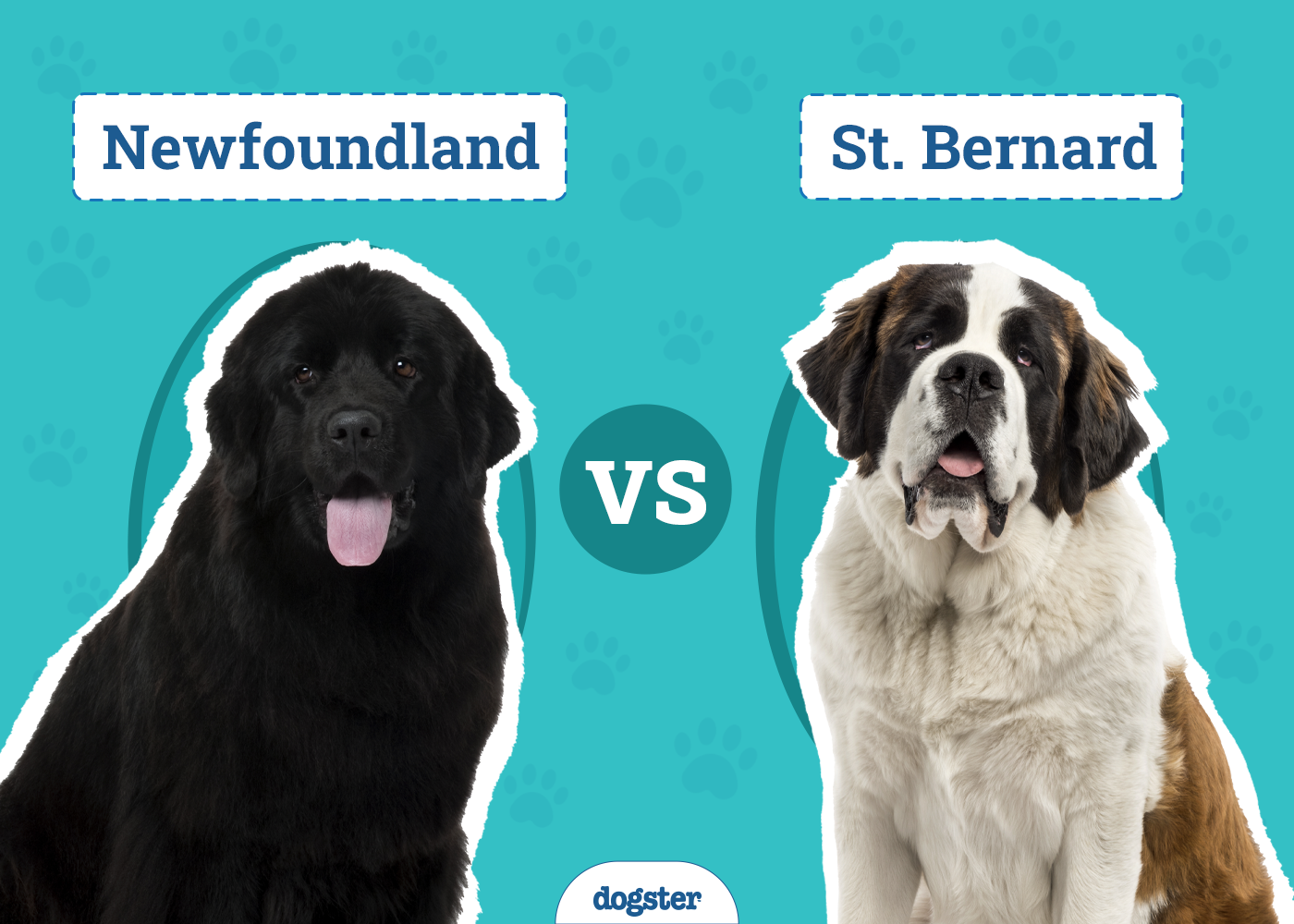
There are quite a few perks to owning a large dog. First, they can easily scare away thieves. Secondly, no strays will enter your property with the furry beast guarding the perimeter. More importantly, giant dogs are quite strong, intelligent, friendly, and tolerant toward children. If you’ve been considering adopting such a dog for a while, you’re probably trying to pick between a Newfoundland and a St. Bernard.
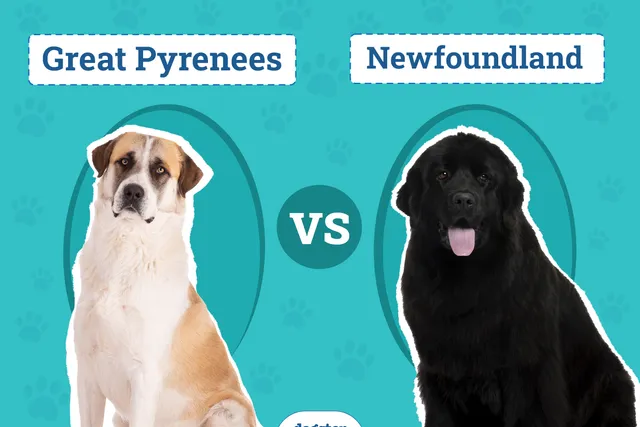
So, which furry bud should you welcome into your family? Well, there are quite a few similarities between these gentle giants. They’re both sweet, smart, quick to catch on, and highly protective. That said, these dogs are NOT the same. They differ in size, appearance, personality, and activity level. Keep reading to learn more about each four-legged bud’s key traits, needs, and pros and cons, and make up your mind!

Visual Differences

At a Glance
Newfoundland Dog Overview

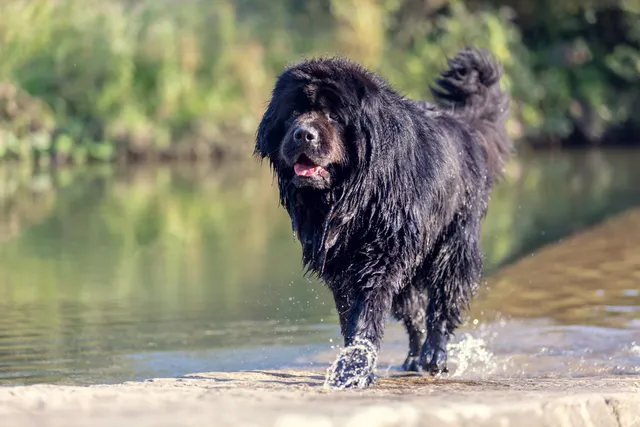
Bred to be the ultimate working dogs, Newfoundlands are naturally good around humans and like to be of service. Thanks to their webbed feet, Newfies are amazing swimmers and have saved countless lives in shipwrecks and other accidents. Back in the day, Newfoundland dogs were used heavily by fishermen in Canada for hauling carts and nets, herding, and protecting property. Today, they are mostly recruited as water-rescue dogs.
Personality / Character
Loyal, protective, and affectionate—that’s the best way to describe the Newfoundland. This dog is ready to put its own life at risk to safeguard its family. More than that, it’s incredibly patient and tolerant with strangers and little children. You will, of course, have to provide supervision to avoid accidents, but Newfies are great around kids. Guardians and workers by design, these dogs serve as the ultimate protectors for their home and loved ones. Despite the imposing size, these furry champs have a very sweet temper. And Newfoundland dogs live their best lives when surrounded by their favorite humans. Now, they can be headstrong at times, but that can be avoided with early socialization. Also, you’ll rarely see any signs of aggression in these dogs. This breed isn’t clingy and will only experience separation anxiety if left alone for long hours.
Training / Exercise
Newfoundlands are smart, outgoing, and capable dogs. They’re patient, willing to follow commands, and have a strong focus. That’s why they’re often called the best dogs for training. To achieve the best results, you need to be a strong, authoritative figure who leads with a gentle hand. Don’t be rude with a Newfie, as they have very tender hearts! Instead, be patient and use positive reinforcement; the pup will grow into a well-mannered adult. A quick note: Newfoundland dogs are excellent swimmers and can start water training at just four months old. So, how much exercise does such a big, muscular dog need? The answer might surprise you: only 30–60 minutes per day. It can be a walk or jog in the morning or some fun games back home. Newfoundlands are excellent working dogs and are often recruited for water rescue missions. But, again, around an hour of activity is usually enough.
Here are the best exercises for a Newfie doggo:
Appearance
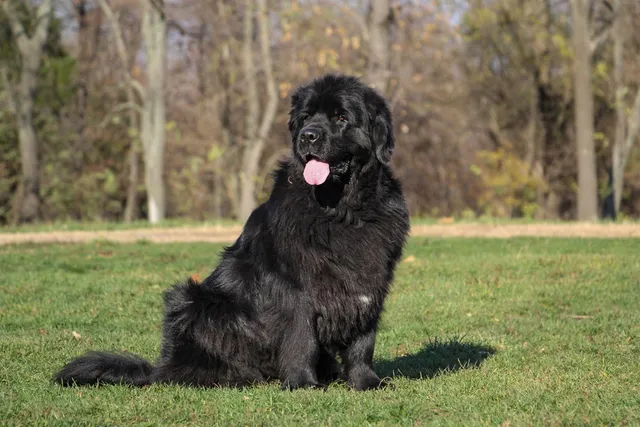
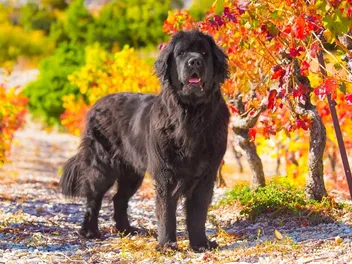
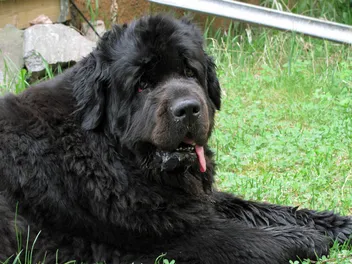
The average female Newfie weighs 100–120 pounds, while the males easily reach the 150 pounds mark. The boys are slightly taller, too (28 versus 26 inches), and tend to be a bit more energetic. This is a big, capable dog with mighty muscles, a strong bone structure, and a dignified bearing. It walks slowly and prefers not to waste energy on trivial things. Newfoundland dogs have a double coat: flat and relatively coarse on the outside, yet soft on the inner side.
The fur does a great job of protecting them from the elements. As for the colors, they range from gray to brown, black, and black and white.

Health / Care
For the most part, Newfoundland dogs are quite healthy. They were specifically bred to withstand harsh weather conditions and handle a heavy workload. On top of that, their coats are practically waterproof. But these mighty creatures still rely on us to keep them healthy. For example, Newfies can’t tolerate heat and should be kept in the shade. Next, if you make it run for hours, that might hurt the dog’s joints.
Here’s a quick look at the most common health issues:
Grooming ✂️
The Newfoundland has a thick, heavy coat that should be brushed once or twice a week. To get rid of loose hair and to avoid mats, we recommend using a slicker brush and a comb with larger-than-average teeth. Also, be ready for extensive shedding twice a year when the season kicks in. Oh, and if your bud is sterilized, the coat will need to be brushed 2–3 times a week. With that, don’t forget to trim the nails, brush the teeth, keep the ears moisture-free, and visit a vet twice a year for proper cleaning.
And what about bathing, you might ask? Once in 1.5–2 months: that’s what most veterinarians recommend.

Suitable for:
Newfoundland dogs will be a great choice if you have previous experience with owning a dog. They’re faithful, intelligent, happy to follow your lead, and friendly toward adults, children, and even strangers. Plus, Newfies can swim and aren’t afraid of chilly weather. However, you’ll need a big enough house for this giant not to feel cramped in. Plus, it might not be able to keep up with an overly active family that likes to spend hours outside. Other than that, the Newfoundland is a keeper!
Pros
- Needs less than an hour of exercise
- Very easy to train, eager to please
- Excellent swimmer (and rescuer)
- Easily handles cold climates
Cons
- Not the best pick for active owners
- May get anxious in a small house
- Prone to overheating
St. Bernard Overview

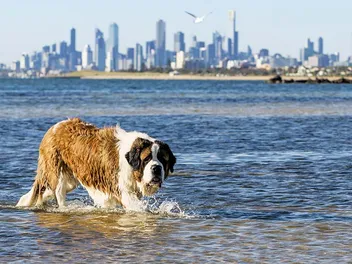
Back in 1050, pilgrims from all over the world were crossing the Alps to find their way to Rome. The treacherous pass held many dangers, but the refugees were often guided and saved by the Saints. Raised by local monks for rescue work, these majestic dogs are equally good at performing various tasks, including herding, drafting, guarding, tracking, and, of course, search-and-rescue missions.
Personality / Character
In many ways, Saint Bernard dogs are similar to Newfoundlands. They are just as open, friendly, and devoted. St. Bernard pups grow into fearless, bold protectors, capable of scaring away the biggest threats. However, this only applies to immediate family. In contrast to Newfies, Saints are not as welcoming toward strangers. More than that, they tend to be a bit more stubborn and harder to “shape” into exemplary canine citizens.
Thankfully, if you provide enough supervision and positive reinforcement, the St. Bernard will grow to be more open to outsiders. Besides, just like Newfoundland dogs, Saints are often referred to as the “giant nannies” for little kids. Curious and kind-hearted, they are ready to go that extra mile to keep you and your family from harm’s way. Just don’t leave them alone for too long, or they might wreak havoc!
Training / Exercise
For a gigantic doggo like Saint Bernard, extensive puppy training and early socialization are essential. To make sure the dog doesn’t scare away strangers, hurt children, or chew on food that it’s not supposed to eat (like from your plate), you need to invest in obedience training. On the bright side, Saints are very smart and will happily follow instructions. Be patient and positive and keep the training sessions short. Now, every single Saint is different, of course.
But, for the most part, an hour of exercise is enough to keep them in shape. As for the more active buds, they’ll need at least 1.5 hours of activity and will gladly join you on the next trip into the wilderness. Consider consulting with your vet to find the optimal routine for the furry beast. Saints like morning walks, jogs, drafting, and various intelligent games. These dogs love to spend time with their human parents!

Appearance
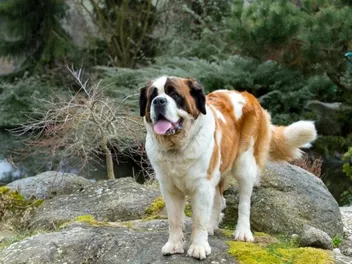
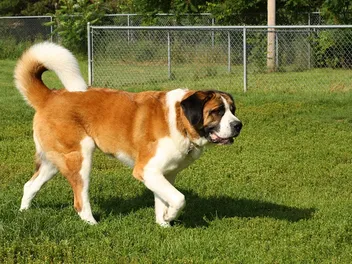
The best way to describe this doggo is “massive”. The females stand 26 inches tall and weigh 120–140 pounds. The males are a bit taller (up to 30 inches) and heavier (140–180 pounds), plus they have wider shoulders. Despite the somewhat scary looks, Saints have beautiful dark brown eyes, a wrinkled brow, a short muzzle, and a very noble, friendly expression. Brought to serve as rescue dogs in the Alps, St. Bernards have a calm, reassuring demeanor.
As for the colors, Saints are mostly white mixed with other shades, including brown, mahogany, red, orange, rust, and brindle.
Health/Care
Just like Newfoundland dogs, Saints are well-built, muscular giants with strong immune systems. That said, they’re also prone to some conditions that are common among large breeds. We’re talking about problems with the joints, GDV (AKA bloat), and some of the other issues that we already covered when talking about Newfies. But they’re a bit healthier.
Here’s a closer look at what your dog might have to deal with:
Grooming ✂️
Saints can have both long and short fur, but the grooming routine is not going to be much different. Weekly brushing can keep the coat dirt-free and remove any dead fur. And much like with a Newfy’s fur, a slicker brush is the best “tool” for a St. Bernard owner. Speaking of the similarities, these giants also shed heavily twice a year. Brush the teeth, trim the nails, and take care of the ears, and you’ll get yourself a fresh, healthy doggo! Occasional bathing (once in two months) will help with that.

Suitable For:
Saint Bernards thrive in large properties with experienced parents and adult children. They are kind, friendly, and sweet, yet can be aggressive and stubborn unless you put them through early socialization. Even then, Saints might not be very trusting with strangers. These furry chaps are full of energy and always happy to go for a jog or hike and will always be there to protect you. So, if you’re in the market for one of the largest, strongest, and sweetest dogs, go with a Saint!
Pros
- Energetic, despite its size
- Always happy to join in activities
- Big and strong: a true giant
- Healthy (for a large dog)
Cons
- Slightly aloof with strangers
- Can be stubborn and destructive
- Takes more effort to train
Which Breed Is Right for You?

As far as the largest, strongest, and kindest dogs go, Newfoundland and St. Bernards are right on top of the list. And, while Saints are bigger, leaner, and more energetic to the naked eye, these breeds look very much alike. You’ll get the same sweet-tempered, affectionate, and family-oriented (and heavily drooling) bud no matter which doggo you choose. They’re both exceptional guardians and have proven to be incredibly good with little children. The life expectancy is also the same (8–10 years). However, Saints are somewhat standoffish with strangers and have a stubborn streak. Also, the slightly larger size might be a bit too much for some dog parents to handle. It’s also worth mentioning that Newfies can swim, take less effort to train, and only need 30–60 minutes of daily exercise. So, for a first-time dog owner, a Newfy will be the right pick. But if you’re in the market for a more energetic dog, a Saint will be a better choice! Related Reads:
Sources
Featured Image Credit: (L) Madeeva_11, Shutterstock | (R) Siddharth shah, Unsplash
Expert dog care, straight to your inbox
News, insights, expert advice, and everything dog.

No spam — unsubscribe anytime.
By signing up, you agree to our Terms & Conditions and Privacy & Cookies Policy.
How useful was this post?
Click a star to rate. You can leave written feedback afterwards. (We read all feedback.)
Nicole has loved animals of all sizes her whole life so it's no wonder she has dedicated her career to helping them through what she loves best: learning, writing, and sharing knowledge with others. She’s the proud mom of two dogs, a cat, and a human. With a degree in Education and 15+ years of writing experience, Nicole wants to help pet parents and pets around the planet to live happy, safe, and healthy lives.