Labrador vs Pitbull: The Differences (With Pictures)

In this article
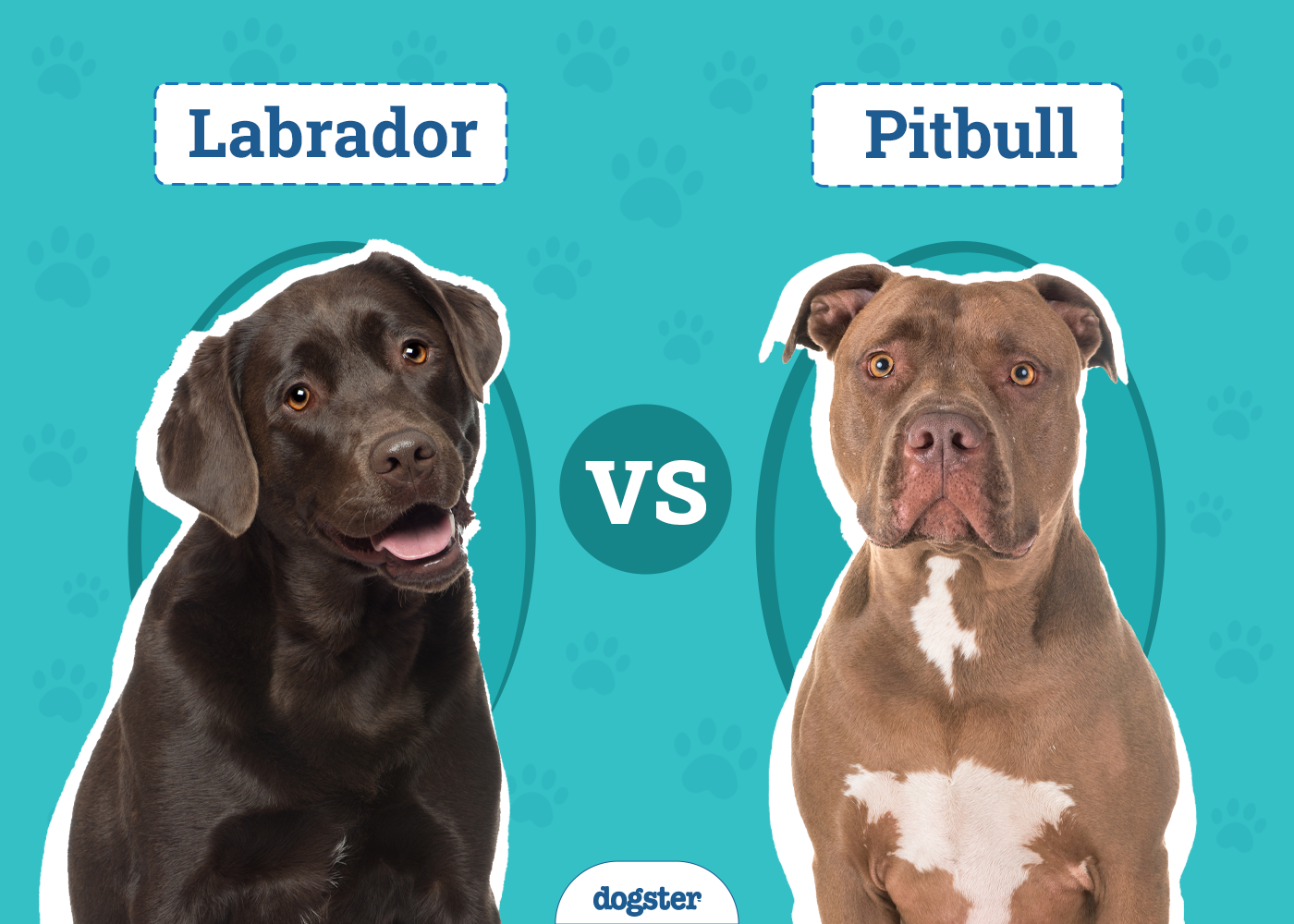
Although both breeds are considered hardworking and loving with their families, Labradors and Pitbulls do have a few big differences, not least of which are their respective reputations. The Labrador is considered one of the best dogs for families and individuals and is one of the most popular breeds in the world.
The Pitbull, though arguably unfairly judged, is classified as an aggressive breed, and their ownership is prohibited in some countries and certain cities in the U.S. Here, we look at the two breeds and consider their similarities and differences to help you identify which is best for you and your circumstances.

Visual Differences

At a Glance

Labrador Overview

The Labrador is one of the most popular pet dog breeds in the world and is loved by families and individuals for their loving and affectionate but playful nature. They will walk happily with their owners, play almost any game they can think of, and then sit and relax on the couch when everybody gets home. The Labrador’s intelligence and willingness to learn have seen them employed as a service dog, therapy dog, and in a host of other roles.
History
Labradors come from the island of Newfoundland off the coast of Canada. They were first bred in the early 18th century and were primarily kept by fishermen, though at this time, they were known as St. John’s dogs. They were companion dogs, but they would also be used to perform various tasks and jobs for their handlers. Their utility and usefulness quickly spread, and by the mid-19th century, they were introduced to England.
Although the breed nearly died out in Newfoundland, breeders in England kept them alive. They became especially popular following World War II, and since then, they have been used in a variety of service roles. The Labrador is one of the most common breeds of guide dogs, therapy dogs, police dogs, and armed services dogs.
Personality
Known for being one of the friendliest and most loyal dogs, the Labrador typically gets along with all people and all animals. So, while the breed does make a good service dog, they do not make a good guard dog. That said, their personality makes them a good choice for families and individuals, as well as owners who already have other pets.

Training 🎾
One of the reasons for the popularity of the breed is that they are intelligent and eager to please. This combination means that the Labrador is considered easy to train. Training is considered important because while the Lab is widely considered a good companion, they can be energetic and prone to bouts of extreme playfulness.
Care
The higher energy levels of the Labrador also mean it is necessary to provide them with plenty of exercise. Expect to exercise a Labrador for at least 90 minutes a day. Without regular exercise, the breed can become bored and may show destructive tendencies. The Labrador is also prone to certain illnesses and hereditary conditions, including hip and elbow dysplasia, cataracts, and progressive retinal atrophy.

Suitable For:
This breed is ideal for energetic owners who are looking for a loyal and affectionate dog. They are good with families of all ages, can be trained easily, and can undertake any of a wide range of service roles. The Labrador also does well in agility and canine sports classes. They are considered a good breed for first-time and novice owners.
Pros
- A loving dog that gets along with everybody
- Will usually get along with other pets
- Intelligent and eager to please
Cons
- Needs plenty of daily exercise
Pitbull Overview

The Pitbull has a reputation that is marred in controversy. Their ownership is prohibited in many countries and some cities around the U.S. However, despite this reputation, the dog tends to be loving with family and loyal to their owners and can make an excellent companion dog. However, early socialization and training are important, and it is not generally recommended that first-time owners take on a Pitbull.
History
Pitbull breeds were first bred in England for bull-baiting, a blood sport that saw dogs pitted against bulls, with the aim of the dog wearing out or bringing down the bull in grueling and potentially fatal matches. When bull-baiting was banned, owners and handlers turned to dog fighting. This combination meant that Pitbulls were trained to be aggressive with other dogs and potentially with other animals, but they also needed to be gentle and unaggressive with their human owners. A spate of fatal dog attacks on people, especially during the latter half of the 20th century, saw the breed banned in some countries and certain cities in the U.S.
Personality
When well socialized and trained from an early age, Pitbulls can make great family dogs and companions that will get along with all family members. They can make good watch dogs because they will get excited and may bark when people approach the house, though they usually want to happily greet the visitors. The dog can be fiercely loyal and may defend their family ferociously, which means that the dog needs to be well-socialized so they do not mistake people for threats.

Training 🎾
Pitbulls need consistent and ongoing training. They should also be socialized from a young age so they are introduced to new people and different situations. This will help ensure that your Pitbull gets along with everybody. Pitbulls can do well in canine sports and agility, and this can be a good way to provide physical and mental stimulation.
Care
Pitbulls also need plenty of exercise, typically around 90 minutes a day or more. Like Labradors, they are prone to certain hereditary conditions, including hip dysplasia, hypothyroidism, and heart disease. The breed is also prone to allergies.

Suitable For:
Pitbulls are not usually considered suitable for novice owners. They are good with families and tend to be good with other humans, but they can be aggressive around other dogs. New owners need to ensure good socialization and training.
Pros
- Good with family and visitors
- Loyal and loving
- Relatively low-maintenance dogs
Cons
- Not legal in all areas
- Carry a stigma because of their history
Legality
Before even considering buying or adopting a Pitbull, you need to check local laws in your area. The breed is banned in some countries, and an increasing number of cities in the U.S. are also introducing laws to prohibit the ownership of Pitbulls. Where they are legal, they typically must remain on a leash at all times and might need to be muzzled when out in public. Even if the breed is legal where you live, if you like to take your dog on days out, consider that where Pitbulls are prohibited, this includes visiting dogs. Labradors are legal in all states and as far as we know, all countries around the world.
Family Dogs
Pitbulls and Labradors are both considered good family dogs. They both get along with family members of all ages and are considered good dogs for children. The Pitbull is sometimes referred to as a “nanny dog” because they will spend hours watching over children to make sure they are safe and well. Labradors are understanding of children, though they do prefer those who are old enough to be able to throw a ball.

First-Time vs. Experienced Owners
The Labrador is one of the most popular breeds in the world. One of the reasons for this is that they are considered adaptable dogs that are excellent first-time pets. Other than their quite high exercise requirements, they are low maintenance, and they are happy to be curled up with their family. They are also easy to train because they are intelligent and eager to please their owners. Pitbulls, however, are considered good pets for experienced owners and are not usually recommended as first-time dogs.
Training and Socialization
Both dogs benefit from training and are intelligent enough to be able to be trained for most roles. The Labrador is easier to train, and while they do benefit from good socialization, they are less likely to develop behavioral problems if they don't get a lot of socialization. Pitbulls need socialization when young and ongoing training to ensure that they are well-rounded pets.
Which Breed Is Right for You?

Labradors and Pitbulls are quite different in some respects. Although they are both intelligent breeds that will usually get along well with people, Pitbulls can be aggressive with other dogs, especially other Pitbulls of the same sex. They are prohibited in some areas too, and they are not considered good dogs for first-time owners. It is also worth considering that there is something of a stigma attached to the breed, which can make owning one a challenge. Labradors are popular around the world because they are loving and loyal family dogs. See Also:
Sources
Featured Image Credit: (Top) Jumpstory | (Bottom) Doz777, Pixabay
Expert dog care, straight to your inbox
News, insights, expert advice, and everything dog.

No spam — unsubscribe anytime.
By signing up, you agree to our Terms & Conditions and Privacy & Cookies Policy.
How useful was this post?
Click a star to rate. You can leave written feedback afterwards. (We read all feedback.)
Nicole has loved animals of all sizes her whole life so it's no wonder she has dedicated her career to helping them through what she loves best: learning, writing, and sharing knowledge with others. She’s the proud mom of two dogs, a cat, and a human. With a degree in Education and 15+ years of writing experience, Nicole wants to help pet parents and pets around the planet to live happy, safe, and healthy lives.