How to Train an Australian Shepherd: 8 Vet-Approved Tips


In this article
Training any dog can be challenging, so what can you expect when training an Australian Shepherd (Aussie)? It’s a good idea to be familiar with the dog breed before starting any training sessions, as temperament is a key factor during this process.
It’s quite easy for untrained Australian Shepherds to get into mischief. They are herding dogs that are highly energetic and definitely need training to harness all that energy.
Here, we provide eight tips to help you get started on the road to training your Aussie. Keep in mind that we’ll just be covering the basics with a bit of guidance on the best methods of training an Australian Shepherd; this guide isn’t for teaching your dog specific tricks.

A Little About the Australian Shepherd
Before bringing a dog into your home, it’s best to find a breed that will suit your lifestyle and family. Active and athletic owners might not be the best fit for Basset Hounds, and Australian Shepherds may not work in a sedentary household.
Also, if you know anything about Aussies, you know that they are not Australian. It’s thought that the ancestors of the Aussie came from the Basque region in Spain. They were eventually brought to Australia and then to America.
The assumption was these herding dogs were originally from Australia, so the name stuck. But it was actually in the States that the Aussie that we know and love today was bred. So, technically, they should be called the American Shepherd!
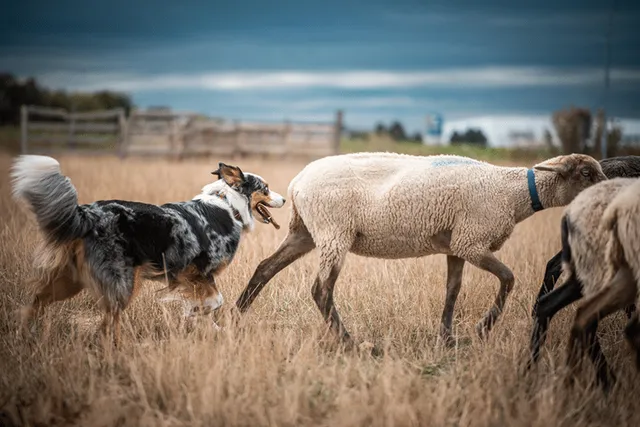
Regardless of their origin story, Aussies were used extensively on ranches and renowned for their herding abilities. They are driven, hard-working dogs prone to herding anything that they can, including children and smaller animals.
Aussies are highly intelligent and are known to trick their owners at times, so they aren’t usually recommended for inexperienced dog owners.
Now, let’s go over a few training techniques for the Australian Shepherd.

The 8 Tips on How to Train an Australian Shepherd
1. Socialization

Socialization is probably one of the most essential parts of training a dog. Without it, the can develop personality and behavioral problems.
The best time to socialize dogs is when they are puppies, but if you bring home an adult rescue dog, you can still go through the socialization process with them; it will just take extra time and patience.
The prime age range for socialization is 7 weeks to 4 months, though again, you can socialize your dog at any age. It is recommended to complete your puppy’s vaccination schedule before introducing it to other animals.
This means that during this time, your Aussie must be introduced to as many places, people, animals, and environments as possible. After a while, this will build self-confidence in your puppy or dog, and they will approach life with a sense of excitement and adventure rather than fear.
2. Reward-Based Training
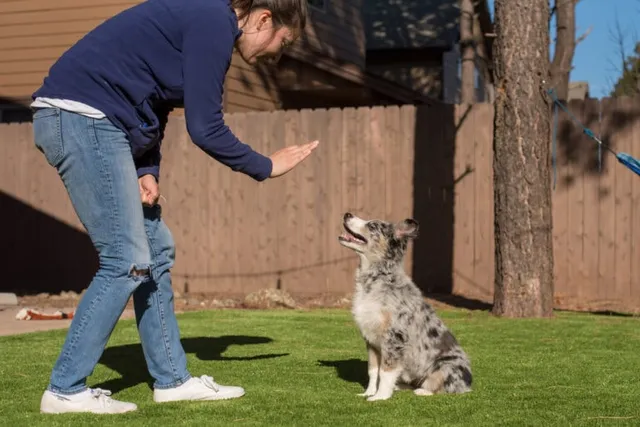
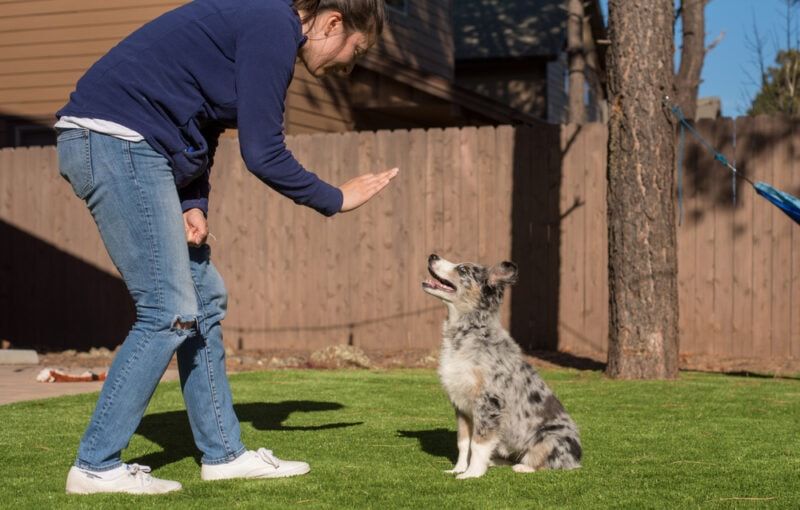
Australian Shepherds respond to reward-based training best, which entails stocking up on your dog’s favorite treats. You can even use positive reinforcement as a treat. Give them plenty of praise when they perform a desired behavior, and avoid any form of punishment when your Aussie exhibits an unwanted behavior.
So, while training your Aussie, if they accomplish something successful, reward them. This includes if they stop doing an unwanted behavior. If your dog stops jumping on you when you come home, for example, give them a treat and plenty of love.
Be sure to use treats that your dog really likes and only use those treats for training purposes. This gives them greater motivation and makes the training far more effective.
3. The Basics

Start training with the basics, which can include cues like “sit,” “stay,” and “down.” There are also fundamental things like getting your dog used to wearing a collar, harness, and leash, in addition to teaching them any household rules that you want to establish.
There are two different methods that you can use to start your dog’s training.
Method One:
This first option includes using verbal cues and rewarding your Australian Shepherd when they are naturally already doing what you want to teach them. It sounds confusing, so here’s an example:
Method Two:
The second method is essentially the opposite of the first. You use the treat to lure your dog to perform the desired action. Here’s an example:
These techniques can be used for other tricks, and since Aussies are food motivated, they will pick up the training quickly.
4. Short Training Sessions
This applies to most dogs, but when you start a training session with your Aussie, try to keep it short, usually no longer than 15 to 20 minutes each day. Holding longer training sessions can cause your dog to have difficulty staying focused, and you’ll both end up frustrated.
Always end your training sessions on a positive note, such as enjoying playtime with your Aussie.
5. Consistent Verbal Cues

In order to prevent confusing your dog, when you choose and use a verbal cue for an action, you need to be consistent. This means always saying the exact word, using it in the same tone of voice, etc.
For example, if you choose “lie down” as a verbal cue, only say “lie down,” and not “lay down,” or your dog might not understand. Ensure that everyone in your household is aware of this.
Your tone of voice can also make a big difference. Saying “come” with a happy voice versus “come” when you’re frustrated can confuse a dog. Be consistent with the verbal cues and your tone of voice.
6. Slightly More Advanced Training
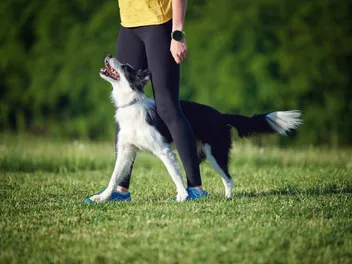
Now that you have done basic training, you can begin slightly more advanced training. Some of these are necessary while others are for fun. For example, you can teach your dog to stay, heel, play dead, or shake a paw.
You should continue to use the previous tips for teaching your dog the new tricks. Keep using your verbal cues for the older commands that you’ve already taught your Aussie. This way, they will still remember these older skills and will receive consistent overall training.
7. Advanced Training

When you’re ready to tackle advanced skills, the training should be broken into smaller and achievable sections. Each skill should be taught separately with praise and treats. Once they’ve all been successfully taught, you pull them all together.
Due to their herding skills, as well as being intelligent and high energy, Aussies need to be kept busy and do well in herding and agility trials.
8. Herding Behavior
Since Aussies are herding dogs, they will herd everything that they can, which can include people and animals in your home and cars and bikes outside. This can be dangerous for your dog, and your children might not enjoy the dog constantly nipping at their heels.
If your Aussie is an actual working dog and is currently being used as a herder, though, you won’t want to curb their herding behavior, so please feel free to skip this section.
How to Stop the Herding Behavior in Australian Shepherds
1. Identify the Herding Behavior
You need to start by recognizing the behavior that your Australian Shepherd begins to exhibit when they are about to start herding.
- Their focus will narrow to one person or animal, and they tend to ignore all other distractions.
- They face the person or animal with their eyes and ears facing forward.
- Some will start by raising their head and chest up while in a relaxed position.
- They might be standing up, with focused and alert body language.
- One of the final signs is when the Aussie is in a crouched position. They will start crawling or remain crouched while remaining focused and launch into herding behavior shortly after.
Once you recognize these herding signs, you can stop the behavior before they engage in it. You should also be aware of what your Aussie’s triggers are.
Certain kinds of movement, people, sounds, or an animal running might trigger your Aussie, so keep an eye on your dog at these times.
If you are concerned about your dogs behavior, we suggest speaking to a vet.
2. Stop the Herding Behavior
When you can tell that your Aussie is about to start herding, this is when their training can be applied. Your Aussie should be taught other skills, including “watch me,” “leave it,” and “down.”
But in the meantime, once your dog starts the herding body language, just use the verbal cue, “sit.” Since your dog needs to use their body to sit, this will help distract them from herding.
Always be consistent. Unless it’s necessary, don’t allow your Aussie to ever engage in herding, as this will just confuse them.
3. Redirect
Redirection is another option to try instead of using the “sit” verbal cue. Once your Aussie starts the herding body language, take your dog outside immediately for running and playtime. This will also help burn off any excess energy.

Conclusion
An Australian Shepherd can make an amazing pet for many people, but others might not be able to manage their abundance of energy. A lack of appropriate training can even lead to a few of these dogs being surrendered to a rescue group.
Taking your puppy to obedience classes is an important step. It adds some of the necessary socialization that they need, and the instructors can give you a hand with their training.
See also:
Do Australian Shepherds Have Tails? Breed Characteristics Explained
Why Does My Australian Shepherd Whine So Much? 6 Likely Reasons
Featured Image Credit: Suzanna Bunch, Shutterstock
Expert dog care, straight to your inbox
News, insights, expert advice, and everything dog.

No spam — unsubscribe anytime.
By signing up, you agree to our Terms & Conditions and Privacy & Cookies Policy.
How useful was this post?
Click a star to rate. You can leave written feedback afterwards. (We read all feedback.)
Kathryn was a librarian in a previous lifetime and is currently a writer about all things pets. When she was a kid, she hoped to work in a zoo or with wildlife in some way, thanks to her love for animals. Unfortunately, she's not strong in the sciences, so she fills her days with researching and writing about all kinds of animals and spends time playing with her adorable but terribly naughty tabby cat, Bella. Kathryn is hoping to add to her family in the near future – maybe another cat or two and a dog.