The Four Fear Responses in Dogs: Vet-Verified Canine Behavior Explained



In this article
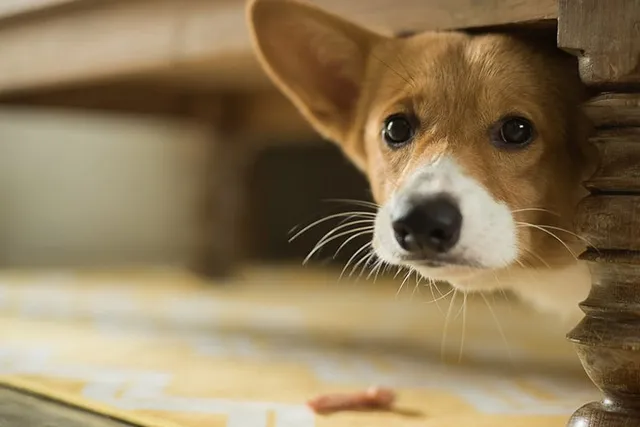
Being scared of things is an evolutionary response in not only humans but also animals. This fear response is designed to help protect us in life-or-death situations. You’ve probably heard of “fight or flight” when it comes to fear and humans, but what is the fear response of canines?
There are four fear responses in canines, and if you’re a dog parent, you’ve likely seen at least one of them before. These four fear responses include flight, fight, fidget, and freeze, and each one causes a different reaction in dogs. Here’s a closer look at the four fear responses of dogs and what you should know about them to help your pup become less afraid of people, places, and things.

What Is a Fear Response?
Even though you’ve likely heard the phrase “fight or flight” before, you may not know exactly what a fear response is, especially in dogs. A fear response is a reaction that occurs when your pup sees something that frightens them (also called a trigger). A trigger can be anything that scares your dog, whether that is another animal, a person, a loud noise, a particular sight, or even a scent. Common triggers for canines include people wearing hats if they are unfamiliar with them, loud noises such as fireworks or thunders, objects blowing in the wind, and strange dogs.
The Four Fear Responses in Dogs
Here are the four fear responses in dogs, what they mean, and how to deal with them.
1. Flight

Everyone has heard of “fight or flight,” and that’s what “flight” in dogs refers to. If a dog becomes scared of a situation, then rather than fight, they could engage in flight by trying to remove themselves from the situation. You may have seen your dog do this before when frightened by another dog or something like fireworks.
If a dog goes to the flight-fear response, they will move quickly away from the thing or area causing their fear. This could be skulking away, running away, or hiding far from the perceived danger. Dogs engaged in the flight-fear response typically show body language like large eyes, pinned-back ears, a tucked tail, and a body posture that is low to the ground.
If your pup is fleeing from something that scares them, let them! Never force your dog to interact or stay around whatever they feel threatened by. This will only cause them to become more fearful of whatever it is. Instead, desensitization and counterconditioning should be used to help them become more used to what they deem frightening and to aid them in becoming more confident and comfortable.
2. Fight

The “fight” fear response is, of course, the other half of the “fight or flight” response. However, it’s important to know that this fear response is often the last resort for canines. If they can utilize any of the other three fear responses to escape the stimulus they’re afraid of, they’ll do that first. That said, sometimes a dog realizes in only a matter of seconds that none of the other responses will work, which leads them to fight as they feel the need to protect themselves.
Think about being on a walk with your pup. If they have a fear of exceptionally tall men and you happen to come across one on your walk with your dog, your pet is limited in how they can react. Flight is out unless they manage to yank the leash from your hand. Freeze or fidget may not keep them away from the tall man. That leads them to fight, which would have them reacting by growling, barking, or lunging.
The fight-fear response is a cortisol-triggered reaction to extreme fear. When working with a dog on their fight-fear response to something, never use punishment. Stick to positive reinforcement to get them to change how they react to the person, place, or thing invoking fear.
3. Fidget

This fear response is less recognized, so you may be unfamiliar with it. But a dog's “fidget” fear response occurs when a canine is trying to deal with the anxiety they’re feeling. These behaviors may also be an effort to avoid conflict or keep the peace, as well.
What behaviors does a dog exhibit when in the fidget fear response? When a pup is in this response, you’ll see nervousness and restlessness. More than that, though, you’ll see displacement behaviors, such as whining, pacing, yawning, sniffing, a slight lift of one of the paws, pinned back ears, lip licking, or excessive scratching.
If you have a dog who engages in the fidget fear response, it’s vital to recognize that they are afraid and uncomfortable and respond with patience to the behaviors. After that, you can work with a canine to get them to be less afraid of what they fear.
4. Freeze

The fourth fear response in canines is “freeze”, which you are likely familiar with. Much like in humans, this fear response results in a dog freezing up in the face of the thing they fear. Most often, this is done in the hopes that if they don’t move, whatever is frightening them won’t see them and will move past without incident.
However, a canine may also freeze when they are not sure how to react or if they are trapped and can’t engage in another fear response. For example, if a dog is walking on a leash and can’t run, fidget, or fight, they could freeze in the hopes whatever is scaring them will go away without noticing them.
If a dog is in freeze mode, you’ll notice them holding completely still for a minute as they try to determine if another fear response is better or if the perceived fear is ignoring them, making it safe to move again. The freeze fear response will also see a dog with their ears pinned back, tightened lips, a lack of eye contact, stiffness in the body, or walking more slowly than normal (if they haven’t completely frozen). The freeze fear response may also be a precursor to another fear response if the dog decides a different reaction would see them faring better.
If your pup is in freeze mode, you should never force them to move. Doing this can make them even more afraid of whatever has caused their fear. Instead, try to get rid of the thing frightening them, then provide them with comfort.
Combined Fear Responses
Although dogs have only four fear responses, a dog occasionally combines these or changes from one to another within seconds or minutes (such as when a dog in freeze mode decides a different fear response would be the better reaction). So, even if your dog has initially entered the fidget fear response, keep an eye on them because they may engage in fight or flight if fidget isn’t serving its purpose.
And if a dog’s fear response starts in anything other than “fight,” but the signs the dog is exhibiting are ignored, they will likely end up in fight mode. Removing your dog from the vicinity of what’s scaring them or removing the trigger from the area will help your dog immensely, though. Please keep in mind that when your dog is experiencing fear, a fight response is always a possibility, your dog might bite or lounge at you if not approached carefully. How a dog will react when they are in this state of mind might not be how you would normally expect them to react so be gentle but cautious.

Conclusion
Knowing the four fear responses of dogs and recognizing when your dog is exhibiting signs of one of these fear responses is crucial. Too many people fail to pick up on the signs that a canine is afraid and force them to stay in contact longer with the thing they are frightened of, which only leads to more fear.
By knowing the signs of flight, fight, fidget, and freeze, you’ll be better able to help your pup stay calm and feel safe. You’ll also be able to pick up on the things they’re scaraed of so you can begin the process of helping them become less afraid and more confident around frightening stimuli. The end result will be a happier canine companion!
Featured Image Credit: Glikiri, Shutterstock
Expert dog care, straight to your inbox
News, insights, expert advice, and everything dog.

No spam — unsubscribe anytime.
By signing up, you agree to our Terms & Conditions and Privacy & Cookies Policy.
How useful was this post?
Click a star to rate. You can leave written feedback afterwards. (We read all feedback.)
Misty Layne lives out in the woods in small-town Alabama with her two Siamese - Serafina & Jasper. She also has an array of stray cats, raccoons, and opossums who like to call her front porch home. When she’s not writing about animals, you’ll find her writing poetry, stories, and film reviews (the animals are, by far, her favorite writing topic, though!). In her free time, Misty enjoys chilling with her cats, playing piano, watching indie and foreign films, photographing abandoned places, and catching up on her never-ending TBR list.