One Bee Sting Almost Ended Her Life, But a Breakthrough Treatment Means It Doesn't Have to Happen Again

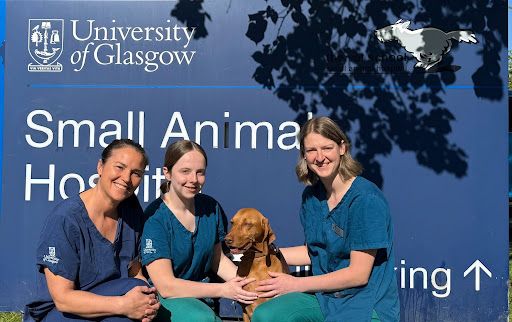
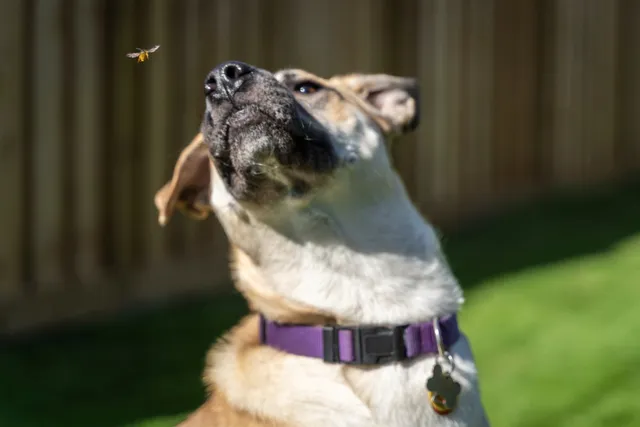
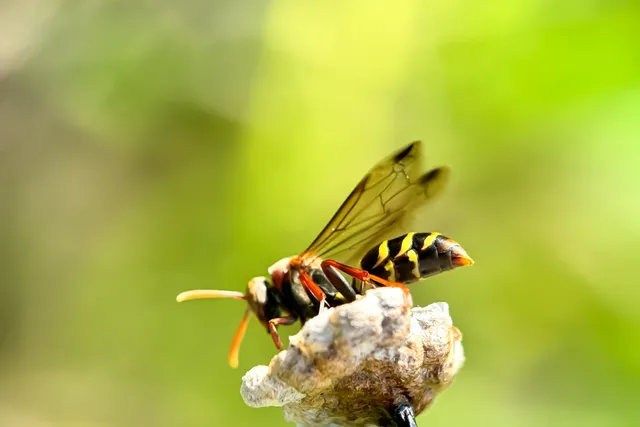
In July 2021, a bee flew through an open window into the Preece family's home in Stratford-upon-Avon. Nobody saw it happen, but suddenly, their beloved Vizsla, Amber, started behaving strangely. She broke out in hives, was vomiting, and by the time the family had rushed her to the vet, she was in full anaphylactic shock.
A single sting is how Amber recently became the first dog in the UK to receive Hymenoptera Venom Immunotherapy (VIT), a treatment now being offered by the University of Glasgow's Small Animal Hospital, the first center in the country to provide it, and one of only a handful of specialist centers anywhere in the world equipped to deliver it.
It’s the Second Sting That Matters
Insect venom allergy in dogs is one of the most serious acute allergic emergencies in veterinary practice. Reactions can develop within minutes of a sting, and while most stay limited to swelling, hives, or vomiting, a small number progress rapidly to collapse, respiratory distress, and death.
The real incidence of this allergy in dogs is not fully known. In humans, it is around 0.3–7.5%, with dogs believed to have a similar prevalence level.1
What makes insect stings particularly dangerous is what happens after a dog survives that first severe reaction. Nearly two-thirds of dogs who experience one severe response to a bee or wasp sting go on to have similar or worse signs the next time they're stung. For families like Claire and Matthew Preece, that statistic translates into something much harder to quantify: a constant dread that accompanies every warm afternoon and open window from spring through autumn.
"Amber became unwell very quickly at home," Claire Preece said. "We didn't even realize at the time that she had been stung by a bee that had flown in through an open window. Her behavior changed first, then things escalated rapidly. It became clear within minutes that this was extremely serious."

Training the Immune System to Chill Out
To understand how Hymenoptera VIT works, it helps to understand what an allergic reaction actually is. Normally, a dog's immune system ignores harmless substances in the environment, and mounts localized attacks on potentially harmful threats such as viruses, bacteria, or insect venom. In an allergic or hypersensitive dog, the immune system ‘overreacts’, mounting a powerful defence against relatively inert substances, releasing chemicals like histamine that cause blood vessels to leak fluid, airways to narrow, and skin to swell or break out in hives. In a mild reaction, this stays localized to the sting site. In a severe reaction, known as anaphylaxis, it happens throughout the whole body at once, which is why signs can escalate from hives to respiratory difficulty and collapse within minutes. It is the immune reaction that causes the damage, not the sting itself.
Think of the immune system in these dogs as a smoke detector wired far too sensitively, one that sounds a full fire alarm at the faintest trace of smoke, real fire or not. VIT works by exposing that oversensitive system to tiny, carefully measured amounts of venom, slowly increasing the dose over time until it learns to stop treating a small incursion as a five-alarm emergency.
Similar immunotherapy treatments are commonly used to help dogs with hypersensitivity reactions to pollen, dust mites, and other environmental allergens, but venom immunotherapy is a new frontier in canine medicine.
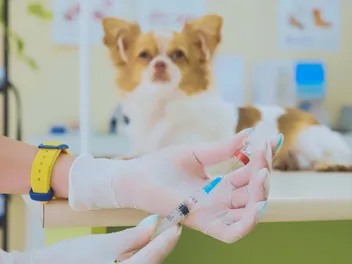
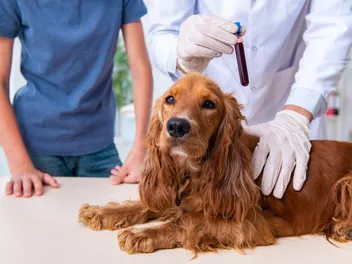
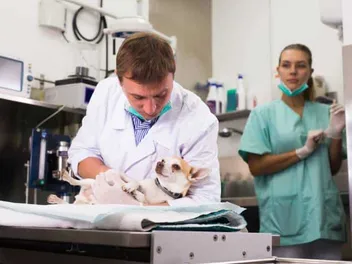
At the Glasgow Small Animal Hospital, treatment starts with allergy testing to pinpoint which venom – bee, wasp, or both – is behind the reaction. From there, dogs go through a closely supervised period of small, carefully increasing venom doses, followed by regular booster injections that continue for years; in some cases, for the rest of the dog's life.
Professor Ana Rostaher, who leads the program at Glasgow and is a leading international expert on VIT, put the goal simply: "Venom immunotherapy represents a major advance in how we can manage severe insect sting allergies in dogs. For affected animals, a single sting can make them very ill and even die. However, this treatment offers a proactive way to change that risk profile."
Small Study, Promising Signs
Veterinary medicine doesn't always have the luxury of large clinical trials, and VIT in dogs is still very much in its infancy. However, the data that does exist is encouraging. In a 2023 prospective clinical trial led by Rostaher, 10 dogs with a history of severe allergic reactions to bee or wasp stings underwent the same rush-induction VIT protocol now being used in Glasgow. All 10 completed the induction phase without serious adverse events. Of the seven dogs later exposed to a re-sting, either accidentally or through a supervised in-clinic challenge, six had no reaction at all, and the seventh developed only a mild, localized swelling that resolved within a day with standard antihistamine treatment. None developed a systemic allergic reaction.
Though the sample size is small, it’s a meaningful result in light of the nearly two-thirds recurrence rate typically seen in untreated dogs. The results are also consistent with decades of human VIT data, where the treatment is effective in the vast majority of patients.

Do All Dogs Need VIT?
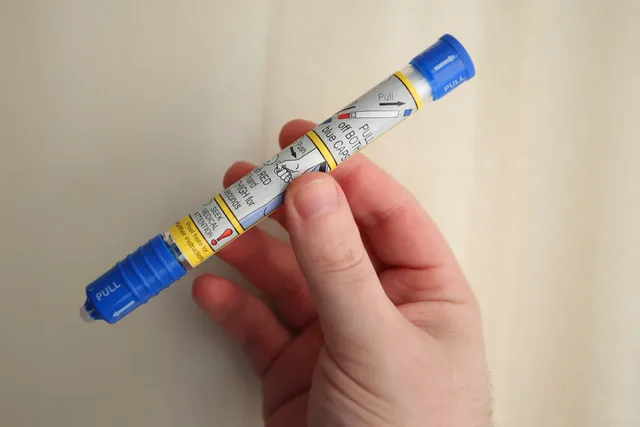
For most dogs, a bee or wasp sting is an unpleasant but brief inconvenience. VIT isn't intended for every dog that's ever been stung. It's specifically for dogs who've already had a moderate or severe systemic reaction, the kind involving collapse, breathing difficulty, or widespread hives, and whose pet parents want to reduce the risk of it happening again, rather than just carrying emergency medication and hoping for the best.
If your dog has had a serious reaction to an insect sting in the past, it’s worth raising directly with your veterinarian, who can help you decide whether referral to a dermatology or allergy specialist for testing makes sense. Access to VIT is still limited to a small number of specialist centers, so it won't be an option everywhere yet, but the field is expanding, and the team at Glasgow intends to grow the program further.
For Amber, the outcome has been what her family hoped for: peace of mind and a return to normalcy, even if, as Claire puts it, the anxiety never fully disappears. "We chose immunotherapy to reduce the risk of another reaction and to regain a sense of control," she said. "We simply wanted to do everything possible to protect Amber."
Anaphylaxis is one of the few true veterinary emergencies where minutes decide the outcome. For families who've lived through it once, the fear of a repeat episode rarely goes away. Professor Rostaher put it well: "For some dogs, these reactions are sudden, severe, and deeply distressing for families. Venom immunotherapy offers a way not just to treat the condition, but to prevent the next emergency before it happens."
That shift, from bracing for the next emergency to actually preventing it, is the kind of quiet relief every pet parent who has ever watched their dog struggle to breathe longs for. For every dog whose worst afternoon began with an open window and an unfortunate bee sting, and for every family who has lived with that same fear since, VIT is not just a treatment; it is a lifeline.
None of this is the bee's fault, of course. Bees and wasps remain essential to the ecosystems all of us, dogs included, quietly depend on, and the point was never to fear them, but to make sure one unlucky encounter doesn't have to end in an emergency. With treatments like this one becoming available, there's real hope that more dogs get to spend their spring and summer afternoons doing what they do best: chasing sunlight and sniffing every flower in the yard, fear-free.
Expert dog care, straight to your inbox
News, insights, expert advice, and everything dog.

No spam — unsubscribe anytime.
By signing up, you agree to our Terms & Conditions and Privacy & Cookies Policy.
How useful was this post?
Click a star to rate. You can leave written feedback afterwards. (We read all feedback.)
Dr. Paola Cuevas is our Senior In-House Veterinarian at Dogster and Pangolia. She has over 19 years of experience working with an array of species and loves sharing her knowledge and experience with our readers and aims to provide assistance with any issue presented by your non-human family members. She received her degree from the University of Guadalajara, Mexico.
Her passions are animal welfare and preventive medicine, and has skills in the fields of nutrition, microscopy, clinical pathology, diagnostic imaging, and endoscopy. Paola frequently contributes pet care insight to various media outlets like PetMD, The Daily Record, Parents.com, etc.
Paola is also an animal behaviorist with extensive experience in positive reinforcement animal training.