Allergy Bumps on Dogs: Our Vet Explains Hives & Urticaria

In this article
If bumpy red welts have erupted suddenly all over your dog, you may be wondering what they could be. These innocuous little bumps that can cause great discomfort to your dog are called “urticaria” or “hives.”
The skin is the body’s biggest and most vital organ. Its complicated network of three layers works synergistically to protect the body from the external world.
However, the skin can suffer from many disorders as a result of internal and/or external factors. It can erupt in rashes, pimples, and boils, and it can scale, dry and bleed. When a dog's body suffers an acute allergic reaction, hives can form on the skin.

What Is Urticaria?
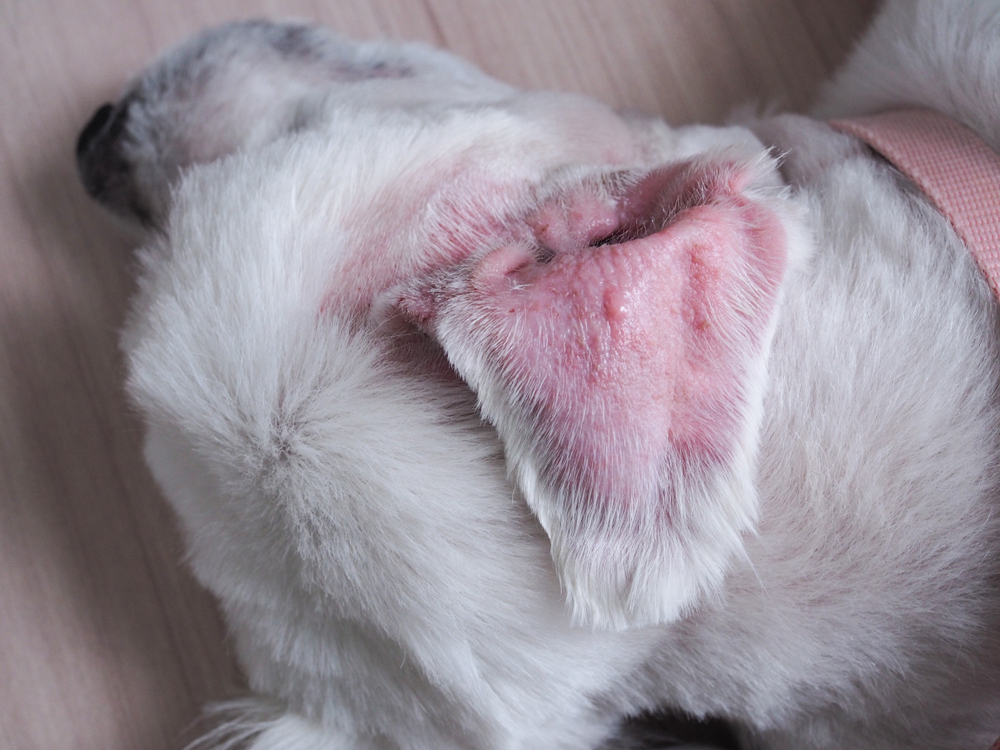
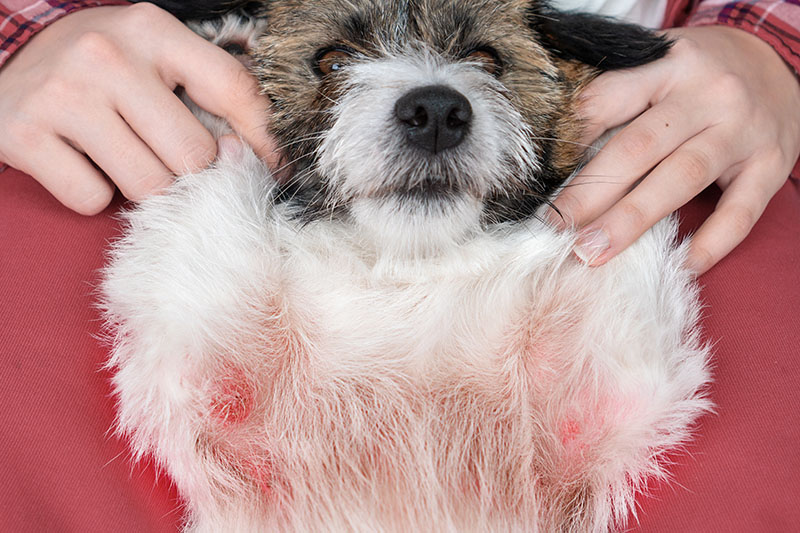
In dogs, urticaria is a skin condition that is typically caused by an allergic reaction. It results in red, swollen patches of itchy skin that usually appear quite suddenly. Sometimes, they can be easily missed because the skin is hidden by fur. They may simply look like numerous patches of raised tufts, and it isn’t until the fur is parted that the classic red welts of hives are noticed.
What Are the Signs of Urticaria?
Hives can vary in size, ranging from a few millimeters in diameter to several centimeters. They most commonly appear on a dog’s neck, back, and legs. However, sometimes they are also found in the mouth, nose, and eyelids. If they are large and numerous, they can blend together.
Since hives are a result of an allergic reaction or underlying inflammation in the body, you should also monitor for signs of swelling around your dog’s mouth or throat. If this is the case, you may notice drooling, an inability to swallow, difficulty breathing, and facial angioedema (swelling of the muzzle and eyes).
If you suspect your pet is suffering from urticaria, you should contact your vet directly for an assessment. They can provide you with more information and a care plan.
What Are the Causes of Urticaria?
Hives are a result of the immune system overreacting to something in the environment, called an “allergen.” This reaction can occur quickly, within 20 minutes of exposure to the substance.
Technically, anything can cause allergic reactions, but the most common causes are:
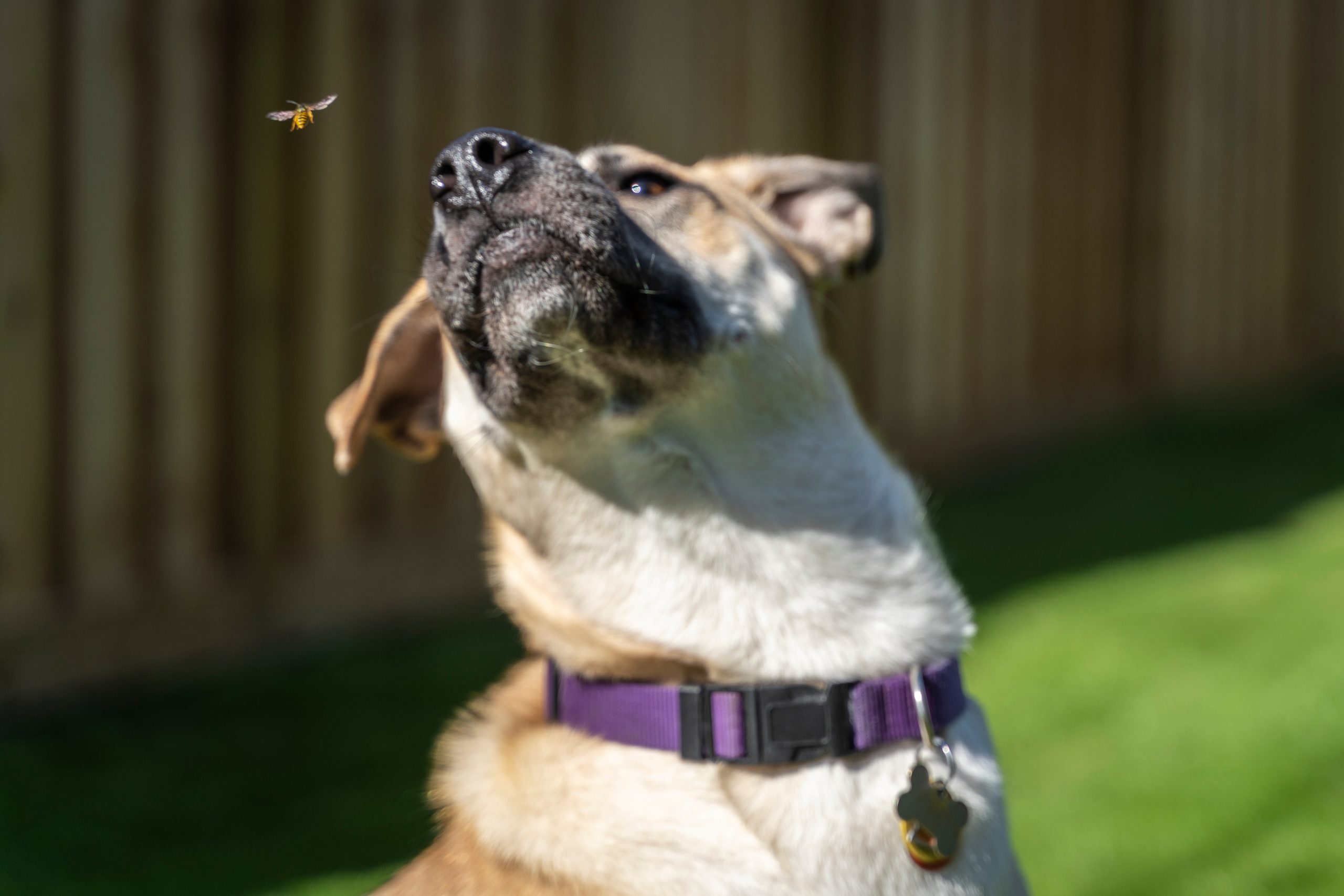
- Insect bites/ stings
- Shampoos
- Medications
- Toxic plants
- Food reactions
- Chemicals
- Pollen
- Molds
- Vaccinations
How Do I Care for a Dog With Urticaria?
Since hives can occur quickly, veterinary treatment is usually recommended. Treatment typically involves an antihistamine and corticosteroid injection. These work by calming the immune response and relieving the signs associated with the allergic reaction. They tend to work rapidly when given by injection, but you must continue monitoring your pet for a few hours after it is given. Under advice from your own veterinarian, you can give oral antihistamines, and if your dog is prone to allergic reactions, keeping veterinary-prescribed antihistamines ready at home is often helpful.
In some cases, if the hives are mild, they will go away on their own in a few hours, and treatment may not be required. Do take note of what they had been exposed to that potentially caused the hives. Were they playing with a bee? Did you wash them with a new shampoo? Did they just have their annual vaccinations? Reporting the incident to your veterinarian is advisable so it can be noted in your pet’s records. For example, if hives occurred after their annual vaccination, the vet may consider giving an antihistamine before their next booster.
Also, you want to limit their exposure to the offending allergen so the immune system doesn’t become increasingly sensitized to the substance and create a worse reaction later.

Frequently Asked Questions (FAQ)
What Is Anaphylaxis?
Any allergic response in a dog should be taken seriously because in severe cases, it can progress to anaphylaxis (a critical allergic response). Anaphylaxis can be life-threatening and occur if the patient has had prior exposure to the offending allergen.
The issue with anaphylaxis is that technically, repeated exposure to any substance can result in the body mounting this immune response. It just depends on whether the immune system considers that substance a threat. A common example of this is a bee sting. The first time that an animal (or human) gets a bee sting, it may be nothing more than a painful inconvenience. The second time, it can progress to severe red swelling. The third time, the blood pressure may plummet, and the body counteracts this by going into shock.
Fortunately, severe anaphylaxis is rare. However, if you notice hives on your dog, it is always recommended to also monitor your dog for signs of anaphylaxis. Interestingly, dogs differ from many other animals in that the liver is the primary organ involved rather than the lungs, so the signs of anaphylactic shock can include a sudden onset of vomiting, diarrhea, drooling, and seizures. Any gastrointestinal signs associated with hives should be taken seriously and warrant an immediate trip to your veterinarian. Other signs to look for include swelling around the mouth and throat and difficulty breathing.

What Should I Do If My Dog Is Suffering From Anaphylactic Shock?
If your dog is suffering from anaphylactic shock, the treatment is intensive. They will be triaged and hospitalized, their airways will be secured, and they’ll be given emergency medication, such as adrenaline, and put on intravenous fluids. Once stabilized, they will proceed to be monitored to ensure that they do not deteriorate.
Final Thoughts
It is never nice seeing your dog uncomfortable. Hives can be especially alarming, as they happen so quickly. One minute your dog may be completely fine, and the next, they are covered in itchy red welts that they won’t stop scratching. Be sure to consider what they were potentially exposed to and how you can limit future risk and hopefully, more severe reactions. If hives occur frequently or a single episode persists beyond a few hours, seeking veterinary care is advised.
See Also:
Featured Image Credit: Luiza Kamalova, Shutterstock
Expert dog care, straight to your inbox
Vet-reviewed advice, training tips, and the best of Dogster. Free, and you can unsubscribe anytime.
By signing up, you agree to our Terms & Conditions and Privacy & Cookies Policy.
Dr. Megan Barnes BVSC MRCVS (Veterinarian)
Meg is an Australian veterinary surgeon, dog expert, and writer, currently living and working in Scotland with her family. She is a passionate advocate of preventative medicine, educating clients, and believes medicine never has a one size fits all approach. When not vetting, her happy place is out walking the hills with her baby daughter and over-excited Labrador in tow, and writing.
Join the conversation
Ask a question, share your story, or send private feedback.