Rimadyl vs Deramaxx For Dogs: Our Vet Explains Safety, Usage & Which to Choose

In this article
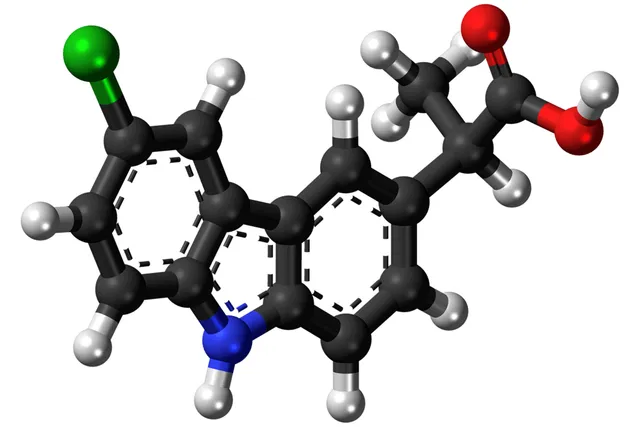
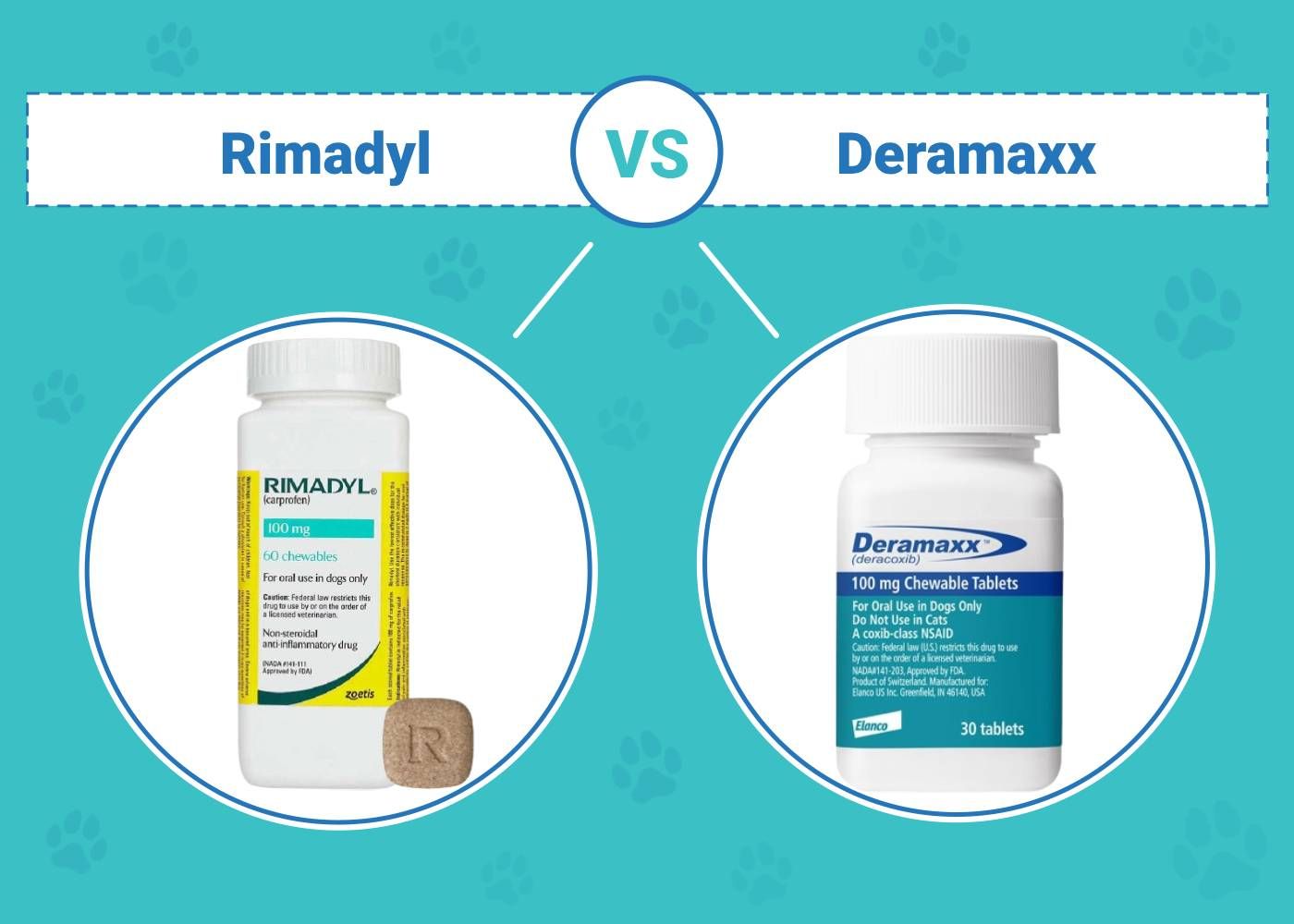
So, you want to compare a couple of pain relief options for your dog. Rimadyl is the brand name for carprofen sold by the animal health company Zoetis. Deramaxx is the brand name for deracoxib sold by the animal pharmaceutical company Elanco. They are similar in that they are both types of nonsteroidal anti-inflammatories.
The primary use of both these drugs is controlling pain in arthritic animals. With osteoarthritis being the number one cause of chronic pain in our pups, choosing the correct treatment protocol is essential. When it comes down to which NSAID to use, individual factors may influence which is the better choice for your dog.
Carprofen and deracoxib are both FDA-approved for use in dogs.1 They have been shown to be effective and safe in most canines. A veterinarian prescribes both products, and your vet will usually choose the best one for your dog based on the circumstances. However, if you want to compare and contrast the two products, read on.


At a Glance
Overview of Rimadyl

Rimadyl, or carprofen, to use the drug name, has been around for a while, having attained FDA approval in 1996. Like other NSAIDs, it provides pain relief, anti-inflammatory, and fever-reducing effects. It can be used in young puppies from 6 weeks of age. Quite often, vets administer an injectable version of this medication.
Rimadyl is moderately priced to inexpensive. Generic forms of this medication are available, potentially saving frugal owners more money. Owners can choose between chewable tablets or caplets to administer Rimadyl to their dogs at home.
The chewable tablets are palatable, so you should be careful not to leave them out for your dog to binge on, leading to an overdose. The caplets are a bit more expensive. Rimadyl can be administered once a day or as a half dose every 12 hours. Dose rates and extensive product information can be found here.
Pros
- Price
- Use in puppies over 6 weeks
- Various forms available
- Able to be given twice daily
Cons
- Need to be careful with chewable tablets
Overview of Deramaxx

Deracoxib was first released in 2002 after gaining FDA approval. Deramaxx is part of a more recent category of NSAIDs known as Coxibs. These kinds of drugs end in “coxib,” like robenacoxib and firocoxib. This refers to their affinity for specific enzymes and their benefits in terms of side effects, but more on that later. Four-month-old pups can be safely prescribed this medication to reduce pain, inflammation, and fevers.
Deramaxx comes exclusively in beefy chewable tablets, which 94% of dogs will eat on their first try. Similarly to other palatable chews, allowing your dog to get into them could result in an overdose. A higher dose is typically recommended after orthopedic surgeries, and lower doses are recommended for long-term osteoarthritis pain relief. More information and dose rates can be found here.
Pros
- Coxib benefits
- Safe for 4-month-old puppies
Cons
- Price
- Only one form is available
- Need to be careful with chewable tablets
How Do They Compare?
Efficacy
- Edge: Deramaxx
A 2002 study compared the efficacy of a placebo, carprofen, and deracoxib on 24 dogs with joint inflammation and pain. It found that medium-high doses of deracoxib were the most effective in relieving pain. Carprofen was effective but less so than deracoxib.
This result is backed up anecdotally as some veterinarians find Deramaxx to have superior analgesic properties to Rimadyl. One study of 805 dogs taking carprofen for osteoarthritis found that most dogs improved, but only 26.7% of limping had entirely resolved.
Activity levels and the duration of the arthritis affected the response to treatment. This highlights that sometimes other treatments are needed to control pain in arthritic dogs. Another study showed that deracoxib was an effective pain relief after surgery.

Side Effects
- Edge: Deramaxx
NSAIDs primarily work by inhibiting an enzyme called cyclooxygenase (COX), which comes in two forms: COX-1 and COX-2. COX-1 pathways produce prostaglandins that have beneficial effects on the body, such as producing a protective layer of gastric mucus and maintaining blood supply to the kidneys.
COX-2 pathways produce prostaglandins that we want to target. These prostaglandins are involved in pain, inflammation, and fever. COX-2 also produces beneficial prostaglandins involved in renal function, reproduction, and development.
Side effects occur primarily due to the suppression of beneficial COX products. As mentioned earlier, coxibs on paper produce fewer side effects because they are COX selective and inhibit COX-2 pathways over COX-1. While carprofen is COX-2 preferential, deracoxib is COX-2 selective, with a superior preference for this pathway. Unfortunately, in practice, even COX-2 selective medications can lead to adverse effects, and every animal is different in how they respond.
So, what are the common side effects? Gastric ulceration and gastrointestinal upsets are the most commonly noted reactions. Gastric ulcerations can be severe, and full-thickness damage to the stomach wall is called gastric perforation, which is life-threatening and necessitates surgery.
Dogs with kidney disease are more prone to the condition when NSAIDs are used. Dogs with liver disease can also have their condition worsened. If the liver is unable to metabolize the medications properly, they can build up in the system, leading to overdose.
Overall, both medications are safe and well tolerated in most dogs. One study of 805 dogs taking carprofen found that 24 of them experienced side effects. One more serious but thankfully much less common side effect is idiosyncratic liver toxicity. Rarely, deaths can occur from using NSAIDs.
Signs of an adverse reaction to watch for when your dog is prescribed any NSAID include:
- Vomiting, with or without blood
- Diarrhea
- Blood in the stool
- Dark tarry stools, which indicate gastrointestinal bleeding
- Poor appetite
- Drooling
- Nausea
- Drinking more than usual
- Urinating more than usual or not at all
- Lethargy
- Collapse
If you suspect your dog is having an adverse reaction, stop the medication and contact your veterinarian or local emergency clinic for advice. Your dog may need intervention to help them recover. You can report adverse reactions to the FDA online or by calling 1-888-FDA-VETS (1-888-332-8387). You should also call the drug company to discuss the situation.

How to Prevent an Adverse Reaction
While you cannot prevent 100% of adverse reactions, as some dogs are hypersensitive or allergic to specific NSAIDs, there are some ways you can make these medications safer for your dog. Ideally, dogs should have blood work demonstrating good liver and kidney function before starting NSAIDs, especially for long-term use or older animals.
This blood work can be repeated every 6 months and 3 weeks after starting medication to catch any changes early. Being alert to declining liver and kidney function means the dose can be adjusted, or alternative pain relief can be prescribed before there is a high risk to your dog.
Only use the medications as directed by your veterinarian to avoid overdose. Using certain medications with Rimadyl or Deramaxx can increase your dog’s risk of side effects. A washout period of 5–7 days is recommended when using medications that may interact with the NSAID.
This includes other NSAIDs and corticosteroids like prednisolone. In a study of 29 dogs that experienced gastric perforation while taking deracoxib, 90% received the medication at doses higher than label recommendations or received another NSAID or corticosteroid within 24 hours of taking the medication.

What the Users Say
We have read user reviews on several platforms to get a good idea of what consumers think about these products. However, when reading the reviews, especially for medications, you should take them with a grain of salt. Remember that each animal responds differently to medication, and some of the signs owners notice may actually be unrelated to the medication.
Both drugs have been noted to be very effective in improving dogs' mobility with arthritis. Animals on each medication have suffered from kidney, liver, or gastrointestinal tract damage as a result of the medication. Many people noted that the response to one medication over the other depends largely on the individual dog.
Although more expensive, Deramaxx may provide stronger pain relief. One vet noted the lack of an injectable form of Deramaxx can be a disadvantage. Typically, dogs will receive a postoperative injection of NSAID and then continue the same NSAID in oral form since mixing NSAIDs is not recommended.

Conclusion
If your dog needs a nonsteroidal anti-inflammatory, your vet will choose the one they think is most appropriate for your circumstances. Aside from carprofen and deracoxib, there are other options like meloxicam, grapiprant, robenacoxib, and firocoxib.
If you want to compare Deramaxx and Rimadyl, Deramaxx is more expensive but, on paper, has better safety and efficacy. Rimadyl is a safe and more budget-friendly alternative.
Expert dog care, straight to your inbox
Vet-reviewed advice, training tips, and the best of Dogster. Free, and you can unsubscribe anytime.
By signing up, you agree to our Terms & Conditions and Privacy & Cookies Policy.
Dr. Ashley Darby BVSc (Veterinarian)
Dr. Ashley has worked in mixed and small animal emergency clinics and general practice ever since 2017 after studying Sydney University. She grew up in South Africa and England before moving to Australia, and her passion for animals came from many childhood safaris in the Kruger National Park.
Ash lives with her husband, two happy Springer Spaniels, and one very patient black cat. She also competes in equestrian sports with her horse, Atlas.
Join the conversation
Ask a question, share your story, or send private feedback.