Dog Nosebleeds: Causes & Care Guide (Vet Answer)

In this article
We all know that people can get nosebleeds for various reasons, but what about dogs? Can dogs get nosebleeds? Yes, they can. If you have ever had your dog run up to you with a nosebleed, it's easy to panic, and you're not alone. Let's dive into some potential causes of nosebleeds in dogs and what you can do about it.

What Is a Nosebleed?
A nosebleed is just like it sounds: blood coming from one or more of the structures in the region of your dog's nose: the nasal cavity itself, the nostrils, or even the nasopharynx. This condition is also referred to as epistaxis.
What Are the Signs of Nosebleeds in Dogs?
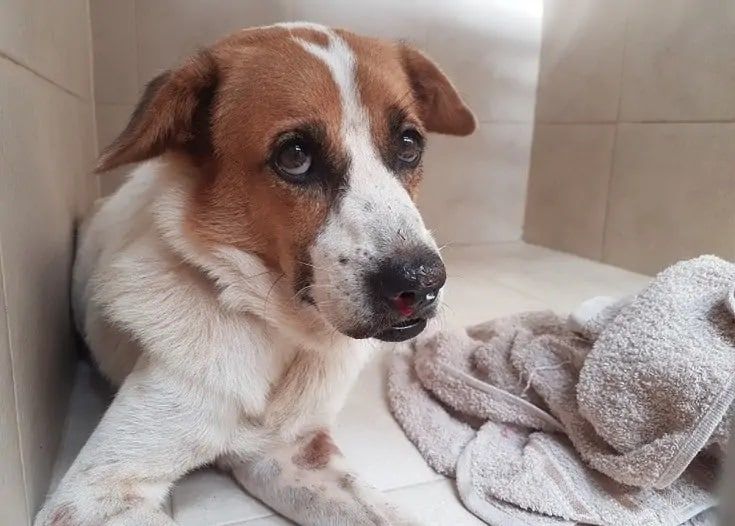
Nosebleeds can appear in a few different ways. You might see blood coming from one or both nostrils. It can be a couple of drops that you notice when your dog sneezes, or significant amounts of blood could run out of your dog's nose.
If your dog has a condition that causes generalized bleeding or difficulty clotting, you could see other signs:
- Pale gums
- Increased respiratory rate (tachypnea)
- Elevated heart rate (tachycardia)
- Delayed capillary refill time
- Weakness
- Lethargy
- Distended abdomen from bleeding
Is your dog presenting any of these signs? We suggest you speak with a vet online.
You might notice facial deformities with certain conditions, such as nasal tumors or even fungal infections.
Because dogs with nosebleeds may swallow the blood, you might see evidence of that blood in vomit or stool. The stool may look dark and tarry, generally referred to as melena. Vomit could have blood clots in it or look like coffee grounds.
What Are the Causes of Nosebleeds in Dogs?
There are a range of different things that could cause epistaxis in dogs. The two most common tend to be nasal tumors, which may not be readily apparent on physical exam, and trauma. Nasal tumors make up roughly 1% of all tumors in dogs. They can cause deformities of the muzzle.
Some of the potential nasal tumors include:
- Hemangiosarcoma
- Squamous cell carcinoma
- Lymphoma
- Osteosarcoma
Conditions affecting the nasal cavity can contribute to epistaxis. If your dog gets a tooth root abscess or an oro-nasal fistula in the maxilla or upper jaw, it could cause bleeding into the nasal passages. These conditions may be evident on a physical exam or under anesthesia, but your veterinarian may need diagnostic imaging, such as dental radiographs (X-rays), to diagnose them.
Dogs like to use their noses to investigate the world around them. Unfortunately, that can increase the odds of a nasal foreign body, such as a grass awn or foxtail. These objects may be quite tiny but can migrate through the tissues and cause inflammation and bleeding.
Disorders that contribute to bleeding or trouble clotting are associated with nosebleeds, including:
- Von Willebrand's disease
- Immune-mediated thrombocytopenia (decreased platelets)
- Hemophilia
- Bone marrow suppression
- Liver failure
- Heat stroke
Infections affecting the airways, such as bacterial or fungal infections, may cause nosebleeds.
Other infection possibilities are:
- Ehrlichiosis
- Rocky Mountain spotted fever
Certain rodenticides (rat poison) can cause bleeding. Drug reactions could also cause an issue. Even something as commonly used as non-steroidal anti-inflammatory drugs (NSAIDs) could cause bleeding.
Diagnosing a Dog With Epistaxis
If your dog presents with a nosebleed, your veterinary team will first try to make sure he is stable. They'll perform a physical exam and ask you questions. Some of the ones you might get asked are:
- Has your dog taken any medications or supplements?
- Could your dog have been exposed to rat poison? If so, do you know what kind?
- Has your dog been rough-housing or potentially injured?
- Have you noticed any swelling or bruising, such as on the belly or legs?
- Is your dog on flea and tick prevention? Have you seen any ticks on your dog?
- Have you noticed sneezing or nasal discharge?
- Has your dog had dark, tarry stool or vomit that looks like coffee grounds?
Some of the diagnostic tools your veterinarian may recommend include:
- Blood work, including a complete blood cell count and biochemistry panel
- Clotting tests, including PT/PTT
- Radiographs (X-rays)
- Urinalysis
- Cultures for bacteria or fungal organisms
- Respiratory panel to look for certain infectious agents
- Ultrasound
- CT scan
- Endoscopy or rhinoscopy
How Do I Care for a Dog With Nosebleeds
There aren't many home therapies for dogs with nosebleeds, and you should have your pup evaluated by a veterinarian as soon as possible, especially with significant amounts of blood coming from the nose. But first, you should calm your pet to try lowering their blood pressure. Excited or stressed pets with higher blood pressure will likely bleed more. VCA Animal Hospital recommends putting an ice pack on their muzzle, as the cooler temperature will help constrict blood vessels.
At the veterinary hospital, your veterinarian will assess your pet and come up with a tentative diagnosis. In addition to controlling bleeding, your vet will look to treat the underlying cause. For example, they might recommend:
- Antibiotics for a bacterial infection
- Antifungals for a fungal infection
- Surgery for a foreign body
- Extractions for a tooth root abscess
- Vitamin K for certain rodenticides
- Steroids for autoimmune conditions
- Radiation for nasal tumors
Dogs with chronic or recurrent nosebleeds may benefit from an herb called Yunnan Baiyao. Talk to your veterinarian before administering it to see if they think your pet might benefit from it.
Your pet may need a thorough oral exam performed under heavy sedation or anesthesia. If dental disease is noted at that time, your veterinarian may be able to treat the diseased teeth or refer you to a veterinary dental specialist. Additionally, your dog may require blood or platelet transfusions, depending on how severe the bleeding has been.

Frequently Asked Questions (FAQ)
How does liver disease cause nosebleeds?
In the later stages of liver disease or failure, the liver loses the ability to create clotting factors. Without these components in the bloodstream, your dog's body cannot adequately stop bleeding.
Can heat stroke cause a nosebleed in dogs?
Yes, if your dog develops heat stroke, they can develop a nosebleed. Unfortunately, this phenomenon typically occurs with severe heat stroke when your dog's body is going into disseminated intravascular coagulopathy.
Conclusion
If your dog develops a nosebleed, they need to be evaluated by a veterinarian as soon as possible. Identifying the underlying cause of epistaxis is important so that your veterinarian can treat it effectively, which may involve in-depth diagnostics. Ultimately, the prognosis for your dog will depend on what the cause is, as well as your pup's response to treatment.
Sources
Featured Image Credit: W_NAMKET, Shutterstock
Expert dog care, straight to your inbox
News, insights, expert advice, and everything dog.

No spam — unsubscribe anytime.
By signing up, you agree to our Terms & Conditions and Privacy & Cookies Policy.
How useful was this post?
Click a star to rate. You can leave written feedback afterwards. (We read all feedback.)
Dr. Samantha Devine DVM (Veterinarian)
Dr. Samantha Devine is a practicing veterinarian who enjoys caring for animals and sharing her knowledge with pet owners. Preventative care, ranging from nutrition to vaccination, is her specialty and passion!
With over 12 years of veterinary experience, Dr. Devine has extensive knowledge to share about small animal medicine, horses, aquatic species, and even zoo animals. She has also been writing for online pet sites for most of that time.