Do Dogs Have a Gag Reflex? Our Vet Explains


In this article
If you have seen videos of a dog making a retching noise, you might wonder if it's due to a gag reflex. We're here to tell you, that yes, dogs have gag reflexes just like humans. Yet another thing we have in common!
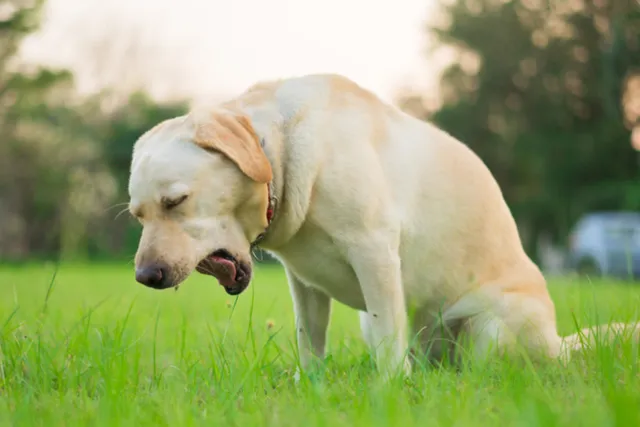
Before reading this article, you should ensure what your dog is really doing is gagging. Vomiting and coughing can both look a lot like gagging, and can be associated with gagging so it can be difficult to tell the difference. True gagging is when the pup lowers their head, sticks out their tongue, and makes a retching sound, but isn’t moving air out their lungs or bringing up vomit. If you're not sure, take a video of the behavior to show to your vet.

Dogs Have Gag Reflexes
As you now know, dogs do have gag reflexes that work in the same way as humans and other mammals. There are two pipes that run through the neck, with their entrances being side by side in the throat. The esophagus is the pipe for food and water to enter the stomach, whereas the trachea or windpipe is an airway. The gag reflex evolved to protect food from entering the airways, preventing life-threatening choking and aspiration pneumonia. Interestingly, the gag reflex develops in the fetus, meaning it is present before birth. During a puppy’s time with their mother, the sensitive gag reflex will prevent them swallowing food that is too solid for them.
During gagging the muscles in the throat contract and the soft palate lifts up with the aim of expelling food. However, more complex behaviors like opening the mouth, and sticking out the tongue occur with gagging. Severe gags can lead to vomiting. Tactile sensation within the throat stimulates the gag reflex and the nerves carry impulses to the brainstem and back to cause the gagging without conscious thought. Certain diseases can stimulate the gag reflex or cause it to become more sensitive.

The 9 Reasons Dogs Might Gag
1. Something They’ve Eaten
We all know the dog that hoovers down their kibble or tries to eat things that aren’t food. If the body registers something in the throat that can’t be easily swallowed, say a piece of string or a large bite of food, it’s normal for the gag reflex to be triggered to protect the airway. In sensitive people, sticky or mushy food textures can stimulate a gag reflex, the same could be true for dogs. A large lump of peanut butter stuck in the throat would probably cause a dog to gag! If they try to eat something sharp this could also lead to gagging, especially if it gets stuck in the throat. Using a slow feeder and elevating the food bowl during meals can help prevent gagging. You should also give your dog a drink of water if they gag after eating.
2. Severe Coughing
Severe coughing can result in inflammation and mucus in the throat triggering the gag reflex. Coughing is a sign of problems that can range from mild to life-threatening, not a diagnosis in itself. If coughing triggers the gag reflex, vomiting or regurgitation can often follow. Your dog may bring up food or brown/yellow stomach contents. Kennel cough is a common viral cause of coughing and inflammation in the upper respiratory tract. It can cause a hacking cough, which tends to increase with excitement or exercise. Similar signs can also be caused by tracheal collapse, where the windpipe collapses on itself like a wet paper straw. This is common in small breed dogs, and is more of a chronic condition.

3. Local Infection
If there is inflammation of the throat or larynx, this sensitizes the nerves and the gag reflex which could lead to more frequent gagging. Dental disease, which causes plaque and bacteria to accumulate in the mouth is the most common cause of inflammation and infection in the mouth. Infections can also lead to a thick discharge that activates the gag reflex; fungal infections, though uncommon, will generally cause a lot of nasal discharge. If you notice any nasal discharge, excessive drooling, or bad breath, your dog may be gagging due to an infection.
4. Smoke or Fume Inhalation
Severe smoke inhalation is most common in dogs that have been in a house fire but exposure to things like cleaning products, pool chemicals, varnishes, strong fragrances, aerosol sprays, and cigarette smoke can also be harmful for them. If your dog has inhaled a substance, it will travel through their nose, throat, windpipe and lungs. Depending on what has been inhaled this can result in mild irritation to chemical burns. Either way, the inflammation in the throat will lead to a sensitive gag reflex.

5. Laryngeal Paralysis
The larynx or voice box is the organ in the throat that controls swallowing and vocalizations. It represents part of the upper airway and can be felt as a firm structure under your dog’s neck. Some dogs will develop a condition called laryngeal paralysis where the nerve that controls the muscles of the larynx no longer works. This occurs frequently in older large breed dogs, especially Labrador Retrievers. Laryngeal paralysis leads to gagging and other signs like noisy breathing, exercise intolerance, changes in bark, and coughing due to inhaled food. It can cause respiratory distress and in some cases surgery is needed to improve a dog’s quality of life.
6. Trauma
Trauma can cause an abnormal gag reflex in a few different ways. Damage to the larynx or trachea can cause air to enter abnormal spaces, and gagging can be one of the signs of a problem. If a blood vessel is ruptured in the area blood can also pool in areas in shouldn’t and trigger gagging. Finally, brain injuries can affect the control centers for gagging in the brain stem, causing gagging signals to arise from the brain without cause.

7. Neurological Problems
Since gagging is controlled by the brainstem and nerves, diseases affecting these structures can lead to frequent and abnormal gagging. Infections, cancers, and specific diseases, like myasthenia gravis, a condition where an animal lacks enough of the neurotransmitter needed for movement, can all cause gagging. If your dog has neurological problems, they will probably have other signs of disease like behavioral changes, confusion, wobbly gait, or abnormal reflexes.
8. Cleft Palate
Cleft palate is a congenital problem that can be noted in newborn puppies. These pups have a defect in the hard and soft palate that creates a channel between the oral and nasal cavities. When they try to drink milk or eat, part of their meal enters the nasal passages which can result in food coming into the airway. The gag reflex then functions normally to try and protect the puppies but often food is inhaled anyway leading to further complications.

9. Cancer
Cancer in the throat is not uncommon in dogs. Cancerous growths can arise from the tissues surrounding the throat, tongue, tonsils, or larynx. Growths that sit around the throat can stimulate the nerve cells, in the same way that a large chunk of food stuck there would, triggering a gag. Different cancers can also impact the neurological pathways that control the gag reflex leading to abnormalities.
When to See a Vet
You should see your vet if there is no obvious cause for your dog’s gagging in terms of something they have eaten. You should also have your dog examined if the gagging occurs frequently or doesn’t stop quickly. You can call your vet for advice about how urgent your dog’s condition is; however, there are some signs your pup will need to be seen at an emergency clinic.
We recommend urgent to immediate treatment for:
Conclusion
Gagging is a normal, helpful reflex in mammals including our beloved dogs. If your pooch has been over enthusiastic with their eating their gag reflex may have just saved them from choking or aspiration pneumonia. However, gagging is not a common occurrence in normal dogs. If your dog is gagging frequently, or has an episode that doesn’t stop, there is an underlying cause that needs to be addressed. Many causes of gagging can be treated relatively easily or even cured however, the only way to know the best individual plan for your dog is to get them seen by your vet. We wish them a speedy recovery!
Sources
Featured Image Credit: VK-photography, Shutterstock
Expert dog care, straight to your inbox
News, insights, expert advice, and everything dog.

No spam — unsubscribe anytime.
By signing up, you agree to our Terms & Conditions and Privacy & Cookies Policy.
How useful was this post?
Click a star to rate. You can leave written feedback afterwards. (We read all feedback.)
Dr. Ashley Darby BVSc (Veterinarian)
Dr. Ashley has worked in mixed and small animal emergency clinics and general practice ever since 2017 after studying Sydney University. She grew up in South Africa and England before moving to Australia, and her passion for animals came from many childhood safaris in the Kruger National Park.
Ash lives with her husband, two happy Springer Spaniels, and one very patient black cat. She also competes in equestrian sports with her horse, Atlas.