Why Is My Dog Gagging? Vet-Approved Reasons, Tips, & FAQ


In this article
View 4 More +There are many behaviors that we, as dog parents, can easily tolerate or ignore because of our unconditional love for our pets, particularly those surrounding bodily functions! But when your pet displays a troubling sign like gagging, you undoubtedly become concerned. Sometimes, dogs gag for no serious reason, and the episode is short-lived. However, if your dog is gagging more frequently or showing other signs of illness or discomfort, it could indicate a problem that needs veterinary attention.

Why Is My Dog Gagging?

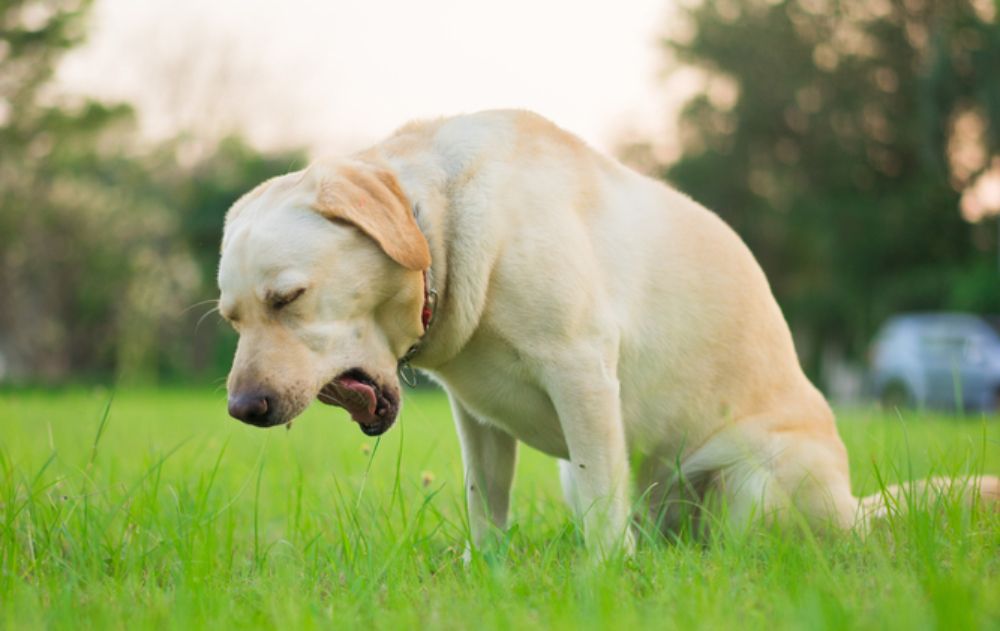
There are a few things that can cause your dog to gag, but firstly, it’s important to differentiate your dog's gagging from coughing and vomiting. When dogs gag, they typically open their mouth wide and make a retching sound. However, nothing will come up except some mucus they may have swallowed. Gagging can also occur in conjunction with a cough.
To determine the seriousness of your dog’s gagging, try to take note of whether your dog coughs and then gags, or gags and then coughs, or neither.
If your dog gags first and then coughs, it could be associated with a dysfunction of the larynx. But if your dog first coughs and then gags, it is often associated with respiratory issues. Sometimes, gagging occurs when your dog drinks too fast or gets excited, and it’s a temporary issue that isn’t harmful. Here are some common reasons your dog could be gagging:

Kennel Cough and Other Respiratory Issues
If your dog is coughing and then gagging, it is likely associated with respiratory disease. Infectious tracheitis (also known as kennel cough) is a type of respiratory infection that results in an intense cough that sounds like the honking of a goose and is often followed by a gag, and it is highly contagious. Quite often, owners think their dog has something stuck in their throat.
Coughing and then gagging can also result from other cardiorespiratory issues, such as pneumonia, heart disease, or neoplasia (cancer).
1. Laryngeal Paralysis
Laryngeal paralysis is when the rigid,1 cartilage opening to the trachea, called the larynx, becomes weak, not holding its rigid, open structure. This creates resistance when breathing and leads to inflammation and swelling around the laryngeal tissue. It will usually start off subtle and become worse over time. The breeds most commonly affected are the Labrador and Golden Retriever. In severe cases, a procedure called a Laryngeal Tieback is performed to keep the larynx open.

2. Collapsing Trachea
This condition is most often seen in smaller breeds, like the Yorkshire Terrier. The cartilage rings of the trachea do not hold their shape properly and, like with laryngeal paralysis, create resistance to air flow, which becomes worse over time. It can be managed medically, or in severe cases, surgical stents can be placed to hold the trachea open.
3. Elongated Soft Palate
Particularly common in brachycephalic (short-faced) breeds, this is when the soft palate at the back of the roof of the mouth protrudes over the larynx, sometimes getting stuck under the epiglottis (the ‘trap door’ that covers the larynx when food or water is being swallowed). The dog gags to get the palate unstuck, and sometimes will also exhibit ‘reverse sneezing’.
It is now relatively common for dogs with this problem to have the end of the soft palate surgically removed.

4. Reflux
Sometimes, acid from the stomach can leak into the esophagus and cause irritation of the nerves that control swallowing, resulting in gagging. This might happen with gastrointestinal disease or just because your dog’s stomach has been empty for a long time.
5. Foreign Body
As mentioned earlier, dogs with infectious tracheitis often sound like there is something stuck in their throat. Occasionally, dogs will gag because there actually is something stuck. Things like blades of grass, grass seeds, or tiny bones can sometimes get lodged under the soft palate or beside the larynx, causing gagging. Your dog might also start gagging if they have swallowed something large or sharp that has caused irritation on the way down (like how we feel if we swallow a pill without water).

6. Intestinal parasites
Parasites such as roundworms have larval stages that migrate through the trachea, and this can cause coughing and gagging.

When Should My Dog See a Vet?
If your dog is gagging and you are worried, phone a vet immediately for advice.
If your dog occasionally gags when they get excited or drinks too fast, they are unlikely to need urgent attention. If your dog is alert, happy, eating and drinking, and seems like their usual self, keep an eye on them for 48–72 hours. If the gagging becomes frequent, it is best to have them checked out. If it only happens on the odd occasion, it is still worth mentioning it to the vet at your dog’s next routine health check.
If your dog is gagging and coughing or vomiting, you should visit a vet for a full examination.
You should see a vet if your dog is gagging and there are other signs such as:
What Should I Do If My Dog Is Gagging?
If your dog starts gagging, you must pay close attention to ensure your dog is not choking. Your dog could be gagging from chewing on something but not necessarily choking, and you can look around for pieces of sticks, chewed-up toys, or bones to determine if that could be the case.
If your dog doesn’t seem distressed or unwell, monitor them and contact a vet for guidance if the gagging persists. Ensure your dog is eating and drinking and going to the bathroom regularly. If your dog shows any of the signs mentioned above, or if you are worried, make an appointment with a vet.
If your dog’s tongue or gums become pale, purple, or blueish at any time, they need urgent veterinary attention.
How Can I Prevent Gagging in My Dog?
Depending on the cause of your dog’s gagging, you might not be able to prevent it, but here are some ways to help minimize it.
- Keep them from chewing sticks, bones, or toys that can break and cause splintering. Only offer durable, chew-safe toys, and always supervise your dog when they are chewing them.
- Keep up with routine parasite prevention and vaccinations.
- Use puzzle feeders to slow down eating to prevent your dog from gagging while eating.
- Raise water bowls to help prevent gagging when drinking.
- Avoid leaving too long a gap between meals, especially overnight.
Conclusion
Gagging can be a normal and sporadic occurrence for dogs, but if the gagging is frequent, you should seek veterinary assistance. In many cases, the cause will not be too serious, but getting a proper diagnosis will help you monitor and manage the problem better.
Remember, if your dog is gagging and showing ANY signs of being unwell, you should contact your vet to make an appointment. If your dog is having difficulty breathing, do not wait to make a phone call. Take them to a vet or emergency animal hospital immediately.
Sources
https://www.kingsdale.com/a-closer-look-at-the-top-7-causes-of-gagging-in-dogs
https://virginiaveterinarycenters.com/pet-emergencies-wait-or-should-pet-seen-immediately/
https://vcahospitals.com/know-your-pet/reverse-sneeze-in-dogs
https://www.petmd.com/dog/conditions/infectious-parasitic/c_multi_ascariasis
Featured Image Credit: Dhanoo Surasarang, Shutterstock
Expert dog care, straight to your inbox
News, insights, expert advice, and everything dog.

No spam — unsubscribe anytime.
By signing up, you agree to our Terms & Conditions and Privacy & Cookies Policy.
How useful was this post?
Click a star to rate. You can leave written feedback afterwards. (We read all feedback.)

Nicole has loved animals of all sizes her whole life so it's no wonder she has dedicated her career to helping them through what she loves best: learning, writing, and sharing knowledge with others. She’s the proud mom of two dogs, a cat, and a human. With a degree in Education and 15+ years of writing experience, Nicole wants to help pet parents and pets around the planet to live happy, safe, and healthy lives.