Why Does My Dog Poop on Concrete? 7 Potential Causes


In this article
Your daily walks with your dog are usually pleasant experiences. You meet other people and their pups, exercise, and enjoy the fresh air. Even when you're a responsible owner who carries poop bags to collect the waste, your dog may embarrass you when they defecate on the concrete. It's not a unique habit, but why doesn't your dog use the grass instead? In this article, we'll discuss some of the common reasons why your dog prefers to poop on the sidewalk or driveway.

The 7 Reasons Why Your Dog Poops on Concrete
1. Age-Related Issues
If your older dog has always pooped on the grass and has recently changed their pooping business to the concrete, the problem may be age-related. Cognitive dysfunction syndrome in dogs can cause them to act differently and do things they’ve never done before. The disease affects your dog’s brain and can result in confusion and forgetting where they are, their training, and other memories.
Your dog may start pooping on areas they’ve been trained not to poop on, and they also may break other training rules. It’s important to take your dog to the vet for regular check-ups. Vets can detect signs of cognitive dysfunction early on and provide resources and treatment before your dog’s health worsens.
There is no cure for cognitive dysfunction syndrome, but ensuring your dog receives appropriate mental and physical exercise to keep their brain stimulated may help support cognitive function and slow progression in some cases.
If you’re concerned about your pet's health, you should contact a vet.
2. Arthritis
Arthritis is a disorder that affects your dog’s joints and can cause pain, stiffness, or lameness. There is medication available for dogs with arthritis to ease the pain, but they typically still battle with getting up, walking around, and getting back down again.
If your dog has arthritis, they may have started pooping on concrete simply because it’s closer to them than the grass or because the concrete is flat, unlike the soft, uneven surface of grass, and may feel more stable or require less effort to access.
Other signs that accompany arthritis in dogs may include excessive licking or chewing of joints, fatigue, muscle atrophy, irritability, and a lack of interest in things they used to love doing.

3. Frozen or Wet Grass
If it’s been raining outside or the grass is covered in dew early in the morning, your dog may either hold in their poop until the circumstances are more ideal, or they’ll do it in a more comfortable area, like on your dry concrete.
Dogs may be reluctant to get their paws wet or muddy and will avoid soppy, soggy grass. The same is true if it’s cold outside and the grass has frozen. Your dog is more likely to choose the warmer, drier driveway than the cold, frozen grass to do their business on.
4. Long Grass
If you’ve been too occupied with the stresses of life to notice the length of your yard’s long grass, your dog’s new pooping spot may grab your attention. However, many dogs, especially dogs that are used to short may avoid longer grass and choose alternative surfaces due to unfamiliar or uncomfortable texture.
Your solution to your dog pooping on the concrete could be as easy as cutting your grass.

5. Habit
As much as you may enjoy rainy days, they may affect your dog’s behavior. If your dog has been kept inside during a wet week or kept under the carport while still having the freedom to run around the yard if desired, their toilet training may become inconsistent.
Your dog may have become so used to pooping under the carport that when the sun comes out, they carry on the same routine and avoid their previous grassy spot completely. Dogs often repeat behaviors that have been previously reinforced or practiced.
Instead of reprimanding them for their new routine, reteach them their old one. You’ll have your furry friend using the grass again in no time! If you haven’t cleaned up their poop in a while, they may be going back to the same area because they associate their remaining scent with toilet time and continue to use the area. It’s essential to remove the smell from your concrete completely.
6. A Bad Experience
If your dog has been trained to poop on the grass and has suddenly stopped, it may be because they had a bad experience, such as a nasty case of diarrhea, or they were bitten or stung by an insect while pooping on the grass.
The bad experience may have turned your pup off the grass and onto the “safer” concrete.

7. Your Dog is Young or Newly Adopted
A newly adopted dog may poop on concrete because that’s what they’ve been brought up to do. Unfortunately, many dogs that come from puppy mills often have never had the luxury of sniffing the grass, rolling on it, or doing their business on it. They’re raised in confined spaces that consist only of concrete and are accustomed to defecating on it.
Once you’ve adopted a new dog and brought them to your grassy home, they may poop on whatever concrete they find, large or small, because that’s all they’ve ever known to do. You can change this behavior by potty training them and giving them consistent guidance and positive reinforcement.

How To Change Your Dog’s Pooping Spot
If you’re eager to train your puppy or dog to poop on the grass or want to fix their new bad pooping habit back to their old one, there are several ways to do it.
Use Pee Pads
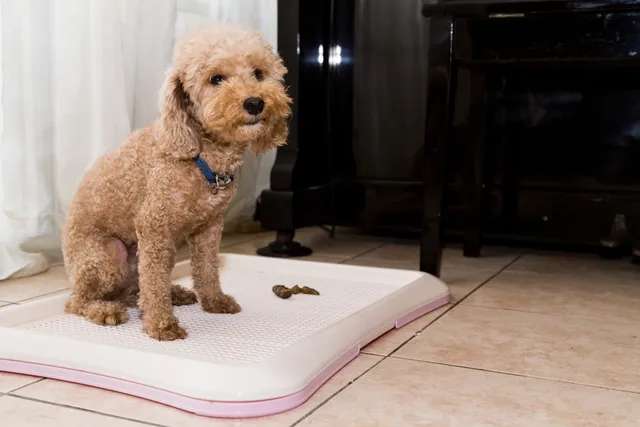
To start the training process, you can use pee pads. Puppies and dogs may learn to use pee pads through prior training and reinforcement. You can put one down on the concrete area your dog has been pooping on, and when they use it, praise them and give them treats.
Once your dog consistently poops on the pads, move them to the grass. You can put some grass clippings on the pee pads until your dog is familiar with the smell, and then remove the pads altogether. When your dog poops on the grass where the pads used to be, praise them and let them know they’re doing the right thing.

Go Out with Your Dog
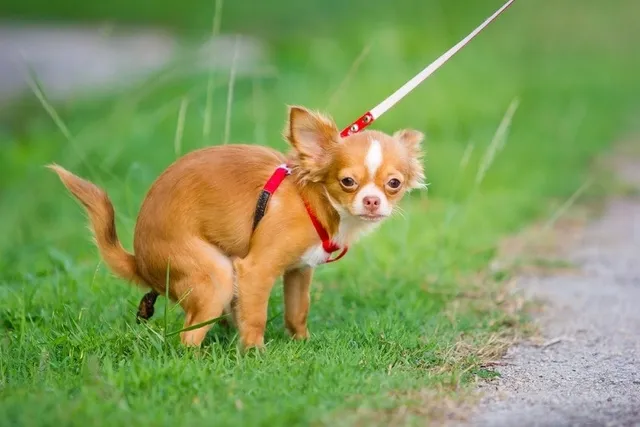
Once you’ve fed your dog, take them outside to relieve themselves. You can let your dog out to sniff around and continuously call them to the grassy area until they poop, or you can keep your dog on a leash and resist their tugs to run over to the concrete area. With consistency, your dog may begin to eliminate on the grass. Make sure to praise them and give them treats when they do.
If your dog doesn’t poop when you’ve taken them outside, take them back inside and repeat the process after a bit of time or when your dog starts to become restless. Continue this process until your dog starts to poop on the grass without your intervention or influence.
Place Their Poop on The Grass
Another tip you could try is taking some of their poop and placing it in the yard where you’d like them to poop. As we mentioned previously, dogs pick up the scent in their poop and are more likely to poop where that smell is due to scent association with previous elimination.
However, you must clean the concrete where your dog has previously pooped so that they don’t go back to their scent. You can use enzymatic cleaners to remove the poop smell from your concrete.

Final Thoughts
Your dog may be pooping on the concrete for several reasons, such as a lack of training, habit, preference, or health-related problems. If your dog’s behavior has changed, with other signs accompanying the new habit, take them to the vet since it could be something serious that needs treatment.
You can train your dog to poop on the grass by starting with pee pads, supervising them, praising them, and giving them treats to reward their good behavior. Some dogs will be easier to train than others. Stay consistent, and give them a lot of praise and love when they defecate on the grass.
Related reads:
Featured Image Credit: Francesco83, Shutterstock
Expert dog care, straight to your inbox
News, insights, expert advice, and everything dog.

No spam — unsubscribe anytime.
By signing up, you agree to our Terms & Conditions and Privacy & Cookies Policy.
How useful was this post?
Click a star to rate. You can leave written feedback afterwards. (We read all feedback.)
Keri-Beth is a freelance writer from South African who specializes in animals. She has grown up with a range of pets, volunteered at many shelters, and is highly passionate about pet care. Currently, Keri-Beth is raising two dogs - Benji, the Golden Cocker Spaniel, and Gracie, the Boerboel. With so much information out there, Keri-Beth has made it her questo to make pet care as easy and straightforward as possible for any pet parent in the world.
In her spare time, Keri-Beth enjoys photography, camping, and spending time with her husband, who is a professional drummer.