5 Best Grasses for Dogs in 2026 - Reviews & Top Picks


If one part of our home is particularly susceptible to our dogs' accidental damage, it’s the grass. Whether on purpose or by accident, dogs can ruin our lawns in a matter of moments, leaving pet parents wondering how they can better maintain and protect their lawns from their dogs.
The good news is that you can protect your lawn by planting different kinds of grass that are more resistant to the damage your dog can do. However, it depends on what type of damage your dog is doing to your lawn in the first place. Here are the five hardiest types of grass that you can plant to keep your property looking pristine, even with your dog running around on it!
In this article

A Quick Comparison of Our Favorites (2026 Update)
| Rating | Image | Product | Details | |
|---|---|---|---|---|
 |

|
Kentucky Bluegrass |
|
Check Price |
 |

|
Perennial Ryegrass |
|
Check Price |
 |

|
Fescue |
|
Check Price |

|
Bermuda |
|
Check Price | |

|
Zoysia |
|
Check Price |
The 5 Best Grasses for Dogs
1. Kentucky Bluegrass – Best Overall

| Soil Needs: | Rich, Neutral to Slightly Acidic |
| Sun Needs: | Full Sun to Shade |
| USDA Plant Hardiness Zones: | 2–6 |
Our choice for the best overall grass for dogs is Kentucky Bluegrass. Kentucky Bluegrass is a hardy grass that can thrive in various climates. Kentucky Bluegrass is a perfect grass for pet parents who live in colder climates as it thrives in cold temperatures, though it will grow well in just about any environment.
This grass is fast growing and will heal itself quickly if damaged, making it an excellent choice for pet parents with dogs running around and peeing on their lawn. This quick healing and cold weather hardiness are why we chose it for the best overall grass for dogs.
Pros
- Thrives in cold seasons as well as warm ones
- Heals from damage quickly
Cons
- It won’t thrive in very shady areas
2. Perennial Ryegrass – Best Value

| Soil Needs: | Moist, Neutral to Slightly Acidic |
| Sun Needs: | Sun to Partial Shade |
| USDA Plant Hardiness Zones: | 3–7 |
Perennial Ryegrass is an excellent option for pet parents who have a large dog or multiple dogs since it’s highly tolerant of the nitrogen in dog urine. This grass is a fast-growing option for pet parents who need to repair their lawns post-haste. Perennial Ryegrass isn’t as cold-hardy as Kentucky Bluegrass, but it will stay a gorgeous green during mild winters.
Perennial Ryegrass does need more fertilizer and water than some other grasses, but it’s worth it since you probably won’t have to replant patches of the grass that your dogs have designated as their bathrooms. We think it's the best grass for dogs for the money.
Pros
- Particularly resistant to the nitrogen in dog urine
- Stays green in the winter
Cons
- Requires more fertilizer and water than other grasses
3. Fescue – Premium Choice

| Soil Needs: | Well-Draining |
| Sun Needs: | Sun to Shade |
| USDA Plant Hardiness Zones: | 4–7 |
Many Fescue seeds can thrive in all kinds of climates. So, you’ll have to pick a source that works well in the environment you live in. However, this is a thick, hardy grass that will thrive even if your dog is rough and tumble when running around on it.
Fescue is one of the hardiest grasses you can grow. It can withstand cold, drought, and shade with ease and is resistant to the nitrogen in dog urine, making it an excellent choice for pet parents with multiple dogs or large dogs.
Additionally, Fescue doesn’t require a lot of attention to thrive. You can usually get away with just watering it and mostly leaving it alone. You won’t need to look for special fertilizers or anything to help your Fescue thrive.
Pros
- Doesn’t require any special attention to thrive
- Resistant to the nitrogen in dog urine
Cons
- You will have to make sure you get Fescue seeds that will grow in your climate
4. Bermuda

| Soil Needs: | Rich, Neutral |
| Sun Needs: | Full Sun |
| USDA Plant Hardiness Zones: | 7–10 |
If you live in a sunny, warm climate, Bermuda grass is an excellent option for your lawn. Bermuda grass doesn’t need much water and is a fast-healing grass seed with a deep root system. For this reason, Bermuda grass is a common choice for sports fields and golf courses.
However, Bermuda grass won’t survive the winter if you live in a colder climate and will need to be replanted in the spring since the grass will die. If you live in colder weather, it’s probably better to invest in grass that will survive the winter since plenty of grasses are just as hardy and will thrive in those climates.
Pros
- Fast-healing and great for homes with rowdy dogs
- Doesn’t require much water
Cons
- Will die in cold climates
5. Zoysia

| Soil Needs: | Loamy, Neutral |
| Sun Needs: | Full Sun to Partial Shade |
| USDA Plant Hardiness Zones: | 5–11 |
Zoysia grass is dense and soft but don’t let that fool you; it’s incredibly hardy once established. This is another grass intended for warmer climates, and this grass is particularly resistant to droughts.
However, Zoysia takes a bit of time before it establishes its root network in the area it’s planted. Damage to the grass before it’s fully established can prevent it from growing fully and devastate its growth.
Additionally, this grass won’t thrive in cold climates. So, if you live in colder weather, it will be more effective to invest in grass that will survive the winter and regrow when it gets warmer, like Kentucky Bluegrass.
Pros
- Dense and soft to the touch
- Resistant to drought
Cons
- Won’t thrive in cold climates
Buyer’s Guide - How to Choose the Best Grass for Dogs
When buying grass for your lawn, it is best to determine what challenges your property will face when growing. Several factors affect the look of our lawns when we introduce dogs to the equation.
How Dogs Destroy Grass
Urine
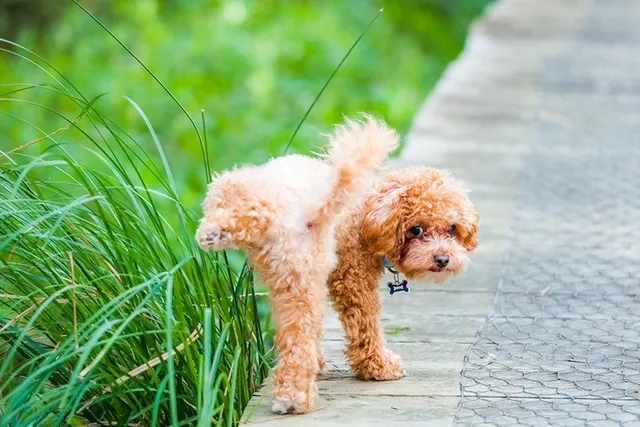
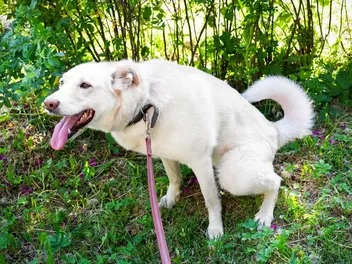
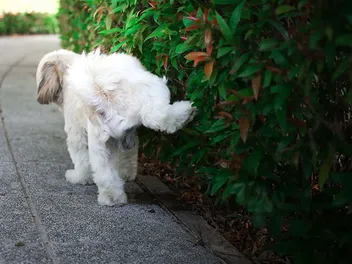
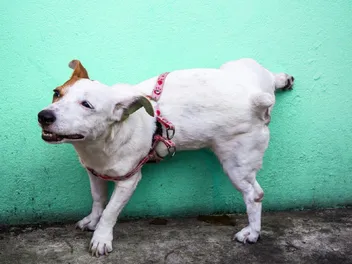
Dog urine comprises several chemical components that allow dogs to excrete toxins from their bodies. One of these components, urea, is exceptionally high in nitrogen, which causes the grass they pee on to turn an unsightly brown or yellow color. At the same time, nitrogen is essential for plant growth; but excessive amounts of the chemical leave plants with chemical “burns” and kill them.
Some owners combat this effect by training their dogs to only pee and poop in a specific spot of the lawn, minimizing the damage done to the overall property. But, this strategy requires a lot of work, and if your dog is already used to a different routine, it may not be easy to get them on the same page as you.
A more straightforward strategy is to plant grasses that better withstand the nitrogen in their urine. Pet parents can also dilute the urine by spraying the grass with a hose after they pee. This washes the urine off the grass and spreads the urea out over a larger area, minimizing nitrogen exposure for each site.
Digging
Many dogs love to dig; it is an instinct for them! However, this can not only damage the grass blade, but digging can tear up the roots of your grass and kill it. Additionally, the repeated pawing motions at the soil can compact it, making it hard for your grass to repopulate in that area.
Pet parents can minimize the damage done by digging by creating boundaries and presenting them with alternative outlets for their urges, such as a children's sandpit filled with earth.

Running
Dogs can also damage the grass by running. Running causes a similar type of damage to the grass that digging does, but you’ll most likely only see this damage if your dog repeatedly runs over the same spot. This damage is usually seen around fence areas and connecting your dog’s favorite places in the yard.
To help minimize this damage, encourage your dog to use the whole yard. While it’s impossible to prevent them from having favorite spots, playing with your dog using the entire yard will prevent them from running over the same places so repeatedly that they damage the turf and grass in the area.
Buying the Right Type of Grass
When purchasing grass, you’ll also want to ensure you get the right type of grass. While many types of grass are hardy enough to withstand the damage that dogs can deal them, not all are appropriate for your yard.
Sun Needs
You’ll want to consider how much sun your grass will get when you purchase grass seeds. If you live in a shady area, grass that needs a lot of sun will die from lack of sunlight and vice versa.
Soil Needs
Grass also has different soil needs when it comes to growing. While it may seem, at first, that all dirt is the same, this is simply untrue when you do a deeper study of horticulture. Soil has many properties, including acidity, texture, and drainage. Grass, like any other plant, won’t necessarily grow in soil that doesn’t suit its needs.
You’ll want to make sure that you can provide the grass you purchase with the right type of soil it needs to grow and thrive, or the grass will die.
Climate
Plants are also biologically designed to thrive in certain climates. If you live in a cold environment but purchase warm-weather grass, you’ll find that it dies when it gets cold. It sounds overly simple when we say it like that, but it’s an often-overlooked factor when growing grass. Not all grasses are created equal, and some won’t do well when introduced to the wrong climate.
You can figure out what type of grass you need to plant by checking your USDA plant hardiness zone. There are 11 main zones of USDA plant hardiness determined by the area’s climate and topography. These zones are broken up into smaller sub-zones that allow you to determine how well your grass will thrive in your climate more accurately.
Our Selection Process For Best Grasses for Dogs
To create this buyer's guide, our writing team and editorial staff checked customer reviews, brand reputation, and veterinary approval ratings to present the grasses for dogs we think should be highlighted for our readers. In some cases, we conducted hands-on testing along with seeing how much our dogs liked the grasses for dogs. All these factors were considered when selecting these listed grasses for dogs to help you make the best purchase for your furry friends.
Why Trust Dogster?
Since 2004, Dogster has been a trusted brand for dog owners online, which means we have a lot of experience with grasses for dogs. We take pride in promoting the well-being of all dogs—from toy breeds to giant canines. Our in-house veterinarians, writers, and editors examine each product on our lists, ensuring its quality and reputation. As pet owners ourselves, we only want the best for our furry companions. At Dogster, we are transparent about the products we promote. The nutritional information, overall brand reputation, and customer reviews are all considered for these lists. We inform you how we want to be informed.
In Conclusion
No matter where you live or how many dogs you have, there’s grass out there that suits your exact needs. Our choice for the best overall grass for dogs was Kentucky Bluegrass for its versatility and hardiness. Pet parents looking to spend a little less might want to spring for Perennial Ryegrass. Fescue is an excellent premium choice for pet parents who have a little more flexibility with spending!
Featured Image Credit: Julio Yeste, Shutterstock
Expert dog care, straight to your inbox
News, insights, expert advice, and everything dog.

No spam — unsubscribe anytime.
By signing up, you agree to our Terms & Conditions and Privacy & Cookies Policy.
How useful was this post?
Click a star to rate. You can leave written feedback afterwards. (We read all feedback.)
I’m a freelance writer with a passion for animal science and technology. I love to share the world of animal science with people to help them make informed decisions for themselves and their pets. I’ve worked in professional pet care for over six years and realised I could help change the world of pet care by bringing the information people needed to them in terms they could understand. Knowledge is power and I love to help everyone become the most informed they can be.