Abnormal Dog Stool: Our Vet Discusses Signs, Causes & Treatment

In this article
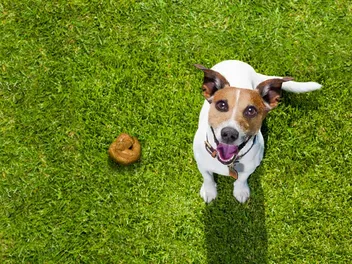
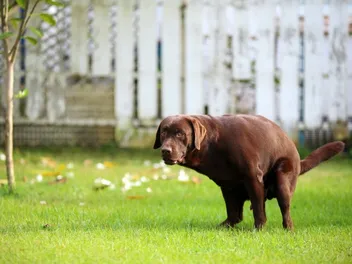
Many dog owners might be uncomfortable having to think (or talk) about their dog’s bowel movements. But the truth is, a dog’s stool is a helpful tool as evidence of their digestive health as well as their overall physical condition.
Abnormal stool is a vast category that we’ll delve into with this article; not only will we talk about normal versus abnormal stool, but we’ll also discuss some potential causes and varying treatments that may be used should your dog have this troubling health concern.

What Is Abnormal Stool?
Abnormal stool is anything that is not normal, so really, we should explore what’s normal for a dog’s stool first!
Normal dog stool is brown and may vary from a medium nut shade to a darker chocolate shade. Some general characteristics of feces to keep in mind include what is called the “4 C’s of dog poop.” Regular components of these categories are:
- Color: Medium to dark brown, may vary in shade somewhat.
- Consistency: Should be firm but not too hard or too moist.
- Coating: No or minimal coating/mucous around the feces.
- Contents: No presence of unusual substances in the fecal material.
In addition, the stool shape should be more oblong, similar to miniature logs, and the size should be fairly comparable to the amount of food they eat. It should be formed with segmentation and will not be hard, but rather firmer with a pliable texture; it is often compared to the consistency of Play-Doh. As far as cleanup goes, there should be little to no leftover residue after being picked up.
Because there are differences in people’s opinions, definitions, and experience, a helpful resource is a fecal scoring scale. This allows the veterinary community (as well as the pet owner) to standardize a pet’s stool appearance. These scales typically have picture examples and show and describe varying degrees of change while saying what appearance is normal versus what is not.
Many veterinary clinics may have copies to view, or these can also be searched for and viewed online. Purina has a commonly utilized fecal scoring chart1, but others include the Waltham fecal scoring scale or Royal Canin’s version.

What Are the Signs of Abnormal Stool?
Changes in the four C’s are great starting points for signs of abnormalities as well as some additional factors. If feces have any or a combination of the following, these are important signs to take note of:
Color

Varying colors can sometimes signify or provide a clue about certain health problems. Abnormal colors and some possible problems associated may be:
- Black - This can signal there is upper gastrointestinal (GI) bleeding.
- Red - This may signal fresh blood which can be due to bleeding of the lower GI tract, foreign bodies, worms, tumors, anal gland problems, etc.
- Orange/yellow - Liver, pancreas, or bile duct health issues.
- Green - Grass consumption, certain treats with green pigmentation, and some types of poison like rat bait.
- White/gray - May signal pancreatic or liver issues or large amounts of bone ingestion.
- White spots - Parasites may be present in your dog's stool and intestines
Consistency

The amount of moisture is too high (resulting in soft, formless, or runny stool) or too low (resulting in a hard or crumbly stool).
Contents and Coating

Presence of non-fecal material integrated into the stool. This could include blood, parasites that resemble white flecks of rice or spaghetti-shaped worms, or parts of ingested foreign material. Slimy or much more than minimal mucous; may leave behind a moist film when being picked up.
Other Factors
- Size: Poop is smaller than usual, or much more fecal volume is present than the amount of food a dog typically eats.
- Shape: Non-log shape or not fully formed; crumbles, flat puddles, or varying other shapes.
In addition, some related defecating behaviors that would also be considered abnormal include:
- Discomfort or pain when defecating.
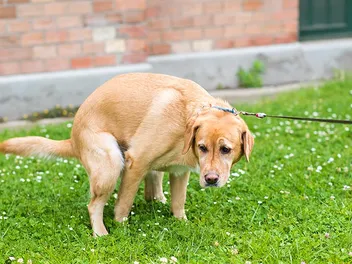
- Straining to defecate.
- Increased or decreased frequency of bowel movements.
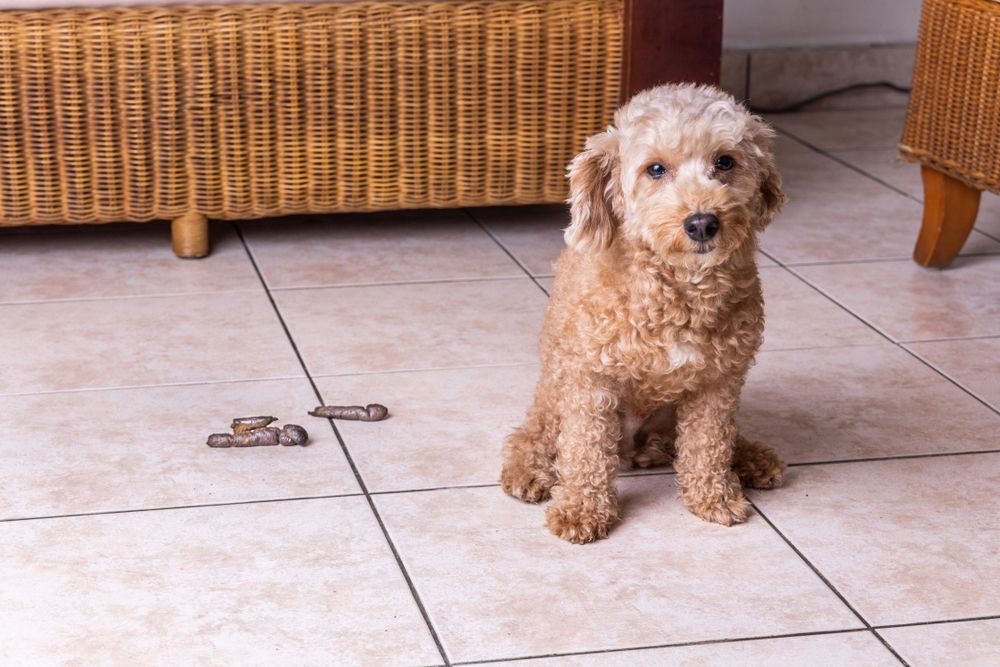
- For a fully potty-trained dog, not having control of their bowel movements for several hours at a time is not normal.
What Are the Causes of Abnormal Stool?
The potential causes of abnormal stool are extremely vast. Some common categories include constipation and diarrhea, and while these are not diseases themselves, they are signs of many different potential health problems.
Of these groups, some different causes could include:

Constipation (less frequent or difficulty passing stool)
- Lack of water intake, dehydration
- Ingesting abnormal material, a few examples could be bones, cloth, plants, rocks, cat litter, etc.
- Intervertebral disc or spinal-related diseases
- Anal sac/gland disease
- Hypothyroidism
- Colon inflammation or obstruction due to pelvic fracture, tumor, enlarged prostate, etc.
- Medication side effects
Diarrhea (more frequent loose or liquid stools)
- Dietary indiscretion
- Sudden or quick diet change
- Certain intestinal parasites such as Roundworms, Giardia, etc.
- Some bacterial, viral, or fungal infections
- Stress colitis
- Foreign body obstruction
- Food allergy
- Inflammatory bowel disease (IBD)
- Hemorrhagic gastroenteritis (HGE)
- Exocrine pancreatic insufficiency (EPI)
- Cancer
How Do I Care for a Dog with Abnormal Stool?
At the Veterinary Clinic
The first step includes a thorough history and a veterinarian’s full physical exam. Based on a combination of this information, supportive care to treat the signs may be attempted first or further testing may also be recommended.
Some tests could include different fecal tests looking for various parasites or abnormalities, bloodwork, radiographs (X-rays), or ultrasound. If the recommended tests do not provide answers, more in-depth testing may be warranted.

Treatment
Medical treatment would depend on the specific cause of the abnormal stool. Many cases may be mild and self-limiting while others may be helped with a temporary bland or prescription diet change. Some may also have the potential to be treated with dog-specific anti-diarrheal or anti-nausea medications.
For those with intestinal parasites, dewormer or medication to treat the specific parasite would be needed. In addition, probiotics or a medicated diet change may be helpful. For parasites, dewormers specific to the found parasite would be utilized. In dogs with a foreign body obstruction, either endoscopy or surgery to remove the item in question would be needed.
For dehydrated pets, fluid administration (intravenous or subcutaneous) may be required.
Frequently Asked Questions (FAQ)
If my dog has constipation or diarrhea, can I give them something over the counter?
Some medications, such as laxatives for constipation or human antidiarrheals, are available over the counter for human use. For safety reasons, it is not recommended to give your dog any medication, including these, unless under the direction of a veterinarian.
Based on your dog’s specifics, they can discuss exactly what medications may be given, a recommended dose, as well as discuss important risks, side effects, and drug interactions.
What are some ways I can help my dog’s stool be as healthy as possible?
Some ideas to help your dog’s stool be in tip-top shape include ensuring they always have access to clean water, feeding a formulated high-quality diet for their stage of life, regularly cleaning up fecal material where your dog goes to the bathroom, and ensuring routine physical exams and fecal checks for parasites.
Of equal importance is dog-proofing your home and yard to prevent them from getting into or eating things they shouldn’t and ideally not feeding human food or too many treats. In addition, regularly observing your dog’s potty breaks may not be your favorite task, but it’s very helpful for noting changes or if a medical problem may be occurring
How many bowel movements per day is abnormal?
This may depend on the individual dog as well as how much, what, and when they are eating, but most adult dogs that are eating regularly have 1–2 bowel movements a day. Puppies often have a few more bowel movements than this and commonly go shortly after eating. One consideration is that if a dog deviates from their version of normal, this could be due to an underlying health issue.


Conclusion
Recognizing when a dog has normal versus abnormal stool is a great tool to know if a potential health problem is going on. Consulting with your veterinarian, and remembering to bring in a current fecal sample, can help start the process of finding out what’s going on and how best to resolve the issue.
See Also:
Sources
https://www.akc.org/expert-advice/health/how-often-should-my-dog-be-pooping
https://www.akc.org/expert-advice/health/dogs-poop-says-health/
https://www.purina.com/articles/dog/health/digestion/what-does-healthy-dog-poop-look-like
https://www.purina.com/articles/dog/health/digestion/dog-poop-types-color-guide
https://www.amcny.org/pet_health_library/diarrhea-causes-and-treatments/
Featured Image Credit: ThamKC, Shutterstock
Expert dog care, straight to your inbox
News, insights, expert advice, and everything dog.

No spam — unsubscribe anytime.
By signing up, you agree to our Terms & Conditions and Privacy & Cookies Policy.
How useful was this post?
Click a star to rate. You can leave written feedback afterwards. (We read all feedback.)
Dr. Rachel Ellison DVM (Veterinarian)
Dr. Rachel Ellison lives on a mountain in Utah with her husband, daughter, and son, as well as their animal menagerie— a Bernese Mountain Dog, a Bengal/Siamese mix, and an orange tabby cat, as well as numerous chickens. During her free time, she enjoys being with those she loves, cooking and baking, reading, hiking, sharing her knowledge about cats, and exploring nature and the world around her.