12 Heartbreaking Puppy Mill Statistics & Facts: 2026 Update


In this article
Note: This article’s statistics come from third-party sources and do not represent the opinions of this website.
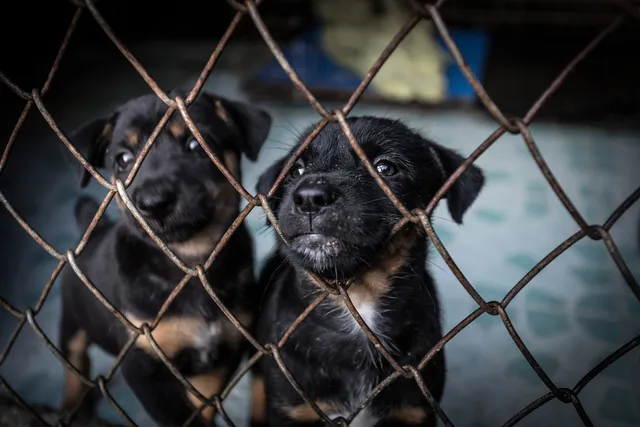
Puppy mills are heartbreaking occurrences. They put profits above the safety and health of their animals, including puppies and the dogs that they use for breeding. This often means having as little overhead as possible, prompting puppy mills to cut out veterinary care and keep their dogs in tiny spaces. Females are often bred continuously, with puppies being weaned early to prompt the mother to breed again. Many dogs do not survive long in these conditions.
Here, we gathered the most eye-opening puppy mill statistics and facts in various categories.

The 12 Puppy Mill Statistics
2.11 million puppies originating from puppy mills are sold each year.
500,000 dogs are currently kept solely for breeding purposes in puppy mills.
10,000 puppy mills are currently active in the United States.
There are 509 humane pet sales laws are in place.
Missouri has the largest number of puppy mills.
40% of listed puppy mills are repeat offenders that have previously been exposed.
Female breeding dogs produce an average of 9.4 puppies per female each year.
Most female dogs are bred every heat cycle and given little time to recuperate.
Food in puppy mills is often contaminated, old, and even infested with bugs. Dogs are often malnourished for this reason.
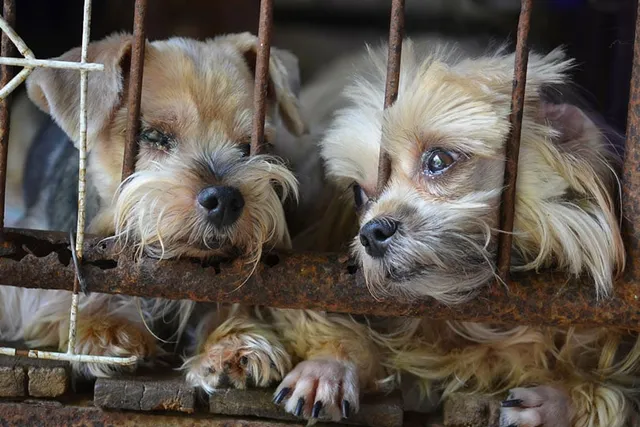
Dogs in puppy mills spend 24 hours per day in cramped cages with little room to exercise or play.
Puppies are often weaned from their mother too young, resulting in physical and mental difficulties.
During shipping, puppies may be kept in containers without food and water for up to 12 hours.

The Size of Puppy Mills
1. 2.11 million puppies originating from puppy mills are sold each year.
(Gitnux.org)
Each year, about 2.11 million puppies are sold throughout the United States that originally came from puppy mills. Many of these dogs are sold in pet stores, which are the primary outlets that these mills use to sell their puppies.
No quality breeder would turn their puppies over to pet stores for them to sell to unknown buyers. Instead, professional breeders typically take great care in placing their dogs. Therefore, most pet stores must source from puppy mills to stay open. Many puppy mills also advertise their dogs online.

2. 500,000 dogs are currently kept solely for breeding purposes in puppy mills.
(Humane Society)
Many of these dogs are females, as one male can be used to breed many different females. Usually, these dogs are kept in dismal conditions and bred continuously. Most females do not live long, as their bodies quickly become worn out from the constant breeding and poor conditions.
Therefore, puppy mills have to continuously restock their females. Usually, these females are sourced from a litter produced by the puppy mill. Some dogs are inbred with their own father or brother. Of course, the exact number of dogs is always changing.
3. 10,000 puppy mills are currently active in the United States.
(Humane Society)
It is estimated that about 10,000 puppy mills are currently producing puppies in the United States. Many of these puppy mills have over 50 dogs, not including the puppies. Therefore, these operations are quite large.
Most of these puppy mills are not registered with the USDA, though about 2,072 of them are. Often, these puppy mills are poorly regulated or skimp through inspection to stay in business.

The Legalities of Puppy Mills
4. There Are 509 Humane Pet Sales Laws Across North America
(Best Friends)
Humane pet sales laws have continued to expand across North America. According to Best Friends Animal Society, 509 laws were in place across North America by the end of 2024, following the passage of more than 25 local ordinances and statewide bills during the year.
These laws generally restrict pet stores from selling puppies and kittens from commercial breeding operations, including puppy mills and kitten mills. Instead, stores may be required to source animals from shelters, rescue organizations or other approved sources. The goal is to reduce the market for commercially bred animals and encourage pet adoption.
The laws vary by location, so the specific requirements can differ. Some apply only to new pet stores, while others cover existing businesses as well.
5. Missouri has the largest number of puppy mills.
(Horrible Hundred Report)
Based on reports in 2020, Missouri had the largest number of puppy mills. In total, it had 21 dealers, which is far higher than the second state, Ohio, with 16 dealers.
However, it was also noted that state inspections had decreased due to the COVID-19 pandemic. Therefore, there may be more dealers out there now. To make matters worse, not all the dealers have been put out of business. Some of them are still selling puppies.

6. 40% of puppy mills are repeat offenders who have previously been exposed.
(Horrible Hundred Report)
Almost half of the puppy mills out there have already been caught and fined once. However, these breeders are not forced to surrender their dogs or are denied from owning dogs again, which enables them to continue to breed and sell puppies.
Even those who are banned from owning dogs often ignore the law and purchase dogs again, anyway. Since there is no mass database for those who aren’t allowed to own dogs, there is little stopping these repeat offenders from purchasing dogs again.

The Treatment of Females
8. Female breeding dogs produce an average of 9.4 puppies per female each year.
(Humane Society)
On average, females produce about 9.4 puppies a year at puppy mills. With the average litter size being about five, that means the average female is bred at least twice a year.
It is recommended that dogs only be bred once a year, if that. Many proper breeders will spread out a female’s litters to ensure that the dog can completely recover between litters. However, at puppy mills, they don’t often do this.
Therefore, many females are overbred and die early deaths. Their bodies simply can’t handle the conditions of puppy mills and continuous breeding.
9. Most female dogs are bred every heat cycle and given little time to recuperate.
(DoSomething.org)
Female dogs are bred as much as possible. Little attention is paid to their health and well-being, so they often die.
Early weaning is common because it encourages the female to go into heat again. Not only is this bad for the puppies, but it also causes the female to breed more than nature intended, leading to health problems. Sometimes, females are killed after they are no longer able to breed.

10. Food in puppy mills is often contaminated, old, and even infested with bugs. Dogs are often malnourished for this reason.
(DoSomething.org)
The food at puppy mills is often low quality at best. At worst, the food may be old or contaminated. The conditions in the cage are often poor, which leads to food becoming contaminated if it hasn’t been already.
Dogs are often not provided with the appropriate amount of food either. It can be expensive to feed a pregnant female, and most puppy mills do not want to pay the extra cost.
The Treatment of Puppies
11. Dogs in puppy mills spend 24 hours per day in cramped cages with little room to exercise or play.
(Puppy Mill Project)
Puppies are not given adequate room to run around and be puppies. There is little room to exercise or play in the cramped cages that they are provided. Therefore, puppies often miss this key socialization stage, which may cause them to end up with behavioral problems. It isn’t healthy for the females either.

12. Puppies are often weaned from their mother too young, resulting in physical and mental difficulties.
(Puppy Mill Project)
Puppies are often weaned from their mother weeks before it is natural. In fact, most puppies are simply removed from the mother and put straight on low-quality dry food. In many cases, they aren’t as slowly weaned as they should be.
Often, puppies cannot eat or digest the food that they are put on, which leads to malnutrition. Therefore, these puppies may develop health issues. Early weaning can also lead to behavioral problems because the puppy is not learning behaviors from the mother like they should be. This can result in tons of medical bills for the new owner.
13. During shipping, puppies may be kept in containers without food and water for up to 12 hours.
(Puppy Mill Project)
Both licensed and unlicensed puppy mills sell to pet stores all over the country. Often, puppies are not sold within the state. Therefore, they must be shipped, sometimes across the country.
During these shipment periods, puppies are kept in cramped conditions. Food and water are typically not provided. Disease is common because many unvaccinated puppies are kept together. Many puppies do not make it.

Frequently Asked Questions
Are Puppy Mills Illegal?
No. In many cases, puppy mills are completely legal. Some of them are even licensed by the USDA. However, puppy mills may do illegal things, such as keeping dogs in unsanitary conditions. They must get caught doing these things, though, and punishments are often no more than a fine. (Puppy Mill Project)
What Are Puppy Mills?
The exact definition of puppy mills is a bit up in the air. Typically, though, these are large facilities that care more about profits than the health of their dogs. Often, corners will be cut whenever possible.
However, these mills can be quite small in some cases. There isn’t a minimum number of dogs that are required for a place to be a puppy mill. (Humane Society)
Does PetSmart Use Puppy Mills?
No. PetSmart often uses pets from local rescues. Most animals at its stores will have the rescue listed so you can tell where the animal is from. If it isn’t listed, we recommend asking before purchasing. (HuffPost)
Conclusion
Puppy mills are a sad occurrence throughout America. They are located in every state, though they are largely concentrated in the Midwest. Usually, these mills sell to pet stores, and many laws are centered around stopping this connection. If you can prevent pet stores from purchasing from puppy mills, you can effectively shut down puppy mills.
To avoid funding puppy mills, be sure to adopt from a qualified breeder or a rescue. Be sure to see the conditions that the puppy is kept in before purchasing.
See also:
Expert dog care, straight to your inbox
News, insights, expert advice, and everything dog.

No spam — unsubscribe anytime.
By signing up, you agree to our Terms & Conditions and Privacy & Cookies Policy.
How useful was this post?
Click a star to rate. You can leave written feedback afterwards. (We read all feedback.)
Kristin loves to help pet parents create a fulfilling life for their pets by informing them on the latest scientific discoveries and helping them choose the best products for their pets. She currently resides in Tennessee with three cats, four dogs, two fish, and a lizard, though she has dreams of owning chickens one day!