How to Stop Dog Drooling? Our Vet Explains

In this article
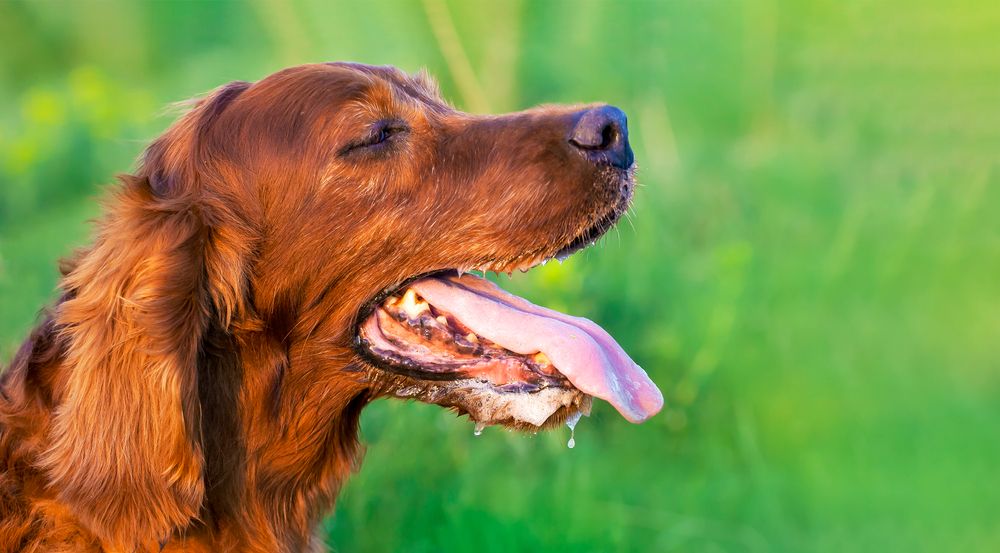
One of the less appetizing features of dog ownership is dealing with drool. While there are some breeds that might seem like they’re drowning in drool (and others that are highly unlikely to stain us with their saliva), if you’re living with a dog, some drool is to be expected. But how much is too much? How can we tell if our dogs are drooling more than they should, and are there ways to stop the flow of saliva?
Let’s take a look at the purpose of saliva, the causes of excessive salivation, why some dogs drool more than others, and what steps you can take to stop dog drooling.

Why Do Dogs Drool?
Saliva is produced to help lubricate and break down food, so when our dogs are anticipating (or hoping for) something to eat, they will naturally start producing saliva. For some dogs, the amount of saliva produced can seem excessive. This is largely due to the amount of saliva-producing surface area in the mouth, but it can also be impacted by individual physiology, behavior, and habits.
For example, a particularly food-driven Labrador may start to drool in the minutes leading up to their meal time or whenever food is nearby, whereas a dog of the same breed may drool very little if they lack that ‘greedy gene’.

What Causes Excessive Drooling?
When we talk about ‘excessive’ drooling, we are not talking about breeds that naturally drool more than others, we mean more salivation than is normal for that dog. For dogs that drool a lot normally, it can be harder to tell if they are suddenly drooling excessively, so it pays to be familiar with what is normal for them in terms of the volume, texture, color, and smell of their saliva.
Some of the things that may cause excessive drooling are:
- Nausea: Just like saliva lubricates the esophagus when eating, the body will also start to produce more saliva in preparation of the stomach contents coming back up the esophagus. Other signs that your dog's drooling is due to nausea include inappetence, exaggerated swallowing, hunched posture, head held low, sad or anxious facial expression, and vomiting.
- Dental disease: If your dog has an infected tooth, gingivitis, or a build-up of tartar, this can result in the overproduction of saliva in response to inflammation in the mouth. Other signs of dental disease include thick saliva, sometimes tinged with mucus or blood, foul-smelling saliva and breath (halitosis), red, inflamed gums, and difficulty picking up, chewing, or swallowing food.
- Injury to the mouth: Cuts in the mouth from a sharp stick or toy may cause excessive drooling, and you may also see blood within the saliva. Dogs are naturally inquisitive and often like to explore new things with their mouths, which can lead them to have unfortunate encounters with bees, wasps, and even porcupines.
- Irritation of the mouth: Eating or just mouthing a toxic or caustic substance can result in excessive salivation, and in many cases, could be a sign that your dog needs urgent attention. If you think your dog may have ingested something harmful, do not delay in seeking veterinary advice.
If your dog isn’t usually much of a drooler, or if you’ve noticed any change in the smell, appearance, or amount of saliva they are producing, the best thing to do is schedule a check-up with your vet. If your dog is suddenly producing a lot of saliva, do not delay in seeking veterinary attention as this could be the sign of an injury or toxin.

Why Do Some Breeds Drool More Than Others?
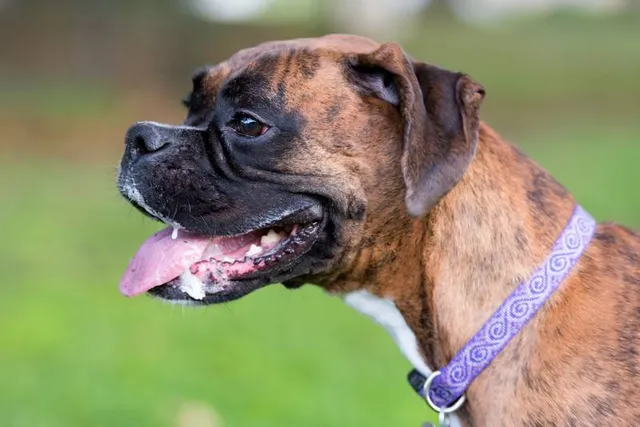
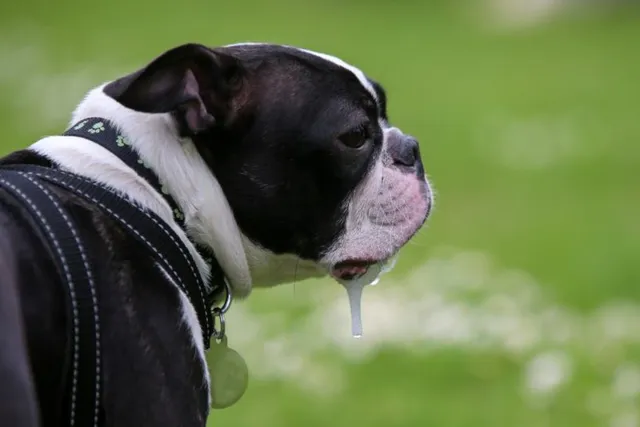
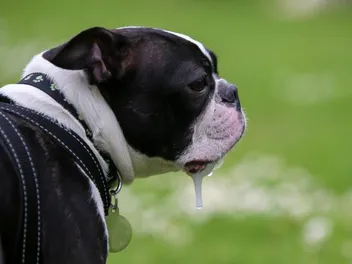
The reason some dog breeds seem to drool more than others is largely due to the conformation of their mouth, gums, and lips. Brachycephalic (short-faced) dogs like Bulldogs, Boxers, and Pugs are more likely to drool more because the mucous membranes of their mouth which produce saliva are more compressed, leaving less space inside the mouth to contain saliva produced.

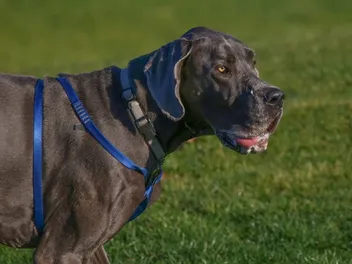
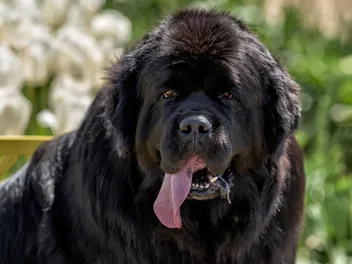
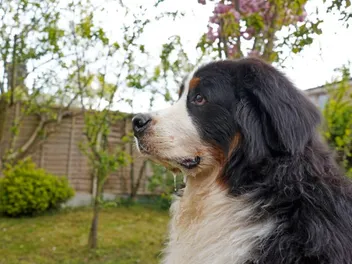
Dogs with particularly large and floppy jowls, like the Great Dane, Saint Bernard, and Bloodhound are also known to be very slobbery, and this is due to the fact that they have an excessive amount of saliva-producing surface area in those floppy lips and that drool tends to flow out of the mouth rather than into it.
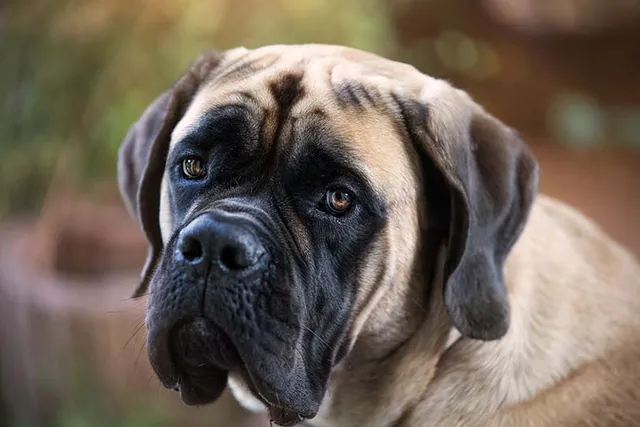
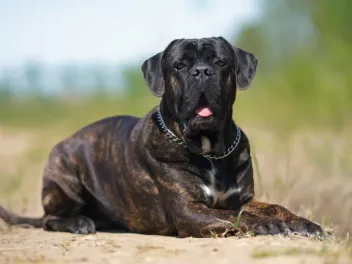
And when you’ve got a breed that is both well-endowed with their jowls and brachycephalic, like an English Mastiff, Bullmastiff, or Dogue de Bordeaux, you’ve got a bonafide drool machine!


How To Stop Dog Drooling?
If you’re feeling fed up with the flob, you’re no doubt desperate for ways to reduce the amount of drool your dog is producing. The bad news is that if your dog is naturally a heavy drooler, you’re never going to be completely rid of this sticky problem, but fortunately, there are some things you can do to limit when and how much they drool, or how far they spread it, by following these tips:
1. Choose the right breed
Okay, so this tip is only going to be helpful before you adopt your dog, but it is certainly one to be aware of. If you don’t think you can cope with a slobbery pooch, be sure to do your research into which dog breeds are the biggest droolers, and which breeds are less likely to coat your house in saliva. Keep an eye out for short faces, droopy jowls, and folded lips, as these are the traits that will often equate to a drooly dog.
2. Mix up meal times
Have you ever heard of Pavlov’s dogs? As the father of classical conditioning, Ivan Pavlov would ring a bell whenever he fed his dogs. Because the dogs became conditioned to expect food at the sound of the bell, they would start to salivate whenever they heard it, whether or not there was food present.
Dogs that are fed on a very strict schedule will very quickly learn when to expect their meals, and will often start to salivate in anticipation of food. By following a less rigid feeding schedule, your dogs are more likely to wait for you to tell them that their food is ready rather than anticipating its arrival. We’d recommend keeping to a 2-hour window to help keep their digestion regular.

3. Multiple meal times
Hunger often exacerbates drooling, so by breaking your dog’s daily food allowance into 2 or 3 meals per day, you may find yourself dealing with less of a deluge. Bear in mind that you shouldn’t feed your dog within 2 hours of exercise, so make sure your food routine still works with their exercise routine. It’s also important that you don’t leave too long a gap overnight, as the build-up of stomach acids can also increase saliva production. If breakfast tends to be around 8 am, make sure their evening meal is close to 8 pm rather than early in the evening.
4. Keep dogs away during meal prep - yours and theirs
Seeing and smelling food is often enough to get our mouths watering, so you can imagine how much it affects your dog. Keep your dog out of the room when you are preparing their food or cooking your own to reduce the intensity of their anticipatory drool.
5. Don’t feed scraps or tidbits
Although it can be hard to resist those pleading eyes, if you let your dog have scraps or leftovers of your food, you are conditioning them to expect it. If you do want to treat them to a little taste of what you are eating, put a little portion aside to give to them later. That way they don’t associate your food with theirs and are less likely to drool when they see you enjoying a snack.

6. Stay on top of dental hygiene
Out of sight, out of mind is the biggest problem with dogs and dental health. If we’re not in the habit of checking our dog’s teeth and gums, it’s easy to take for granted that everything is fine. Staying on top of your dog’s dental health through regular brushing, dental chews, vet check-ups, and dental checks can keep tooth disease at bay and stop your dog from producing too much smelly saliva.
7. Train them to wipe their mouth
Drooly dogs and messy drinkers can be trained to wipe their mouths after having a drink. By having a towel secured beside their bowel, you can use treats or clicker training to teach them to push their mouth into the towel to remove excess saliva and water.
If your dog isn’t quite up to that challenge, keeping some towels on hand to mop up your dog’s jowls from time to time will go a long way to keep your house and furniture flob-free. You might even want to give your dog a bib so that they have something to mop up that drool with them at all times.

8. Use a no-spill water bowl
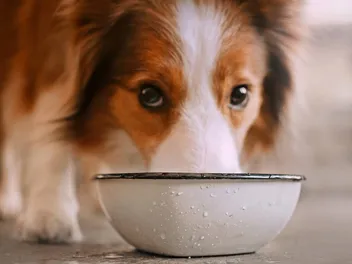
If your dog seems to cause a flood every time they have a drink, a no-spill dog water bowl might be the solution for you. The floating level stops your dog from submerging their mouth in the water, reducing the amount of mess around the bowl as well as the amount of water that clings to their lips.
Final thoughts
Although dogs and drool often go hand-in-hand, there are things we can do to reduce the amount of saliva our canine companions produce, as well as minimize how much they are able to spread it around. It’s important to be aware of how much drool is normal for your dog, as an increase in salivation can be a sign of a number of health issues that should not be ignored.
Make sure you do plenty of research into dog breeds if you are looking to adopt, particularly if you don’t think you could handle a heavy drool breed like the Great Dane or Saint Bernard. Hopefully, these tips and tricks will help you and your dog enjoy a slightly drier life together!
See also:
Sources
Featured Image Credit: Reddogs, Shutterstock
Expert dog care, straight to your inbox
News, insights, expert advice, and everything dog.

No spam — unsubscribe anytime.
By signing up, you agree to our Terms & Conditions and Privacy & Cookies Policy.
How useful was this post?
Click a star to rate. You can leave written feedback afterwards. (We read all feedback.)
Dr. Karyn Kanowski, BVSc MRCVS (Vet)
Dr. Karyn is originally from Queensland, Australia, and has resided in the UK for the past 10 years. She graduated from The University of Queensland School of Veterinary Science in 2010, and also holds a Bachelor’s degree in Zoology. Karyn is passionate about using experience, evidence, and working with pet owners to provide the best solutions for pets. She also believes in making reliable information about animal health accessible to everyone. 5 cats and 4 dogs let her share their home with her and her husband, and when she is not practising as a veterinary surgeon, she spends her time writing, gardening, and cleaning up pet hair!