How to Overcome a Fear of Dogs: 6 Tips and Steps to Follow



In this article
There are around 70 million domestic dogs in the United States, which means there’s a pretty good chance that many of the people you know have at least one dog.1 Most people look forward to visiting homes with dogs or even owning a dog so that they can cuddle, go on walks, and play fetch with them, but for around 9% of adults in the United States, interacting with a dog can be a terrifying experience.2
Having an intense fear of dogs can have an impact on a person’s life because dogs are just about everywhere. They are commonly walked in neighborhoods and parks, but they’re also often allowed to travel on public transport and visit pet-friendly hotels and restaurants. In many settings, dogs are difficult to avoid completely, and many people living with this fear want to find a way to become more at ease around dogs and make life a bit less stressful. We’re going to discuss how to get started, so keep reading.

Before You Start
Before we get into how to overcome this phobia, we need to understand it. The fear of dogs isn’t as uncommon as you may think, and there is even a name for it, called cynophobia. The fear of dogs isn’t the same as a bit of nervousness around a hyperactive dog, but rather it is intense and can affect a person’s life. One person can be more fearful of dogs than another, and in extreme cases, a person may experience sweating, a rapid heartbeat, nausea, trembling, anxiety, and feeling like they’re in danger when around dogs.
Cynophobia is common in children, but adults can suffer from it too. It may be more likely to occur alongside other anxiety-related conditions, but it can affect anyone, especially if they’ve had a bad experience with a dog in the past. This fear can be so strong that it can be triggered by hearing a dog growl without needing to see it. In extreme cases, just seeing a dog on television can trigger the symptoms.
Exposure therapy and cognitive behavior therapy (CBT) can help people manage this disorder, but if you think you are experiencing cynophobia, it’s a good idea to consult with a healthcare or mental health professional.
However, those who feel capable of working through this fear can do so on their own or with the help of a friend or family member.

The 6 Steps to Overcome a Fear of Dogs
1. Identify What It Is That Scares You
You may know that you are scared of dogs, but to overcome that fear, you need to identify what it is about dogs that scares you. This will take a bit of self-evaluation. Were you bitten or chased by a dog in the past? Do you feel unsafe around them? Is the sound of their barking overwhelming? Do you feel more afraid around larger dogs as opposed to smaller ones? Do you prefer being around one breed but not another?
Once you know what the source of your fear is, you can start to figure out what is rational and what isn’t and work on challenging unhelpful thoughts through gradual and practical coping strategies.
2. Think About Dogs
One of the ways to start to overcome your fear in a controlled environment is to simply think about dogs. Imagine seeing a dog in the distance, and as you feel more and more comfortable with the imagery, picture yourself moving closer to the dog. Eventually, you can challenge yourself to pet the dog, talk to the dog, and even take the dog for a walk.
Positive reinforcement is something that is used to great effect when training dogs, but it can also help retrain the human brain. Try thinking about dogs while you’re doing something you enjoy – eating an ice-cream, getting a massage, spending time with friends – if you can create a positive association with dogs, you can actually teach your brain and nervous system to respond differently.
Once you start to feel comfortable with the thoughts, you can move on to the next step.

3. Look At Real Videos of Dogs
For some people, looking at videos of dogs can be difficult, but it’s such an important step to take. Spend time looking at pictures of different dogs, large and small, and even attempt to watch dog videos. Listen to them bark, run, and play with each other.
You can also watch videos of people interacting with dogs and take notice of how relaxed and comfortable they look. This may help you challenge some of the fears you have about dogs. Once watching these videos is no longer overwhelming, you can move on to holding a toy or model dog. Don’t forget to incorporate positive reinforcement to really strengthen the link between dogs and good feelings.
4. Get Around a Friendly Dog
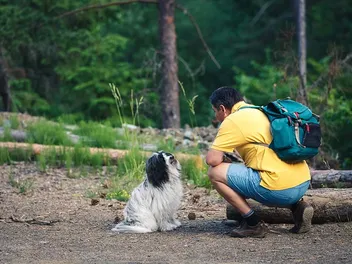
This step is going to be one of the harder ones you’ll need to accomplish, but once you do, you’ll be so much more confident around dogs. Start by watching dogs from a distance in a park or in the yard of one of your friends or family members. If this step feels very challenging, ask a friend to do it with you. Next, start to move closer to the dog as you did when you imagined dogs in your mind in step two.
Once you’re ready, attempt to pet the dog while they are held on a leash or in the arms of their owner. Do this enough times until you’re able to be around the dog without a leash on. Don’t force yourself to do anything you don’t feel ready for. This can be a process that you accomplish over one day or several days. Just do what feels right for you.

5. Understand Body Language
Body language goes both ways. Once you start to feel more comfortable around dogs, they’ll see it in your body language and feel more comfortable around you. You can show a dog that you’re feeling relaxed around them by watching them casually and remaining composed if they jump up or run around you. Screaming will only get a dog worked up and escalate the situation. Make sure you avoid running, as sudden movement can trigger a dog’s instinct to chase.
Understanding a dog’s body language will make you feel more confident. Knowing that the dog is comfortable and calm around you will help you feel relaxed. Any barking, growling, baring of teeth, or raised hair is an indication that the dog isn’t comfortable, and you should calmly remove yourself from their space. However, tail wagging, licking, rolling over, and yawning can indicate that the dog is comfortable, relaxed, and even happy to be around you.
6. Keep At It
Now that you’ve faced your fears, continue to do so over and over again at your own pace, and soon enough, you may not find dogs as frightening as you once did. If you do it once and never again, you may fall back into your old way of thinking, leaving you feeling anxious and fearful. Spending time with dogs that you trust will build your confidence with them, which will help you feel in control when confronted with a new dog on public transport, in the park, or in someone’s home.
If you feel overwhelmed or are not sure how to proceed with these steps safely, it’s best to consult a mental health professional.

Conclusion
Having a fear of dogs can affect a person greatly and even prevent them from carrying out simple tasks. Some people experience cynophobia so severely that they benefit from professional help, such as therapy, and in some cases, medication may also be considered. However, others may reduce their fear by following gradual steps that include identifying the source of the fear, thinking about dogs, observing them, spending time around them, and learning to understand their behaviour.
When these steps are taken gradually and repeated over time, people can feel more confident around dogs and reduce the intensity of their fear responses. Remember, this is a process, and it may take some time to get to the place you hope to be!
Sources
https://my.clevelandclinic.org/health/diseases/22082-cynophobia-fear-of-dogs
https://wagwalking.com/daily/how-to-overcome-your-fear-of-dogs
https://neaterpets.com/blogs/news/ways-to-overcome-fear-of-dogs
https://www.medicalnewstoday.com/articles/cynophobia#treatment
https://www.akc.org/expert-advice/advice/how-to-read-dog-body-language/
Featured Image Credit: alexei_tm, Shutterstock
Expert dog care, straight to your inbox
News, insights, expert advice, and everything dog.

No spam — unsubscribe anytime.
By signing up, you agree to our Terms & Conditions and Privacy & Cookies Policy.
How useful was this post?
Click a star to rate. You can leave written feedback afterwards. (We read all feedback.)
Keri-Beth is a freelance writer from South African who specializes in animals. She has grown up with a range of pets, volunteered at many shelters, and is highly passionate about pet care. Currently, Keri-Beth is raising two dogs - Benji, the Golden Cocker Spaniel, and Gracie, the Boerboel. With so much information out there, Keri-Beth has made it her questo to make pet care as easy and straightforward as possible for any pet parent in the world.
In her spare time, Keri-Beth enjoys photography, camping, and spending time with her husband, who is a professional drummer.