How Did Wolves Become Dogs? Facts & FAQ

In this article
Domestic dogs are a treasure in our society, and for many people, dogs are members of the family, sometimes even taking on a childlike status in the family. It’s amazing to think that at one point, humans didn’t have domestic dogs.
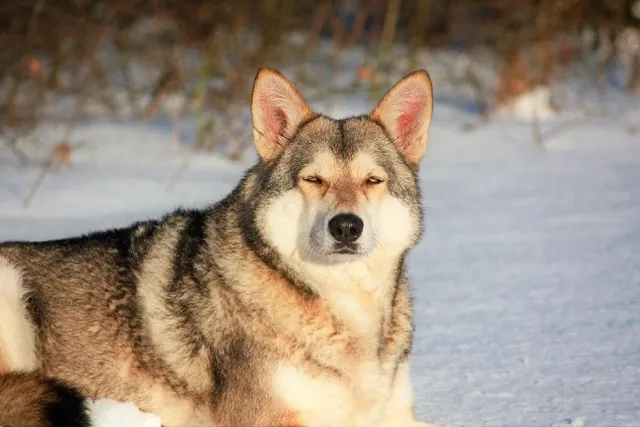
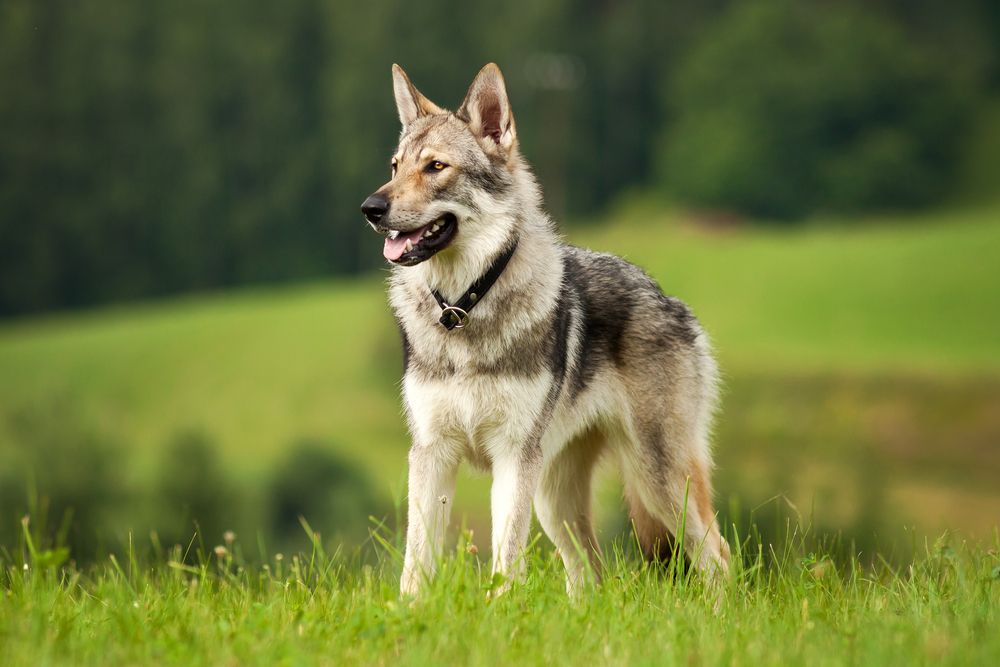
First, it’s important to understand that dogs descended from wolves, but not the wolves we have today. In fact, modern dogs and wolves share a common ancestor, but they evolved differently around 20,000–40,000 years ago. Before domestic dogs, there were wolves, and somehow those wolves turned into the dogs we know and love today. How did this happen, though?

How Did Wolves Become Dogs?
The evolution of dogs happened with a huge amount of human intervention, while modern wolves evolved from wolves that weren’t domesticated by humans.
There are a few theories as to how early humans domesticated dogs. The primary theory is that wolves began to associate humans with food, so they started hanging around camps. For the braver and more docile wolves, they were likely tossed food scraps directly from humans, furthering their positive association between humans and food. For the other wolves, they would have fed on the scraps left behind by humans’ meals and hunts, so the positive association wouldn’t have been quite as strong for them.
There is also a theory regarding humans collecting wolf pups directly from dens, allowing them to raise the pups by hand. It’s very possible that both of these forms of domestication occurred. Over time, humans selectively bred wolves to achieve specific characteristics.
Early on, these characteristics likely were associated with hunting skills, protective ability, and a manageable or social temperament. Obviously, what people were looking for in dogs changed over time, resulting in our dog breeds today, ranging from Pugs and Yorkies to Great Danes and Tibetan Mastiffs.

When Were Dogs Domesticated?
It’s difficult to have a direct answer on when dogs were domesticated, and it’s unclear who domesticated dogs or where they were domesticated. It’s believed that dogs were domesticated sometime around 20,000–40,000 years ago. Sometime in that timeframe, domestic dogs and wolves split from each other genetically.
Between 17,000 and 24,000 years ago, domestic dogs split off into Eastern and Western dogs, leading to the earliest Asian and European domestic dogs.
Nobody knows for sure, but dogs are believed to be one of the first animals to be domesticated by humans, competing with goats and sheep for the title of the earliest domesticated species.
Although it’s not widely accepted, there is a group of scientists who believe that Eastern and Western dogs were domesticated completely independently of each other. Basically, they believe that a group of humans in modern-day Asia domesticated dogs around the same time that a group of humans in modern-day Europe domesticated dogs, but both of these groups accomplished these domestications without a precedent or knowledge of the other group having domesticated dogs.

How Do Modern Dogs Differ?
Modern dogs are not the same as the earliest domesticated dogs, but they are exceptionally similar. Genes from dogs that lived upwards of 5,000 years ago are almost identical to the genes of modern dogs. Keep in mind, though, that evolution often occurs extremely slowly, which means that 5,000 years isn’t particularly long in evolutionary terms.
Interestingly, one of the primary differences between the 5,000-year-old dog and modern-day dogs is that modern-day dogs have a higher capacity for digesting starches, thanks to an enzyme that is present in the bodies of modern dogs. It should go without saying that ancient domestic dogs didn’t look like Pugs and Shih Tzus. They would have had a very wolf-like appearance that would have changed very slowly over time with selective breeding.

Summary
Dogs were some of the earliest animals that humans domesticated, but the domestication of dogs remains a huge mystery. As science advances and more fossils and remains are found, we may luckily get more answers about the domestication of dogs. It’s a long history that led to our modern dogs, and since humans made dogs into what they are today, we have a responsibility to practice responsible breeding and find ways to better dogs, making them healthier.
Sources
Featured Image Credit: gloverk, Shutterstock
Expert dog care, straight to your inbox
News, insights, expert advice, and everything dog.

No spam — unsubscribe anytime.
By signing up, you agree to our Terms & Conditions and Privacy & Cookies Policy.
How useful was this post?
Click a star to rate. You can leave written feedback afterwards. (We read all feedback.)
Brooke Billingsley spent 9 years as a veterinary assistant before becoming a nurse in 2013. She lives in Arkansas with her boyfriend, and loves all animals; currently sharing a home with three dogs, two cats, five fish, and two snails. She has a soft spot for special needs animals and has a three-legged senior dog and an internet famous cat with acromegaly and cerebellar hypoplasia. Fish keeping has become a hobby of Brooke’s and she is continually learning how to give her aquarium pets the best life possible. Brooke enjoys gardening and keeps a vegetable garden during the summer months. She stays active with yoga and obtained her 200-hour yoga teacher certification in 2020. She hosts a podcast focusing on folklore and myth and loves spending her free time researching and writing. Brooke believes that every day is an opportunity for learning and growth and she spends time daily working toward new skills and knowledge.