Overbreeding in Dogs: Consequences, Risks & Health Issues


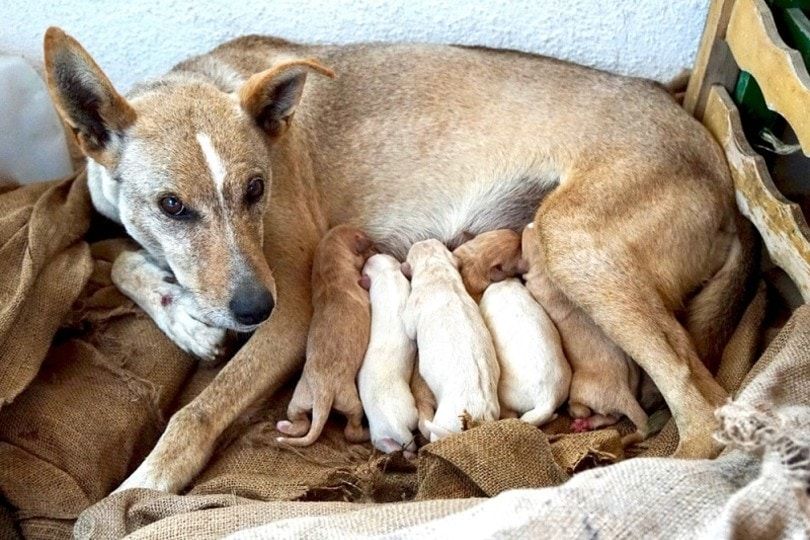
As you may know, many dog breeders are reputable, act responsibly, and care about the health and welfare of their pups. Unfortunately, there are also people who irresponsibly breed dogs, particularly in places like puppy mills. They are known for overbreeding dogs for profit without concern about the consequences, risks, and health issues for the mothers or their litters.
The effects of overbreeding are similar, whether done in a backyard breeding situation with one or two dogs or in puppy mills where many dogs are being bred on a larger scale for profit.

What Is Overbreeding?
According to the American Kennel Club’s (AKC) guide to responsible breeding, it is “customary to avoid breeding a bitch on consecutive heats to allow sufficient time for recuperation between pregnancies.” The guide also states, “The AKC rules do not allow, except with special documentation, the registration of a litter out of a dam less than 8 months of age or more than 12 years of age at the time of mating, or by a sire less than 7 months of age or more than 12 years of age at the time of mating.”
Overbreeding is a harmful practice. Dogs are bred more often than they should without any concerns for the mother’s health or the welfare of the litter of pups. Overbreeding also contributes to the overpopulation of dogs and the euthanasia of sickly or unwanted pups every year.
Overbreeding can involve:

What Are the Consequences of Overbreeding?
Overbreeding poses serious health and welfare risks both to the mothers and their puppies. It also contributes to the large numbers of unwanted dogs and overcrowded shelters and rescues. Sadly, many of these dogs are euthanized every year.
Due to the large number of puppies being born in puppy mills, overbreeding can also reduce the likelihood of animals from rescue groups, shelters, and reputable breeders being placed in loving homes.
1. Welfare Concerns
Puppy mills, where overbreeding is most common, are notorious for their poor conditions. Dogs are usually kept in small and unsanitary enclosures with little to no veterinary care.
Female dogs are bred repeatedly with no rest between litters. When they are no longer able to reproduce, they are often discarded or euthanized.
Puppies are not socialized and bred for their physical traits rather than temperament. As a result, they frequently suffer from behavioral issues later on in life.
2. Genetic Defects and Inherited Disorders
When dogs are overbred, appearance or specific traits are typically prioritized over health and genetic diversity. Dogs may be inbred (mated with closely related dogs) to maintain these traits, which can also increase the prevalence of genetic disorders.
3. Putting Profit First
Overbreeding does the opposite of responsibly breeding to improve. They do not think about the welfare of the animals. They rush to make more money, so they spend less and breed more.


Health Concerns of Overbreeding in Dogs
Overbreeding generally results in multiple litters being born in cramped conditions, often without any form of veterinary care. This poses hygiene risks and increases the spread of infectious diseases. For example, viruses like parvovirus and parasites like hookworms can rapidly spread among the puppies.
The mothers can also be affected by malnutrition, hypocalcemia (low calcium levels, which can be life-threatening), uterine infections, and mastitis.
When dogs are overbred, the parents rarely have any genetic or health testing before breeding. This increases the risks of genetic and inherited issues in the puppies.
Health issues that can be more common due to overbreeding include:
Frequently Asked Questions (FAQs)
What Are Some Red Flags You Should Be Aware of?
- The breeder avoids or refuses to show you the entire property where the dogs are kept and bred.
- The breeder is not questioning the potential buyer.
- The person selling the dogs has several types of designer crossbreeds or purebred pups being sold.
- If the seller does not offer you a puppy contract or health guarantee, buyer beware.
What Should You Look for in a Breeder?
- A responsible breeder will explain and provide a potential buyer with vet information, medical history, and vaccine records.
- A responsible breeder does not have multiple puppies available for sale at all times. In most cases, they have waiting lists and will have potential owners for puppies before the dog is even bred.
- They want to introduce you to the mom and dad dogs and are willing to show you where the pups sleep and play.
- They will inquire about why you want a dog, your plans for training and care, and your home and lifestyle.
What Are Some Steps I Can Take to Help Stop Overbreeding?
- Adopt a pet: Many dogs at your local shelter or rescue need a loving home.
- Donate: Donate pet supplies or give monetary contributions to your local shelter to help support animals waiting for a loving home.
- Support responsible breeders: If you choose to get a puppy from a breeder, research them thoroughly and make sure they are reputable.
- Support Laws: Become educated on your state's laws regarding responsible dog breeding, spread awareness, and support legislation that regulates breeders.
Summary
Overbreeding is hazardous to the mother and puppies. It can put the mother at risk for life-threatening illnesses, subject the dogs to unhealthy conditions, and to future health problems. You can do your part to prevent overbreeding by adopting from your local shelter, donating to needy pets, and researching and supporting reputable and responsible breeders who care about the health and welfare of their dogs.
Sources
Featured Image By Peter Maerky, Shutterstock
Expert dog care, straight to your inbox
News, insights, expert advice, and everything dog.

No spam — unsubscribe anytime.
By signing up, you agree to our Terms & Conditions and Privacy & Cookies Policy.
How useful was this post?
Click a star to rate. You can leave written feedback afterwards. (We read all feedback.)
Nicole has loved animals of all sizes her whole life so it's no wonder she has dedicated her career to helping them through what she loves best: learning, writing, and sharing knowledge with others. She’s the proud mom of two dogs, a cat, and a human. With a degree in Education and 15+ years of writing experience, Nicole wants to help pet parents and pets around the planet to live happy, safe, and healthy lives.