Do Golden Retrievers Smell? 8 Vet-Approved Tips to Help


In this article
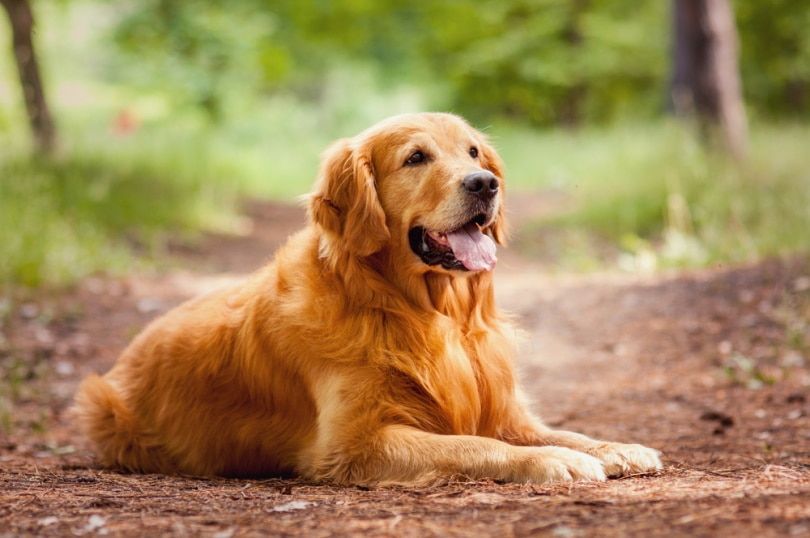
Our canine friends have a special place in our hearts and homes. However, some breeds can be smellier than others. What about the Golden Retriever? As a classic retrieving dog built for the outdoors, do they carry a stronger scent than their peers?
Like all dogs, Golden Retrievers can smell, but much of this can be reduced with proper grooming. Additionally, maintaining healthy skin, ears, and dental care plays an important role in controlling odor. Let's find out what contributes to the scent of these gorgeous canines and where they rank among other breeds.

Golden Retrievers: Level of Smell
All dogs develop a smell if they aren't properly bathed. Like humans, dogs collect grime and debris in their hair and skin. In addition to grooming, natural skin oils (sebum) and microorganisms on the skin can contribute to normal canine odor. With proper coat maintenance, they won't generate much of an odor. Some hunting breeds, like Beagles or Basset Hounds, emit a scent that people often refer to as "hound scent." Wrinkly dogs like Bulldogs and Pugs can smell bad due to the bacteria buildup between their skin flaps.
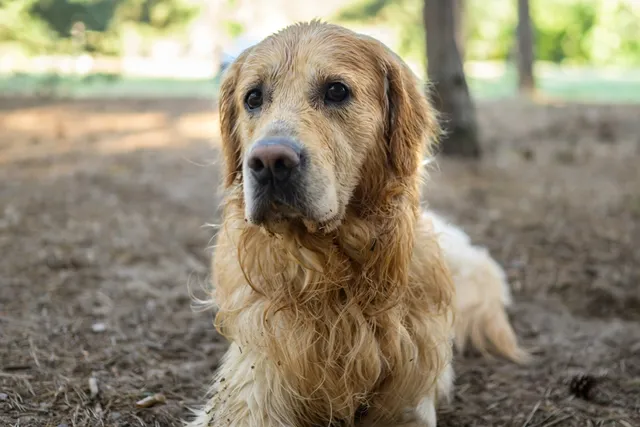
However, Goldens are pretty straightforward when it comes to their aroma. They generally smell pleasing until they've gone too long without a bath. Their dense, water-repellent double coat can retain moisture and natural oils, which may contribute to a characteristic “doggy” odor, especially if the coat stays damp. If you spend most of their time playing outside, you'll have to bathe and brush them more often. Dogs that spend more time outdoors may accumulate dirt, allergens, and microorganisms, which can increase odor and may require more frequent grooming.
What Can Influence Your Golden’s Odor?
If your Golden Retriever suffers from allergies, they might emit a foul smell. Sometimes, the allergies cause secondary skin infections with yeast (Malassezia) or bacteria, which can produce a distinctive foul smell. The yeast has a very particular odor, and it can also be associated with ear infections.
Other signs of skin allergies include:
- Excessive scratching
- Rashes
- Hot spots
- Yeast overgrowth
- Ear infections
Allergies can come from environmental or dietary triggers. If you suspect your Golden Retriever has allergies, you should make an appointment with your vet for further investigation.

The 8 Tips for Keeping Your Golden Retriever Smelling Good
Keeping your Golden smelling like a million bucks can be a constant task, but you'll get into a routine that works for you. Here are seven tips to keep clean and odor-free.
1. Practice Regular Bathing
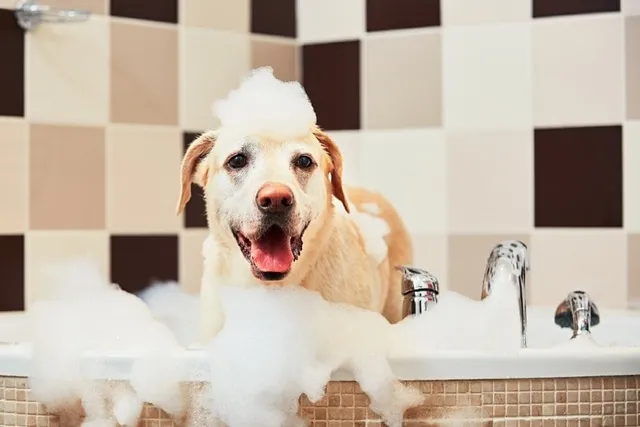
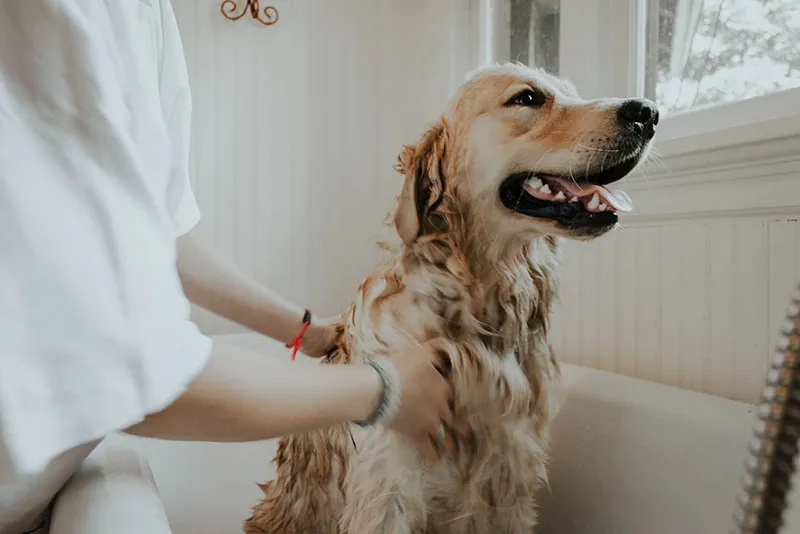
Dogs need baths less often than us, but they start developing noticeable odor over time due to normal skin oils, environmental debris, and microorganisms. On average, you should bathe your Golden Retriever as frequently as most other canines: every 4 to 6 weeks. Golden Retrievers can have allergy issues or sensitivities to some shampoos. As a precaution, you can use fragrance-free shampoos.
Overbathing can cause other issues, like dandruff and dry skin, which can lead to excessive itching. Try to bathe your dog no more than once a month. However, bathing frequency should be adjusted based on the individual dog’s skin condition, activity level, and veterinary guidance rather than a strict schedule. For Goldens with extra sensitive skin, you might have to wait 6 weeks or longer in between.
Our Favorite Products
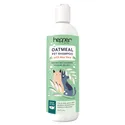
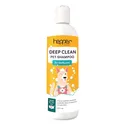
Bathing your dog may be challenging, but selecting the right shampoo can help make the process a bit easier. Our favorite products come from Hepper's Shampoo product line, offering natural, pet-friendly solutions meticulously designed to gently cleanse your dog's skin and coat without any risk of irritating or drying them out. These formulas are free of harmful additives such as dyes, soaps, sulfates, and phthalates. The Deep Cleansing Shampoo is a great option for pet owners who have difficulty neutralizing tough doggy odors. Hepper's Oatmeal Pet Shampoo is a great way to treat your pet to aloe vera and oatmeal's calming benefits while you revel in the delightful and refreshing scents!
| Rating | Image | Product | Details | |
|---|---|---|---|---|
For Sensitive Pups
 |
|
Hepper Colloidal Oatmeal Pet Shampoo |
|
Check Price |
For Smelly Pups
 |
|
Hepper Deep Clean Shampoo |
|
Check Price |
At Dogster, we’ve admired Hepper for many years and decided to take a controlling ownership interest so that we could benefit from the outstanding designs of this cool pet company!
2. Commit to Regular Brushing
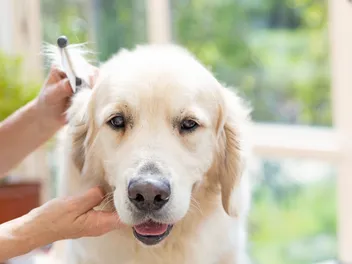
It is generally recommended to brush your Golden Retriever several times per week, though some individuals may benefit from daily brushing, especially during heavy shedding periods. Brushing helps distribute natural skin oils along the coat and supports coat cleanliness. Also, it helps loosen and remove dirt and debris that can get stuck in the coat.
Since the Golden has a double coat, occasionally brushing deeply with a de-shedding tool can combat dander, matting, and shedding. De-shedding tools should be used carefully and not excessively, as overuse can damage the coat or irritate the skin. If adequately managed with brushing, your Golden can smell good for longer between baths.
3. Keep Up With Oral Hygiene
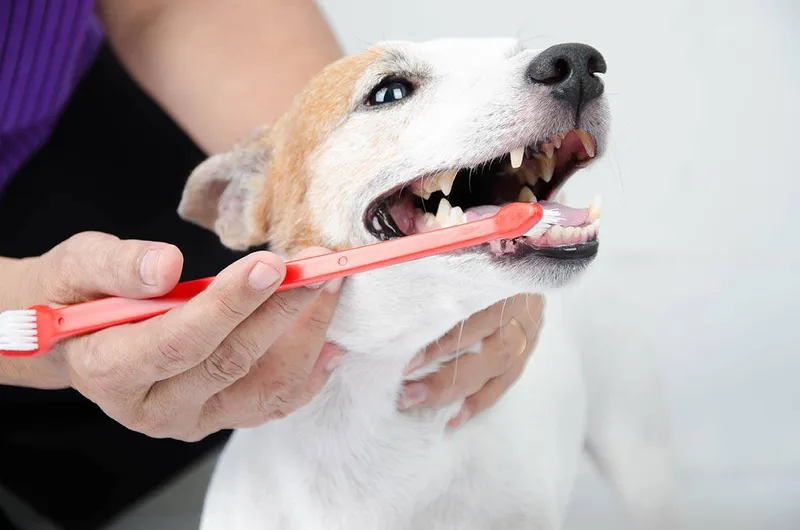
Does anyone like hot, stinky dog breath in their face? To combat bad breath, your Golden should have their teeth brushed every day. Also, it is best to start as early as possible. Even though puppy teeth will inevitably fall out to make way for adult teeth, it can be a trial run to familiarize them with the process. Daily brushing is ideal, but even brushing several times per week can significantly improve dental health and reduce odor when daily care is not feasible.
4. Offer Dry Baths
You could always try a bath between baths, so to speak. To help manage surface oil and debris buildup in your Golden's fur, you can try natural or store-bought dry dog shampoos to help reduce odors and maintain coat freshness between traditional baths.
Try to go fragrance, dye, and chemical-free if you can.
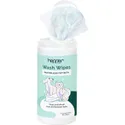
Keeping your dog clean doesn't have to mean giving them a full bath. The Hepper Waterless No Rinse Shampoo and Wash Wipes are great waterless products to keep on hand for in-between baths. They're specially formulated to be safe for dogs of all ages, sizes, and breeds. The hypoallergenic formulas contains natural, moisturizing ingredients that effectively remove dirt without irritating your dog's skin.
| Image | Product | Details | |
|---|---|---|---|

|
Hepper No-Rinse Pet Shampoo |
|
Check Price |
|
Hepper Wash Wipes |
|
Check Price |
At Dogster, we've admired Hepper for many years, and decided to take a controlling ownership interest so that we could benefit from the outstanding designs of this cool pet company!
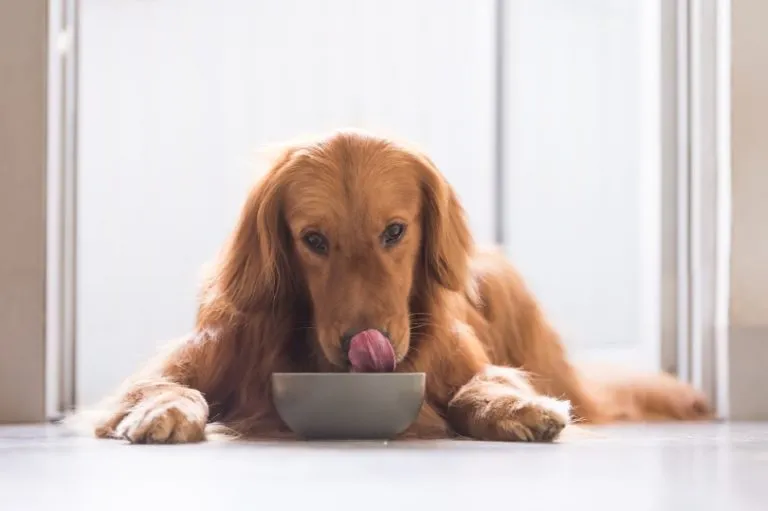
5. Choose the Correct Diet
Believe it or not, their diet plays a role in how your dog smells. Many dogs suffer from food allergies, which can contribute to secondary skin issues, including yeast or bacterial overgrowth, that may cause odor.
Proper nutrition supports skin barrier function and immune health, which can help reduce the risk of odor associated with skin disease.
6. Take Them to a Professional Groomer
There's nothing wrong with a little royal treatment. Your Goldie can see their stylist roughly every 6 weeks. Unlike home grooming, groomers use several tools and resources that people often don't have at home. They can provide thorough coat care, including bathing, drying, brushing, and trimming, which helps maintain skin and coat health.
It's refreshing for your dog to have clean fur.
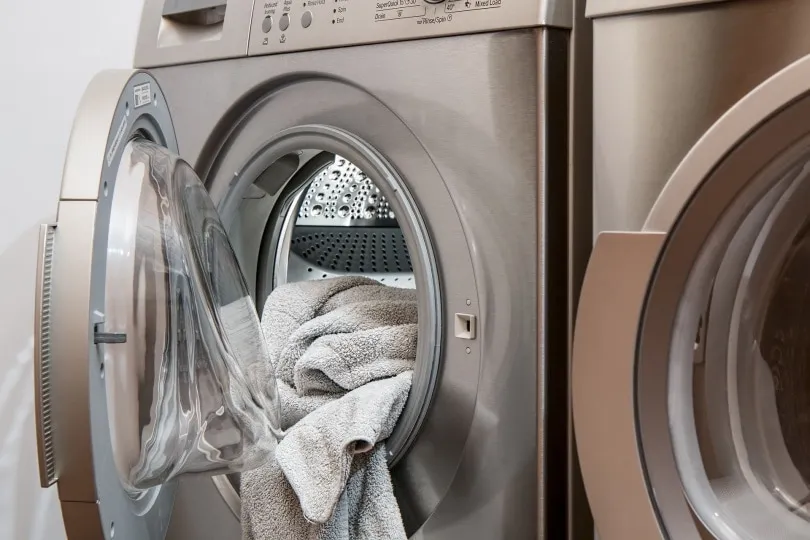
7. Wash Their Bedding & Blankets
You can give your dog a bath on a regular schedule. However, if dirt and grime remain on their blankets, beds, and clothes, they will get dirty again quickly. Leftover smells remain on the blankets and bedding, causing dirt, debris, bacteria, and skin particles to collect on the material. If your dog lies in the bed, the same smelliness will find your dog again. Regularly cleaning bedding helps reduce environmental buildup of microorganisms and allergens that can contribute to odor and skin irritation. It's best to wash your dog's bedding and blankets approximately every 1 to 2 weeks.
8. Keep Them Dry
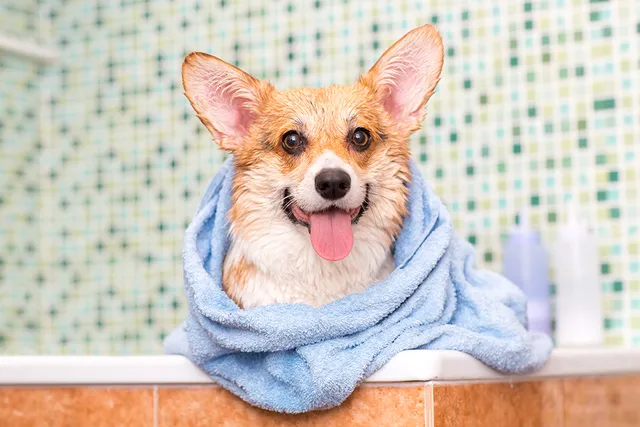
Keeping your Golden Retriever dry is an important part of controlling odor. Moisture trapped in the coat can promote the growth of normal skin microorganisms, such as bacteria and yeast, which can contribute to odor. Golden Retrievers often enjoy swimming and water activities, which can increase how frequently their coat becomes wet. After baths, swimming, or outdoor play, make sure to dry your dog thoroughly, especially in dense areas of their coat.
Allowing the coat to remain damp for prolonged periods may also increase the risk of skin irritation or infection, particularly in dogs prone to skin issues. Regular brushing and proper drying techniques can help maintain a fresh-smelling coat.
Conclusion
With proper care, diet, and health, your Golden Retriever shouldn't smell bad often, though a mild natural scent is normal. You can have a clean-smelling dog with minimal lingering odors if you implement good grooming habits. So, now you know that while Golden Retrievers are not inherently prone to strong odor, their dense, water-repellent double coat can trap moisture and natural oils, which may contribute to odor if not properly dried and maintained, making consistent hygiene practices, including teeth brushing, especially important.
See also:
Featured Image Credit: Olena Brodetska, Shutterstock
Expert dog care, straight to your inbox
News, insights, expert advice, and everything dog.

No spam — unsubscribe anytime.
By signing up, you agree to our Terms & Conditions and Privacy & Cookies Policy.
How useful was this post?
Click a star to rate. You can leave written feedback afterwards. (We read all feedback.)
Ashley Bates is a freelance dog writer and pet enthusiast who is currently studying the art of animal therapy. A mother to four human children— and 23 furry and feathery kids, too – Ashley volunteers at local shelters, advocates for animal well-being, and rescues every creature in need. Her mission is to create awareness, education, and entertainment about pets to prevent homelessness. Her specialties are dogs and cats.