

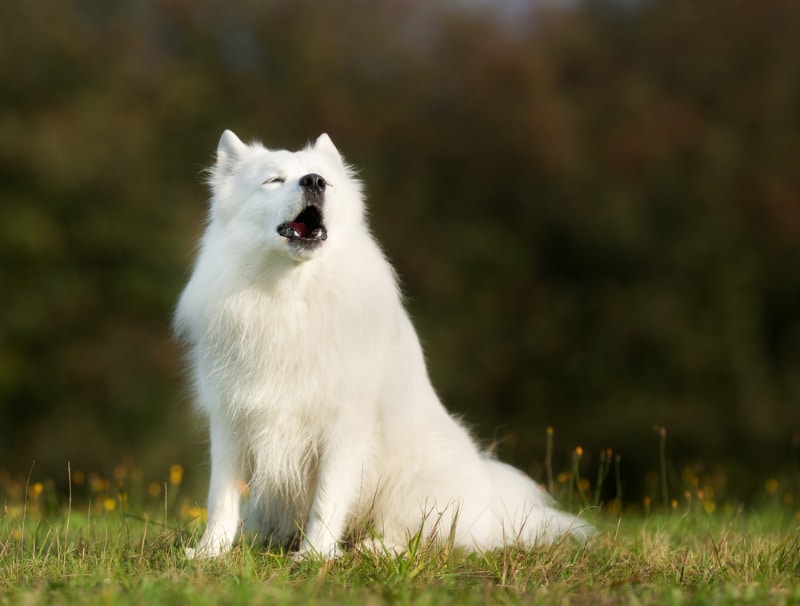
While our pet dogs have a lot of quirks, some of which we try to train or breed out of them, howling is one thing that just seems to be a natural instinct for canines. Howling is one way that dogs communicate with the world, whether it’s to get our attention or make contact with other dogs.
However, there are some dogs that howl more than others. Whether you love it and are looking to adopt a chatty breed, or you hate it and want to know what dogs howl so you can steer clear of a breed that makes too much noise, we’ve put together a list of 20 dog breeds that you can expect to howl from time to time.

Why Do Dogs Howl?
Many people associate the howls of our beloved pets with the howls of wolves. Is this behavior related to their wolf ancestry though? Or do they howl for different reasons?
Wolves howl because it helps them communicate with their pack over long distances. It also serves to maintain the pack’s territory. Funnily enough, one howl can set off a chain reaction in wolves. On the other hand, dogs live very different lives from their wolf ancestors. While scientists aren’t completely certain as to why dogs howl, they assume that it is also a means of communication in dogs, just like how they growl, bark, and whine.
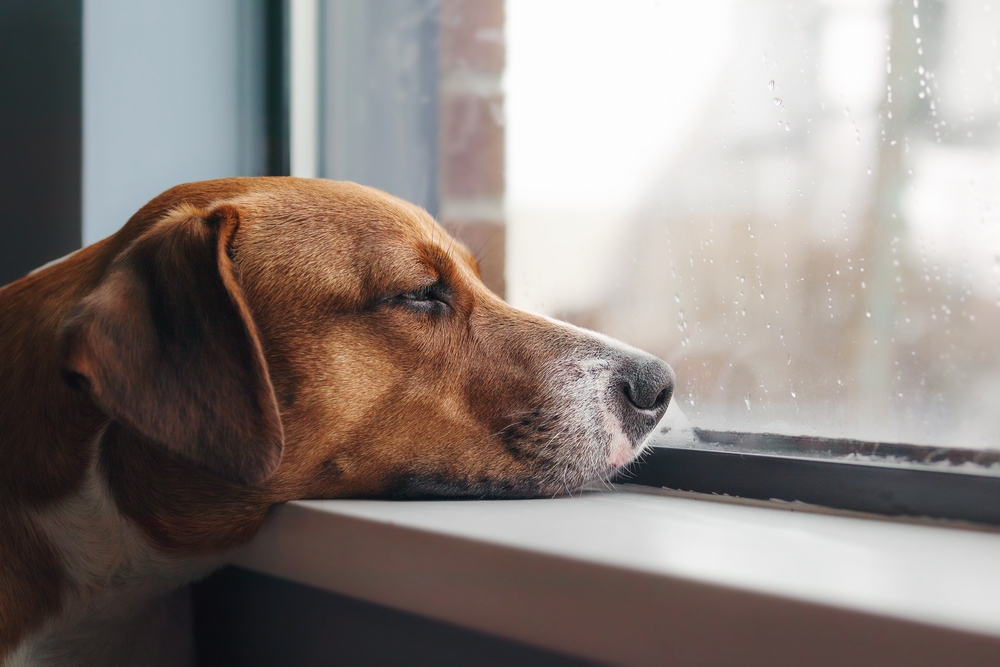
There are many reasons dogs can howl. Our best guess is that they howl to get attention, communicate with humans and other dogs, express big emotions (like separation anxiety), let others know that they’re there, and as a response to pain. Some breeds are more prone to howling than others, though. Interestingly, breeds that are more closely related to wolves howl more than breeds that are more recently developed.1 So, which breeds are most likely to howl?

The 25 Dog Breeds That Howl
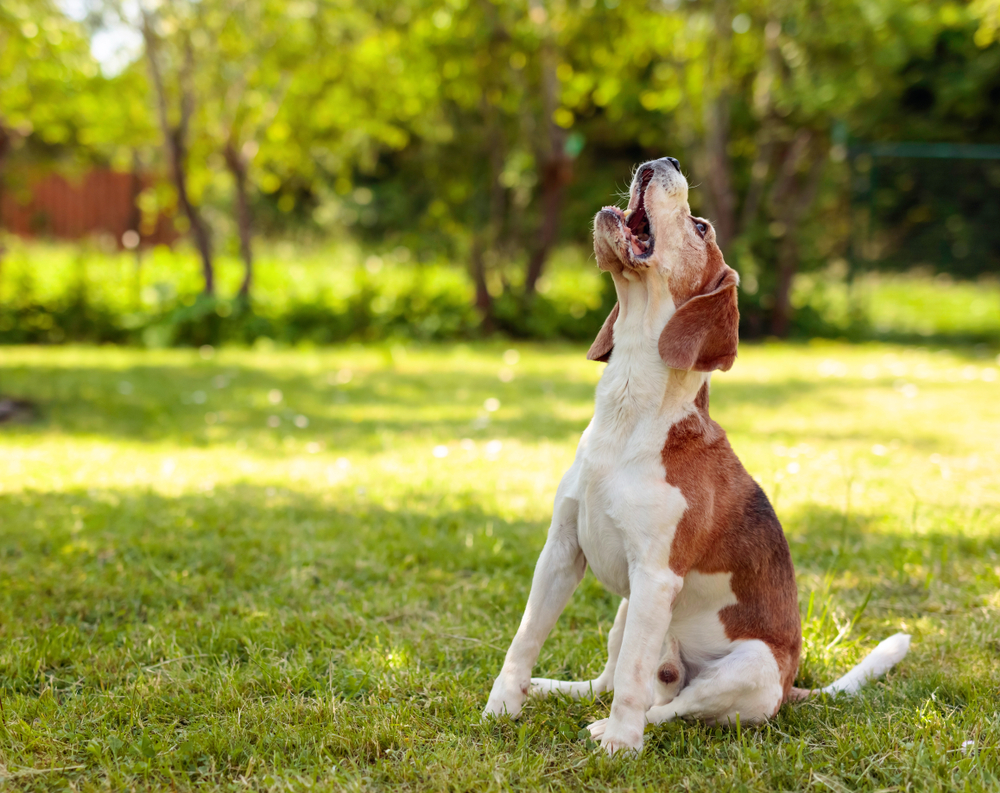
1. Beagle
| AKC Group: | Hound Group |
| Origin: | England |
| Original Job: | Scent hound, hunting rabbits |
The bay of a Beagle that’s hunting is a quintessential association with this breed. Even the sound of their bark is unmistakable. This breed was bred as a scent hound and for hunting, which explains why they would make this distinct sound. As rabbit hunters, Beagles will track down rabbits hidden under foliage and then bay loudly to let their owners know that there is prey nearby.
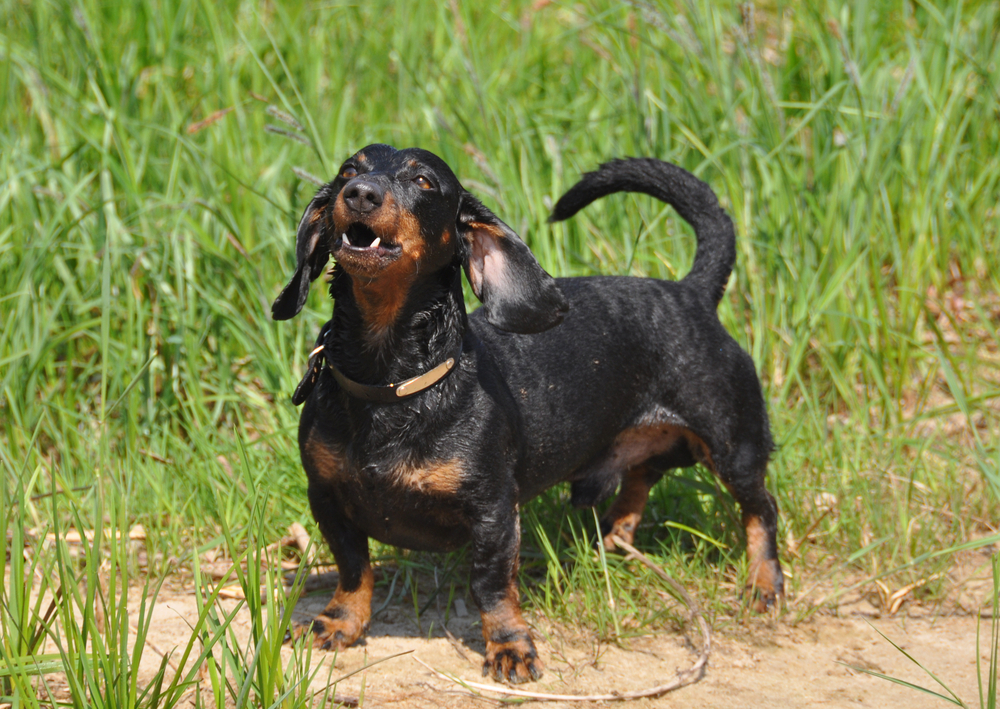
2. Dachshund
| AKC Group: | Hound Group |
| Origin: | Germany |
| Original Job: | Hunting badgers |
It’s hard to imagine a dog the size of the Dachshund going after formidable prey like badgers. They would enter the den of these animals, barking to alert their human companions of their location. A genetic mutation gave the breed their short legs and long, narrow body, which came in handy with this job.2
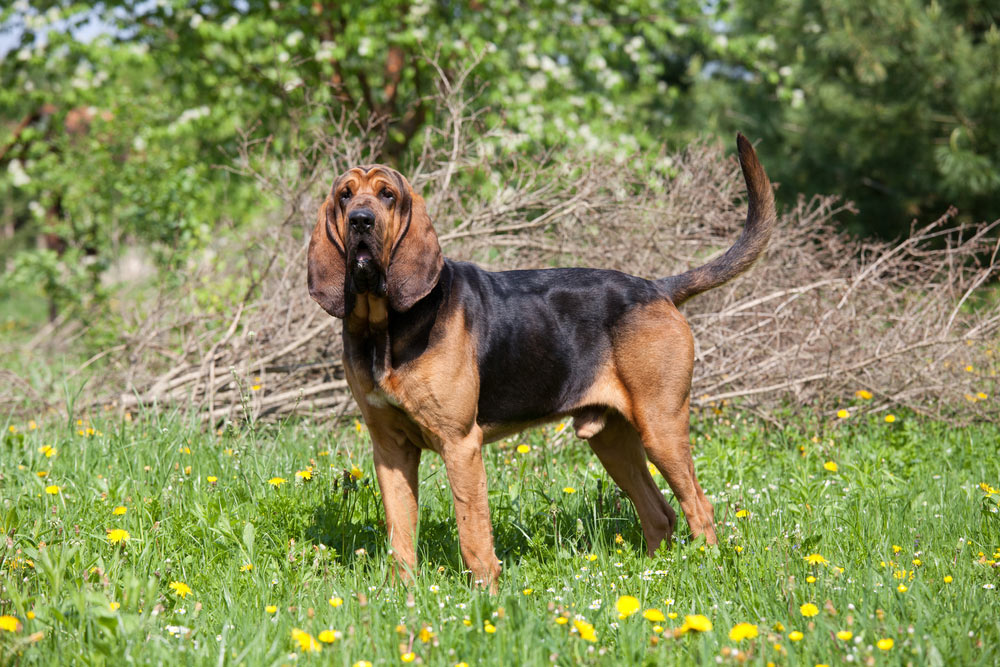
3. Bloodhound
| AKC Group: | Hound Group |
| Origin: | Ancient Mediterranean area |
| Original Job: | Scent hound |
The amazing sense of smell of the Bloodhound is legendary. The breed’s abilities became evident early in the pup’s murky past. The dog is hard-working and steadfast. Their olfactory abilities are undoubtedly working faster than the human companion following them, and barking and howling are necessary for humans to be able to hear so that they can keep up while a Bloodhound follows a scent.
4. American Foxhound
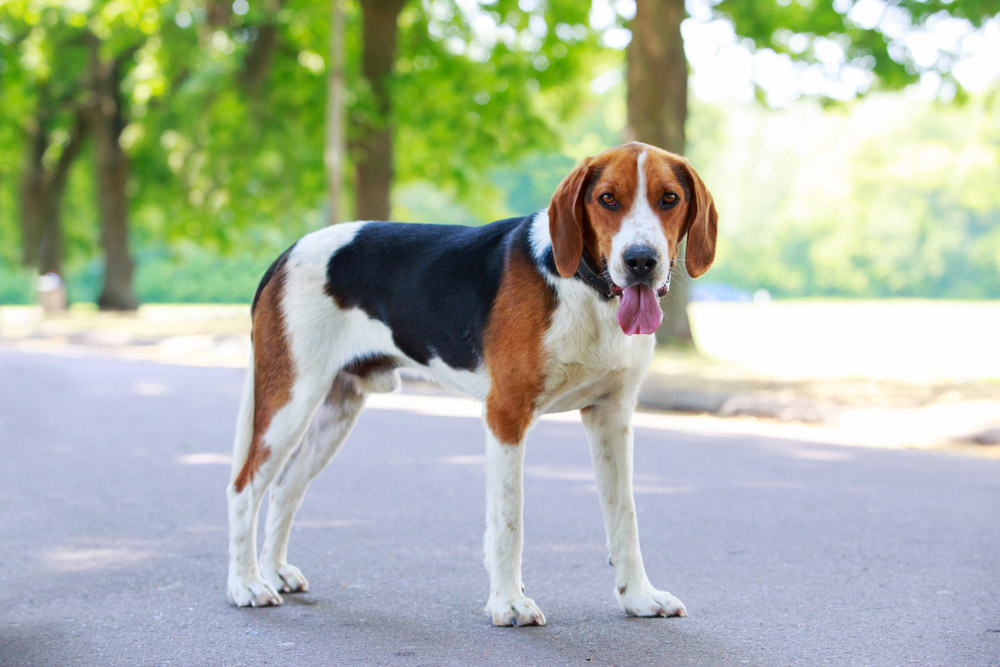
| AKC Group: | Hound Group |
| Origin: | United States |
| Original Job: | Fox hunter |
The American Foxhound is appropriately named, as it clearly highlights the dog’s original job. George Washington and others selectively bred their English counterparts to refine the breed for their needs. Howling is vital for them when on the hunt with a pack of hounds. Also, since foxes often live in forests, riparian habitats, and edges, their short stature allows this dog to stay on track while in challenging conditions.
5. Basset Hound
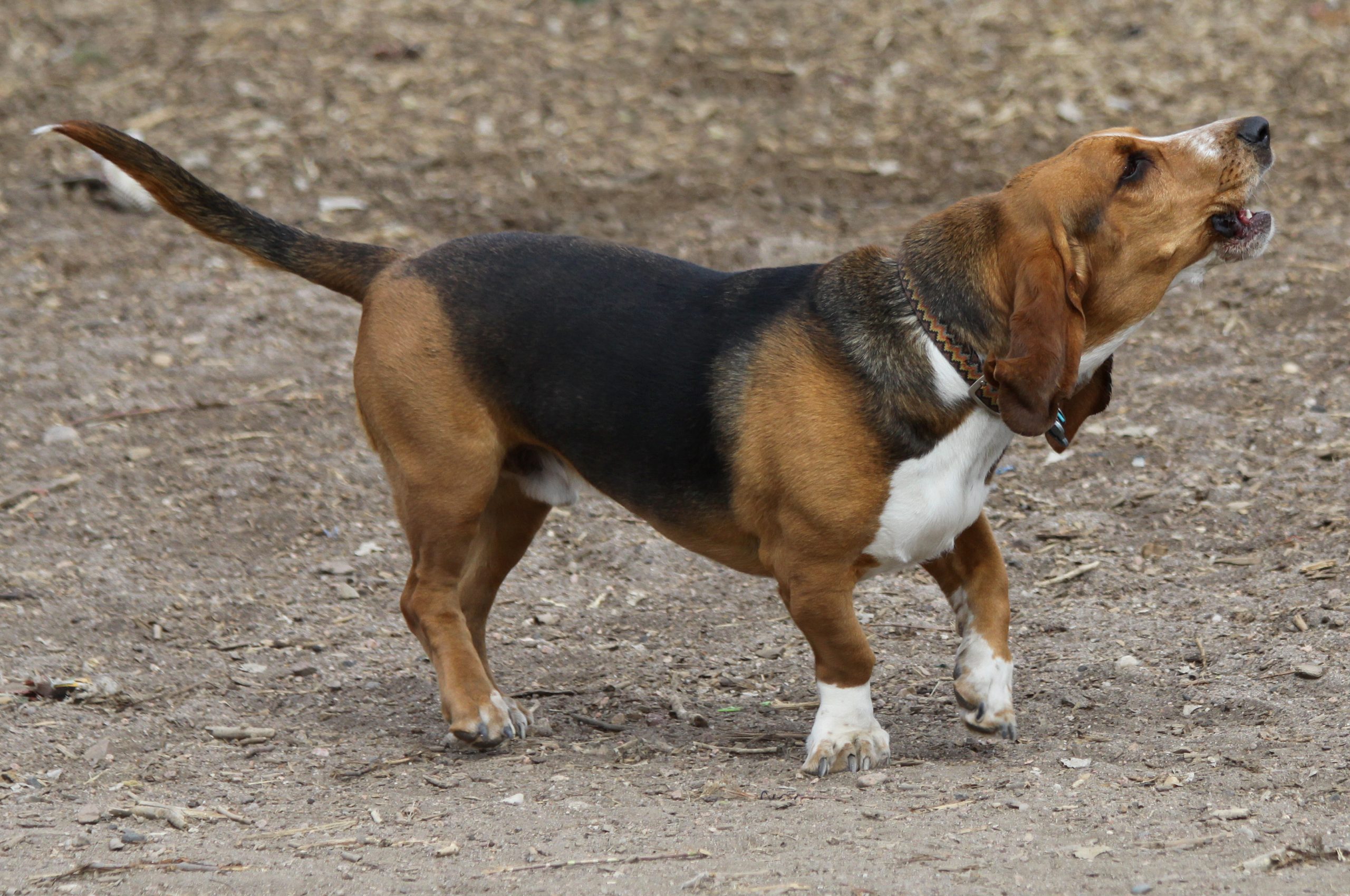
| AKC Group: | Hound Group |
| Origin: | France |
| Original Job: | Hunting deer and rabbits |
The Bloodhound was the model for the Basset Hound with their comparable olfactory abilities. The short stature of the Basset Hound breed, however, proved an asset for hunters of small game, allowing the dog to maneuver in brushy habitats. This breed is an excellent example of the specialization of selective breeding, with a pup able to work various terrains and step up as a foot hound for people walking in the field with them.
6. Bluetick Coonhound

| AKC Group: | Hound Group |
| Origin: | United States |
| Original Job: | Scent hound of raccoons and other medium to large game |
The name of the Bluetick Coonhound provides a clue to this breed’s job as a raccoon hunter. The dog’s intelligence and endurance made this canine suitable for hunting other game as well, though. Their distinctive voice made them easy to follow in the field. The aim is often to tree the quarry to prevent its escape. People have used this breed singly or in packs, depending on the prey species, but you can bet that they’re successful at whatever they’re hunting.
7. English Foxhound
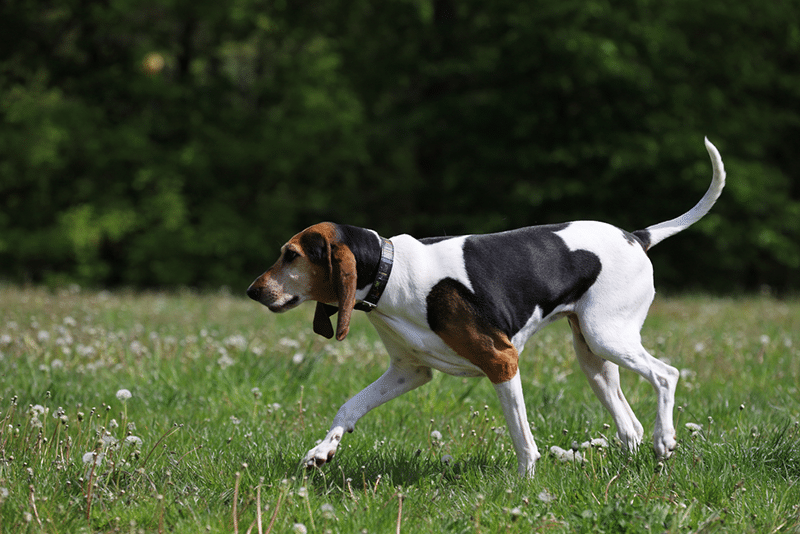
| AKC Group: | Hound Group |
| Origin: | England |
| Original Job: | Scent hound for medium and large game |
The English Foxhound may have started with big game, but the breed soon segued into the role of its namesake. The Hunting Act of 2004 banned the sport in England and Wales.3 Barking and howling was an essential part of the dog’s job. They typically hunted in packs, making it easier for the canines to stay together and for humans to follow them.
8. Norwegian Elkhound
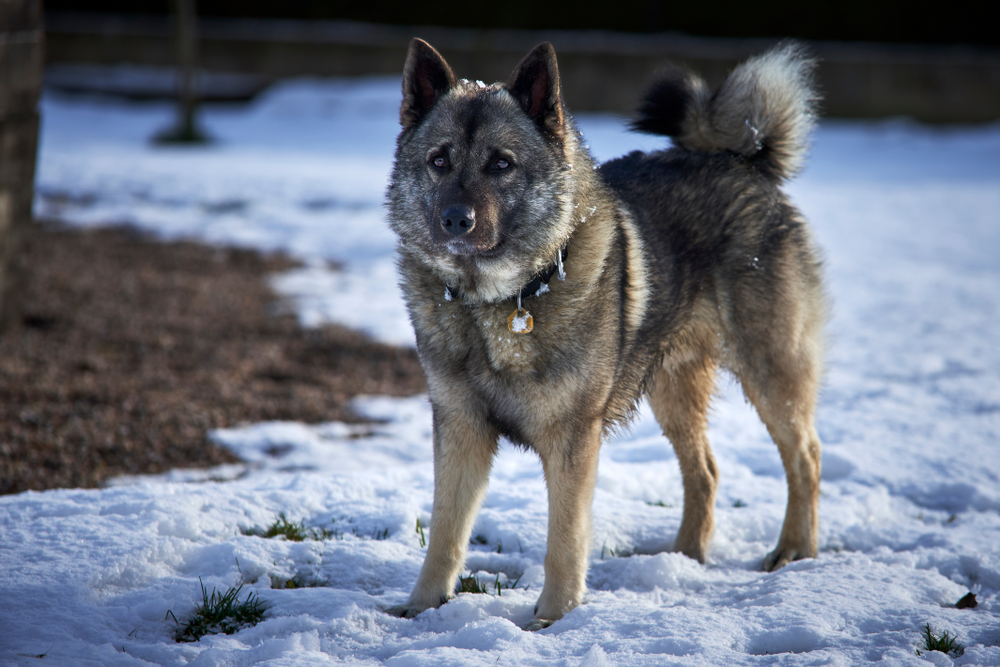
| AKC Group: | Hound Group |
| Origin: | Norway |
| Original Job: | Scent hound after elk and moose |
The Norwegian Elkhound has been a loyal hunting companion for humans for thousands of years. This dog is fearless, considering the game they herded, hauled, and hunted. We listed Norway as the breed’s origin. However, its history goes back to the Vikings. Howling is a vital trait for this pup. Since their quarry is fast, the canines must keep up with their speed, and howling leads their hunting companions to the prey by being vocal.
9. Siberian Husky
| AKC Group: | Working Group |
| Origin: | Siberia |
| Original Job: | Sled dog |
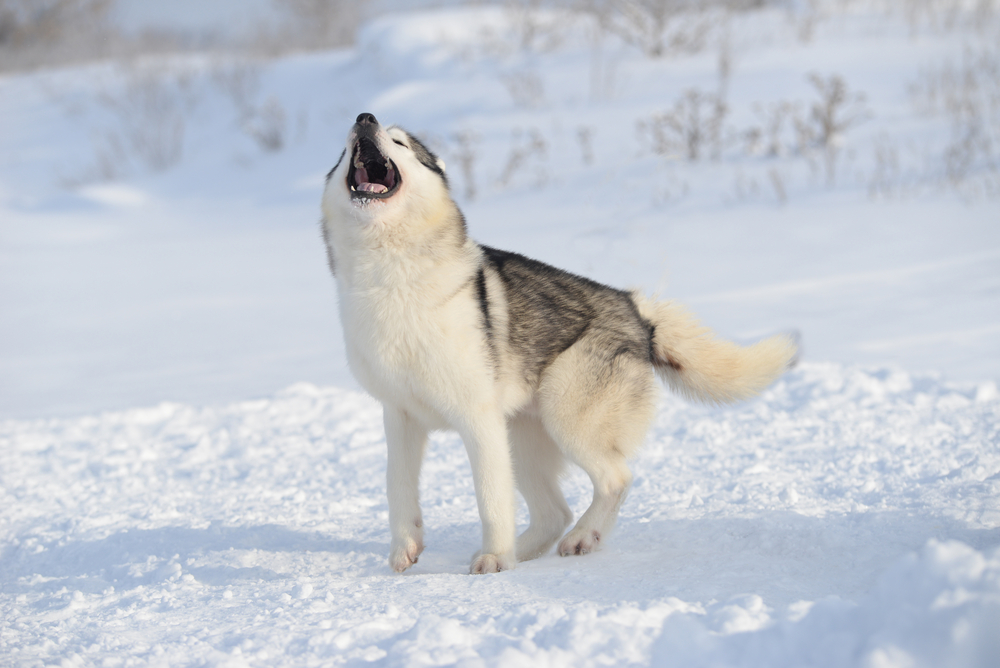
Humans have used dogs for sledding as early as 8,000 years ago.4 This job made these pups sociable with other canines. It also influenced the breed’s evolution for the tremendous physical demands. Siberian Huskies are very vocal, whether in or out of the harness. They howl so much and so distinctly, that it sometimes sounds like they’re actually trying to talk. Don’t believe us? Just look up a few videos of Siberian Husky howls on YouTube.
10. Samoyed

| AKC Group: | Working Group |
| Origin: | Siberia |
| Original Job: | Sled dog, hunting companion, and watchdog |
The Samoyed is an all-purpose hunting dog suited for bitterly cold weather. Like the previous breed, this dog worked on sledding teams, and it’s a job some of them still have. They are vocal with an almost shrill quality to their voices. Remember that barking is common among canines in this job, and we like to think that they are encouraging their teammates!
11. Cairn Terrier
| AKC Group: | Terrier Group |
| Origin: | Scotland |
| Original Job: | Ratter |
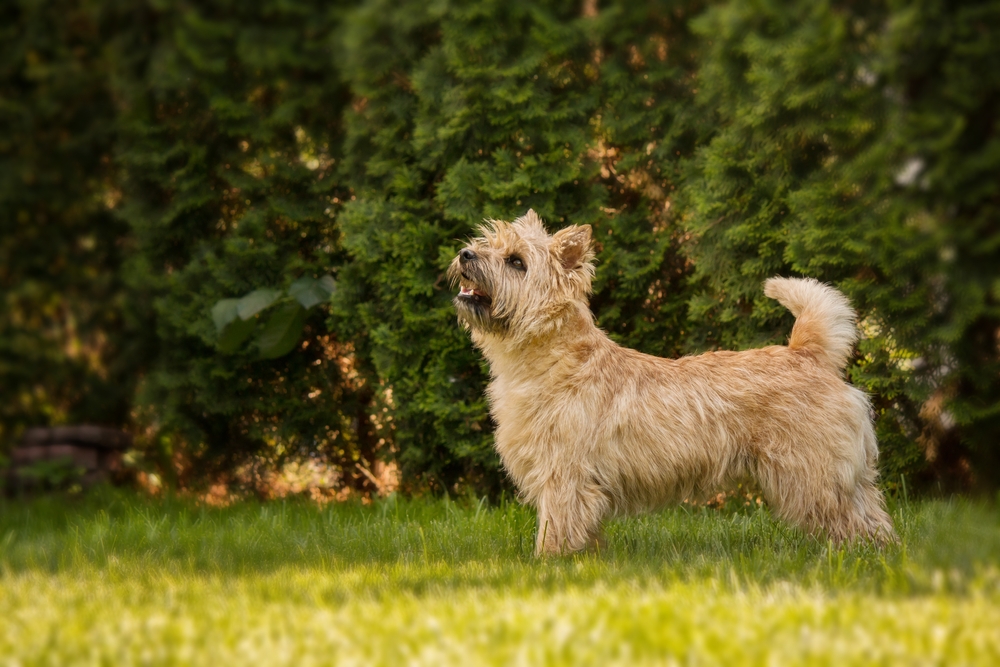
The name of the Cairn Terrier is a clue about the breed’s original job as a ratter. Rodents scurried among the rocks of Scotland, finding places to hide from the dogs in pursuit. Howling is an alert to the owner that they’ve made a kill, and it’s also a function of their protective nature. Vocalizing is also an expression of their excitement while on the hunt, and it’s a common trait among breeds in the AKC Terrier Group.
12. West Highland White Terrier
| AKC Group: | Terrier Group |
| Origin: | Scotland |
| Original Job: | Ratter or earth dog |
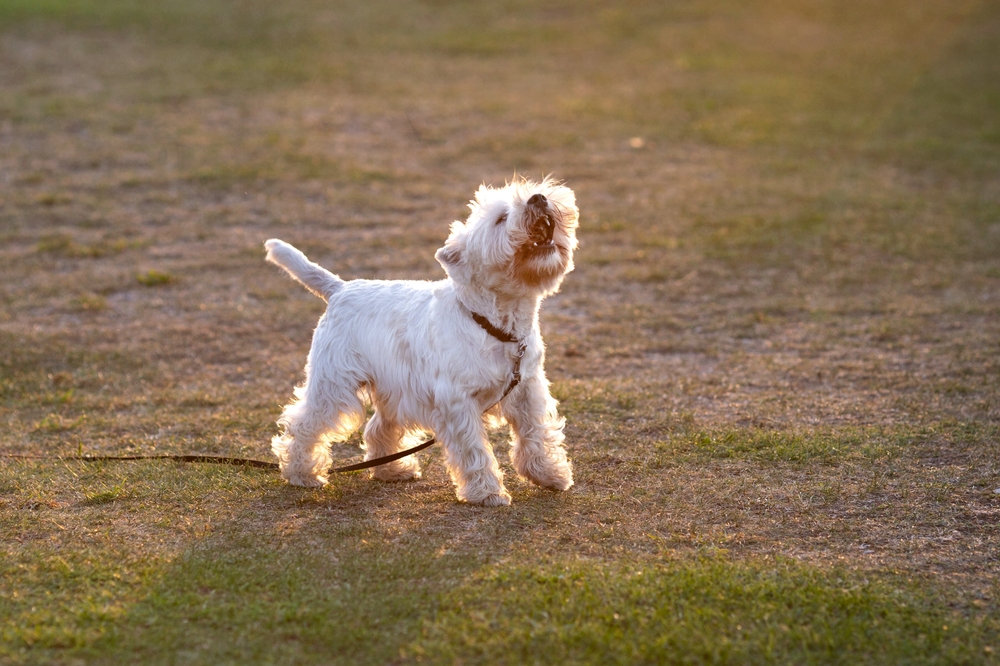
Rodents were a plague for farmers, opening up a job for an intelligent and quick canine like the West Highland White Terrier. This dog is a genuinely happy pooch, as evidenced by their facial expression. They are loyal pets and protective of their families and homes. Like other terrier dogs, their howling was helpful to humans when they were hunting prey that hid in underground dens.
13. Miniature Schnauzer
| AKC Group: | Terrier Group |
| Origin: | Germany |
| Original Job: | Ratter |
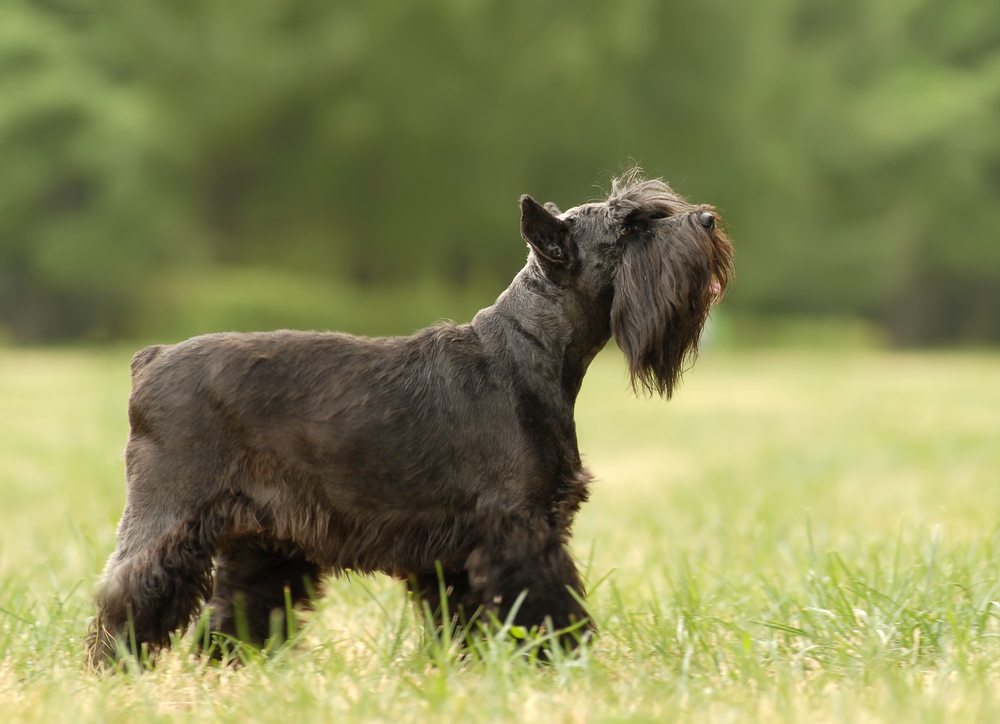
Just one look at the Miniature Schnauzer and you know they mean business. This pup is a smaller version of their larger cousin, the Giant Schnauzer. They are lively with a protective nature that comes from their farm-dog history. That sets the stage for a vocal pooch, which describes this breed to the tee. They are playful pets that will keep up with the kids—including the howling and roughhousing.
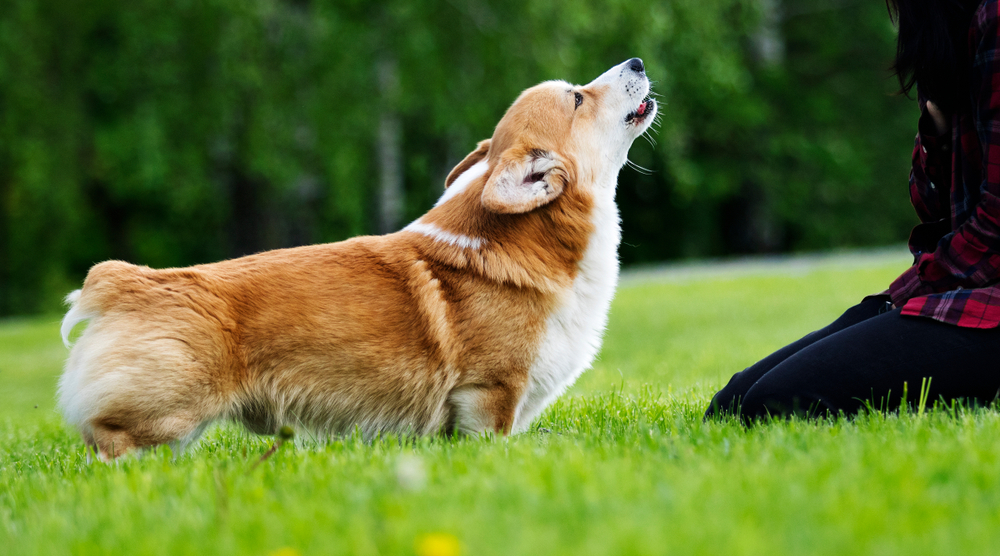
14. Pembroke Welsh Corgi
| AKC Group: | Herding Group |
| Origin: | Wales |
| Original Job: | Herder of livestock |
The size of the Pembroke Welsh Corgi is an advantage when herding livestock, such as cattle, because they were able to nip at their heels. This dog is tenacious and persistent enough for the job, but it also helps to have a big bark/howl to direct the livestock to where they need to be.
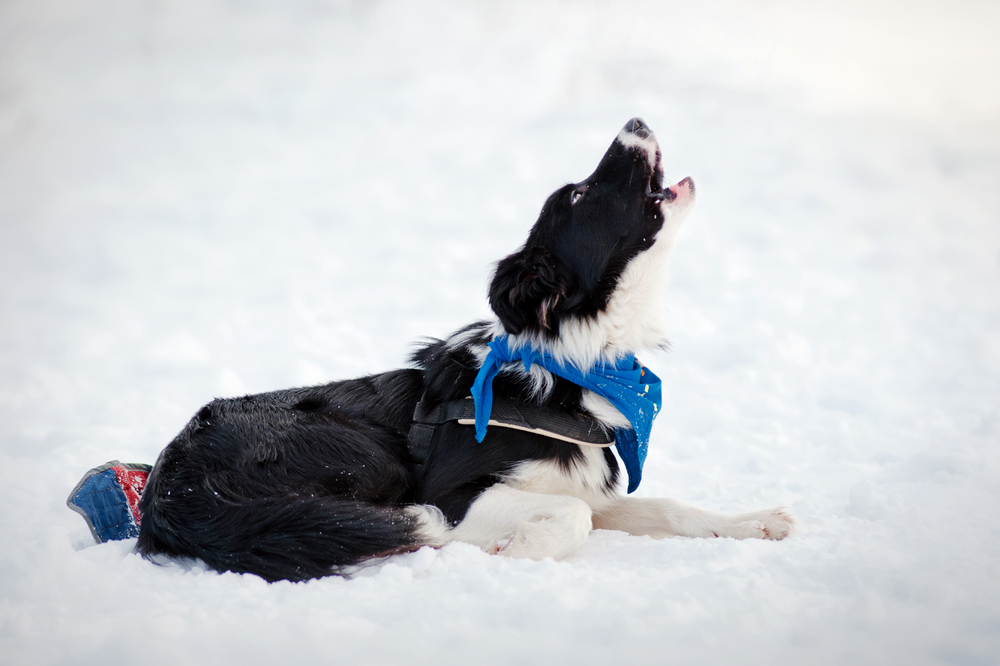
15. Border Collie
| AKC Group: | Herding Group |
| Origin: | Great Britain |
| Original Job: | Herder of livestock |
The Border Collie is probably the most intelligent canine breed. Their job as a herder demanded a skill set that included intelligence, independence, and tenacity. It also demands strength and endurance to navigate in rough terrain. Their voice is a useful tool when on the job as well. Their high-pitched bark that sounds almost like a howl ensures they’re heard by all, mainly livestock and humans.
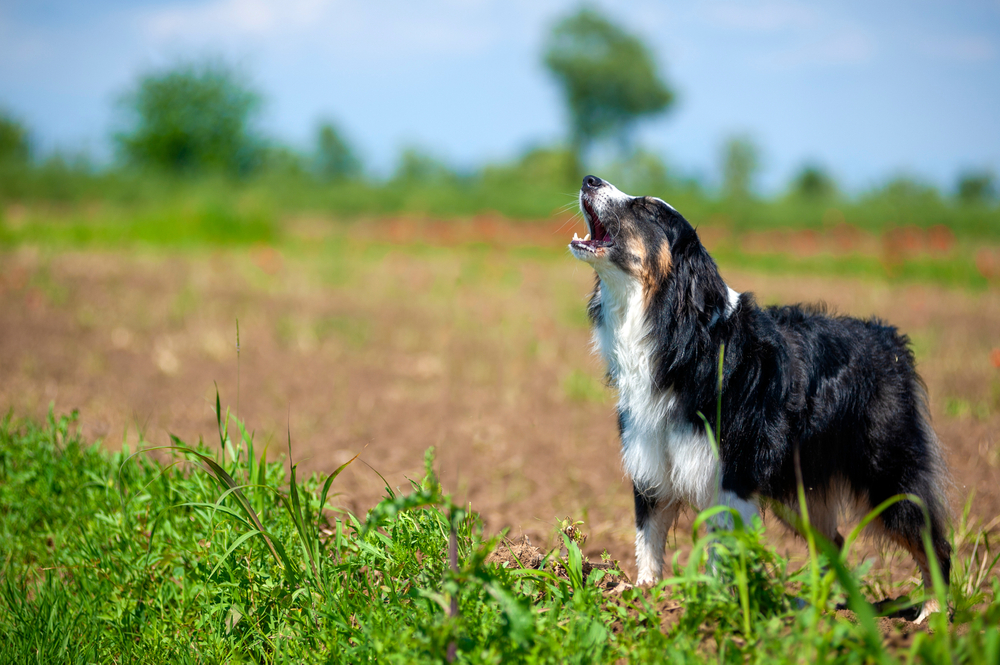
16. Australian Shepherd
| AKC Group: | Herding Group |
| Origin: | United States (California) |
| Original Job: | Herder of livestock |
The name of the Australian Shepherd is a misnomer. While the stock is from the Land Down Under, the development of the breed happened in the United States. This dog has many of the traits we discussed in the previous entry, as they are also livestock herders. The work is demanding, requiring many skills to succeed, and a loud howl is one of them. The dog must keep their livestock group together, making it an essential quality to direct them.
17. Collie

| AKC Group: | Herding Group |
| Origin: | Scotland |
| Original Job: | Herder of livestock |
The development of the Collie breed goes back to Roman times. Herding dogs need to be vocal, and this is also a howler due to the job they were bred for. They are somewhat protective and good with kids. Perhaps they view children like livestock they need to keep in check.
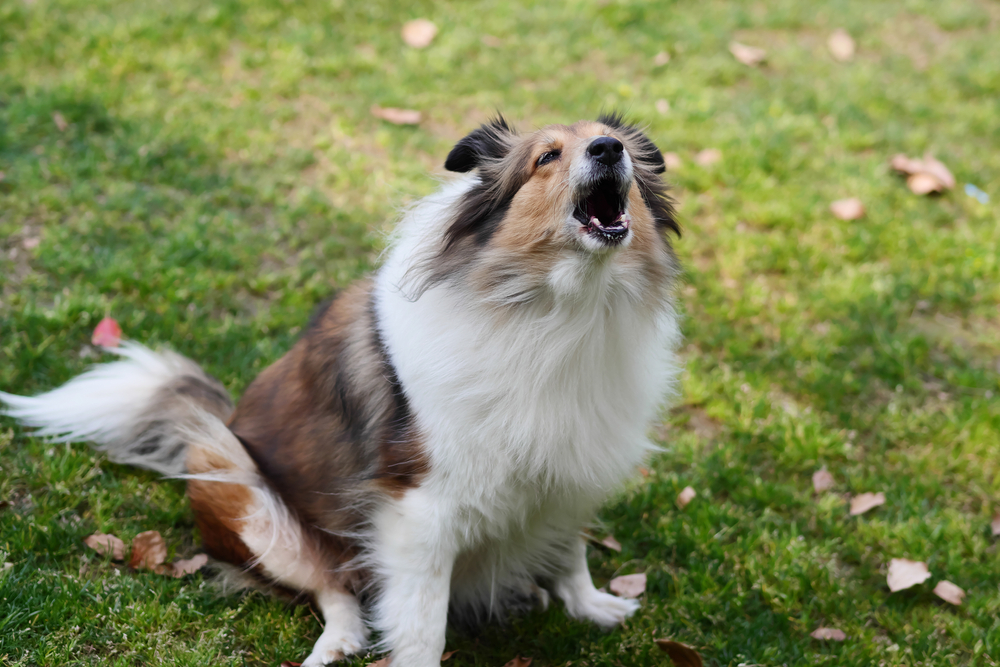
18. Shetland Sheepdog
| AKC Group: | Herding Group |
| Origin: | Scotland |
| Original Job: | Herder of livestock |
The Shetland Sheepdog is yet another herder from Scotland. We see the same skills in this breed that help other canines succeed in their herding roles. This dog’s history speaks to the harsh life of livestock farmers. The impetus for this pup’s smaller size was to use them on smaller livestock, but it was their intelligence and learning capacity that made this pooch an excellent herder.
19. American Eskimo
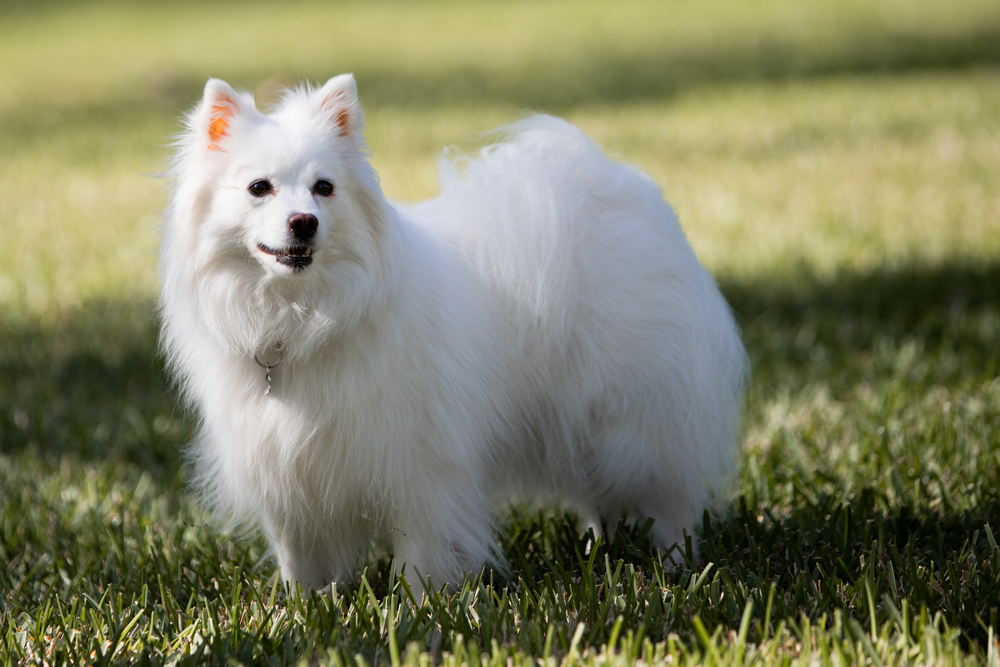
| AKC Group: | Non-Sporting Group |
| Origin: | United States |
| Original Job: | All-around farm dogs, circus performers |
The American Eskimo is another breed with a misleading name. Germans were a significant influence on the development of this dog. It’s a non-sporting breed. Nevertheless, their use as circus performers undoubtedly encouraged howling as part of their acts, but being vocal was also useful on the farm.
20. Basenji
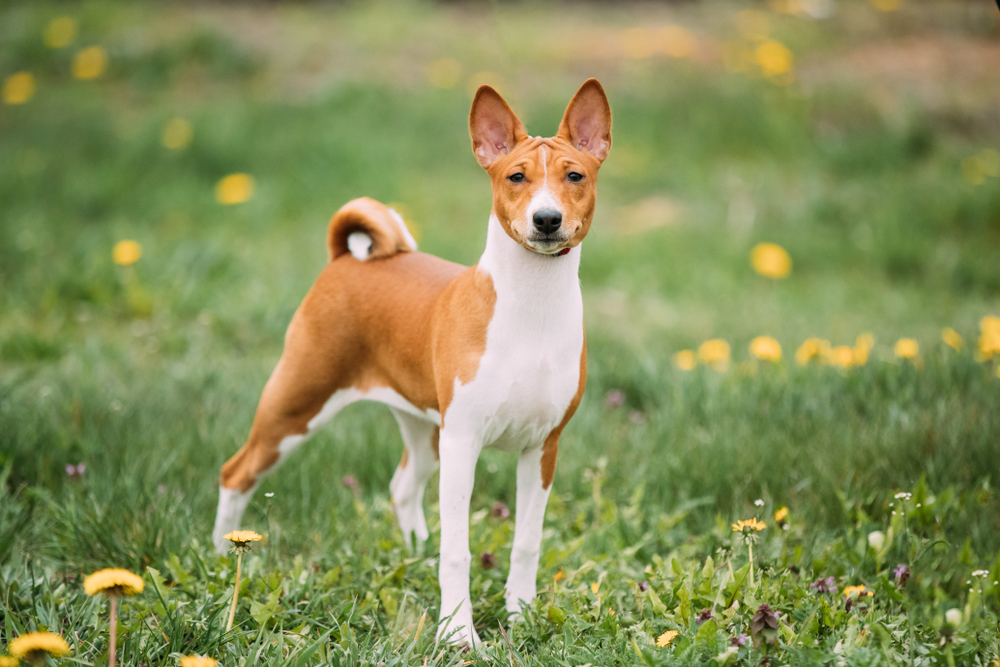
| AKC Group: | Hound Group |
| Origin: | Africa |
| Original Job: | Hunting, scouting |
Arguably one of the oldest dog breeds, the Basenji’s name literally translates as ‘the jumping up and down dog’. Their lean and athletic physique has remained quite unaltered since their days spent alongside the Pharaohs of Egypt, with the distinctive curly tail and upright ears. This breed is often referred to as the barkless dogs, as they lack the classic canine bark completely. Instead, their vocalizations consist of howling, yodeling, and singing.
21. Saluki
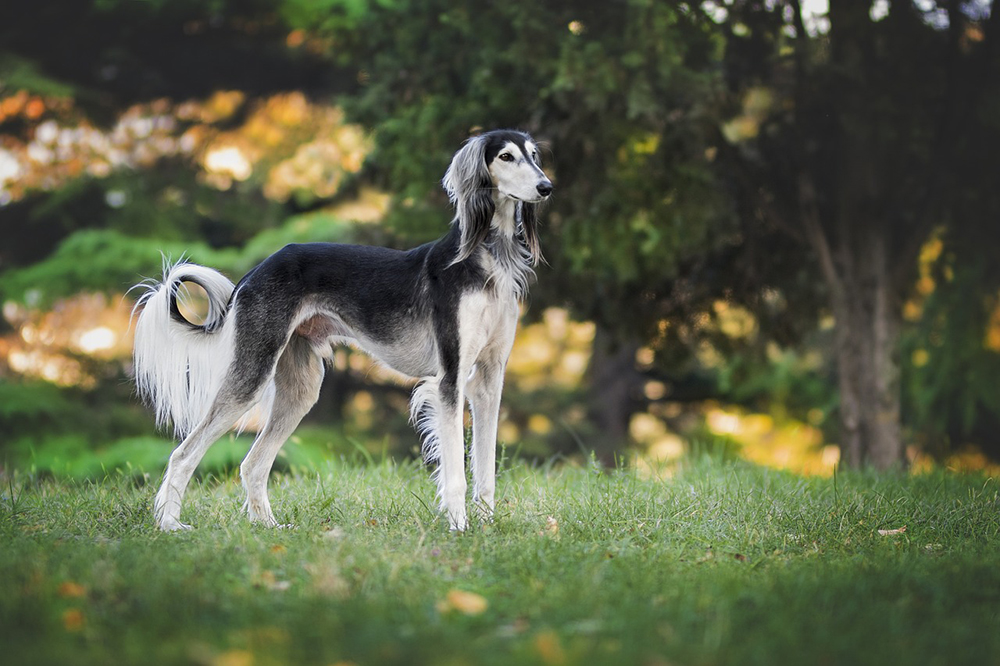
| AKC Group: | Hound |
| Origin: | The Middle East |
| Original Job: | Hunting |
The Saluki does not have a traditional hound-like howl. Instead, they have a high-pitched howl. Saluki owners refer to this as “singing”, which often ranges in volume. If a Saluki senses danger or something unknown, they might sing. Salukis that are particularly attached to their owners might sing if they are away from them for too long.
22. Shiba Inu
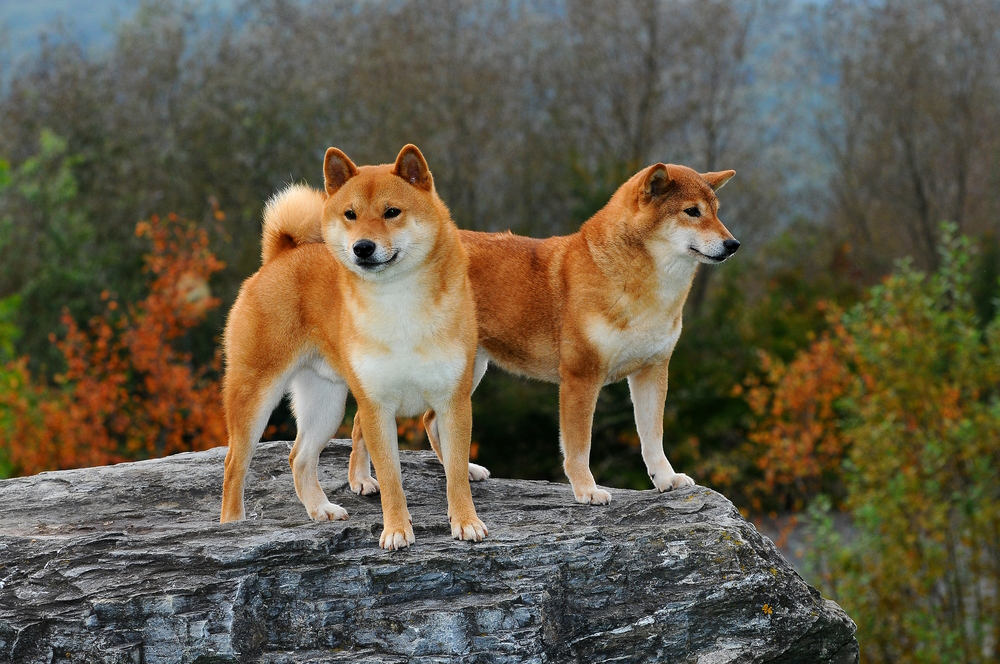
| AKC Group: | Non-Sporting Group |
| Origin: | Japan |
| Original Job: | Hunter |
Shiba Inus are quite the talkers! In addition to howling, they also yodel, yip, and groan. While this breed may become vocal for various reasons, they usually howl when stressed or anxious. Owners try to curb their “talking” with exercise and playtime and teach them to mimic words.
23. Miniature Pinscher
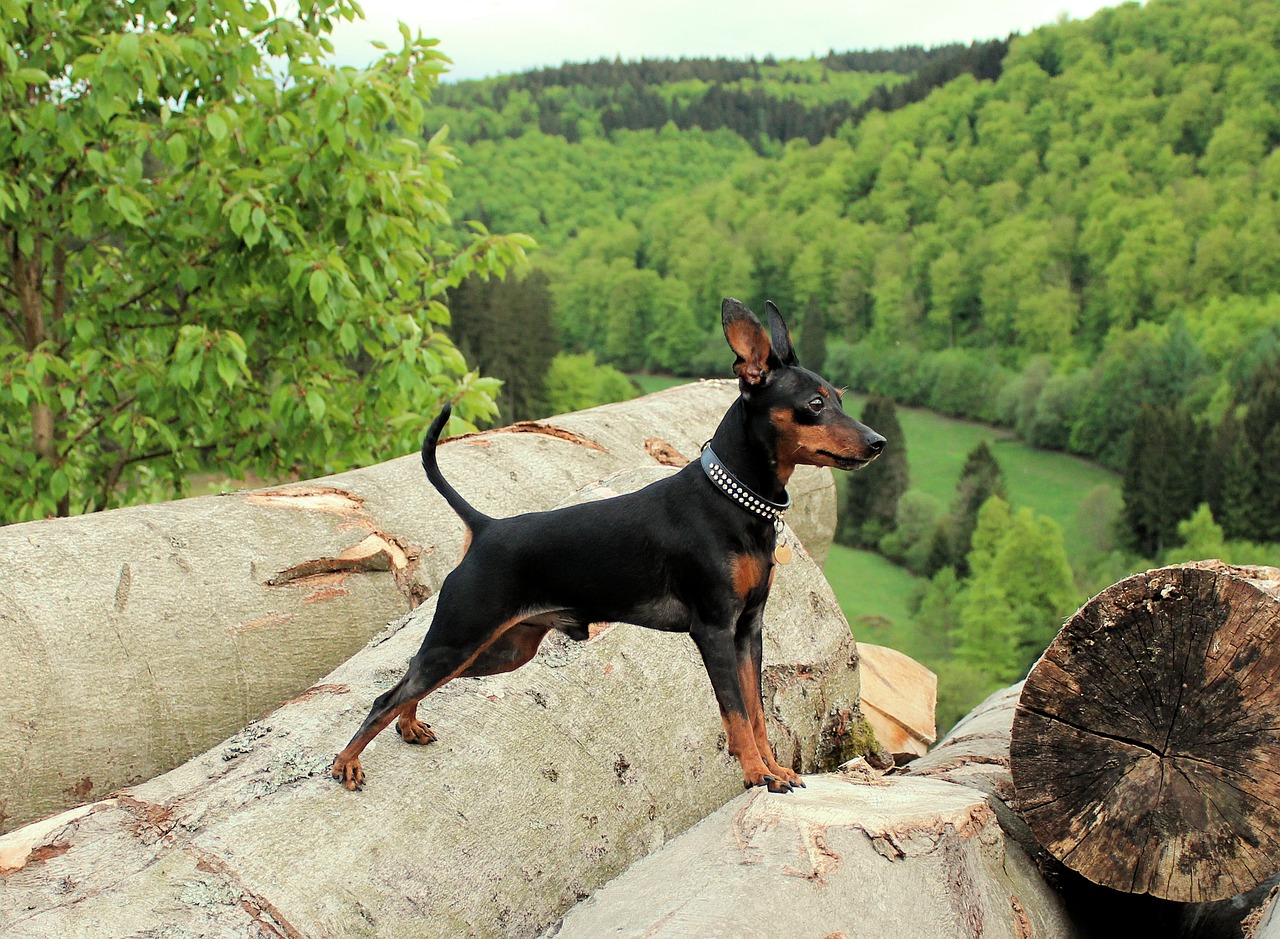
| AKC Group: | Toy |
| Origin: | Germany |
| Original Job: | Barnyard Ratter |
Don’t be fooled by their small stature and group categorization; the Miniature Pinscher is loud and proud! Often referred to as the “King of the Toys,” they are known for being vocal. While they were mainly used as ratters and getting rid of other vermin around their owners’ property, they are now used as guard dogs because they will alert their owners of strangers. Min Pins often howl when distressed or anxious.
24. Alaskan Malamute
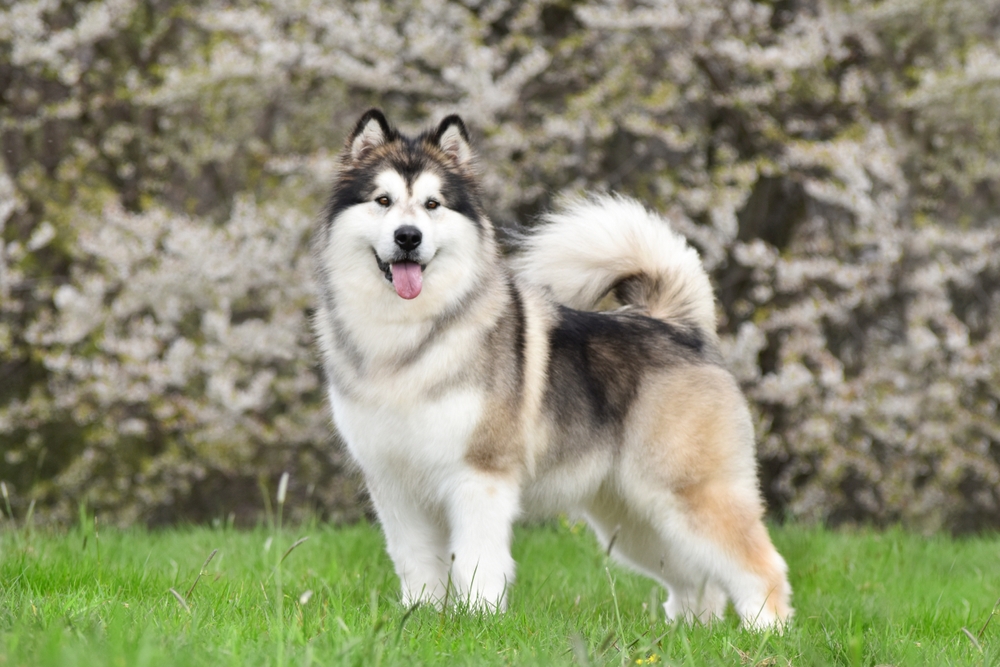
| AKC Group: | Working |
| Origin: | Alaska |
| Original Job: | Sled Dog |
While often confused for a Siberian Husky to some, the Alaskan Malamute does share their love for howling. This is definitely a vocal breed. While some of the other breeds on this list use howling to show stress and anxiety, the Alaskan Malamute howls to communicate with their owner and other dogs.
25. Irish Wolfhound
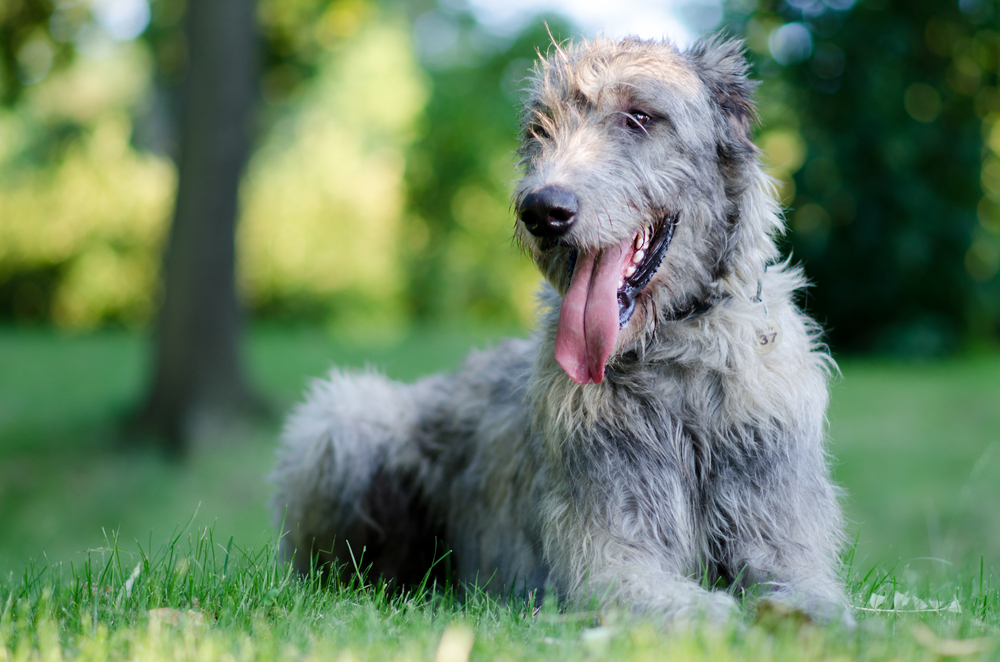
| AKC Group: | Hound |
| Origin: | Ireland |
| Original Job: | Hunting |
Lastly, we have the Irish Wolfhound. Unlike the Siberian Husky, this breed is not known for being extremely vocal. However, when they do howl, they often sound like wolves because of their deep and almost mournful vocalization. When they were hunters, this breed howled to let other dogs and people know their location. Nowadays, owners have noted that their Irish Wolfhounds howl when they hear sirens.

Final Thoughts
Some breeds are more likely to vocalize than others, and ancient breeds, such as the Akita, are less likely to bark and will howl if they want to get their owners’ attention. Modern breeds that selective breeding has developed over the last 200 years may include pets more inclined to bark, like the Beagle because it was part of their job.
Understanding these differences can help prospective pet owners make an informed choice about what dog breed to get and the training they must use to prevent unwanted behavior.
Featured Image Credit: BIGANDT.COM, Shutterstock
 Why Do Dogs Howl?



























2 Responses
My miniature poodle howls at the sound of sirens and high-pitched motorcycles. First he listens, then responds.