Why Are Police Dogs Called K9? History & Facts

In this article
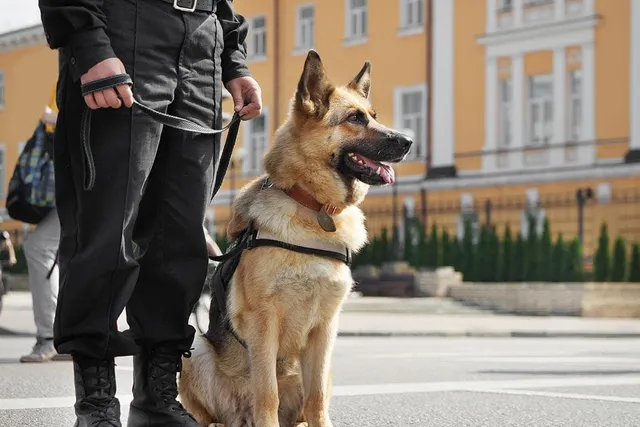
The history of using canines for police and military work goes back to the Romans using Neapolitan Mastiffs on the battlefield as “dogs of war.” However, police dogs are now an integral part of law enforcement, taking on the duties that they outperform humans in. Canines originally became our guardians and livestock herders through the ages. But when required, they acted as police dogs to ensure law and order while assisting in apprehending those lawbreakers.
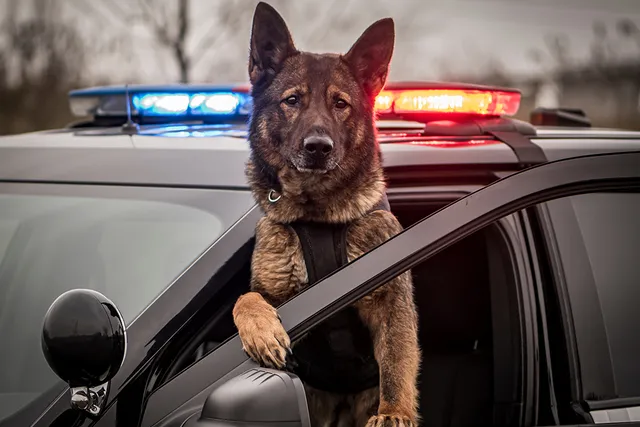
The term “K-9” is a homophone for the word “canine.” Its first formal but unofficial use was during World War II. Its popularity undoubtedly rose from its ease of use instead of spelling out the word.

The Beginnings of Canine Training Units
Using dogs in police work is a no-brainer. They can smell and detect things better than we can. They can run faster than any human, with Greyhounds clocked at a blistering 45 mph. Canines are also better equipped, with the word “canine” meaning “pointed tooth.” Our early history with these animals is chock full of stories of dogs fighting alongside humans, but they found their way into law enforcement in the late 19th century.
The Belgians recognized the potential for using dogs in this capacity, with the first training facility opening in 1899 in Ghent, Belgium. They didn’t recruit the typical canines we think of for these roles. Instead, wolfhounds and sheepdogs stepped up to the plate. Their size was undoubtedly a point in their favor. It didn’t take long for others, including the NYPD, to learn about their potential.
The trainers used a unique approach. They taught the pups to associate uniformed police officers as friendly and anyone else as hostile. These dogs were the ultimate multitaskers, detecting and bringing down their quarry. Unfortunately, the dogs’ training backfired after many complaints and an accidental shooting. The NYPD disbanded the country’s first canine unit. Several other cities also tried and failed.


The Quartermaster War Dog Program
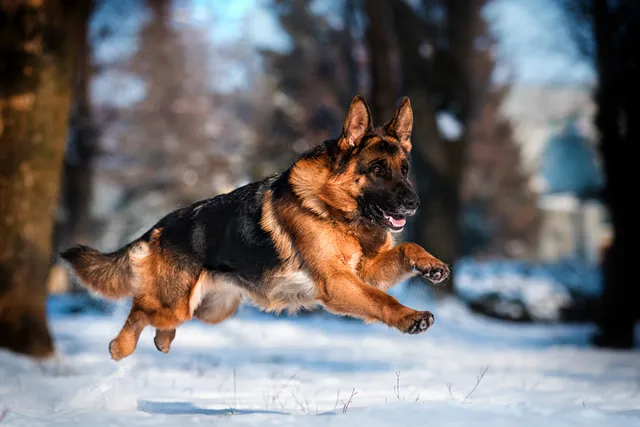
Police dogs didn’t go away despite the charges of being overly aggressive. Private agencies still used them during the early 20th century. The military also had canines. Law enforcement in London kept dogs as companions when doing their rounds. Germany opened a training facility in Greenheide in 1920, making the German Shepherd Dog their star pupil. Scotland Yard got into the act in 1938.
Then, World War II started. The military saw the potential for the trained canines and secured them for the war effort. An organization called “Dogs for Defense” teamed up with the American Kennel Club to encourage citizens to donate capable canines to join the Quartermaster Corps K-9 Corps. That’s where the police dogs came into their own, and where the first unofficial use of the term “K-9” appears.
The animals adapted well to their new roles after training with the US Armed Forces War Dog Program. More than 10,000 canines went on to serve all branches of the military in 15 War Dog platoons. In London, law enforcement used dogs in recovery missions to locate victims of the Blitz. The K-9 units' service during the two world wars cemented their use in law enforcement.
The dogs performed several vital tasks, including the following:
They would find similar duties stateside after the war. March 13, 1942, is the official founding of the US Army K-9 Corps.

Resurrecting Canine Use in Law Enforcement
The London Metropolitan Police recruited dogs for their regular duties after the end of World War II. Similarly, the United States resurrected canine use in various capacities, including security details in department stores. These efforts stalled in some areas for the same reasons they failed earlier. However, proponents recognized the need to refine the training methods and capitalize on the dogs’ strengths.
Several cities began training programs, including Dearborn, MI, Portland, OR, and Los Angeles, CA. The Baltimore City (MD) Police Department was the most successful, thanks to the efforts of a veteran of the US Marine’s K-9 Corps. Presumably, the use of the term “K-9” segued into law enforcement because of the widespread attention Baltimore received. Other nearby cities began their own K-9 units.

Modern-Day Police Work
Modern-day police work has led to specialization with K-9 units. Law enforcement had previously used Bloodhounds for search and detection. That usage goes back hundreds of years. However, their tasks have evolved with the times and technology. Police dogs are typically single or dual-purpose animals. Jobs include detection or patrol.
The former involves tracking or finding explosives or narcotics. The canines only train with one type of detection. The latter works with security, clearances, and officer protection. Interestingly, one task resembles the role of guardian dogs, which historically would capture intruders and keep them at bay until the landowner or groundskeeper arrived. Today, we call it suspect apprehension.
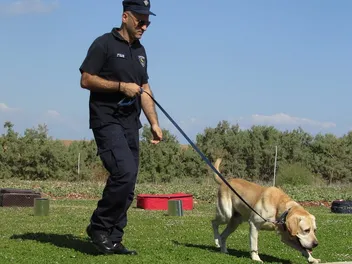
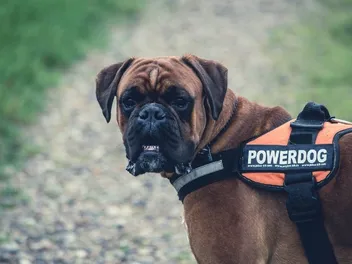
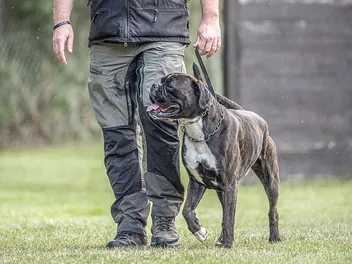
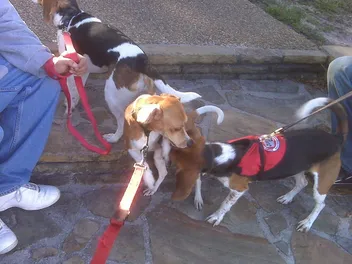
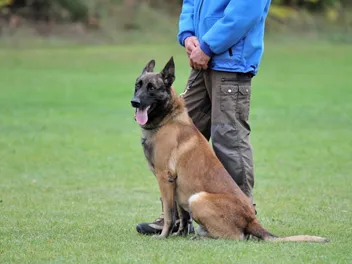
The term “K-9” has stuck with law enforcement and the various organizations working with these animals, including the National Police Dog Foundation and the United States Police Canine Association (USPCA). They use multiple breeds in these roles.
including the following:
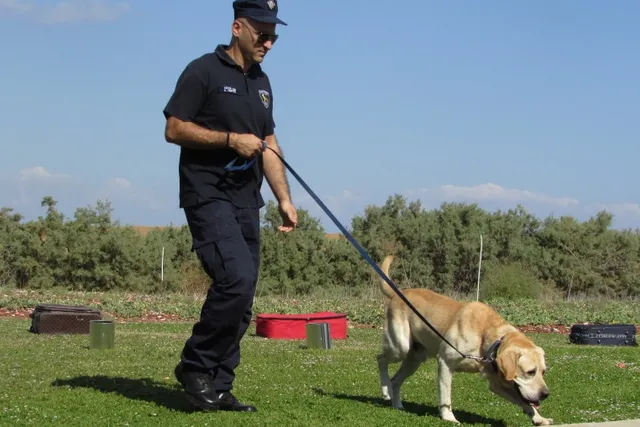
Even the unlikely Labrador Retriever has found a spot on the police K-9 units. The London Metropolitan Police used them in the mid-1940s to accompany bobbies on patrol for purse snatchers in Hyde Park. The military continues to use dogs for various duties based on the unique talents of the breed. They have a permanent place alongside soldiers on and off the battlefield.

Final Thoughts
While the formal history of police dogs started rocky, canines have proved themselves to be valuable companions for law enforcement and the military. They are courageous and loyal companions. Many personnel can thank their K-9 units for protecting them during difficult and dangerous times. That day when a wild canid first approached a human was the beginning of a beautiful friendship.
You might also want to check out: Can Police Dogs Smell Nicotine? Vet Verified Facts & Info
Sources
https://www.quartermasterfoundation.org/quartermaster-war-dog-program/
https://vcahospitals.com/know-your-pet/how-dogs-use-smell-to-perceive-the-world
https://www.vetstreet.com/our-pet-experts/meet-eight-of-the-fastest-dogs-on-the-planet
https://scholarlycommons.law.northwestern.edu/cgi/viewcontent.cgi?article=5041&context=jclc
https://www.quartermasterfoundation.org/quartermaster-war-dog-program/
https://www.asomf.org/the-history-of-k9-corps-in-the-u-s-army/
https://www.americancityandcounty.com/2012/07/23/police-employ-dogs-to-help-keep-the-peace/
Featured Image Credit: Sashulity, Shutterstock
Expert dog care, straight to your inbox
News, insights, expert advice, and everything dog.

No spam — unsubscribe anytime.
By signing up, you agree to our Terms & Conditions and Privacy & Cookies Policy.
How useful was this post?
Click a star to rate. You can leave written feedback afterwards. (We read all feedback.)
Since 2009, Chris has written on a variety of topics. Her motto with all of her writing is “science-based writing nurtured by education and critical thinking.” She specializes in scientific topics, with a special love for health and environmental topics, and of course, pets of all shapes and sizes.
Chris lives happily with her husband and three cats in the land of 10,000 lakes, writing, wining, and boating as much as she can. She and her husband, Norm, were awarded the State of Kentucky Colonel Honor for their restoration work at Mammoth Cave National Park.