Dogster is reader-supported. When you buy via links on our site, we may earn a commission at no cost to you. Learn more.

Dog Training

How to Train a Dog to Pee on a Pad: 4 Vet-Approved Tips & Tricks


Misty Layne
By Misty Layne · Reviewed & fact-checked by Dr. Nia PerkinsVet Approved
Dr. Nia Perkins
Reviewed & Fact-Checked byDr. Nia PerkinsDVM (Veterinarian)
A graduate of Tuskegee University College of Veterinary Medicine, Nia dreamed of becoming a veterinarian since she was a kid growing up in Chicago. She's been a veterinarian for almost two decades, and has practiced in various settings including private practice, emergency, shelter medicine, and telehealth. She also owned a mobile vet service and a brick and mortar small animal and exotics hospital, in Alexandria, Virginia.View authorThe information is current and up-to-date in accordance with the latest veterinarian research. Learn more
Updated on June 17, 2026
Share
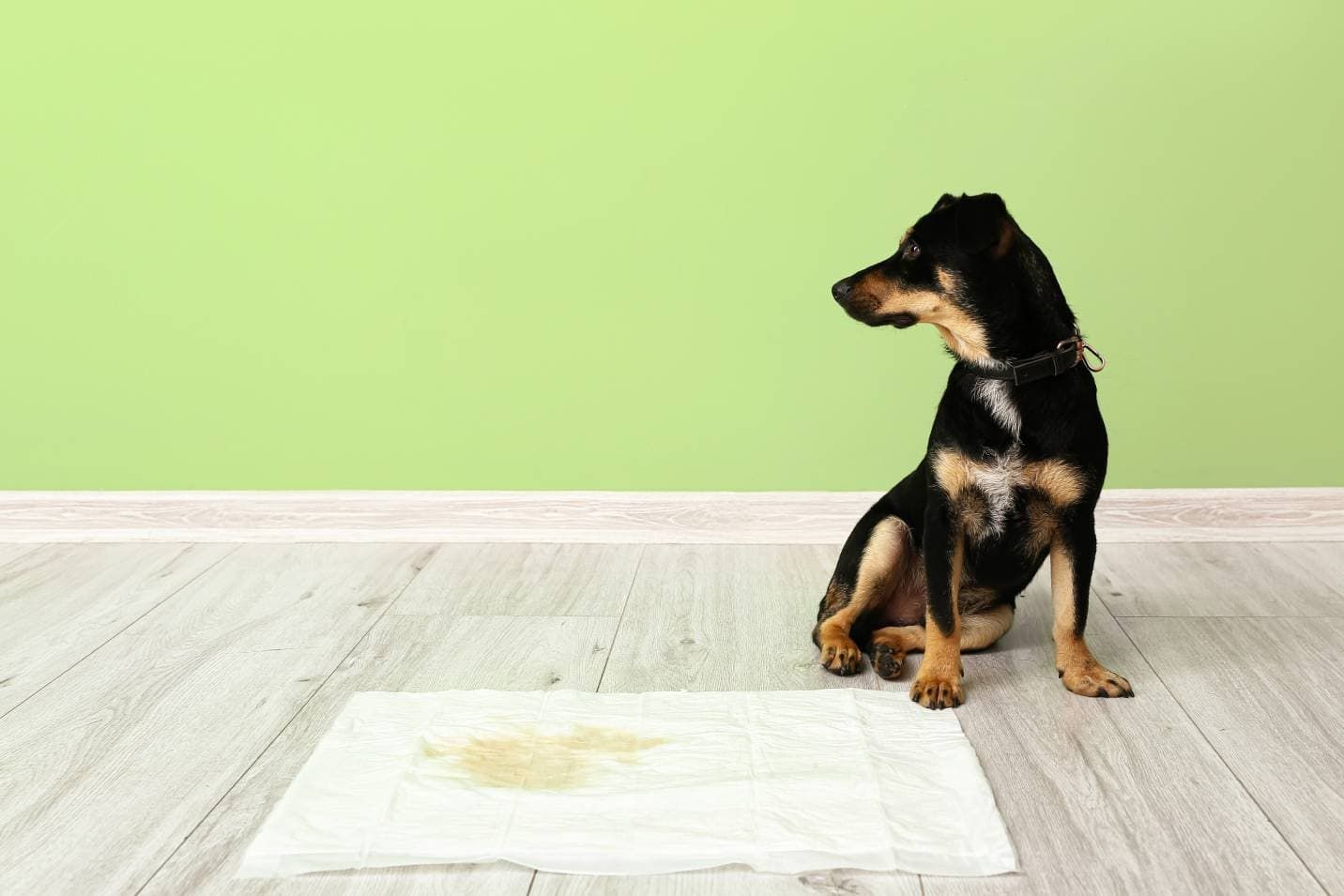
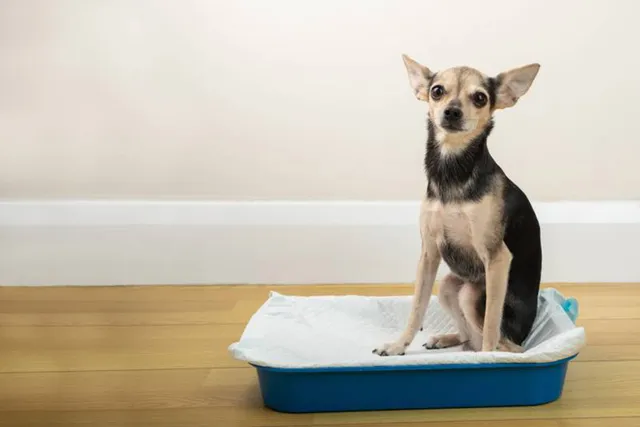
Dog pee underpad

While it’s ideal to have your puppy learn to go to the bathroom outside, sometimes that’s just not possible. That’s where puppy pad training comes in. For example, if you have a job that keeps you away for long hours, or you live in a location that has brutal winters, it may be more convenient to train your dog to use puppy pads. This may also help avoid the risk of your pup having accidents in the house. You’ll both be happier!

Training your dog to use a puppy pad can be time-consuming and sometimes messy, but it's a simpler process than you might imagine. The important thing to keep in mind is the need for routines and consistency—just like with any training you might do with your dog. With this step-by-step guide for how to train your dog to pee on a pad, you’ll know exactly what to do when you begin your puppy pad training.

Dogster divider_v3_NEW_MAY_24_

Before You Begin

Before you begin training your dog to use a puppy pad, you’ll need to do a couple of things.

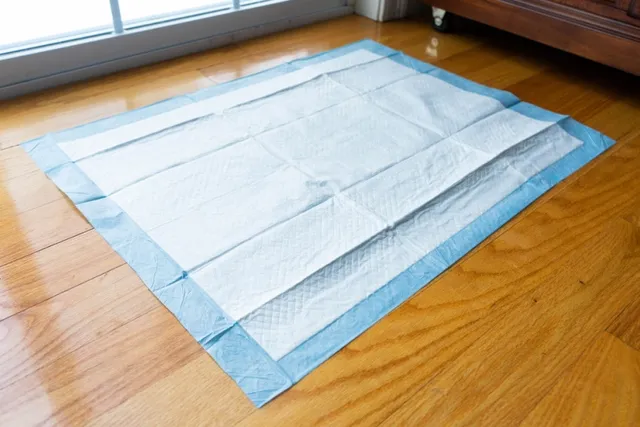
First, decide what kind of pad you want to use. Key aspects in choosing the right type of pad include ensuring it is large enough for your dog to use comfortably. You also want the pad to be absorbent so that cleanup is easy.

The breed of dog you have will play into your decision-making as well. After all, you wouldn’t get the same type of pad for a miniature breed as you would a large breed. You may also want to consider using a pad holder to add an extra layer of protection for your floors.

Once you’ve chosen the pad you want, you’ll next need to decide where to place them. When you find a location that’s easy for your dog to get to and not in the way of foot traffic, keep putting the pads there. You don’t want to constantly change up the location of the pads and confuse your pup. You want them to know exactly where it’s okay to go to the bathroom.

Finally, you’ll want to introduce your dog to the pads, so they know where they are. When it’s time for them to go, consider using a command such as “go potty”, so they start to get the idea of what the pad is for. Keep using the command consistently as you train them.

The Importance of Effective Cleaning

If you haven't properly cleaned your bed after your dog had an accident, there is a good chance they'll repeat this behavior in the same spot. It can be confusing for a dog if they can smell the presence of urine on a surface. If you don’t properly clean the urine from the bed, your dog may be able to continue smelling it, leading to them getting confused and thinking that it’s an appropriate place to urinate. An enzyme-based cleaning product, will help to eliminate any remaining urine odors that may cause your dog to continue peeing in the same place.

Our Favorite Cleaner

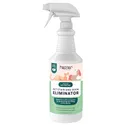
Hepper Advanced Bio-Enzyme Pet Stain & Odor Eliminator Spray is our favorite all-purpose cleaner for pet messes. It permanently lifts the very worst stains and odors, making clean-up and accident prevention a breeze. Hepper offers a 100% guarantee, which is a great bonus! Learn more about it here.

Comparison Table (block #757821)

At Dogster, we’ve admired Hepper for many years, and decided to take a controlling ownership interest so that we could benefit from the outstanding products of this cool pet company!

Now it’s time to begin training your dog to pee on the pads!

Dogster divider_v3_NEW_MAY_24_

How to Train a Dog to Pee on a Pad in 4 Steps

Although puppy pad training will take time and patience, it only involves a few steps.

1. Create a Routine

Image By: New Africa, Shutterstock

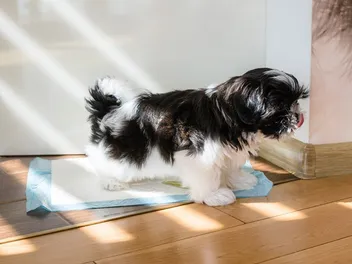
Perhaps the most essential aspect of any training is creating a routine. Puppy pad training is no different. It shouldn’t take much time for your pup to pick up the routine you’re establishing.

Establish a routine:

  • Know how often puppies need to pee. To start a routine, you need to know how often your dog will need to go to the bathroom. The general rule is that puppies can control their bladders for one hour for every month of their age. So, if you have a 2-month-old puppy, they will need to go every 2 hours; a 4-month-old puppy would go every 4 hours. Every puppy is different, though, so keep an eye on your dog to see how often they need a potty break.
  • Once you have an idea of how often your puppy will need to go to the bathroom, take them regularly to the puppy pad on that schedule, to encourage them to pee. Besides taking them on their individual schedule, you’ll also need to take them to the pad upon waking and after drinking water. Puppies have tiny bladders, so water runs through them very quickly!
  • Give your puppy their meals on a regular schedule. Little ones will need to go to the bathroom fairly quickly after eating and drinking. So keeping mealtime on a regular schedule means they’ll take bathroom breaks on a regular schedule as well.
  • Remove your pet’s water bowl a couple of hours before bed to lessen the chance of a nighttime While puppies are a little better at controlling their bladders during sleep, you should be prepared for a bathroom break sometime during the night until they have complete control. If your dog needs to pee during the night, they will most likely wake you with whining or scratching. Setting an alarm to get up at some point in the night may help keep their bathroom routine.

2. Supervision

Image By: New Africa, Shutterstock

Next up is supervision. You will need to keep watch over your pup to decrease the chance of accidents.

Supervision:

  • Always keep your puppy within sight. This way, not only will it be easier to take them to the pad every hour or so, but you can also look for any signs that they need to go to the bathroom. If you see your pup whining or sniffing the ground, you should immediately take them to the puppy pad.
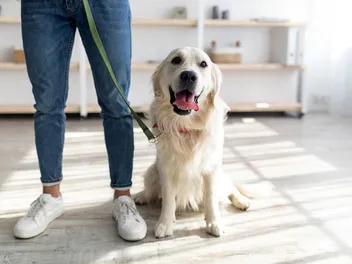
  • You may want to consider keeping your dog on a leash while inside so you can keep an eye on them. This way, you don’t risk them going to another room and having an accident when you’re distracted.
  • If you won’t be home or aren’t able to keep a constant watch, don’t let your puppy roam the house! The safest option is to place them in a crate until you return. Try not to leave them too long in the crate, otherwise, you may come home to a little surprise.

3. Reward Good Behavior

Image Credit: manushot, Shutterstock

Dogs tend to react better to positive reinforcement, so be sure you’re offering lots of praise and rewards when they use the puppy pad.

Positive Reinforcement:

  • Reward your dog in some way right after they successfully use the puppy pad. You can offer excited praise, plenty of pets, or even a treat.
  • If you’re using treats as a reward, you’ll need to give one immediately upon success (so, no going to grab one out of the kitchen and come back). Keep a few treats in the areas where you have the puppy pads, so you always have them ready.

4. Be Patient

Image Credit: Pixel-Shot, Shutterstock

Your puppy is learning, and accidents will happen, so it’s essential to remain patient throughout the puppy pad training. The process takes time!

Patience:

  • Don’t punish your dog. Yelling at them when they pee somewhere other than on the pads, will only teach them to go to the bathroom when it’s “safe”—when you aren’t around.
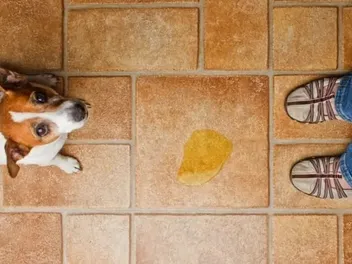
  • If an accident occurs, simply clean it up without giving your dog attention. Be sure to use a cleaner that will eliminate any lingering urine smell. This will ensure your pup isn’t encouraged to use that spot again.
  • If you see your dog starting to pee somewhere they shouldn’t, pick them up and place them on a puppy pad, then reward them when they finish the job there.
  • Remember that your dog won’t be able to fully control their bladder until they are about 16 weeks of age, or longer. So have some patience during this time.
  • If you’re training more than one dog at a time, keep in mind that every pup is different. Just because one learns quickly to use puppy pads, doesn’t mean another will.
Dogster divider_v2_NEW_MAY_24_

Conclusion

Though puppy pad training can be an arduous process, you can teach your dog to pee on a pad with some time and patience. To do so, you must establish routine and consistency, have a boatload of patience, and provide your puppy with plenty of praise when they succeed. With this step-by-step guide on how to get your puppy to pee on a pad, you should have no trouble getting your dog housebroken!

See Also:


Featured Image Credit: Pixel-Shot, Shutterstock

The Dogster Newsletter

Expert dog care, straight to your inbox

News, insights, expert advice, and everything dog.

No spam — unsubscribe anytime.

By signing up, you agree to our Terms & Conditions and Privacy & Cookies Policy.

Click a star to rate. You can leave written feedback afterwards. (We read all feedback.)

Misty Layne
Authored by

Misty Layne

How to Train Your Dog to Use Grass Potty Pads: 10 Vet-Approved Tips

How to Train Your Dog to Use Grass Potty Pads: 10 Vet-Approved Tips

Grass potty pads are a great way to protect a lawn or flower beds while providing your dog with somewhere outdoors that they are allowed to use for peeing and…

Nicole Cosgrove
By Nicole Cosgrove · 4 weeks ago
Why Does My Dog Pee Next to the Pad? 7 Vet-Reviewed Reasons

Why Does My Dog Pee Next to the Pad? 7 Vet-Reviewed Reasons

Using puppy pads is a convenient way to potty train a puppy, especially if you’ve got a smaller dog breed that has to relieve himself more frequently. Potty tr…

Jessica Kim
By Jessica Kim · 4 weeks ago
How to Train Your Dog to Use a Litter Box: Step-by-Step Guide (Vet-Reviewed)

How to Train Your Dog to Use a Litter Box: Step-by-Step Guide (Vet-Reviewed)

While litter boxes are often associated with cats, dogs can also learn how to use litter boxes. However, unlike cats, dogs don’t have instinctual behaviors tha…

Jessica Kim
By Jessica Kim · 2 weeks ago
How to Potty Train a Puppy or Dog: Vet-Approved Step-by-Step Guide

How to Potty Train a Puppy or Dog: Vet-Approved Step-by-Step Guide

Potty training your puppy is vital, and it will save you a great deal of trouble later. However, some people struggle with training, especially those who have…

Ed Malaker
By Ed Malaker · 2 weeks ago

My Dog Is Having Pee Accidents in the House: Vet-Reviewed Causes & What to Do

Housetraining a puppy can be quite challenging at times, but once they are consistently eliminating outside, you figure that things should be fairly smooth sai…

Kathryn Copeland
By Kathryn Copeland · June 17, 2026
My Dog Is Having Pee Accidents in the House: Vet-Reviewed Causes & What to Do

How to Potty Train a Chihuahua: 8 Vet-Approved Tips & Tricks

Potty training can be challenging for novice dog parents, but it shouldn’t be too overwhelming, and it mostly involves sticking to a schedule and giving your C…

Kit Copson
By Kit Copson · June 17, 2026
How to Potty Train a Chihuahua: 8 Vet-Approved Tips & Tricks

How to Potty Train a Poodle in 4 Simple Steps

Bringing home a new Poodle or a Poodle mix is exciting. You want to play with your new little friend, make them comfortable, and get them settled in their new…

Patricia Dickson
By Patricia Dickson · June 17, 2026
How to Potty Train a Poodle in 4 Simple Steps

How Long Will It Take to Potty Train a Dog? Vet-Approved Facts & FAQ

Potty training is one of the more challenging aspects of owning a dog. If you’re contemplating adding a puppy to your home, you probably have many questions. H…

Oliver Jones
By Oliver Jones · June 17, 2026
How Long Will It Take to Potty Train a Dog? Vet-Approved Facts & FAQ

How to Potty Train a Shih Tzu: 10 Vet-Approved Tips (With Video)

Shih Tzus are spunky little dogs with big personalities that can warm the hearts of any human being they meet. They are also quite smart, which is beneficial w…

Rachael Gerkensmeyer
By Rachael Gerkensmeyer · June 16, 2026
How to Potty Train a Shih Tzu: 10 Vet-Approved Tips (With Video)

10 Common Dog Potty Training Issues (Vet-Verified)

Dog potty training is challenging for most dog owners and is often a rite of passage for becoming a dog parent. You’re not alone in the challenges, and acciden…

Jessica Kim
By Jessica Kim · June 29, 2026
10 Common Dog Potty Training Issues (Vet-Verified)

How to House-Train an Adult Dog: The Umbilical Cord Method (Vet-Approved)

Have you just adopted an adult dog only to discover they aren’t house-trained? They might say you can’t teach old dogs new tricks, but that isn’t true. You can…

Misty Layne
By Misty Layne · June 16, 2026
How to House-Train an Adult Dog: The Umbilical Cord Method (Vet-Approved)

How to Stop a Dog From Marking in the House in 5 Simple Steps

If you’re suddenly encountering urine spots in the house, it can be incredibly frustrating. It can be difficult to know if your dog is urinating or scent marki…

Kristin Hitchcock
By Kristin Hitchcock · June 17, 2026
How to Stop a Dog From Marking in the House in 5 Simple Steps

Love Dogs? So Do We! Join the Dogster Community

Stay informed with expert pet care insights delivered straight to your inbox! Discover professional guidance on animal behavior, feeding tips, trusted product picks, and much more.

You may opt-out at any time. View our Privacy Policy for more information.

The Dogster app on a phone